
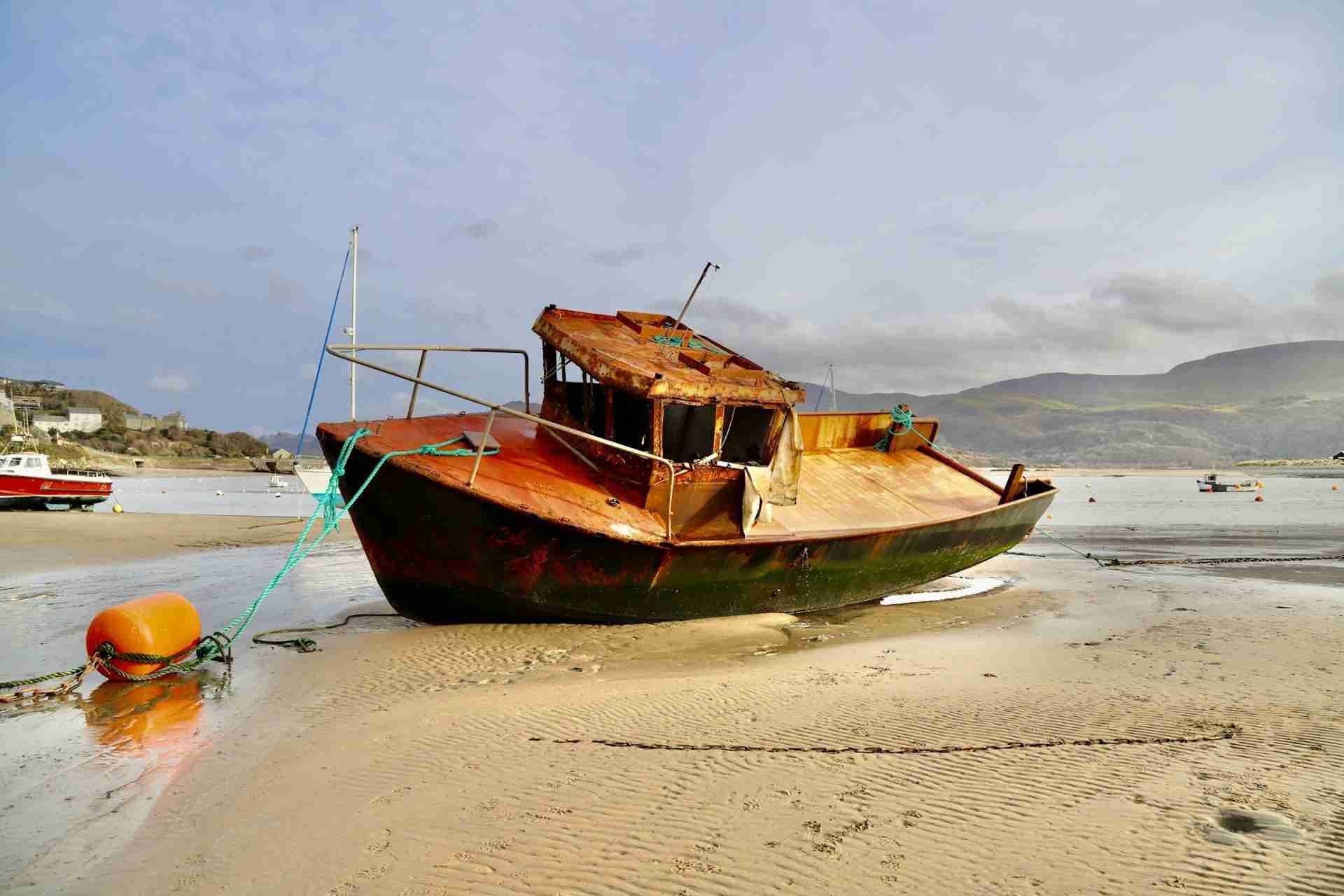
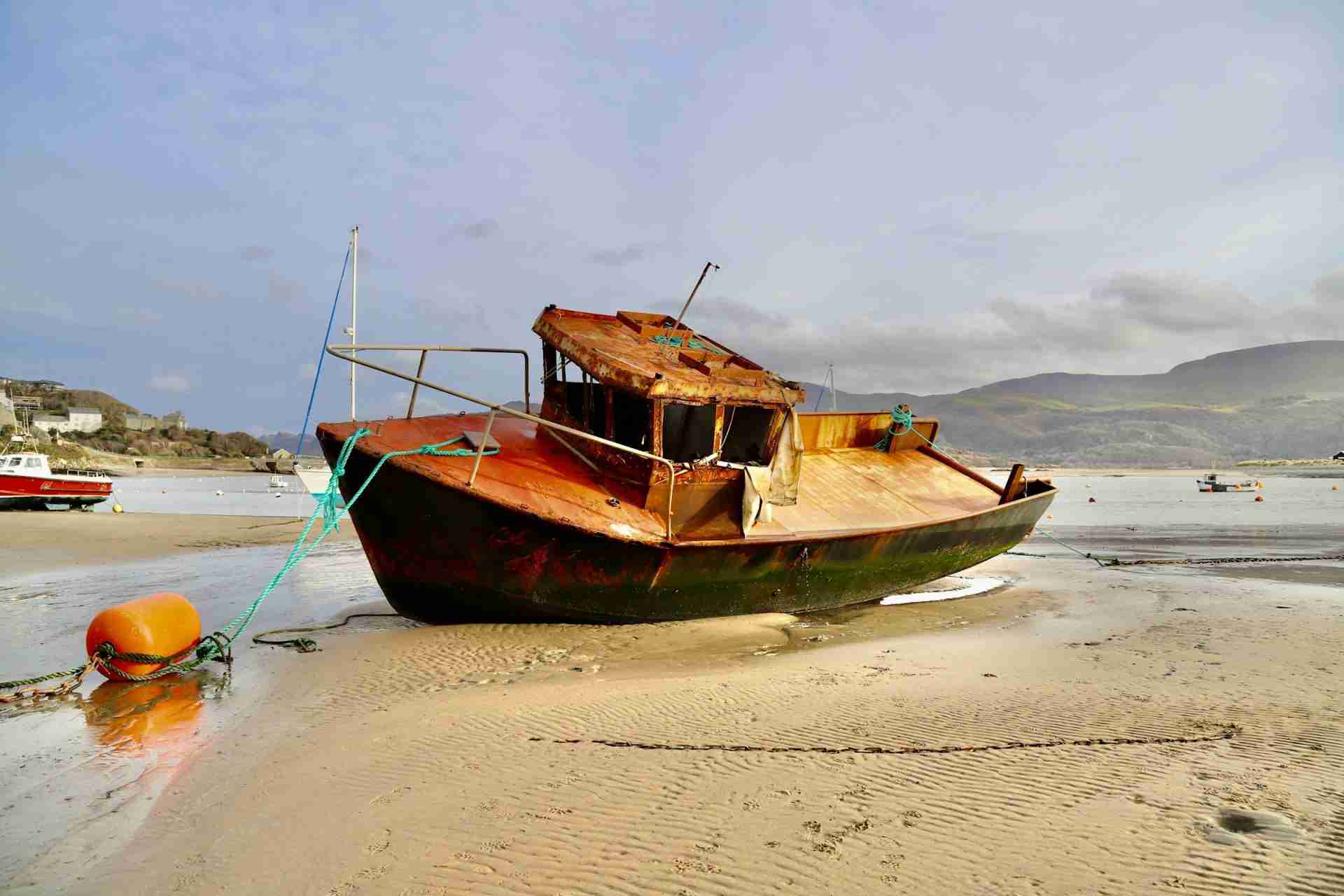
Barmouth Harbour is a working shoreline on Wales's west coast where the sea pulls back daily to reveal moored fishing boats resting quietly on sand waiting for high tid to return. Backed by hills and a low pier, the harbour is a calm, understated setting that gives photographers a window into the rhythms of coastal life. This isn't a polished marina or a tourist perfect quay. It's a functional place shaped by tide and time, where ropes stretch across mudflats and the boats are left grounded until the tide comes back. The mix of sky, texture, and old vessels makes it an ideal spot for shooting slow paced scenes with room for atmosphere and detail.
Best Photography Opportunities
• Fishing Boats at Low Tide
The most distinctive feature of Barmouth Harbour is the collection of small fishing boats that rest on the sand when the tide goes out. These grounded vessels offer strong foreground interest and natural leading lines, especially when paired with the low light of early morning or late afternoon. Their weathered hulls, tangled ropes, and tilted angles tell quiet stories of use and patience, making them ideal subjects for both wide environmental frames and close up studies. During low tide, you can walk carefully around the exposed ground to find different vantage points, but be mindful of slippery surfaces. The boats appear static, but the scene is full of texture and slow, shifting light that rewards attention.
• Pier and its Coastal Backdrop
Barmouth Pier is small and practical, made for fishing and mooring rather than scenic strolling, but it adds a clean horizontal line that balances the curves of the boats and the hills beyond. From the pier itself, you can frame the harbour and surrounding town or shoot outward toward Cardigan Bay, depending on the light. At high tide, the pier becomes a dividing edge between water and land, while at low tide it rises above the exposed ground. This makes it a useful element for scale and framing. Its simplicity works well in minimalist compositions or black and white conversions where structure and shadow are the focus.
• Reflections and Changing Sky
Barmouth's coastal weather moves quickly, often creating layered skies that shift from overcast to glowing in minutes. After rain or during high tide, pools of water around the harbour catch reflections of boats, ropes, and sky. These make for quiet, introspective frames with strong symmetry or soft diffusion depending on conditions. The mood of the harbour can swing from sharp and clear to hazy and muted in the span of a morning, so it helps to visit with time to wait and watch. Shooting during the edge of a weather system often brings the best mix of light and movement.
• Textures in Sand and Working Detail
At low tide, the exposed sand around the boats is marked by ridges, rivulets, and footprints, creating natural patterns and contrast. You can shoot directly down or at low angles to highlight these textures, using them as foreground or standalone abstract studies. Ropes stretched taut across the sand, anchors left visible, and rusted fixtures all add photographic depth. These elements give you the chance to build a series of detail shots that speak to the working nature of the harbour. A short telephoto lens helps isolate these moments while maintaining separation from the background.
• Sunset Over Cardigan Bay
Looking west from the edge of the harbour, you have an open view across the bay where the sun drops directly into the water. This makes Barmouth a good location for low horizon sunset shooting, especially when the tide is in and the water reflects the warm light. Boats floating again at high tide catch the last color of the day, and the sky often puts on a strong display here even after the sun dips. This is a good time to switch to longer exposures or silhouette work as the light fades. The town quiets down by this point, so you often have the space to yourself.
Best Time to Visit
Barmouth Harbour changes dramatically with the tide, so timing your visit around low or high tide is more important than the season. Low tide exposes the working floor of the harbour and the resting boats, while high tide brings reflections and movement to the waterline. Both conditions are photographically interesting, but offer very different moods and composition options.
In terms of daylight, early mornings are best for quiet, undisturbed access to the harbour and soft side light across the boats and sand. Evenings are good for color, especially if clouds gather over the bay. Summer brings longer hours and a bit more activity, while winter often gives you dramatic skies and stillness, though with shorter light windows. There is no wrong season to visit, as long as you time your shoot around the tide tables and expected weather.
How to Get There
Barmouth is accessible by car via the A496, with road connections from Dolgellau or the nearby Snowdonia area. There is also a railway station in town served by the Cambrian Coast Line, which runs scenic trains along the coast and stops within walking distance of the harbour. Once in Barmouth, the harbour and pier are easy to reach on foot from the town center. The ground is mostly flat, though footing can be slick or muddy near the boats at low tide. There are no access fees or restrictions on photography, and it is a relaxed, open site to explore with camera gear in hand.
Recommended Photography Gear
A wide angle lens is useful for capturing the full scope of the harbour, the arrangement of boats, and the open view toward the sea. A standard zoom or short telephoto is ideal for tighter shots of details, textures, and isolated boats on the sand. A tripod is helpful if you are shooting in low light or working with reflections at the edges of the day. A circular polarizer can help with managing glare on wet surfaces or bringing out texture in the sky. Because conditions can shift quickly and ground surfaces may be wet, waterproof footwear and a lens cloth are good to have on hand.
Nearby Photography Locations
This long wooden railway viaduct stretches across the estuary and offers great leading lines and symmetry from either side. It is especially striking at sunset when the low sun catches the side of the structure and reflects off the water.
• Panorama Walk
A trail above the town provides a high vantage point over the harbour, the bridge, and the sea beyond. It is ideal for wide landscape shots and for seeing the full shape of the estuary from above.
Just across the bridge, this quieter stretch of sand gives you clean views back toward Barmouth and the hills behind it. It works well for telephoto compression and more minimalist coastal compositions.
A short drive inland brings you to the dramatic slopes of Cadair Idris, where you can transition from coastal photography to mountain landscape work. The area offers varied terrain and classic moody Welsh light.
• Llanaber Church and Clifftop Views
North of Barmouth, this quiet church overlooks the sea and provides a peaceful setting for shooting layered horizons, wild grass, and passing clouds. It is best in soft morning light or when mist rolls in from the water.
Barmouth Harbour may be modest in scale, but it offers a strong sense of place and rhythm. The mix of weathered boats, shifting tides, and practical working detail gives photographers a grounded and flexible subject to work with. Whether you stay for an hour or linger through the changing light, it is the kind of location that invites slow observation and careful framing.
Comments
Loading comments…