
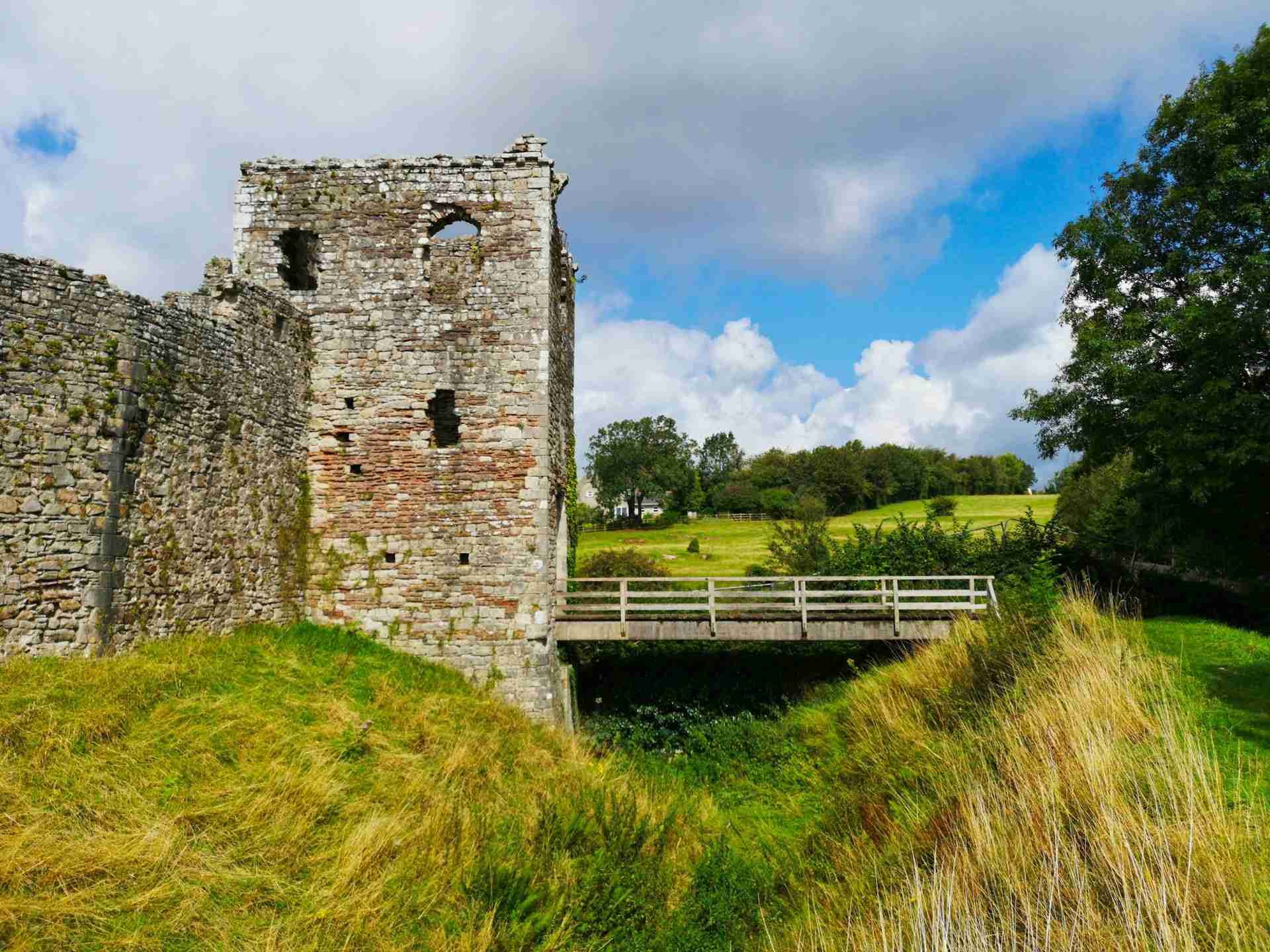
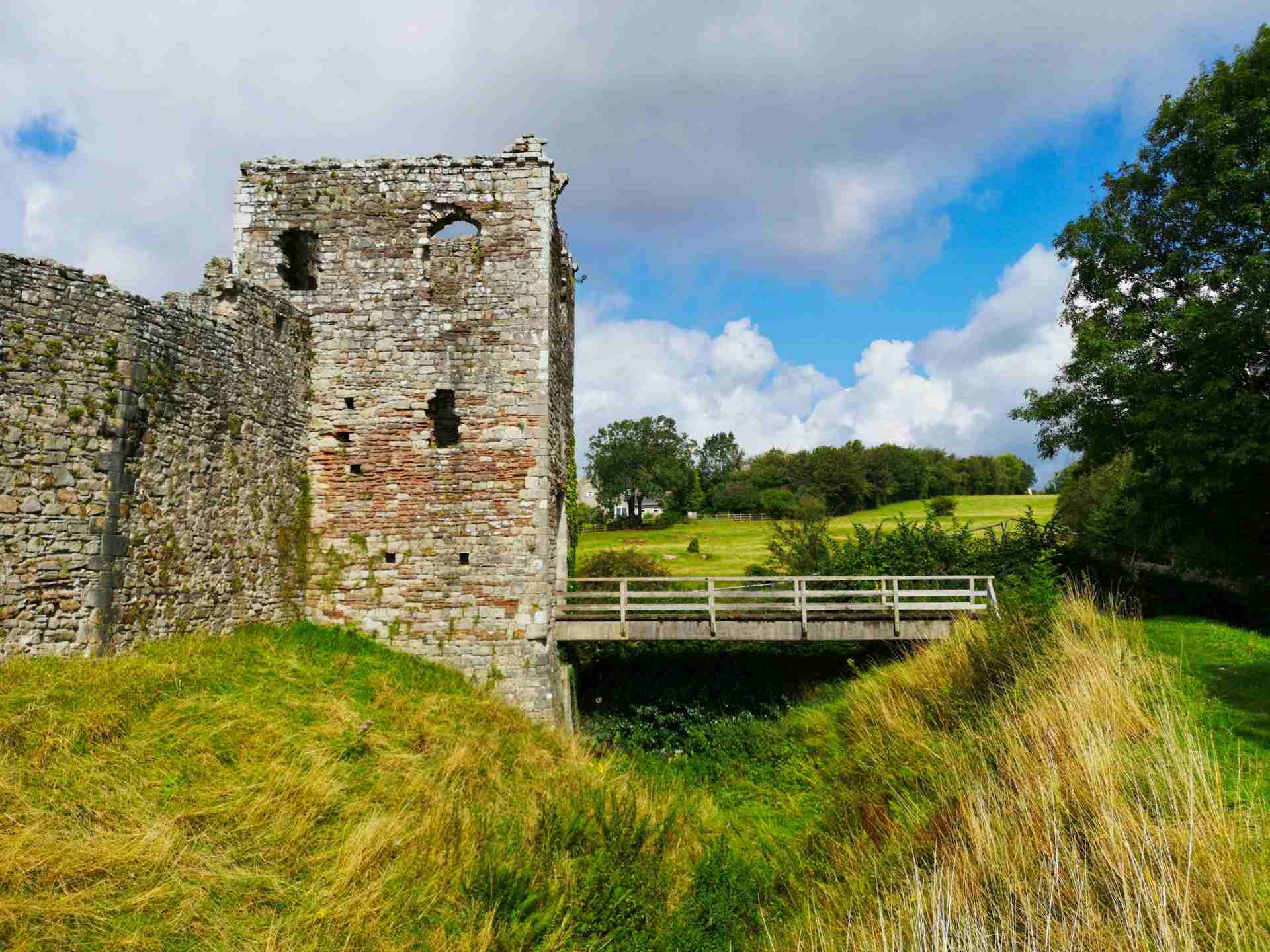
In the quiet village of Coity in South Wales, the ruins of Coity Castle rise as a reminder of the Norman conquest and centuries of Welsh history. Built in the late 11th century and expanded in the following centuries, the castle transitioned from a defensive stronghold into a fortified residence, leaving behind layers of architectural detail for photographers to explore. Today, weathered walls, crumbling towers, and arched gateways stand in open fields, surrounded by grassy earthworks and small lanes. The ruin's openness to the sky, combined with its modest scale compared to Wales's grander castles, gives it a sense of intimacy and accessibility that makes it particularly rewarding to photograph.
Best Photography Opportunities
• The gatehouse and entrance
: The remains of the castle's gatehouse provide one of the most striking compositions, framing views of both the interior ruins and the sky beyond. Shooting from low angles emphasizes the height and defensive strength of the entry, while including sections of the surrounding earthworks adds context. A wide-angle lens helps capture the structure's relationship to the open fields around it. Early morning or late afternoon light grazes the stone, bringing out texture in the weathered masonry. Long exposures on overcast days can give a moody atmosphere, emphasizing the ruin's age and endurance.
• Inner ward and courtyard ruins
: The central courtyard is scattered with remnants of walls, doorways, and windows that lend themselves to layered compositions. From the interior, you can frame sections of the sky through broken arches or place surviving walls in the foreground to lead the eye deeper into the ruin. Side lighting in late afternoon enhances shadow play across the walls, while midday overcast light works well for detail studies. Using a mid-range zoom lens allows you to balance context with architectural fragments, highlighting how the ruin has opened to nature over centuries.
• Tower remnants
: Several of the castle's towers survive in partial form, their jagged tops rising against the horizon. A telephoto lens isolates these towers against the sky, emphasizing their verticality and weathered surfaces. Shooting from outside the castle grounds provides compositions where towers are framed against grassy slopes or nearby village buildings, creating contrast between medieval and modern. Sunset can silhouette these forms, turning them into stark outlines that emphasize their broken grandeur.
• Architectural details in stonework
: Despite its ruinous state, Coity Castle still preserves intricate stonework, including arrow slits, window frames, and decorative carving in doorways. Close-up photography reveals the craftsmanship of medieval masons and the way time has weathered their work. Diffused light is best for these studies, minimizing harsh shadows and glare. A macro or short telephoto lens captures lichen, cracks, and surface textures that speak to the ruin's age. These details add intimacy to a portfolio that might otherwise focus only on broad views.
• The castle in its landscape
: From surrounding fields and paths, Coity Castle can be photographed in its rural setting, with the low-lying village and rolling South Wales countryside stretching beyond. Wide compositions at sunrise or sunset place the castle within glowing skies and soft fields. In autumn, early mist sometimes lingers in the fields, creating atmospheric layers with the ruin silhouetted above. Winter offers equally strong conditions, with bare trees and low sun angles highlighting the starkness of the stone.
Best Time to Visit
Coity Castle is rewarding to photograph in all seasons. Spring brings fresh greenery to the earthworks and wildflowers along the walls, softening the ruin with touches of life. Summer provides long evenings and golden light that illuminates the castle's stonework against deep blue skies. Autumn offers moody, shifting skies and warm color in nearby trees, while winter delivers stark contrasts and long shadows that emphasize the ruin's skeletal form.
Time of day is equally important. Morning light illuminates the castle from the east, creating long shadows across the grassy approaches, while sunset provides strong backlighting opportunities from the west. Overcast skies are excellent for detail photography, while stormy weather brings dramatic skies that suit the ruin's medieval history. Night photography is also possible here, as the lack of urban lighting in the immediate area allows for starry backdrops and even Milky Way compositions in summer months.
How to Get There
Coity Castle is located just north of Bridgend in South Wales, easily accessible by car from the M4 motorway. From Bridgend town center, it is only a few minutes' drive, with parking available in the village near the church. The castle is managed by Cadw, Wales's historic environment service, and entry is free to the public. The site is open year-round, though there are no visitor facilities on the grounds, so planning ahead for water and gear storage is advisable. The terrain is mostly grassy and level, though uneven in places, so sturdy footwear is recommended. The ruin is compact, allowing photographers to explore and set up multiple compositions within a short walking distance.
Recommended Photography Gear
A wide-angle zoom in the 16 to 35 millimeter range is essential for capturing the castle's remains in their landscape, particularly when framing the gatehouse or towers from below. A mid-range zoom such as a 24 to 70 millimeter provides flexibility for courtyard compositions and balancing ruin against sky. A telephoto lens up to 200 millimeters is useful for isolating towers or for compressing the castle within its surrounding village landscape. A tripod is valuable for low-light or long-exposure work, particularly when photographing under moody skies or at dusk.
Filters are particularly effective at Coity Castle. A polarizer enhances sky contrast and cuts glare from stone surfaces, while neutral density filters allow long exposures that emphasize cloud movement behind static ruins. Graduated ND filters help manage the contrast between bright skies and darker interiors when shooting archways and walls. Protective gear such as a lens cloth is useful in wet or windy conditions, which are common in South Wales. A compact backpack makes carrying equipment around the site easy without impeding access through narrow archways or staircases.
Nearby Photography Locations
: Located a short drive from Coity, Ogmore Castle sits on the banks of the River Ewenny. Its riverside reflections and expansive ruins offer both wide seascapes and intimate stone detail opportunities, especially during golden hour.
: Just to the west, this reserve combines dune systems, wetlands, and coastal landscapes. The shifting light across sand and water provides minimalist compositions and wildlife opportunities.
: A ruined manor house near Merthyr Mawr, Candleston offers ivy-draped walls and atmospheric interiors that contrast with Coity's more defensive structures. It is particularly photogenic in low light.
: The town center offers historic churches, bridges, and urban scenes that complement rural castle photography with cultural context. River reflections at dusk provide additional opportunities.
: A larger site to the east, Caerphilly Castle is one of the most impressive fortresses in Wales. Its extensive moats and massive walls provide strong compositions from every angle, especially in the soft morning light.
Coity Castle may not match the scale of Wales's most famous fortresses, but its ruins possess a quiet dignity that makes it deeply photogenic. The openness of the site allows photographers to work freely with light and perspective, while the surrounding countryside adds context and atmosphere. For those seeking to capture the layered history of Welsh castles, Coity offers an intimate and rewarding experience.
Comments
Loading comments…