
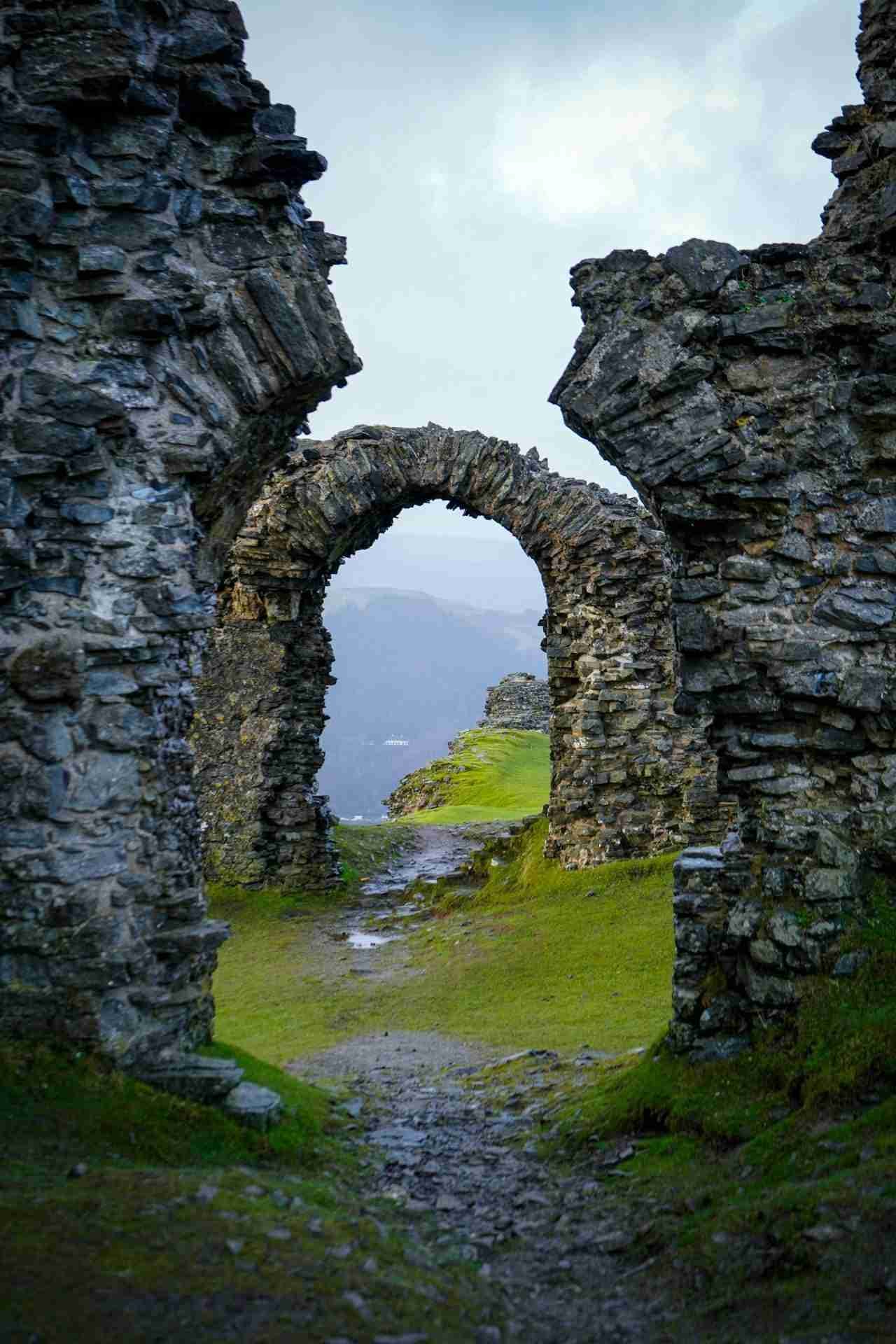
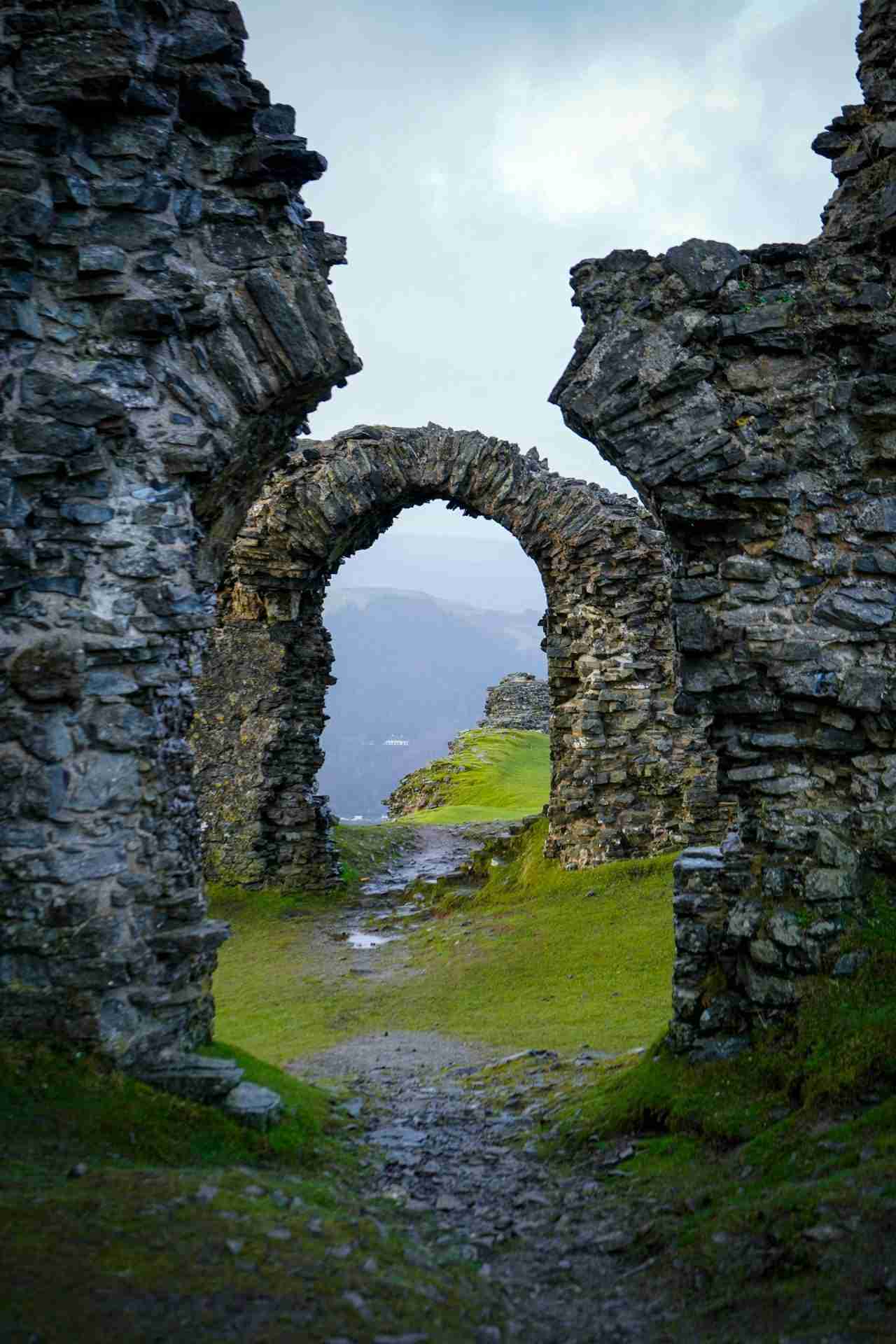
Castell Dinas Bran rises above the Welsh town of Llangollen on a grassy hill that rolls steeply into the surrounding valley. The remains of the medieval castle are weathered but visually striking, with crumbled walls and partial towers standing exposed to sky and wind. From the summit, the view stretches across the Dee Valley and into the Berwyn Mountains, creating a wide natural stage where stone and land share equal presence. This is a location shaped by light and mood. The ruin itself is minimal, but its placement high above the town offers changing perspectives depending on weather, season, and time of day. Photographers willing to climb the hill before dawn or linger until sunset will find moments of stillness and scale that are as much about the space around the castle as the structure itself.
Best Photography Opportunities
• Early Morning Fog
Climbing the hill just before sunrise gives you a chance to capture low fog settled in the valley, with the ruined structure beginning to take shape above it. Use a wide angle lens from mid slope to include both the castle and the layers of mist below, allowing for a sense of depth and atmosphere. The light arrives slowly here, moving sideways across the hill and revealing the forms of stone, grass, and trail as it builds. This is one of the best times to create quiet, open compositions with soft transitions and gentle color. Conditions change quickly, so be prepared to reframe as the fog shifts or the sun breaks through.
• Backlit Silhouette
From the town or nearby riverbank, look up toward the ridge and photograph the castle as a silhouette against the morning or evening sky. The strong shape of the ruin holds well even without detail, especially when cloud cover adds structure and motion behind it. Use a telephoto lens to compress the hill and sky, and experiment with positioning the castle slightly off center to allow space for weather or light to complete the frame. These types of images work best during golden hour when the sky has soft tonal shifts, or in overcast light when the contrast remains balanced.
• Wide Views from Inside the Castle Walls
Once you reach the summit, step inside the remaining stone walls and look outward across the valley. Here, a wide lens can capture both the surrounding landscape and the ruined edges of the structure. Use broken archways or standing walls as framing devices to anchor the scene and create natural depth. This is also a strong angle during sunset, as warm light spills into the ruin and defines the interior textures. Pay attention to shadow lines and how they move across the stones. These compositions often benefit from simple foregrounds, such as a single wall or worn step leading outward into the view.
• Views from the Eastern Trail
As the trail curves east near the summit, it reveals a strong side angle of the ruin, showing its placement on the edge of the hill with sky and ridge dropping away behind it. This angle catches first or last light on the stones and helps show the castle as part of the broader hilltop. A midrange lens gives you the flexibility to adjust framing depending on light and weather. The path itself can be used as a leading line, especially when shooting at sunrise or sunset when it glows softly and pulls the viewer into the scene. This location works well in all seasons, especially when shadows from nearby trees stretch across the slope.
• Detail Work of Stone Texture and Grasses
Even though the castle is in ruin, it offers plenty of texture for more focused compositions. Cracked stone, lichen covered walls, and wind worn grass all respond well to diffused light on cloudy days. Use a short telephoto lens or macro lens to isolate these smaller details, especially when contrast in the broader landscape is too strong for wide work. These images add a more personal tone to your set and pair well with environmental shots from earlier or later in the session. Spend time walking the perimeter to notice how the structure interacts with the landscape in subtle ways.
Best Time to Visit
Castell Dinas Bran is open year round and is most rewarding in spring and autumn when the hill is green and the light remains soft throughout the day. Spring offers morning fog, blooming wildflowers, and cooler air that brings clarity to the views. Autumn provides golden tones in the grasses, richer sky colors, and slightly lower sun angles that stretch the light across the slope for longer. Sunrise tends to offer the cleanest atmosphere and fewest distractions, while sunset can bring drama as clouds build behind the ridgeline.
Summer is accessible and popular, but the light can be harsh and the hill more crowded. Plan for early morning or late evening sessions to avoid flat midday light. Winter offers the chance for snow, low sun, and heavy mist, all of which give the castle a more stark and minimal character. The climb is manageable in all conditions, though it becomes slippery when wet or icy. Wind is common at the summit, especially during seasonal transitions, so bring layers and be prepared for conditions to shift quickly.
How to Get There
Castell Dinas Bran overlooks the town of Llangollen in North Wales and is accessible by foot via a well worn trail that begins just outside the town center. If arriving by car, you can park in Llangollen at one of the public lots or side streets, then walk north toward the base of the hill. The trailhead is near the corner of Hill Street and Castle Street, clearly marked and easy to follow. The hike to the summit takes about twenty minutes, depending on pace, and gains elevation quickly over grassy and sometimes uneven ground.
There are no entrance fees or restrictions for photographing the site, as it is open access and managed by a local trust. The trail is not paved, so sturdy shoes are recommended, especially in wet weather. There are no facilities at the top, and the area is exposed, so carry water and prepare for wind. Photographers planning sunrise shoots should bring a headlamp or flashlight for the approach, as the path is unlit and dark before dawn.
Recommended Photography Gear
The walk up to Castell Dinas Bran is short but steep, so pack light while keeping enough flexibility to cover both wide views and intimate details. A wide angle lens in the 14 to 30 millimeter range is essential for landscape work from the summit, where you can frame the ruin against the valley and sky. Use this lens to include foreground texture like grass, trail lines, or stone walls when building more layered compositions.
A 24 to 70 millimeter lens provides excellent coverage for midrange compositions, side angles of the ruin, and shooting from the trail. It is also useful for environmental portraits or balanced frames that include both structure and terrain. A 70 to 200 millimeter lens helps compress distant hills and isolate the ruin from below or across the valley. It also works well for shooting light patterns on the slope or capturing mist movement.
A compact tripod is helpful for low light shooting, especially at sunrise or when making long exposures to soften cloud or mist. Bring a lens cloth, as morning moisture and wind can fog the front element or collect on filters. A polarizer is helpful on bright days to deepen sky tones or cut glare from the grass. Gloves and wind protection are useful in colder seasons, as there is little shelter at the top of the hill.
Nearby Photography Locations
, just west of town, offer peaceful water scenes and tree-lined reflections. Early morning light works well here, especially when mist rises from the water and softens the forest edges.
, a UNESCO World Heritage site a short drive away, provides high views over the River Dee and a striking blend of industrial structure and natural setting. The light is best in late afternoon when the sun lights the arches from the west.
, located in a quiet valley north of town, offers medieval ruins surrounded by fields and distant hills. The open site is perfect for soft light and architectural texture, especially in the hour after sunrise.
, rising above Llangollen to the north, gives sweeping views across the valley and moorland. Sunset light often glows along the ridge, and the winding road can be used to add flow and structure to wide compositions.
, farther west, offer deeper hiking access and more remote photography opportunities. These hills provide a stronger sense of scale and work well in changing weather, particularly when clouds sweep through the ridgelines.
Castell Dinas Bran offers more than a ruined castle on a hill. It provides space to breathe, to observe how light lands on stone and grass, and to photograph a place where simplicity holds power. It rewards those who stay long enough to watch the scene change, even if the change is just a shift in shadow or the slow rise of fog through the valley.
Comments
Loading comments…