
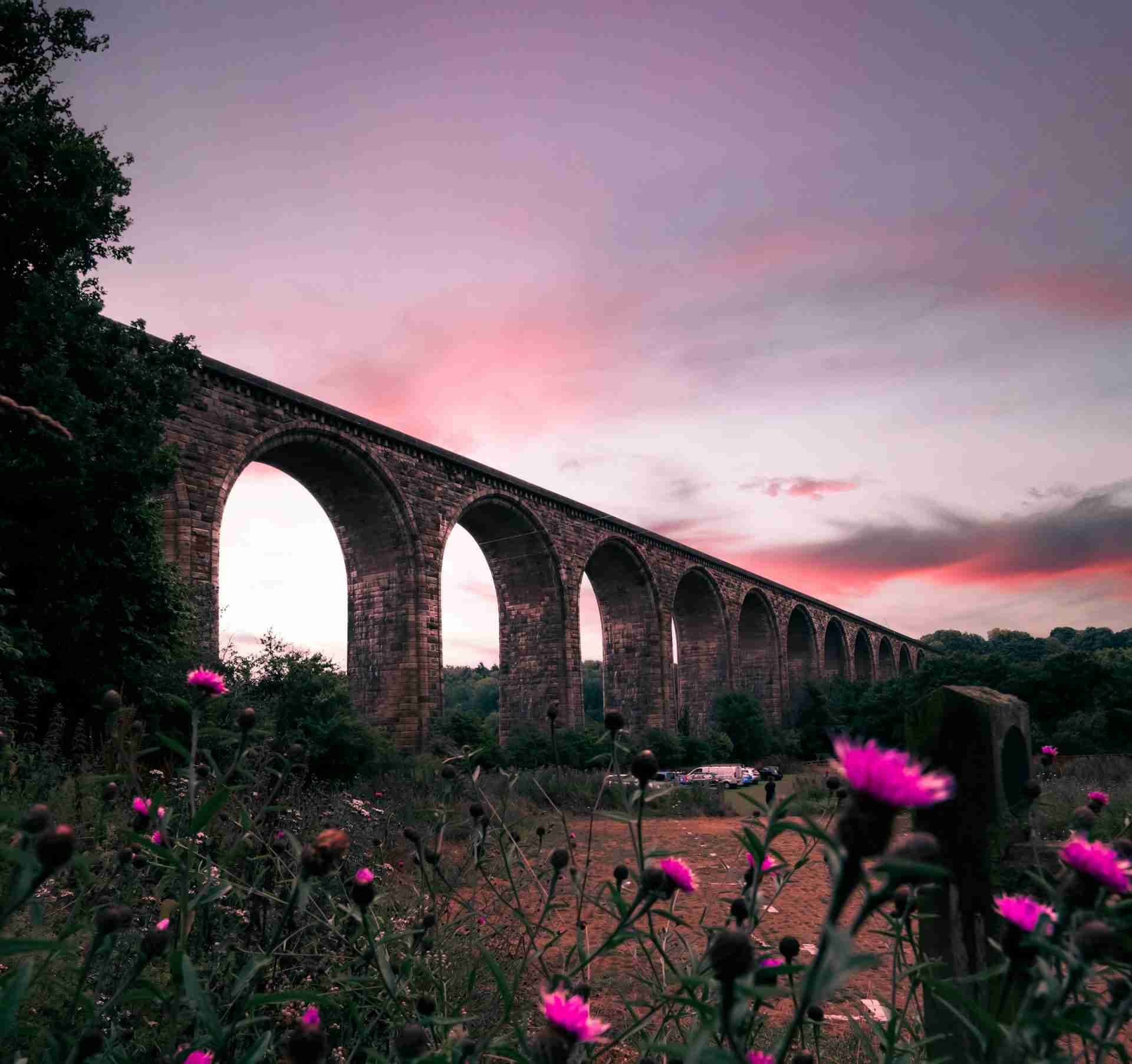
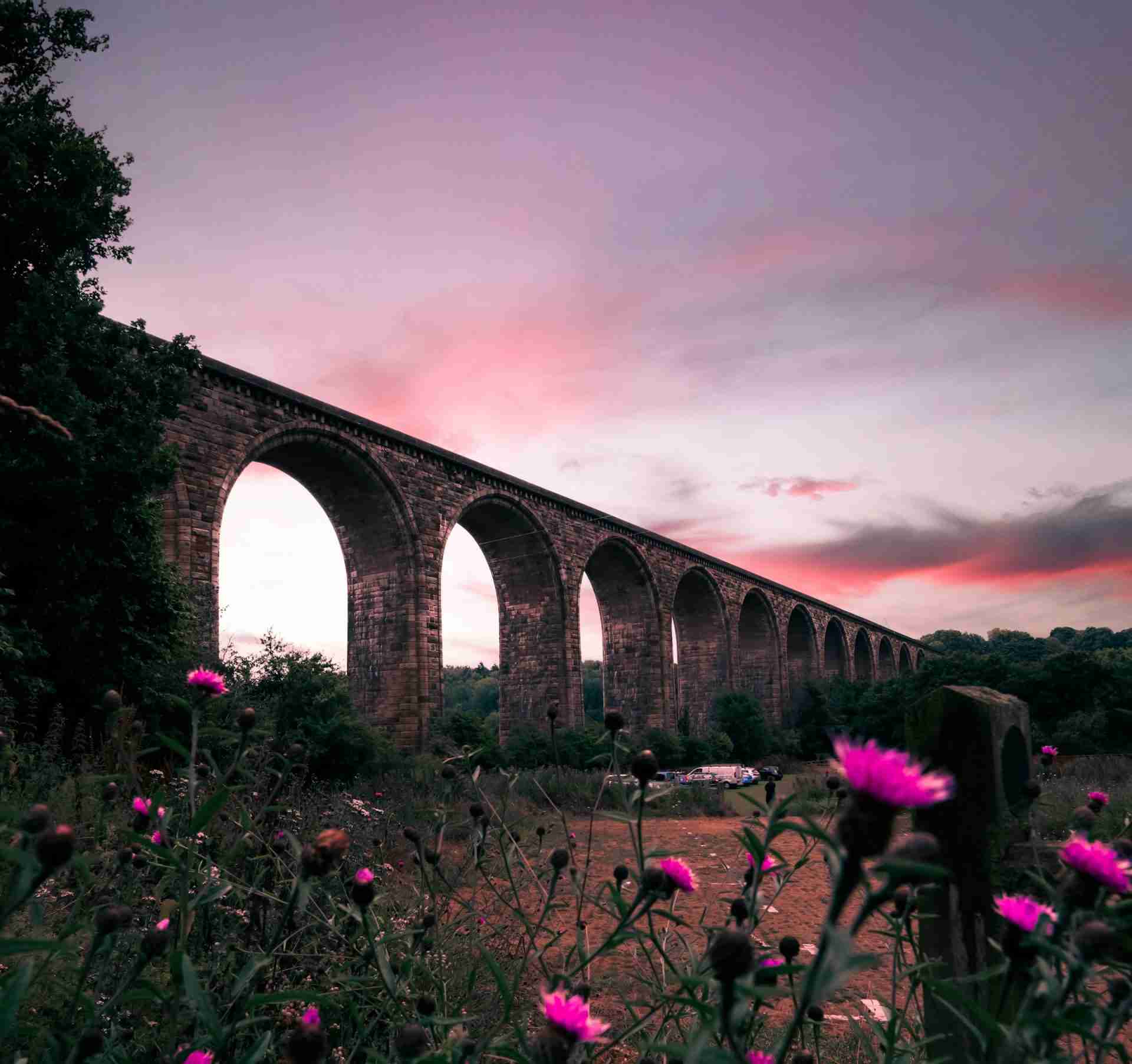
Cefn Viaduct spans the Ebbw Valley near Newbridge as a long, solid piece of stone railway engineering that feels deeply tied to the land it crosses. The viaduct is tall, heavy, and repetitive in a way that immediately suggests structure and rhythm, with a long run of arches carrying the line high above the river and valley floor. What makes it interesting to photograph is not just its size, but how clearly it changes character depending on where you stand. From some angles it dominates the scene, cutting across the valley with confidence, while from others it settles into the slopes and trees, becoming part of the wider landscape. This is a location that encourages walking, looking back, and reassessing compositions rather than settling on the first obvious viewpoint.
Best Photography Opportunities
• Hillside Views Showing the Full Span
The most rewarding views often come from the valley sides, where you can see a long section of the viaduct in a single frame. From these positions, the repeating arches create a steady visual rhythm that naturally carries the viewer's eye across the image. Small changes in elevation make a noticeable difference in how the arches stack and separate, so it pays to move slowly and check alignment often. Side light brings out texture in the stonework and gives each arch clearer definition. These views work best when you take time to explore multiple positions rather than committing to the first clear opening.
• Valley Floor Perspectives Beneath the Arches
Shooting from below emphasizes the height and weight of the viaduct. From the valley floor, the arches rise sharply above the river, paths, and trees, giving a strong sense of scale. Wider focal lengths work well here, but careful framing is important to keep distortion under control. Including a small amount of foreground, such as water, grass, or a path, helps anchor the image and avoid empty space. This angle is especially effective when light falls across the underside of the arches, creating contrast without heavy shadow.
• Diagonal Angles Along the Length of the Viaduct
Positioning yourself so the viaduct runs diagonally through the frame adds depth and movement to the composition. This approach shows how the structure travels across the valley rather than simply crossing it. It also allows you to control how much of the surrounding landscape is included, which helps balance the weight of the stonework. Longer focal lengths can simplify busy backgrounds and keep attention on the arches themselves. These views often benefit from overcast conditions, which reduce contrast and let form do the work.
• Details and Repetition in the Stonework
Beyond wide views, the viaduct offers plenty of opportunities for detail focused images. Individual arches, pier bases, and surface texture can all become subjects in their own right. These images work best when you isolate repeating shapes or patterns rather than trying to include too much context. Even light is ideal, as strong sun can flatten texture or create harsh shadow. Detail work adds variety to a shoot and works well when wider scenes feel visually busy.
• Seasonal Changes in the Valley
The surrounding valley plays a large role in how the viaduct photographs. In spring and summer, foliage softens the structure and adds depth through layered greens. In autumn, colour changes in trees introduce contrast and separation between arches and background. Winter strips the valley back, making the viaduct feel more exposed and graphic. Revisiting the same viewpoints across seasons can produce very different results without changing position.
Best Time to Visit
Spring through autumn offers the easiest access and the widest range of workable conditions, but each season changes how the viaduct sits in the landscape. Summer brings fuller foliage, which can help separate the stonework from the background, though it can also introduce visual clutter in some directions. Autumn is often the most flexible season, with softer light and changing tones in the valley that add depth without overwhelming the structure. Winter provides a more stripped back view, where arches and piers stand out clearly, but paths can be muddy and light is limited. Early morning and late afternoon are generally the best times to shoot, as lower sun angles reveal texture in the stone and create clearer separation between arches. Overcast days are also valuable here, as they reduce contrast and make it easier to work both wide views and details.
How to Get There
Cefn Viaduct is located near Newbridge in South Wales and can be reached by local roads with parking available in nearby residential areas and public car parks. Access to the valley floor and surrounding paths is generally on foot, using public footpaths that run beneath and alongside the viaduct. There is no fee to access the area, but conditions underfoot can change quickly after rain, so waterproof footwear is advisable. Some viewpoints require short walks on uneven ground, so carrying manageable gear makes moving around easier. Always be aware of train activity and avoid trespassing on railway property.
Recommended Photography Gear
A flexible lens range is useful at Cefn Viaduct, as compositions vary from wide landscape views to tight architectural details. A standard zoom works well for general exploration, while a longer focal length helps isolate arches and compress distance from hillside viewpoints. A tripod is useful for low light conditions, especially in winter or on overcast days when shutter speeds drop. Filters are not essential, but a polarizer can help manage glare on wet stone or foliage after rain. Weather protection for both camera and footwear is important, as the valley can remain damp even after dry spells. Bringing enough time matters just as much as gear here, since the best images often come from patient repositioning rather than technical complexity.
Nearby Photography Locations
• Ebbw River Paths
The river paths beneath the viaduct provide calmer scenes and useful foregrounds. They work well for adding context and scale to wider images.
• Sirhowy Valley Walks
Nearby walking routes offer elevated viewpoints and quieter sections of woodland. These areas are useful for exploring alternative angles away from obvious paths.
• Newbridge Town Centre
Industrial remnants and everyday town scenes provide contrast to the viaduct's scale. These locations can help build a more complete visual story of the area.
A short drive away, canal paths introduce still water and slower visual rhythm. They are useful for balance if you want to extend a shoot beyond the viaduct.
• Local Woodland Edges
The wooded slopes around the valley allow for framed views and partial reveals of the structure. These spots are good for more restrained compositions.
Comments
Loading comments…