
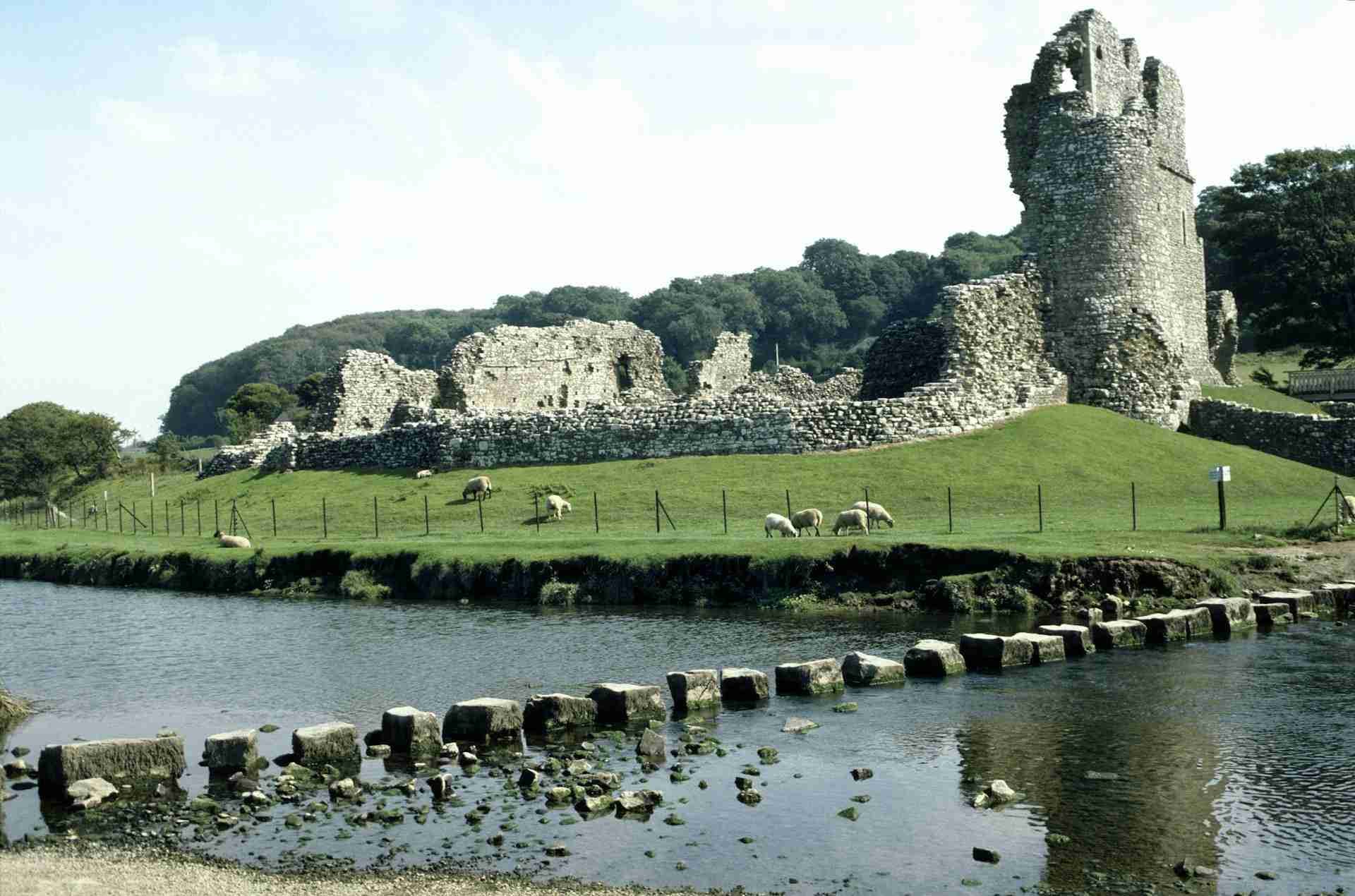
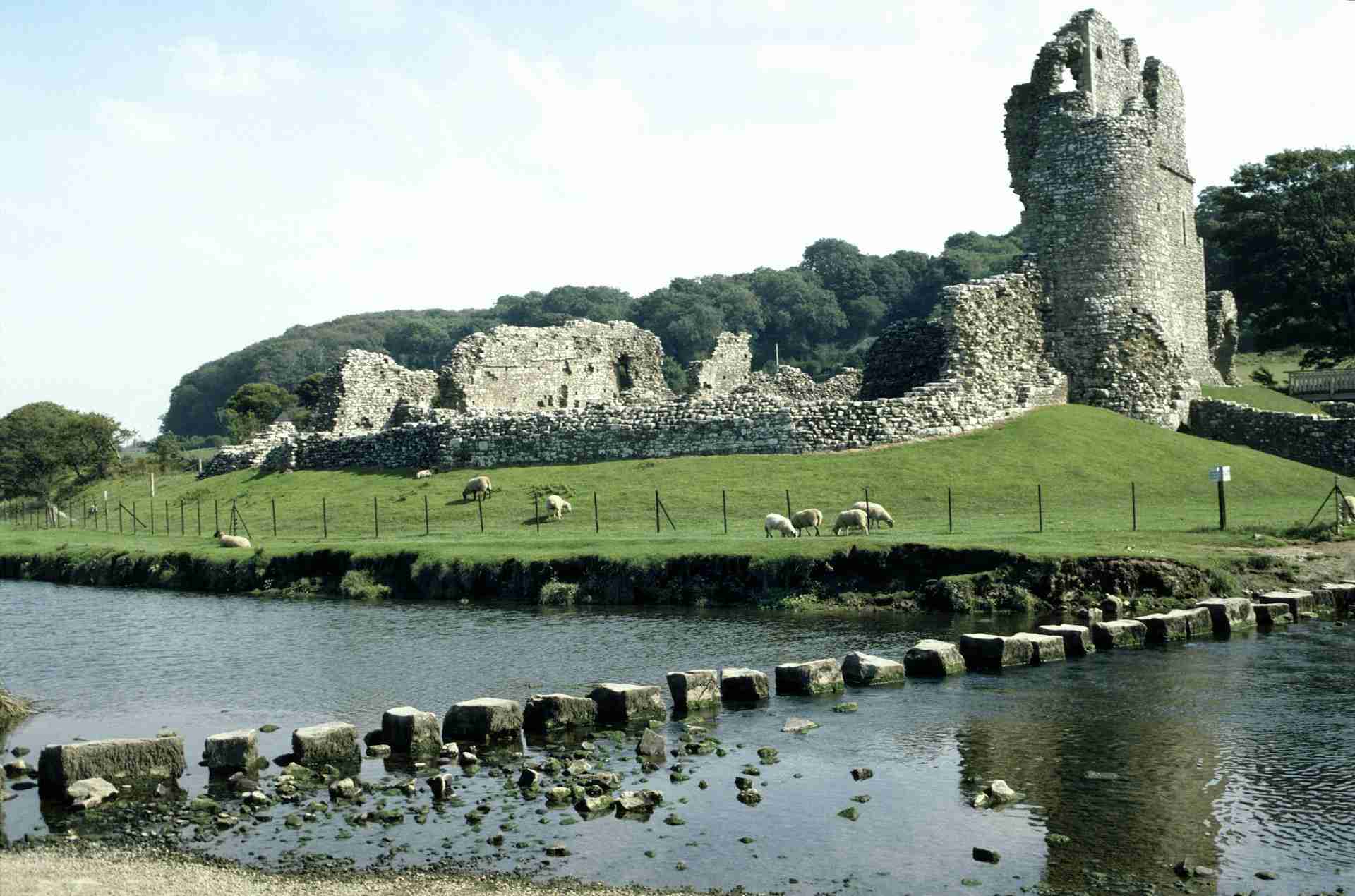
Set along the banks of the River Ewenny just before it widens toward the sea, Ogmore Castle stands in quiet ruin beneath the shifting skies of the South Wales coast. Its worn limestone walls and open-air chambers are all that remain of a Norman stronghold that once guarded the mouth of the Vale of Glamorgan. Today, the castle's skeletal remains offer clean lines, dramatic shadows, and the kind of timeless solitude that lends itself naturally to strong photographic work. Across the river, a row of flat stepping stones creates a visual anchor against the slow-moving water, while grassy banks and grazing sheep offer subtle narrative details to round out the scene. With easy access, broad sightlines, and constantly changing light, Ogmore Castle is a location that rewards patience, exploration, and thoughtful composition.
Best Photography Opportunities
• Stepping stones across the Ewenny River
provide a natural lead-in to the castle and one of the most popular compositions at the site. Shot from the east side of the riverbank, a wide-angle lens allows you to align the flat stones diagonally through the frame, guiding the viewer's eye toward the castle ruins. This perspective works best during calm conditions, when the water reflects both sky and structure. Long exposures taken in early morning or late evening add softness to the river and a painterly feel to the entire image. Include some of the grasses along the river's edge for natural texture and contrast.
• Castle interior and broken walls
offer opportunities for abstract or layered compositions using arches, crumbled staircases, and contrasting stone textures. Shooting from within the remains of the tower or between fragments of the curtain wall gives you a compressed sense of space and invites tighter framing. Late afternoon light spills through the openings and casts clean shadows, highlighting the texture in the masonry. Using a mid-range zoom lens helps balance perspective and detail, especially when isolating single windows or weathered corners. This area is particularly well suited to black-and-white treatments.
• Low sun over the surrounding pastureland
gives the entire landscape a golden hue that complements the pale stone of the castle. From the western hill, photographers can look east across the field toward the ruins, often with sheep grazing in the frame. The castle rises modestly above the bank, so including foreground grasses or fence posts adds depth. This light typically lasts only a short window in the evening, but the open skies of the region provide excellent conditions for silhouettes or rim-lit edges along the structure.
• Reflections after rain or in seasonal flooding
create striking opportunities around the lowland areas near the river. When water levels are higher, sections of the grassland become temporary pools that reflect the sky and stone. These conditions are common in winter and early spring, and they reward low-angle shooting with careful control over exposure and focus. A tripod helps manage slower shutter speeds in lower light, especially when attempting to isolate clean mirror images of the castle ruins.
• Drone compositions reveal the full layout
of the site, including the remaining moat, stone footprint of the castle, and the curved sweep of the river. Flying overhead shows the contrast between the sharp angles of the ruin and the rounded natural features of the surrounding terrain. Early morning flights are recommended for low wind and directional light that defines structure. From altitude, it is also possible to frame Ogmore Castle in relation to the sea to the south and the rising terrain of the Vale to the north. Always check airspace guidance, as this is a rural area but may still be subject to standard flight rules.
Best Time to Visit
Ogmore Castle can be photographed year-round, though each season brings its own strengths. Spring offers fresh grass growth, cool tones in the river, and a chance to photograph mist lifting from the surface in the early morning. The sky often holds strong definition during this season, with broken cloud cover that moves quickly and reflects well in water.
Summer provides long daylight hours and the highest sun angles, which illuminate the stone evenly but may flatten shadows during mid-day. Mornings and evenings remain best for color and texture. This season also brings more walkers and visitors to the area, so early arrival is recommended to avoid distractions in the frame.
Autumn is ideal for soft golden light across the fields and richer tones in the grasses and surrounding hills. It is also the best season for atmospheric light, especially in the final hour of the day. The river level may begin to rise in late autumn, introducing new opportunities for reflections and moody compositions.
Winter offers the fewest visitors and the clearest view of the castle's outline, as surrounding vegetation thins out. Shorter days require tight planning, but low sun angles and frost-covered ground can add texture and drama to wider compositions. Rain is common, so waterproof gear and protective covers for camera equipment are strongly advised.
How to Get There
Ogmore Castle is located near the village of Ogmore-by-Sea in the Vale of Glamorgan, South Wales. It sits beside the River Ewenny just upstream from where the river meets the sea. From Bridgend, it is a twenty-minute drive via the B4524, with clear signage pointing to the castle and nearby car park.
Parking is available in a small lot adjacent to the river. From there, it is a short walk across a grassy field to reach the stepping stones and castle site. There are no entrance fees to visit Ogmore Castle, and the grounds are open to the public at all times. The site is maintained by Cadw, the historic environment service of Wales, and visitors are free to explore the ruins at their own pace.
The area is flat and accessible, though riverbanks can be muddy or uneven after rainfall. Footpaths continue in both directions along the river and toward the coast, offering options for additional shooting locations or scouting for new angles. Public transport is limited, though buses from Bridgend serve Ogmore-by-Sea with stops nearby. Visiting by car provides the most flexibility for early or late shoots and transporting gear.
Recommended Photography Gear
A wide-angle lens is essential for framing the castle against the open sky and river. Focal lengths from 14 to 35 millimeters allow for strong leading lines from the stepping stones and help position the ruins within the surrounding landscape. A standard zoom, such as a 24 to 70 millimeter, is useful for more compressed frames or tighter studies of architectural detail inside the walls.
A tripod is recommended for long exposures and low-light conditions, especially in the early morning or during overcast winter afternoons. Neutral density filters help extend shutter speed over moving water, and a circular polarizer can reduce glare and increase sky definition when working in bright conditions. For foggy or misty mornings, lens wipes and weather protection are essential.
Drone users should bring a compact model with strong GPS and stability features, as wind can pick up quickly in open fields. Top-down shots reveal the layout of the moat and castle outline clearly, while oblique angles from low altitude allow you to frame the river, structure, and pasture in a single shot. Be cautious of wildlife and walkers when launching and landing, especially in narrow areas along the footpaths.
Footwear should be waterproof with good tread, especially after rain. The terrain is easy to walk but can become slippery near the river. Gloves and lens cloths are recommended in cooler months, and a backpack with weather-resistant storage compartments helps keep gear dry during sudden shifts in weather.
Nearby Photography Locations
lies just downstream from the castle and offers dramatic wave action, layered cliffs, and broad sand flats that change shape with the tide. Sunset works particularly well here, with the sky opening wide over the water and clean views to the horizon. The rock pools and low-tide textures add foreground interest for seascapes.
• Dunraven Bay and the Heritage Coast Path
are a short drive west along the coast and provide striking cliff formations and sea stacks. The layered geology of the cliffs catches warm light in the evening, while long exposures during high tide flatten the water against the rock faces for a minimal, graphic effect.
• Southerndown Fields and Hilltops
sit inland from the coast and give photographers high ground over the Bristol Channel. On clear days, you can shoot panoramic views that include the sea, rolling pasture, and distant castle sites. This area is especially good during golden hour, when directional light defines the undulating terrain.
form one of the largest dune systems in Europe and are located just across the river to the north. The dunes are accessible by foot and offer a dramatic contrast to the stone structures of Ogmore. Their scale and shape make them perfect for high-contrast black-and-white studies or minimalist compositions with clean lines and wide negative space.
• Bridgend Town Centre and River Walk
provides an urban counterpoint to the coastal and rural subjects nearby. The river, footbridges, and market buildings allow for environmental portraits or street photography if you want to build a broader visual story around the region. Early morning or overcast days work best to manage contrast and activity levels.
Ogmore Castle is the kind of location that invites slow photography. With each shift in light or weather, the same stone becomes something new. Whether you are walking the river's edge with a wide lens or composing long exposures from a tripod in the grass, the site offers a balance of history, texture, and openness that is rare and deeply rewarding.
Comments
Loading comments…