

Eilean Donan Castle is one of the most photographed castles in Scotland. That distinction might sound like a reason to skip it, but the opposite is true. The castle sits on a small tidal island surrounded by three lochs (Loch Duich, Loch Long, and Loch Alsh) and connected to the mainland by a stone arched bridge. The setting is so photogenic that five photographers can stand in five different positions around the same location and come home with five images that barely resemble each other. That is what makes Eilean Donan worth a dedicated session rather than a quick roadside stop on the way to Skye. The castle rewards photographers who explore it slowly and experiment with multiple compositions, not a single postcard angle to capture and leave. These five approaches will help you experiment with the castle to create a distinct collection of images.
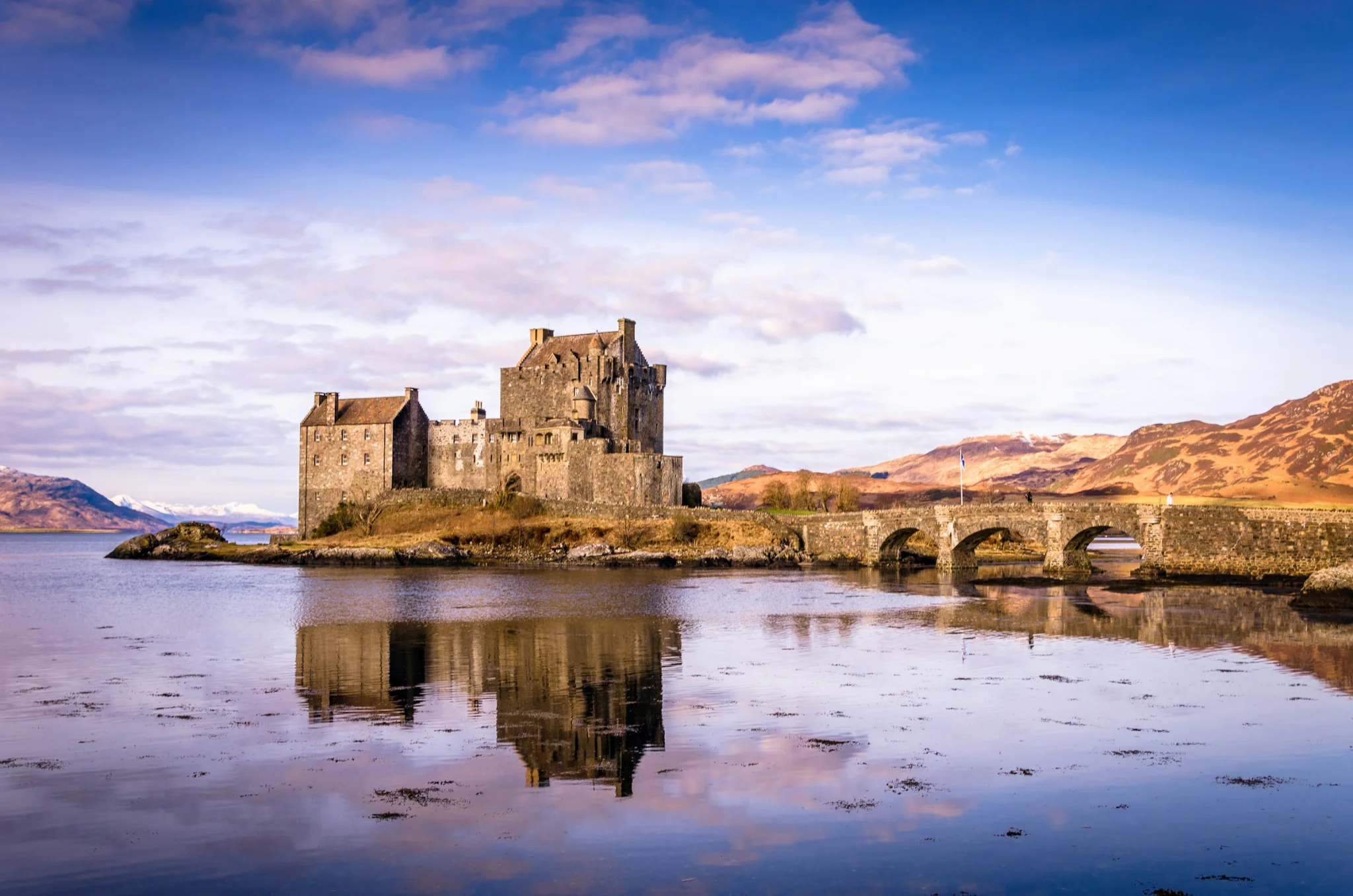
1. The Classic Reflection
The composition most people picture when they hear the name Eilean Donan is the full castle reflected in the still water of Loch Duich with the arched stone bridge extending to the right. This is the postcard shot, and it endures because the geometry is genuinely excellent. The key variables to capturing this image are the tide and the wind. A calm loch at mid-to-high tide produces the perfect mirror reflection. When the water drops at low tide, mudflats are exposed around the base of the island, breaking the reflection and muddying the foreground. Wind will fracture the mirror effect, so this is a shot that favours early mornings before the breeze picks up. Plus morning light from the east illuminates the front of the castle and
the bridge beautifully in spring and summer. In autumn and winter, the
lower sun angle produces warmer tones and longer shadows across the
stone. Overcast conditions are not a disadvantage here; the soft, even
light eliminates harsh shadows on the stonework and the grey sky can
produce a more saturated reflection.
The best vantage point for this composition is from the shoreline at the far end of the overflow car park, south of the visitor centre, where you can position yourself to include the full bridge span and the castle's southern facade. A focal length in the 24 to 50mm range works well here. A wider
lens risks including too much empty foreground, while anything longer
compresses the bridge and loses the sense of the castle sitting in open
water. A circular polarizer will help manage reflections on the loch
surface and deepen the sky, though you may want to back it off partially
to preserve some of the water reflection rather than cutting it
entirely.
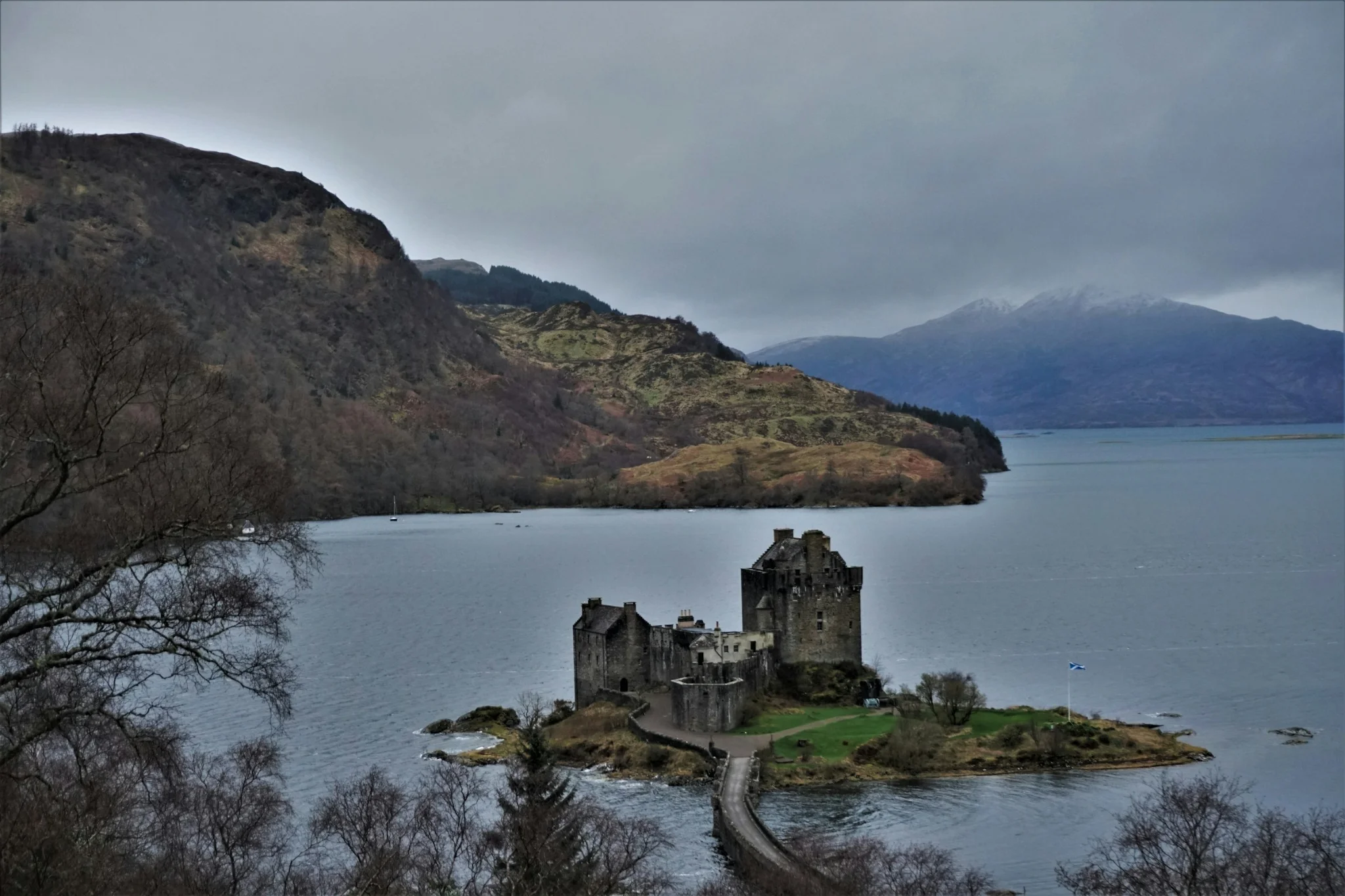
2. The Elevated Viewpoint
The elevated perspective from the hillside above the castle transforms the composition entirely. From above the loch, the castle becomes a small fortified island set within a vast Highland landscape rather than a single structure filling the frame. This is the view that shows off the castle's scale and surroundings. The convergence of the three lochs becomes visible. The village of Dornie appears across the water. The mountains of Kintail and, on clear days, the Cuillin ridge on Skye emerge in the distance. The castle itself becomes just one element in a much larger scene. Every other image of Eilean Donan makes the castle the dominant subject. From above, the landscape claims that role.
A telephoto lens in the 70 to 200mm range is useful for isolating the castle
within the broader scene, while a wider lens captures the full sweep of
the lochs and mountains. This vantage point works exceptionally well in grey, overcast conditions. Low cloud wrapping the peaks, mist sitting
on the water, and flat grey light give the image a moody feel that sunny conditions cannot create. Bare winter branches from the trees
along the hillside road can serve as natural framing elements in the
foreground if you position yourself carefully.
This viewpoint is easily accessible along the old single lane road that rises above the A87 from the village of Dornie, or from the Carr Brae viewpoint. It is a quick five minute drive from the main car park. The ground along the old road can be boggy, particularly after rain, so
waterproof boots are advisable. There is space to park along the side of the road, but the road is narrow so only a few cars can fit.
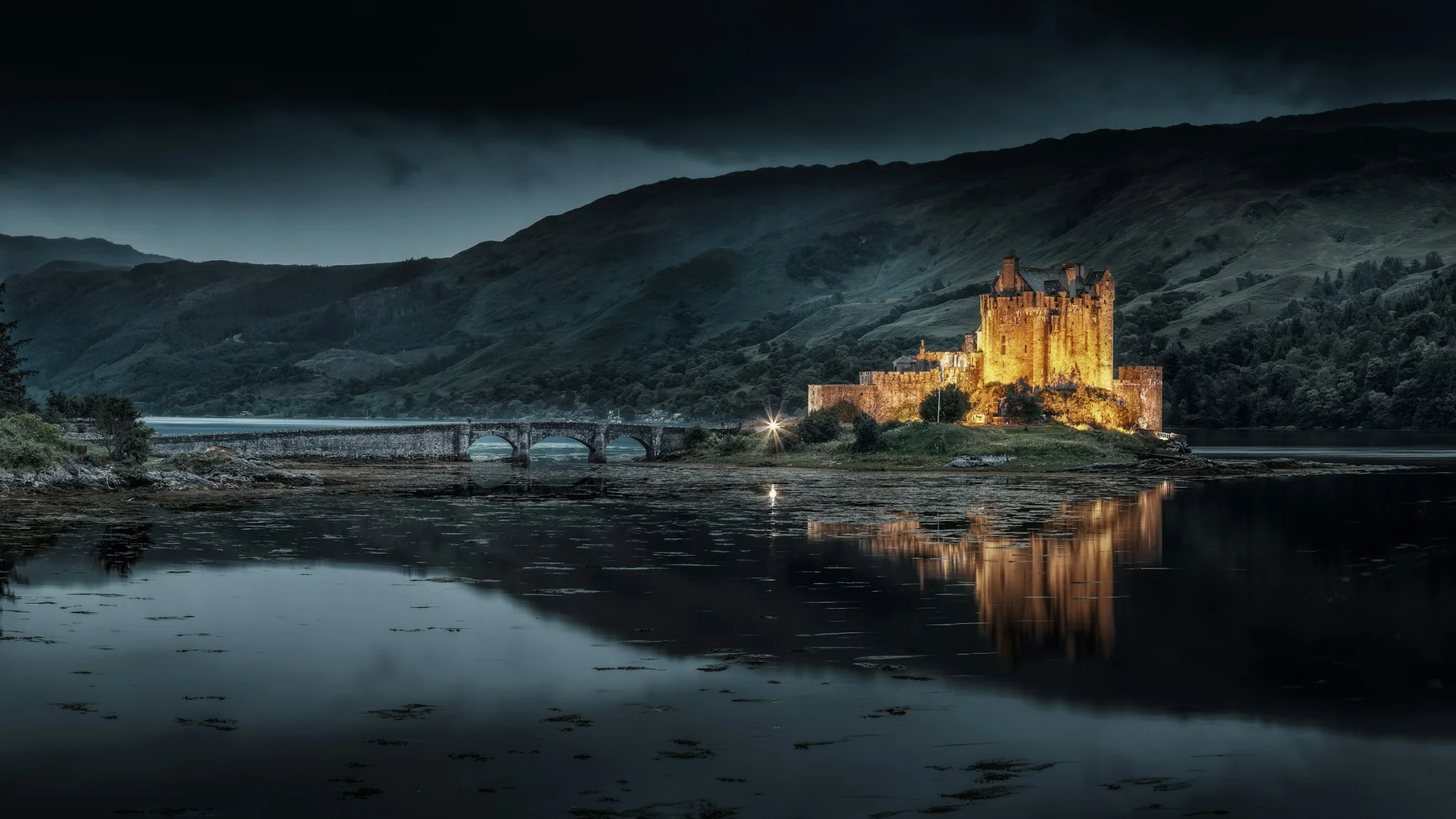
3. The Twilight Perspective
Eilean Donan is lit with floodlights after dark, creating a rare opportunity in landscape photography: a warm toned architectural subject set against a cool twilight sky, reflected in dark water, with silhouetted mountains forming the backdrop. The optimal window is the 20 to 40 minutes after sunset, during the tail end of blue hour, when there is still enough ambient light in the sky to retain colour and cloud detail but the artificial lighting on the castle has become the dominant light source. Arrive early enough to set up your composition and dial in your exposure before the light transitions. Once the sky goes fully dark, you lose the tonal contrast between the warm castle and the cool atmosphere, and the image flattens.
A sturdy tripod is a must for this shot. Exposures will range from two
to thirty seconds depending on the remaining ambient light, the
sensitivity you are comfortable shooting at, and whether you want the
water surface rendered as glass or with some texture. A lower ISO (100
to 400) combined with a longer exposure will produce cleaner files and
smoother water, which complements the stillness of the scene. A remote
shutter release or the camera's built-in timer helps to eliminate any vibration.
The same shoreline of the overflow car park vantage point that works for the daytime
reflection shot works here as well, with the advantage that at this hour
you will likely have the spot entirely to yourself. Tour buses arrive
between 11:00 and 2:00, and most visitors have left well before sunset.
The car park remains accessible after the castle closes, and the bridge
and grounds stay open. There are also viewpoints on the north side of the castle that will work at this time of day. You can shoot from the shoreline along the upper parking lots or even from across the loch behind the Dornie Community Hall.
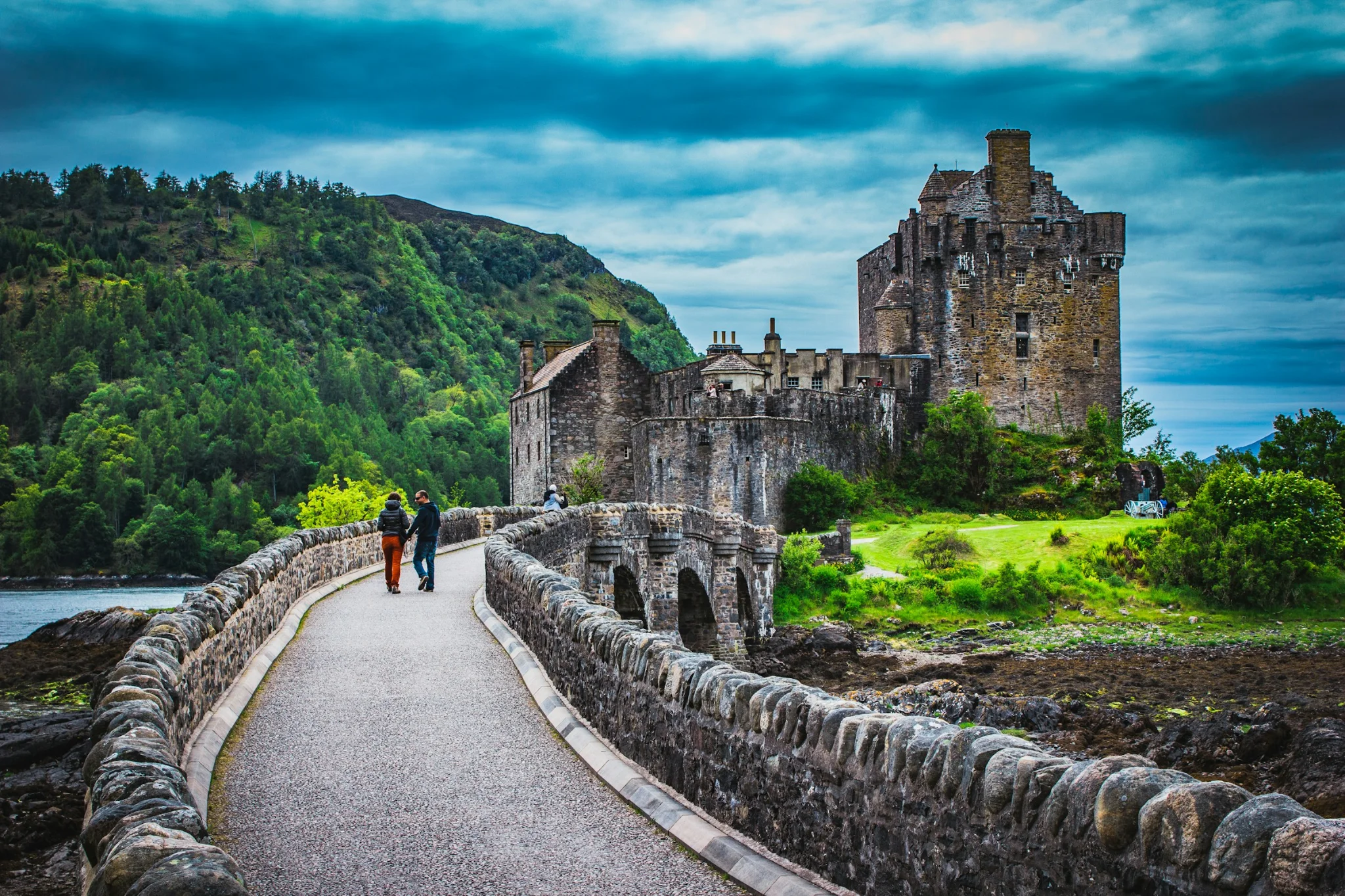
4. The Stone Bridge Leading Line
Walking across the bridge toward the castle entrance produces a perspective that no other vantage point can replicate. The stone walls curve gently toward the island, drawing the eye through the frame and right into the castle. The leading lines of the bridge walls, the texture of the stonework, and the increasing scale of the castle as it rises ahead all create a sense of depth that the more distant reflection shots lack. Plus this is a composition that benefits from the addition of people. Someone walking ahead of you on the bridge provides a sense of scale, and a focal point that anchors the leading line. Without a human element, the bridge can feel like an empty corridor stretching out. With one or two people placed in the mid-ground, the castle doesn't feel so far away.
The bridge is accessible whenever the grounds are open, but the best
light for this south facing composition comes in the afternoon when the
sun is behind or to the side of you. Morning light will backlight the
castle from this angle, which can work as a silhouette but loses the
stone texture that makes this shot compelling. Overcast or dramatic skies
are an asset in this composition because the castle's stone facade and
the bridge read as a continuous tonal range of grey and ochre, and a
textured sky adds visual weight to the upper third of the frame that a
blank blue sky does not.
Lens choice matters here. A moderate wide angle in the 24 to 35mm range
exaggerates the perspective of the converging bridge walls while keeping
the castle large enough in the frame to draw your eye. Wider
than 24mm risks distorting the stonework. A standard 50mm flattens the
leading line and reduces the sense of depth. At 24 to 35mm, the bridge feels like a path you could walk down, and the castle fills just enough of the frame to reward the journey.
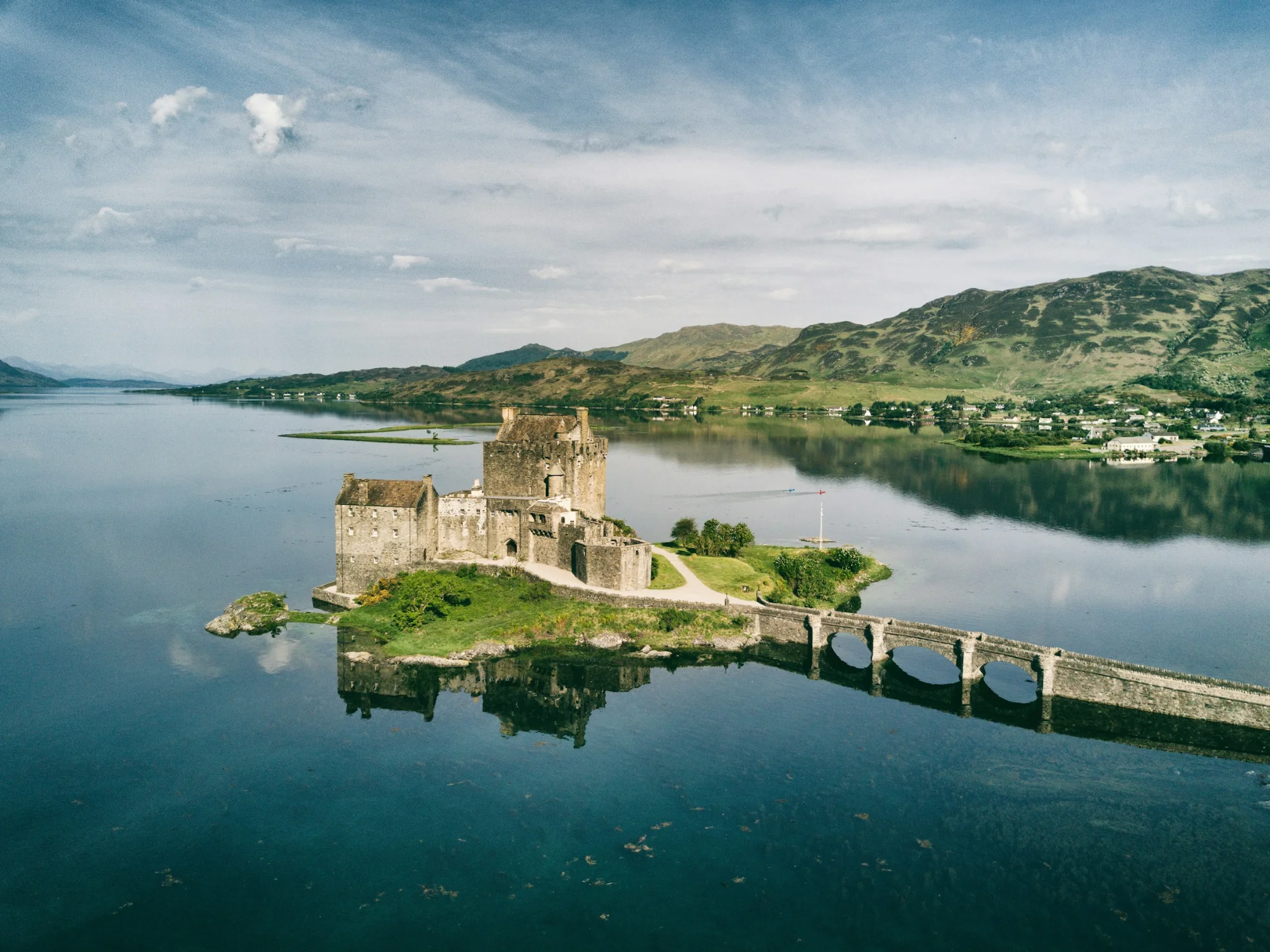
5. The Aerial PerspectiveA drone or elevated aerial vantage point reveals something no ground level composition can: the full layout of Eilean Donan's island, the bridge, and the surrounding trio of lochs in a single frame. From directly above or at a 45-degree angle, the castle's footprint on the island becomes visible and the relationship between the castle, the bridge, and the mainland reads as a single connected design rather than separate elements. This perspective emphasizes the castle's strategic position at the meeting of the lochs. The water surrounding it, the village of Dornie sitting across the loch, and the full span of the bridge are all visible. This is the view that fully explains why someone built a castle on this particular island.
If you are flying a drone, remember that Eilean Donan is a popular tourist site
and airspace regulations apply. Drone flying is prohibited over the area while the castle is open to visitors (between 09:00am and 6:00pm), so you will need to plan your drone photography outing for either sunrise or sunset, which is when the light is best anyway. You also cannot take off or land from the castle grounds without prior permission. Most drone pilots launch from the public foreshore or the community hall car park across the loch in Dornie. The best aerial compositions come from a
position to the southeast, which places the bridge diagonally across the
frame with the village and mountains in the background. Altitude in the range of
30 to 60m provides the most useful balance between context and
detail. For photographers without a drone, the Carr Brae Viewpoint is roughly a five minute drive south of the castle and provides a similar (though not identical) sense of
overhead perspective. It will not match the directly-above geometry of a
true aerial photography, but it highlights the same sense of scale.
Most photographers pass the Eilean Donan Castle once on the road to Skye and take the one shot everyone takes. The castle deserves more than that. Its position at the junction of three lochs, surrounded by mountains, connected by a photogenic bridge, and illuminated after dark means it offers so many distinct compositions before you even begin exploring weather variations and seasonal changes. Plan to spend a full photography session exploring everything the castle has to offer and you will come away with a set of images that shows one of Scotland's most familiar landmarks in ways most viewers have never seen it.
Comments
Loading comments…