
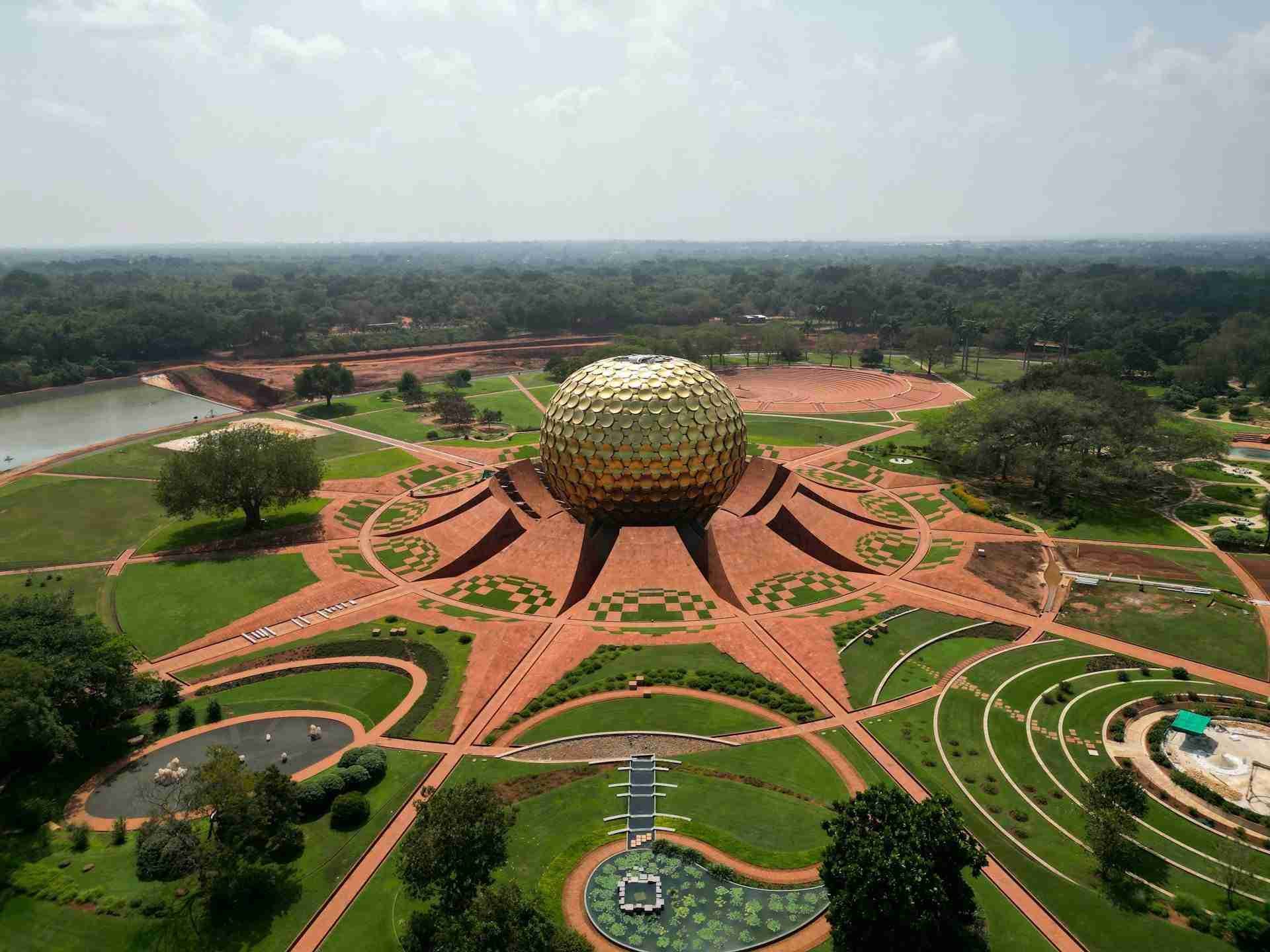
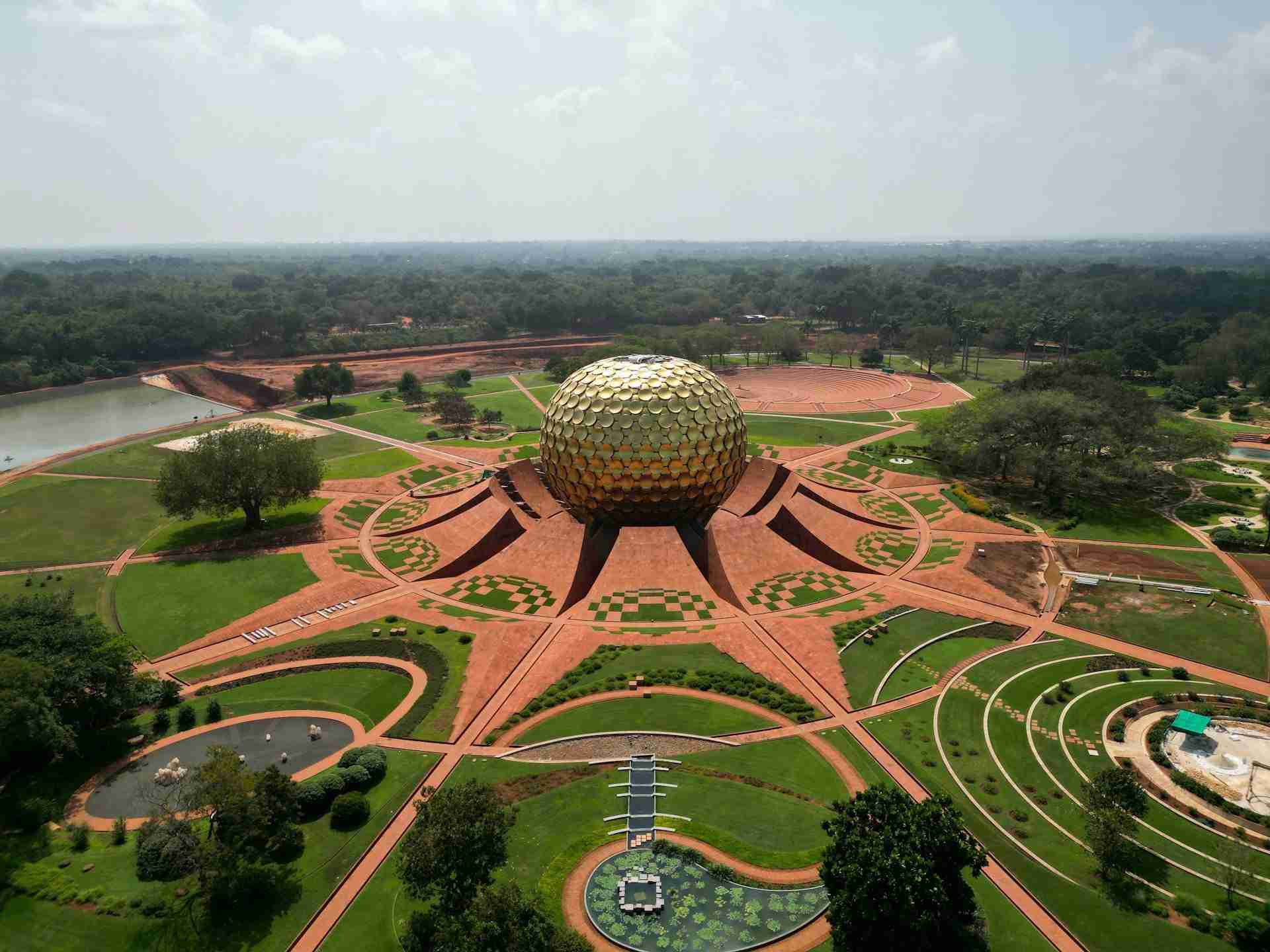
Set within the soul of Auroville's Peace area, the Matrimandir rises like a golden orb from a perfectly manicured landscape. Often referred to as the "soul of the city," this striking structure is not a temple in the traditional sense, but rather a spiritual space for quiet concentration and inner reflection. Surrounded by twelve petal-shaped gardens and radiating symmetry, the Matrimandir's design and presence make it one of the most unique and serene architectural subjects in India. For photographers, it offers a rare fusion of symbolism, geometry, and contemplative energy, especially when captured in the soft light that filters across the red laterite soil and gilded surface.
Best Photography Opportunities
• Main View from the Viewing Point
: The primary public perspective of the Matrimandir is from a designated viewing point, located across the expansive open lawn. From this slightly elevated vantage, you can frame the full golden sphere rising against a backdrop of sky and surrounding gardens. Use a medium focal length to flatten the space slightly and bring out the spherical symmetry. This angle works best in the early morning when the eastern light hits the golden discs, creating a soft shimmer and deepening the contrast against the rich red earth.
• Symmetry and Axis Shots
: The entire Peace area is built with radial symmetry in mind. Aligning your compositions with the cardinal axes or garden paths leading toward the Matrimandir can result in strong, centered images that highlight the architectural and spiritual alignment. Wide-angle lenses work well here to include foreground elements like stone pathways, sunken grass circles, or tree shadows that echo the form of the central dome.
• Golden Surface Details and Texture
: While access to the inner gardens and the Matrimandir itself is limited and tightly controlled, zoom lenses from the viewing point allow for compelling detail shots of the golden discs that cover the exterior. These petal-like panels reflect sunlight differently depending on the time of day, offering abstract compositions filled with tone and repetition. On overcast days, the gold softens to matte bronze, lending a completely different mood to your work.
• Twilight and Evening Light on the Sphere
: Although access is limited after dark, sunset offers a brief window where the Matrimandir glows warmly under ambient light, with the surrounding garden bathed in soft shadows. The contrast between the illuminated dome and darkening foliage makes for a compelling and meditative image. Use a longer focal length to compress background trees or clouds behind the sphere, and stabilize your camera for slower shutter speeds.
• Environmental Context and Garden Framing
: The Matrimandir is surrounded by twelve symbolic gardens, each with a distinct theme—Consciousness, Light, Bliss, and so on. From the outer paths, you can frame the dome through tree branches, over flowering bushes, or through the gate arches of the Peace area. These layers add narrative and natural contrast to the clean form of the sphere, especially when paired with seasonal blooms or soft early morning mist.
Best Time to Visit
Morning is unequivocally the best time to photograph the Matrimandir. The site opens early, and the warm light from the east strikes the golden discs at a shallow angle, creating dimensionality and glow without overpowering glare. Arriving just after opening allows for more time to explore angles with gentle light and fewer crowds around the gardens and visitor areas.
The winter months (November through February) offer the clearest skies, crisp light, and cooler temperatures—ideal for slow-paced, mindful photography. Summer light tends to be harsher and accompanied by increased humidity, though early morning still remains usable. Monsoon season can yield moody, cloud-drenched skies that pair surprisingly well with the golden dome and saturated garden greens.
Sunset views are more limited, as general public access is curtailed in the evening hours. However, the changing light just before closing can offer dramatic tones and silhouette potential if positioned properly at the viewing point.
How to Get There
The Matrimandir is located in the experimental township of Auroville, approximately 10 km north of Pondicherry in Tamil Nadu, India. Visitors must first register at the Auroville Visitor's Centre to receive a free pass for the designated Matrimandir Viewing Point. Same-day registration is often available, though advance booking is encouraged during peak season.
After registration, visitors can walk the shaded path or take a shuttle to the viewpoint. The walk is scenic and takes approximately 10–15 minutes through tree-lined trails and red laterite paths. Photography is allowed only from the designated public viewing areas—access to the inner gardens and the Matrimandir meditation chamber is strictly non-photographic and by prior appointment only.
Tripods and large professional gear are generally discouraged or restricted, so plan for handheld shooting and compact equipment. Always follow posted signs and the respectful, meditative tone of the space, as this is first and foremost a place of spiritual practice.
Recommended Gear and Shooting Tips
A mid-range zoom lens (24–70mm) is ideal for capturing the dome with flexibility, whether you're framing wide environmental shots or zooming in for detail across the golden surface. A telephoto lens (70–200mm) will allow you to compress space and bring out abstract repetitions in the paneling or isolate reflections of light on the sphere.
A polarizing filter can enhance sky contrast and reduce haze during midday visits, though it should be used cautiously to avoid uneven gradients. Bring a lens hood to control flare, especially during sunrise or sunset when you're shooting directly into or near the light source.
Due to the warm climate, lightweight gear and breathable clothing are essential. A microfiber cloth will be useful for cleaning lenses in humid or dusty conditions. Be prepared to move slowly and respectfully, as the quiet environment and spiritual significance of the site invite a deliberate pace—perfect for thoughtful composition.
Scout your location early, and allow time for light to evolve—shadows shift quickly around the spherical structure, and subtle changes can dramatically alter the mood and tone of your image.
Nearby Photography Locations
: Near the Matrimandir, this living root network creates a natural cathedral-like space of light, shadow, and texture—perfect for quiet compositions and abstract natural forms.
: Located a short drive away, this lush reserve features native plantings, butterfly gardens, and winding trails ideal for macro work and environmental nature photography.
• Pondicherry Promenade and French Quarter
: South of Auroville, Pondicherry offers colonial architecture, colorful street scenes, and seaside compositions—best captured in early morning or golden hour for directional light on pastel walls and stone pathways.
: A calm stretch of shoreline north of Pondicherry, this beach offers clean horizons, fishing boats, and soft light—ideal for sunrise or minimal long exposure water studies.
• Irumbai Shiva Temple
: A centuries-old temple tucked in the forest outside Auroville, it provides a compelling contrast to the modernist geometry of the Matrimandir with its sculpted stone, incense smoke, and layered shadows.
The Matrimandir is not just a subject of architectural interest—it's an experience of stillness, light, and inward gaze. For photographers drawn to quiet precision and symbolic form, it offers a rare chance to engage not just with a structure, but with a vision of consciousness made visible in gold, space, and silence.
Comments
Loading comments…