
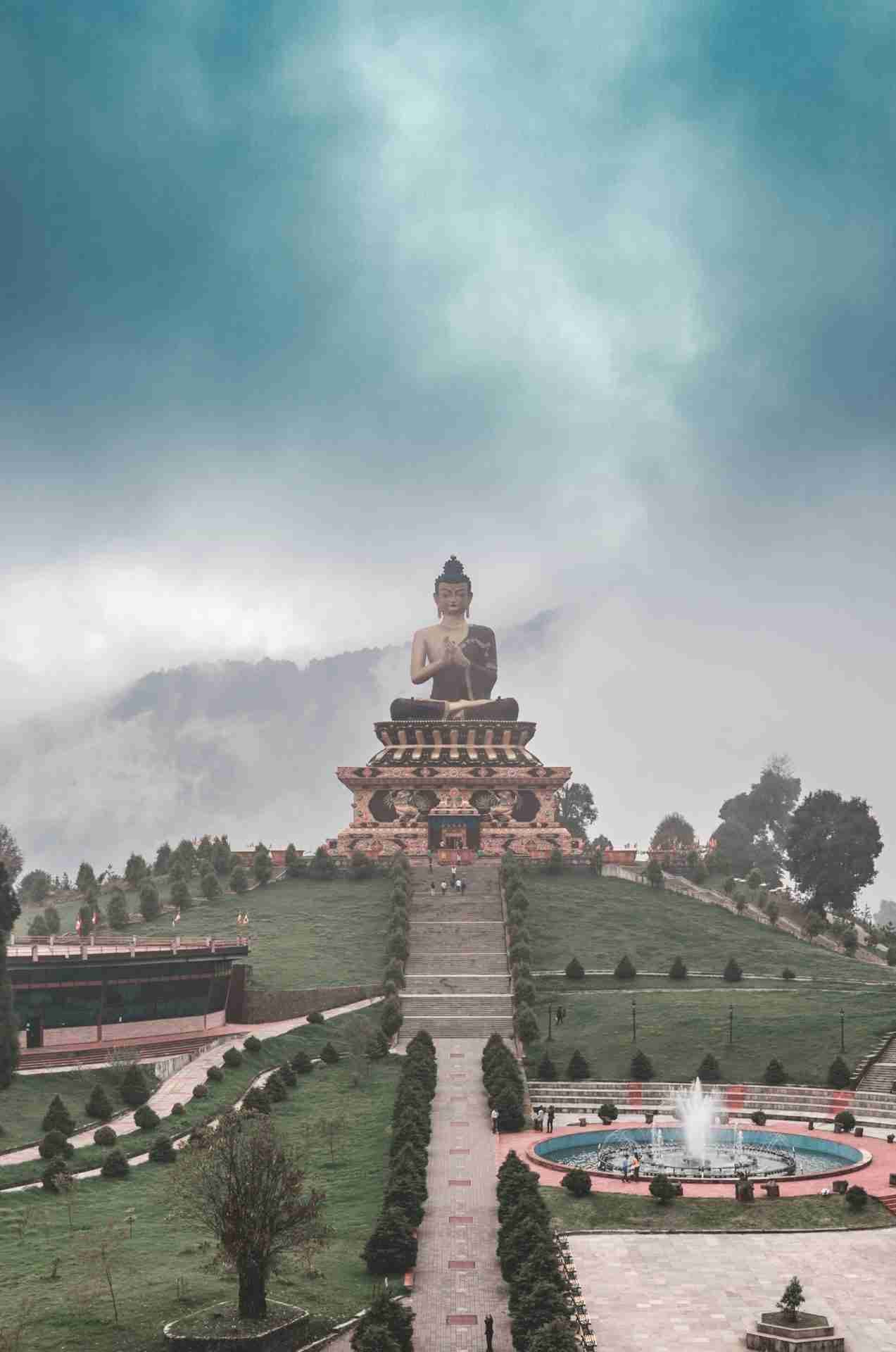
Buddha Park of Ravangla, also known as Tathagata Tsal, sits on a broad hilltop overlooking rolling terrain in southern Sikkim. The site is anchored by a massive seated Buddha statue, but the park itself is expansive, open, and carefully laid out, with wide walkways, landscaped gardens, and long sight lines in multiple directions. From a photography standpoint, this is a place defined by space and elevation. The statue is clearly the central subject, yet the surrounding hills, sky, and changing mountain weather play an equally important role in shaping images. Light moves quickly here, clouds build and break without much warning, and the scale of the setting encourages photographers to think about balance between subject and environment. This is not a location where you rush through viewpoints. It rewards time, patience, and repeated passes through the same areas as conditions shift.
Best Photography Opportunities
• Wide Approaches Facing the Buddha Statue
The main approach paths offer broad, open views where the statue dominates the frame while still leaving room for sky and distant hills. From these positions, photographers can control how much of the base, pedestal, and surrounding grounds are included. Small changes in distance and height significantly affect how imposing the statue feels. Early light tends to create softer transitions between the statue and the background, helping avoid harsh contrast. These views benefit from slow refinement, as alignment and spacing matter more than dramatic angles.
• Side Perspectives Showing Scale and Setting
Moving off center allows the statue to be placed against the surrounding landscape instead of directly facing the camera. From these angles, the hills behind the park help show the true scale of the statue without making it feel overwhelming. Side light adds definition to the statue's surface and brings out gentle texture in the folds and contours. Longer focal lengths can simplify the background and keep attention on the subject. These views are especially effective when clouds are layered rather than flat.
• Lower Angles Near the Base
Photographing from closer to the base emphasizes height and presence, especially when paired with a wide lens. From these positions, the statue rises strongly into the sky, creating clear vertical movement within the frame. Careful framing is needed to avoid distortion that pulls attention away from the subject. Including a small amount of foreground, such as steps or pathway edges, helps ground the image. This approach works well when the sky has texture and depth.
• Human Scale and Visitor Movement
The park regularly has visitors walking, resting, or moving along the paths, which creates opportunities to show scale. A single figure placed thoughtfully in the frame can give a sense of proportion without distracting from the statue. Slower shutter speeds can soften movement if the scene feels busy, while faster speeds keep figures sharp when timing is right. This technique adds context and helps convey how the space is used. It works best when foot traffic is steady but not crowded.
• Details and Secondary Elements
Beyond the main statue, the park includes smaller sculptural elements, railings, steps, and landscaped features that work well for detail focused images. These subjects allow photographers to slow down and look for quieter compositions after completing wider shots. Even light is ideal for this kind of work, as strong sun can flatten detail. Detail images help round out a set and provide visual breathing room. They are especially useful during midday when wide views can feel harsh.
Best Time to Visit
The most productive time to photograph Buddha Park is early morning, when light is softer and the surrounding hills often sit under layers of cloud. During these hours, contrast is lower and the statue separates cleanly from the sky without glare. As the day progresses, sunlight becomes stronger and more direct, which can make exposure more challenging, especially on bright surfaces. Late afternoon can be rewarding if cloud cover breaks unevenly, allowing patches of light to move across the landscape. Seasonal differences matter here. Spring and autumn generally offer clearer air and more comfortable temperatures, making longer shooting sessions easier. The monsoon season brings dramatic cloud formations and shifting light, but also limits visibility and access at times. Winter can produce crisp conditions and distant views, though mornings may be cold and fog can linger. Planning around weather forecasts and allowing flexibility within the day is key at this location.
How to Get There
Buddha Park is located near Ravangla in southern Sikkim and is accessible by road from nearby towns and regional hubs. The final approach involves mountain roads with elevation changes, so travel times can be longer than distances suggest. Parking is available near the park entrance, followed by walking along paved paths to reach different viewpoints. Entry to the park requires an admission fee. The grounds are well maintained, but the elevation and open exposure mean weather can shift quickly, so carrying layers is advisable. Arriving early helps avoid crowds and allows more freedom to work with tripods and slower setups.
Recommended Photography Gear
A flexible lens range is important at Buddha Park, as compositions vary from wide environmental views to tighter studies of form and detail. A standard zoom works well for most situations, while a longer focal length helps isolate the statue against distant hills or compress layers of landscape. A wide lens is useful for close work near the base, provided distortion is managed carefully. A tripod is recommended for early morning and cloudy conditions, especially when light levels are low. Filters are optional, but a polarizer can help manage glare and deepen sky tones when conditions allow. Weather protection for gear is important, particularly during periods of cloud and mist. Comfortable footwear and a manageable kit make it easier to move slowly through the park and revisit viewpoints as light changes.
Nearby Photography Locations
• Ravangla Town Viewpoints
Elevated spots around Ravangla offer broader views of the surrounding hills and valleys. These locations work well for landscape focused images that complement the park.
The outskirts of the sanctuary provide forested scenes and layered hills that contrast with the open space of Buddha Park. They are useful for quieter, more natural compositions.
This area introduces traditional architecture and community life, offering a different visual rhythm from the park's open layout. It works well for cultural context.
A short drive away, the tea garden provides structured rows and rolling terrain. It adds texture and pattern to a broader regional shoot.
• Mountain Road Overlooks
Along the approach roads, occasional pull offs reveal sweeping views of valleys and ridges. These spots are ideal for spontaneous shooting when light breaks unexpectedly.
Comments
Loading comments…