
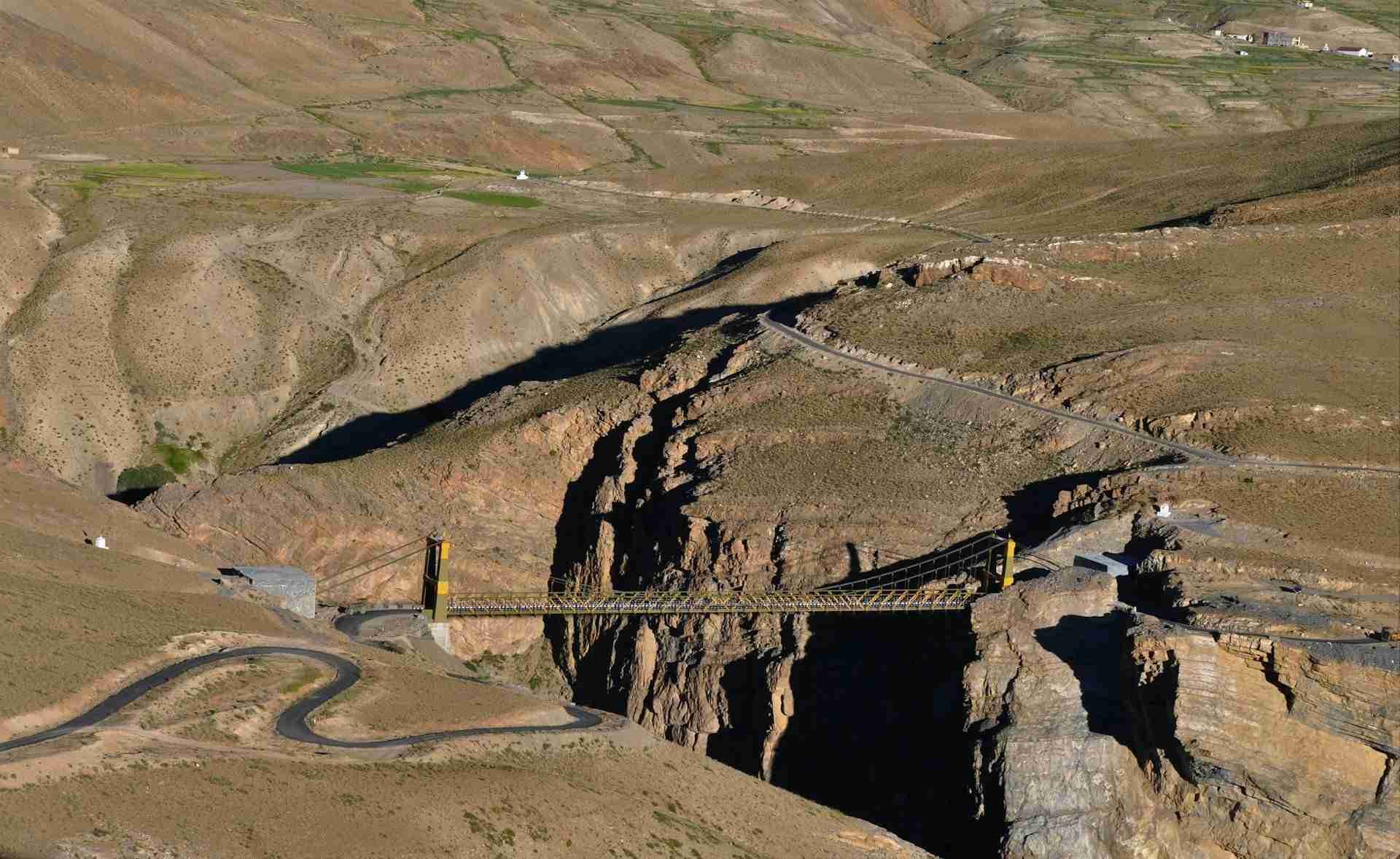
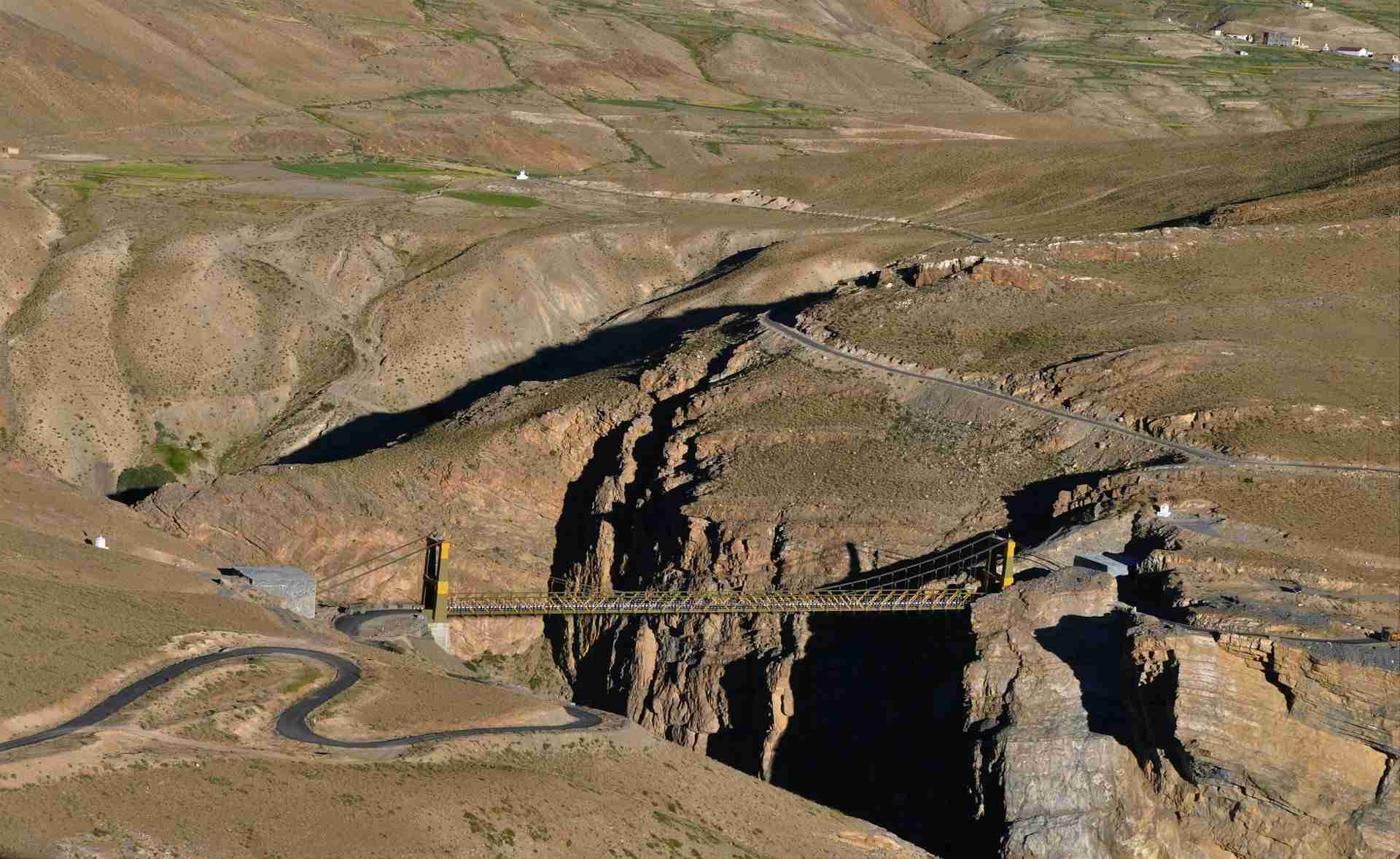
Spanning a dramatic gorge at an altitude of over 4,000 meters, Chicham Bridge in Himachal Pradesh's Spiti Valley is the highest suspension bridge in Asia—and one of the most photogenic pieces of infrastructure in India's remote mountain landscapes. Connecting the village of Chicham Khas with Kibber and other high-altitude settlements, the bridge arches over a 1000-foot-deep canyon carved by centuries of glacial and river erosion. For landscape photographers, this steel suspension bridge offers a rare opportunity to frame engineered precision against the untamed grandeur of the Himalayas.
Best Photography Opportunities
• Wide-Angle Views with the Gorge Below
– From the roadside approaches, you can shoot wide to include the bridge's full span as it stretches between cliffs. Shooting from a slightly elevated angle reveals the deep chasm below and the sheer drop, adding dramatic scale to the composition. Early morning or late afternoon light brings out the rugged textures of the rock walls and adds contrast to the steel structure.
• Drone or Elevated Perspective (Where Permitted)
– If drone use is allowed, aerial shots looking straight down reveal the narrow bridge suspended above a dramatic void. From above, the bridge becomes a thin thread connecting massive geological forms, and the turquoise river below—when visible—adds color and scale. Always check with local authorities and respect regional drone restrictions.
• Framing with Foreground Elements
– Use prayer flags, roadside cairns, or travelers as foreground elements to frame the bridge from a distance. These touches not only add scale but also bring a cultural or human aspect into a predominantly natural setting.
• Long Lens Compression from the Road to Kibber
– From the winding road heading toward Kibber village, you can compress the bridge into the vast surrounding cliffs using a telephoto lens. This technique emphasizes how small human structures appear within the vast Himalayan landscape.
• Twilight or Blue Hour Minimalism
– As the sun dips and the shadows stretch across the valley, the bridge becomes a sleek silhouette against the cooling hues of the stone and sky. Blue hour shots with trailing vehicle lights can create long-exposure compositions that blend the man-made and the ethereal.
Best Time to Visit
The best time to photograph Chicham Bridge is between May and October, when Spiti Valley is accessible and snow has cleared from the high passes. During these months, skies are typically clear, and light is crisp—ideal for high-contrast, high-detail photography.
Mornings offer the clearest conditions and best directional light for capturing the depth of the gorge and the length of the bridge. Sunset can produce pastel hues across the sky and rock face, but access and wind conditions should be considered.
Monsoon clouds (in July and August) can add drama, though sudden weather shifts may obscure views. Autumn (late September to October) brings dry air and sharp light, with the possibility of early snow dusting the surrounding peaks—ideal for high-altitude contrast.
How to Get There
Chicham Bridge is located in Spiti Valley, Himachal Pradesh, roughly 20 kilometers from Kaza. From Kaza, head north toward Kibber and follow the road that leads through Hikkim and Langza or take the more direct route via Key Monastery. The bridge lies just before the village of Chicham Khas and connects it to Kibber.
The route is fully motorable and scenic, but narrow mountain roads demand cautious driving. Small parking areas are available on both sides of the bridge. No permits or fees are required to access or photograph the bridge, though it's advisable to visit during daylight for safety.
Altitude is significant here—over 4,000 meters—so acclimatization is crucial. Take precautions to avoid altitude sickness, and carry water, layers, and protection for both intense sun and sudden cold.
Exploring Chicham Bridge and the Surrounding Area
Beyond the bridge itself, the surrounding terrain offers vast photographic interest. The barren, high-altitude desert of Spiti provides sharp contrasts between rock, sky, and occasional vegetation. Yaks and goats often graze near the edge of the cliffs, adding life to wide shots.
Trails along the gorge's edge offer different vantages, with stone ledges and prayer flag clusters that frame the bridge creatively. The silence of the valley, broken only by wind and distant bells, adds to the meditative pace ideal for slow, intentional photography.
The nearby village of Chicham, with its tightly clustered whitewashed homes, provides additional subjects—especially at golden hour when the sun lights the settlement and shadows stretch across the plateau.
Nearby Photography Locations
– Just a few kilometers from the bridge, Kibber is one of the highest inhabited villages in the world. Its stone houses, agricultural terraces, and proximity to the Kanamo Peak trailhead offer incredible foregrounds and high-altitude culture photography.
– The largest and most iconic monastery in Spiti, Key clings to a mountainside above the valley. Sunrise and sunset shots from the road below offer classic compositions of this fortress-like gompa bathed in soft light.
• Hikkim
– Famous for housing the world's highest post office, Hikkim is a fantastic destination for storytelling photography, with weathered structures, locals on foot or horseback, and open skies framing village life.
– High above the valley floor, this peaceful village is dominated by a massive seated Buddha statue facing the mountains. The dramatic backdrop and fossil-rich hills offer wide landscape potential and environmental portraits.
– To the southwest, Pin Valley's greener terrain and flowing river contrast with Spiti's starkness. It's a rewarding detour for more varied tones, textures, and natural scenes with changing vegetation and wildlife.
Chicham Bridge is more than just a marvel of engineering—it's a thread that links isolated villages and symbolizes resilience in one of the harshest landscapes on earth. For photographers, it delivers drama, geometry, and unmatched scale—inviting a deep exploration of light, silence, and human presence at the roof of the world.
Comments
Loading comments…