

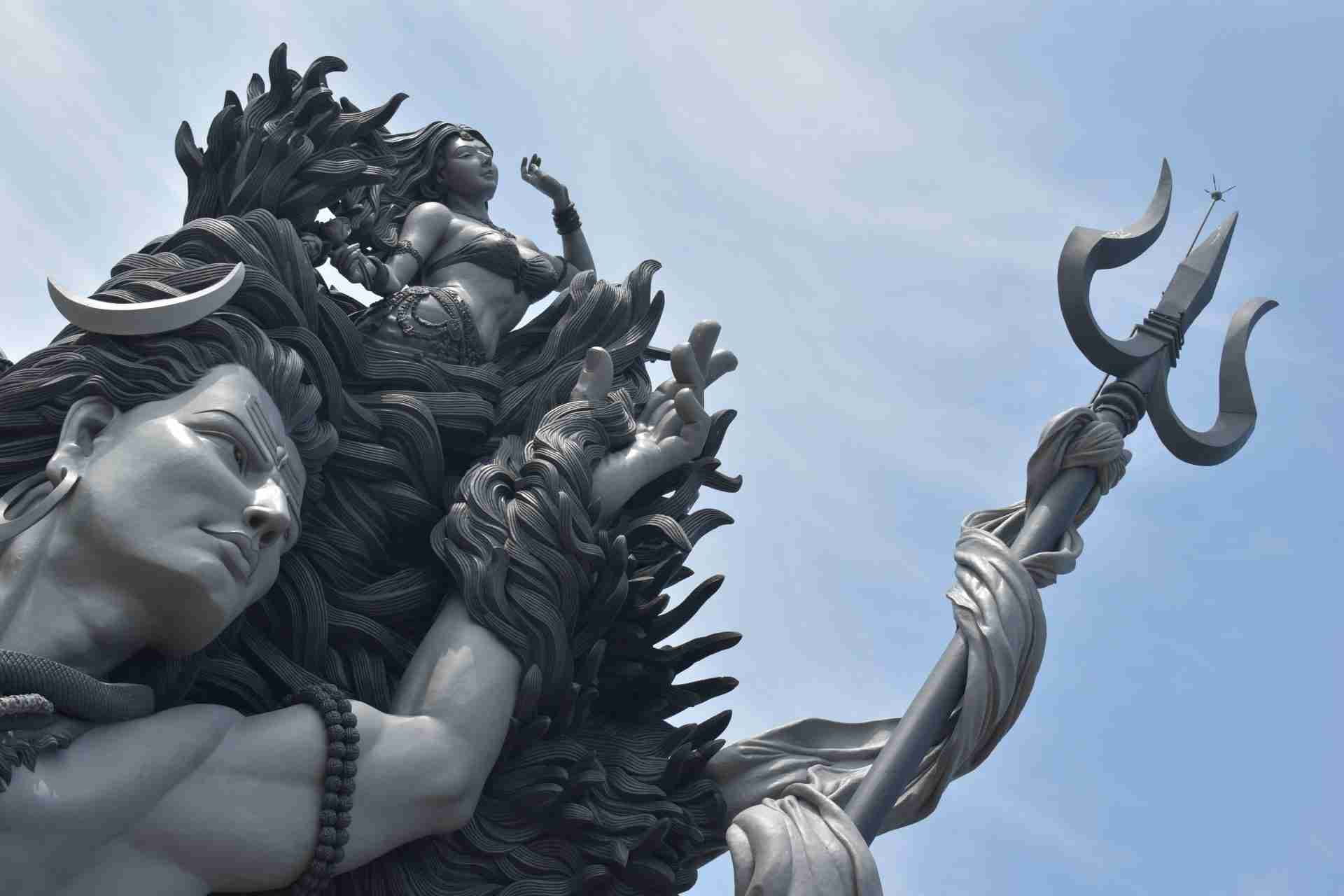
The Gangadhareswara Statue rises above the Arabian Sea at the Aazhimala Siva Temple in Kazhivoor, Kerala. This towering sculpture of Lord Shiva sits on a stone base overlooking the coastline, with the ocean stretching across the horizon behind it. The statue depicts Shiva holding a trident with flowing hair and symbolic elements drawn from Hindu mythology, creating a dramatic and visually powerful subject for photography. The open stone plaza surrounding the sculpture provides space to move around and frame different angles, while the sea and sky form a simple natural backdrop. With its scale, detail, and coastal setting, the statue offers photographers opportunities to capture both monumental sculpture and sweeping seaside views.
Best Photography Opportunities
• Full Statue from the Plaza – The most direct composition comes from the stone plaza in front of the statue where photographers can capture the entire sculpture rising above its base. From this angle the trident, flowing hair, and seated pose of Shiva become clearly visible against the sky. Stepping farther back across the tiled courtyard allows the statue to dominate the frame while still including the surrounding temple area. The open plaza provides flexibility to experiment with different angles and distances. Lower shooting positions can emphasize the height of the sculpture and make it appear even more imposing against the horizon.
• Shiva with an Arabian Sea Bckdrop – One of the defining visual features of the Gangadhareswara statue is its location beside the sea. Photographers can position themselves so the statue is framed against the open water, which creates a clean and uncluttered background. This composition highlights the silhouette of the sculpture while connecting the monument with the coastal environment. On clear days the horizon line becomes a strong compositional element behind the statue. When waves and clouds are visible across the sea, they add subtle movement and atmosphere to the image.
• Detail Photography of the Sculpture – The statue contains many sculptural details that reward closer observation. Elements such as the trident, serpent ornaments, hair, and facial expression provide opportunities for tighter compositions. Photographers can move around the base to isolate these details against the sky or sea. Using a moderate zoom lens allows these elements to fill the frame while softening the background. These detail shots help capture the craftsmanship and symbolism built into the sculpture.
• Use People to Show the Scale – Visitors walking around the plaza naturally provide a sense of scale for the monument. Including people in the frame helps communicate the immense size of the statue and adds life to the scene. Photographers can capture candid moments as visitors approach the sculpture or stand beneath it for photographs. These interactions often create more dynamic images than photographing the statue alone. The large open courtyard allows enough distance to capture both the sculpture and the people within the same composition.
• Sunset Lighting – The coastal setting makes the area particularly appealing during the late afternoon and sunset hours. As the sun lowers toward the horizon, warm light spreads across the plaza and highlights the contours of the statue. The sky often develops soft color above the sea, creating an appealing backdrop behind the sculpture. Photographers can position the statue slightly off center to allow the sky and ocean to fill the remaining frame. These lighting conditions often produce the most dramatic photographs of the site.
Best Time to Visit
Late afternoon and sunset are usually the most rewarding times to photograph the Gangadhareswara Statue. The sun lowers toward the Arabian Sea and casts warm light across the temple plaza and sculpture. These conditions often produce soft shadows and gentle color in the sky behind the statue.
Morning visits can also work well for photographers who prefer quieter conditions before the temple becomes busier with visitors. Clear weather allows wide views across the sea, while cloudy skies can add mood and contrast to the background. Kerala's monsoon season may bring dramatic clouds and rough seas, which can add energy to coastal photographs, though conditions may change quickly during these months.
How to Get There
The Gangadhareswara Statue is located at Aazhimala Siva Temple near Kazhivoor in the state of Kerala, India. Visitors traveling from Thiruvananthapuram can reach the temple by car in roughly thirty minutes depending on traffic. The route follows coastal roads that pass through several fishing villages and small towns. Parking is available near the temple complex, after which visitors can walk into the courtyard where the statue stands.
Entry to the temple grounds is generally free, though visitors should respect local customs and temple guidelines while exploring the area. Because the statue sits within a religious site, photographers should remain mindful of worshippers and ongoing temple activities.
Recommended Photography Gear
A wide lens is particularly useful for capturing the full statue along with the surrounding plaza and ocean background. This type of lens allows photographers to include the entire monument while emphasizing its scale within the environment. A moderate zoom lens can also be helpful for isolating sculptural details such as the trident or facial features.
A tripod may be useful for sunset photography when light levels drop and longer exposures become necessary. A circular polarizing filter can reduce glare from the sea and deepen the color of the sky during daylight. Because the location sits directly beside the ocean, bringing a lens cloth to remove sea spray or humidity from equipment can also be helpful.
Nearby Photography Locations
is a busy fishing port where colorful boats return from the Arabian Sea with their daily catch. Photographers can capture scenes of fishermen unloading nets, boats lining the harbor, and coastal activity along the docks. Early morning often provides the most authentic and lively moments as the harbor comes to life.
• Vizhinjam Rock Cut Cave Temple
carved into rock dates back more than a thousand years and offers a very different photographic subject from the coastal statue. The stone carvings and temple structure provide opportunities for architectural and cultural photography. The surrounding area also includes views toward the nearby coastline.
is one of the most famous coastal destinations in Kerala, known for its curved shoreline and lighthouse overlooking the sea. Photographers can capture wide beach scenes, fishing boats, and dramatic sunsets across the Arabian Sea. The lighthouse also provides elevated viewpoints across the coastline.
offers calm freshwater landscapes surrounded by greenery and farmland. The still surface of the lake often produces reflections of the sky and nearby trees. Sunrise can be especially rewarding when mist forms above the water.
• Poovar Island
lies where Kerala's backwaters meet the Arabian Sea. The area contains winding waterways, coconut trees, and quiet lagoons that provide a peaceful contrast to the coastal temple scene. Boat trips through the backwaters allow photographers to capture traditional landscapes unique to southern Kerala.
Comments
Loading comments…