

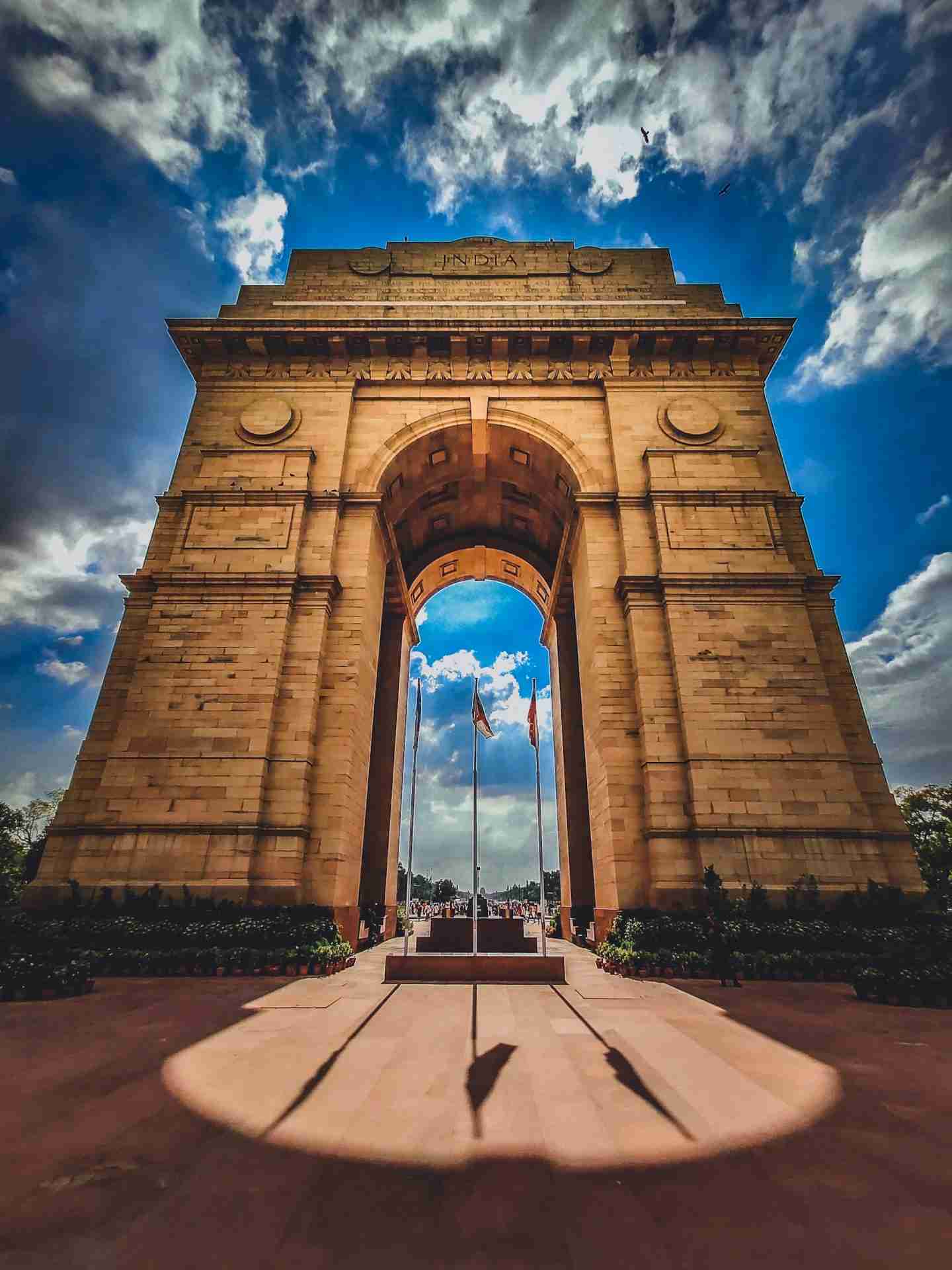
India Gate stands at the centre of New Delhi as a large sandstone war memorial set along a wide ceremonial boulevard. Built in the early 20th century, it honours Indian soldiers who lost their lives in the First World War, and its scale reflects that significance. The structure rises from an open landscape of lawns, pathways, and long straight roads that stretch out in multiple directions. Unlike more enclosed historic sites, this area feels expansive, with clear sight lines and plenty of room to move around. The arch itself remains the focal point from almost any angle, but the surrounding space plays an important role in how you frame it. It is an easy location to approach, whether you are planning a focused shoot or simply passing through as part of a wider walk in central Delhi.
Best Photography Opportunities
• Symmetrical Framing
India Gate naturally lends itself to strong, centred compositions thanks to its clean shape and the long, straight approach leading toward it. By aligning yourself along the central axis, you can create balanced images that emphasize symmetry and structure. Positioning the arch directly in the middle of your frame keeps the composition simple and clear. Including the pathway or road in the foreground helps guide the viewer's eye toward the monument. Small adjustments in position can refine alignment and improve balance. This is one of the most reliable and visually consistent ways to photograph the site.
• Leading Lines
The surrounding boulevard creates strong leading lines that pull attention toward the arch. Shooting from further back allows you to include more of this approach, adding depth and scale to your image. The open space makes it easy to experiment with different distances and focal lengths. Lower angles can emphasize the foreground lines, making them more prominent within the frame. This approach works particularly well when the area is less crowded, allowing the lines to remain clean. It is a simple but effective way to build depth into your compositions.
• Human Scale And Everyday Activity
Because India Gate is a popular gathering place, it offers plenty of opportunities to include people in your images. Individuals or small groups can help show the scale of the monument and make the scene feel more grounded. Positioning people carefully within the frame helps maintain balance without creating clutter. Candid moments, such as people walking or interacting, can add life to your images. Timing becomes important, as the area can get busy quickly. This approach works well if you want to combine architectural and street photography.
• Detail Shots of Architectural Features
Moving closer to the structure allows you to focus on smaller details, such as the stonework, inscriptions, and edges of the arch. These elements provide texture and variation compared to wider compositions. Light direction plays a key role here, as it can bring out subtle depth in the surface. Isolating sections of the structure can help create more focused images. This is a useful approach when the wider scene feels too busy. It adds variety to your overall set of images from the location.
• Evening Light And Night Photography
As the sun sets, the area around India Gate becomes more active, and the monument itself is illuminated. This creates a different atmosphere compared to daytime, with warmer tones and stronger contrast. The lighting highlights the structure while the surrounding area becomes darker, helping the arch stand out. Longer exposures can be used to smooth movement or capture light trails from passing vehicles. Positioning yourself to include both the lit structure and surrounding activity can create more dynamic images. This is a strong option if you want a different look from the same location.
Best Time to Visit
Early morning is the best time to photograph India Gate if you want softer light and fewer people. The lower sun angle helps bring out subtle detail in the stone and keeps contrast manageable. It also gives you more freedom to work with clean compositions before the area becomes busier.
Late afternoon and evening offer a different experience, with warmer light and increasing activity. Sunset can add colour to the sky, while night photography introduces artificial lighting and a more energetic atmosphere. Midday light is often harsh and can flatten the scene, making it more challenging to work with. Seasonally, cooler months are more comfortable for shooting, while summer heat can make longer sessions difficult.
How to Get There
India Gate is located in central Delhi and is easily accessible from most parts of the city. It can be reached by metro, with nearby stations within walking or short driving distance, as well as by taxi or auto rickshaw. The location is well connected and commonly included in city routes.
There are no fees required to access the surrounding grounds, as it is a public space. Visitors can move freely around the lawns and pathways, though access close to the monument itself may be managed depending on current regulations. The open layout makes it easy to explore different angles without restriction. It is a straightforward location to visit, even if you are on a tight schedule.
Recommended Photography Gear
A standard zoom lens in the range of 24 to 70mm works well for most situations, allowing you to capture both wide scenes and tighter compositions. A wider lens can help emphasize the scale of the monument and include more of the surrounding space. A longer lens can be useful for isolating details or compressing the scene.
A tripod can be helpful for evening or night photography, especially if you want to work with longer exposures. A polarizing filter can help manage glare and deepen tones slightly during the day. Keeping your setup lightweight will make it easier to move around and adapt to changing conditions, especially in a busy environment.
Nearby Photography Locations
This long ceremonial road runs directly through India Gate and offers strong leading lines and open views. It is ideal for wide compositions that emphasize symmetry and scale. The openness of the space allows for clean framing when crowds are low.
Rashtrapati Bhavan sits at the opposite end of the boulevard and offers a more formal architectural subject. The building and surrounding grounds provide structured compositions with strong lines. It pairs well with India Gate as part of a larger visual narrative.
Located near India Gate, the National War Memorial offers a more modern and contemplative setting. Its circular layout and clean design create opportunities for balanced compositions. It provides a quieter contrast to the busier main area.
Janpath Market introduces a completely different environment with busy streets, colour, and activity. It is a strong option for candid and street photography. The contrast in energy makes it a useful addition to a shooting plan.
• Connaught Place
Connaught Place features circular colonnades and consistent architectural patterns that work well for structured compositions. It also offers opportunities for street photography within a more organized layout. The location is close enough to combine easily with India Gate.
Comments
Loading comments…