
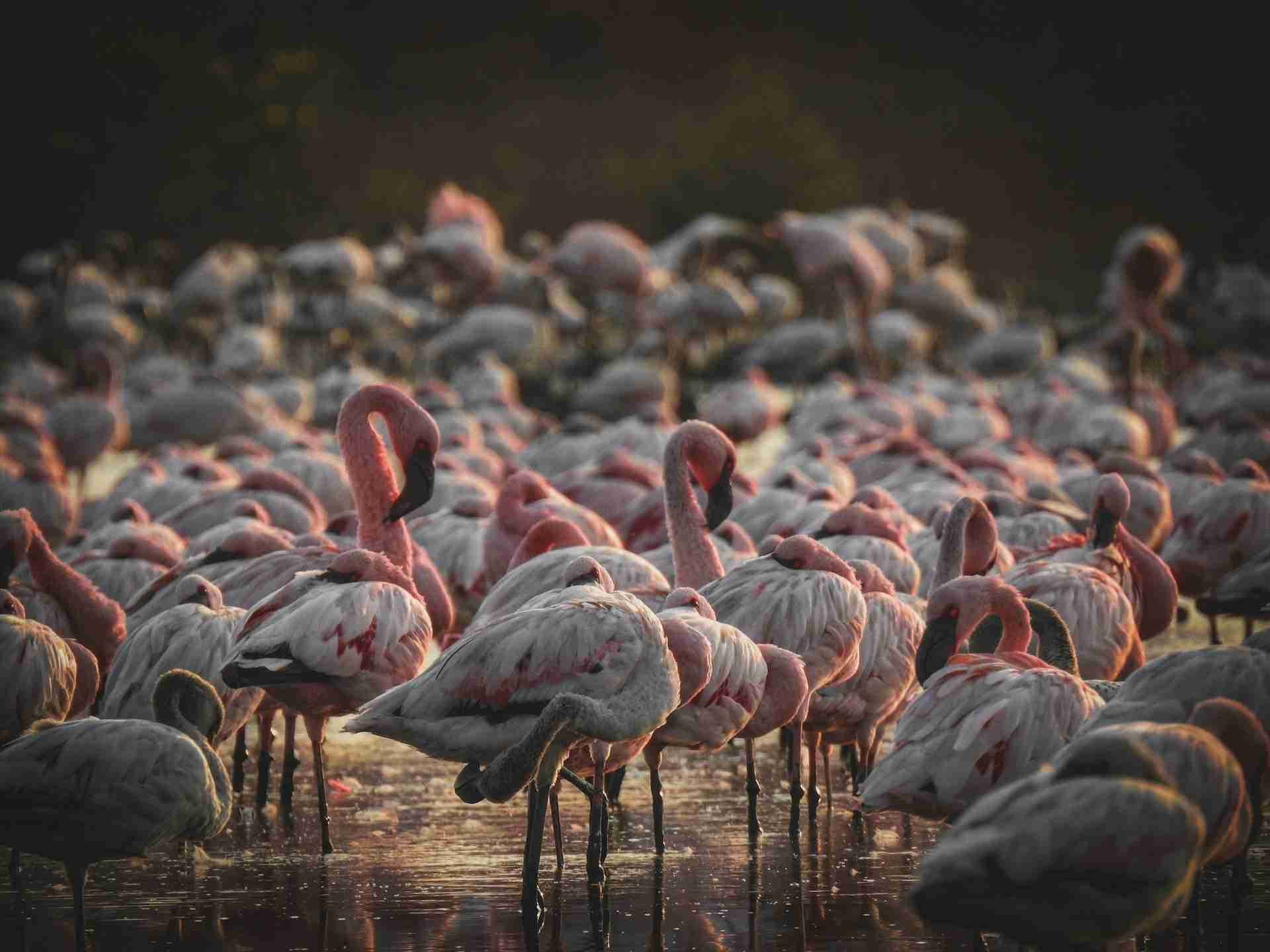
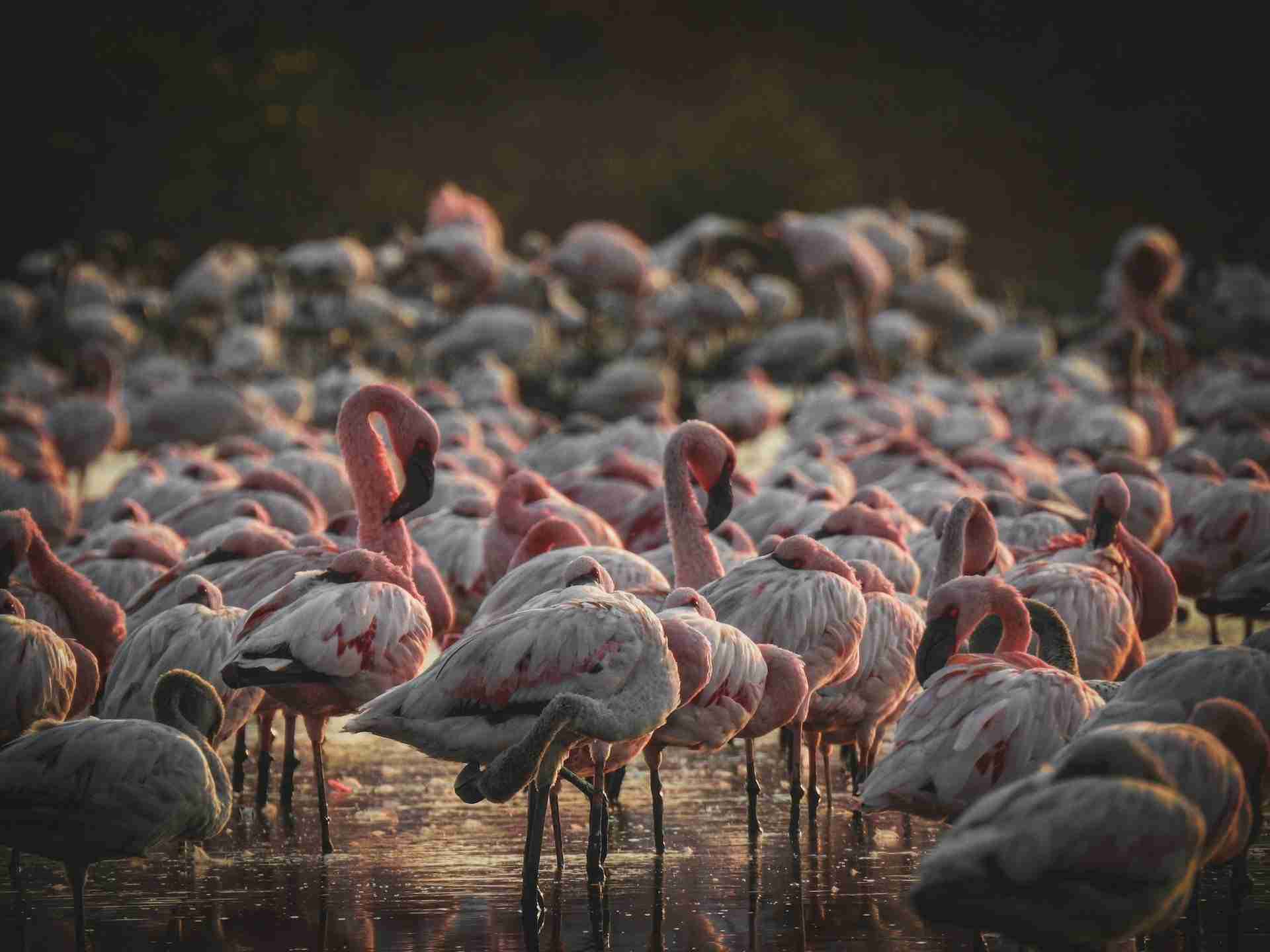
Tucked along the mangrove-fringed shoreline of Navi Mumbai, Karave Flamingo Point
is a seasonal spectacle that draws photographers, birdwatchers, and nature lovers alike. Located near Palm Beach Road, this quiet coastal stretch transforms during the winter months into a vibrant wetland filled with hundreds—sometimes thousands—of flamingos. The elegant wading birds, paired with the moody skyline of Navi Mumbai and the soft glow of the tidal wetlands, create a striking visual scene where urban and natural environments quietly intersect. For photographers, this location offers a rare opportunity to capture wildlife against an evolving cityscape, with golden light and reflective water adding depth to every frame.
Best Photography Opportunities
• Flamingos in Shallow Wetlands
: During peak season, large flocks gather in the exposed tidal flats and estuarine shallows. The early morning light gives their plumage a soft, luminous glow while the calm surface of the water enhances their forms through reflection. A telephoto lens is essential for maintaining distance while still capturing the intricate shapes of their postures and group formations. Look for symmetry in feeding lines or individuals stepping into mirrored water for minimalist compositions with quiet elegance.
• Flight Sequences and Flock Motion
: Flamingos frequently lift off in coordinated groups, their wings flashing black and pink against pale skies. These moments demand fast shutter speeds and anticipation, but the results are rewarding—sweeping arcs of motion that express both grace and wildness. Try panning with the flock to introduce gentle motion blur to the background, or freeze individual birds in midair against the skyline for more sculptural impact.
• Skyline Contrast and Urban Layers
: One of the most unique aspects of this location is the distant but prominent presence of Navi Mumbai's residential towers. Use a longer focal length to compress the flock against the vertical lines of buildings rising behind the mangroves. These images capture the tension between human expansion and natural habitat, particularly when composed at golden hour when light strikes both bird and building with equal warmth.
• Reflections at Low Tide
: When the tide retreats and water levels fall, wide glassy surfaces emerge across the flats. Flamingos standing still or slowly walking through these pools create almost perfect reflections that lend themselves well to symmetry-based compositions. Use a tripod if available and wait for moments of calm to maximize surface clarity and minimize ripple distortion.
• Other Avian Subjects and Mangrove Texture
: While flamingos are the star attraction, the area also hosts herons, stilts, ibises, and gulls. The mangroves lining the shore provide a contrasting textural element, with their twisting roots and low canopies creating natural frames and shadowed backdrops. These secondary elements allow for more variety in framing and give depth to the overall birding experience.
Best Time to Visit
Flamingos typically begin arriving at Karave Point in late December, with peak activity between January and March. During this time, early mornings offer the best light and most reliable bird presence. The air is cooler, the wind calm, and the golden light from the east ideal for photography. Arriving shortly after sunrise gives enough time to set up and begin capturing while the birds are still actively feeding and less likely to be disturbed by human presence.
Tide levels are crucial. Low tide or the transitional period just before it provides the best conditions for wading bird photography, as more of the flats are exposed and birds come closer to the accessible edge. High tide pushes the flocks further back, often out of visual range. Checking tide charts before your visit can make the difference between a successful session and a distant glimpse.
While the birds may linger into April, numbers begin to thin, and light quality shifts with the increasing heat and haze. January and February remain the most photogenic window, balancing light, bird activity, and environmental clarity.
How to Get There
Karave Flamingo Point is located in the Palm Beach Road corridor of Navi Mumbai, near Karave Village and the NRI Complex. It is accessible by car, with roadside parking available along service lanes that parallel the mangrove belt. From there, narrow footpaths and open embankments lead to natural viewing spots overlooking the water.
Public transport users can reach the area via the Harbour Line of the Mumbai suburban railway. The nearest stations are Seawoods–Darave and Nerul, from which auto rickshaws or app-based cabs can be taken to Palm Beach Road. The area is informal and lacks signage, but its popularity among birders and photographers makes it easy to find once you're nearby.
There are no formal amenities at the site, so bring water, sun protection, and any gear you'll need for extended sessions. Footwear with decent grip is advisable, especially if navigating damp ground or slippery concrete embankments. Always stay on firm ground, both to avoid injury and to protect the delicate wetland ecosystem.
Recommended Gear and Shooting Tips
A telephoto lens in the 400mm to 600mm range is ideal for capturing flamingos without causing disruption. Use a lens with image stabilization or a monopod to reduce fatigue during long sessions. Bird movement can be unpredictable, so keep your shutter speed fast—above 1/1000s for flight and action—and your aperture reasonably wide to separate subjects from the background.
For environmental frames or wide perspectives, bring a secondary setup with a mid-range or wide-angle zoom. These work well when framing birds against city structures or layering mangroves, mudflats, and sky. A polarizer can help cut glare on water surfaces, especially when shooting in direct sun, but should be used with care to avoid uneven sky tones.
Keep your camera bag compact and organized. Conditions can change quickly with shifting tides, and you may need to reposition quickly to keep up with the flock's movements. Always approach quietly and remain still once settled—flamingos are sensitive to sudden movement, and excessive activity can flush the flock and reduce your chances for natural behavior shots.
Nearby Photography Locations
• Seawoods Lake
: This inland lake is home to ducks, cormorants, and various waders, particularly useful for casual morning bird photography and reflection-based compositions.
• Belapur Jetty
: A rustic shoreline location offering fishing boats, mangrove-fringed canals, and backlit golden-hour potential. It's a quiet alternative for nature-meets-humanity themed compositions.
• CBD Belapur Hills
: A green space with short treks and monsoon waterfalls during the rainy season, this area is ideal for seasonal nature work, forest macro photography, and dramatic weather skies.
• Elephanta Island
: Though farther afield, this UNESCO World Heritage Site is reachable by ferry from Mumbai and offers a mix of marine views, historic cave architecture, and quiet woodland trails.
Karave Flamingo Point is more than a seasonal birding hotspot—it's a place where subtle light, delicate wildlife, and the encroaching edges of the city come together in fleeting moments. For photographers seeking both visual harmony and ecological significance, it offers one of the most rewarding and contemplative shooting experiences in the Mumbai region.
Comments
Loading comments…