
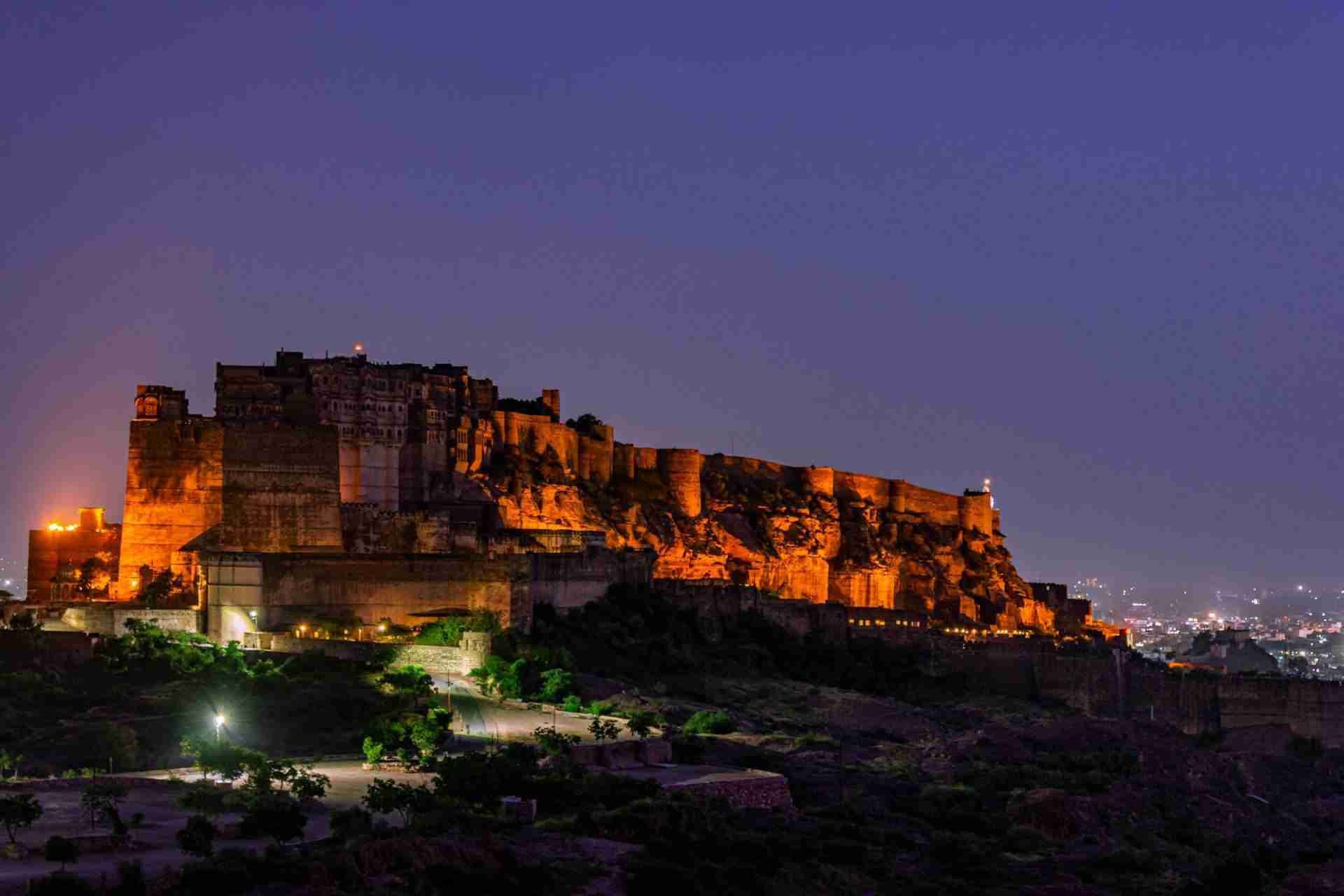
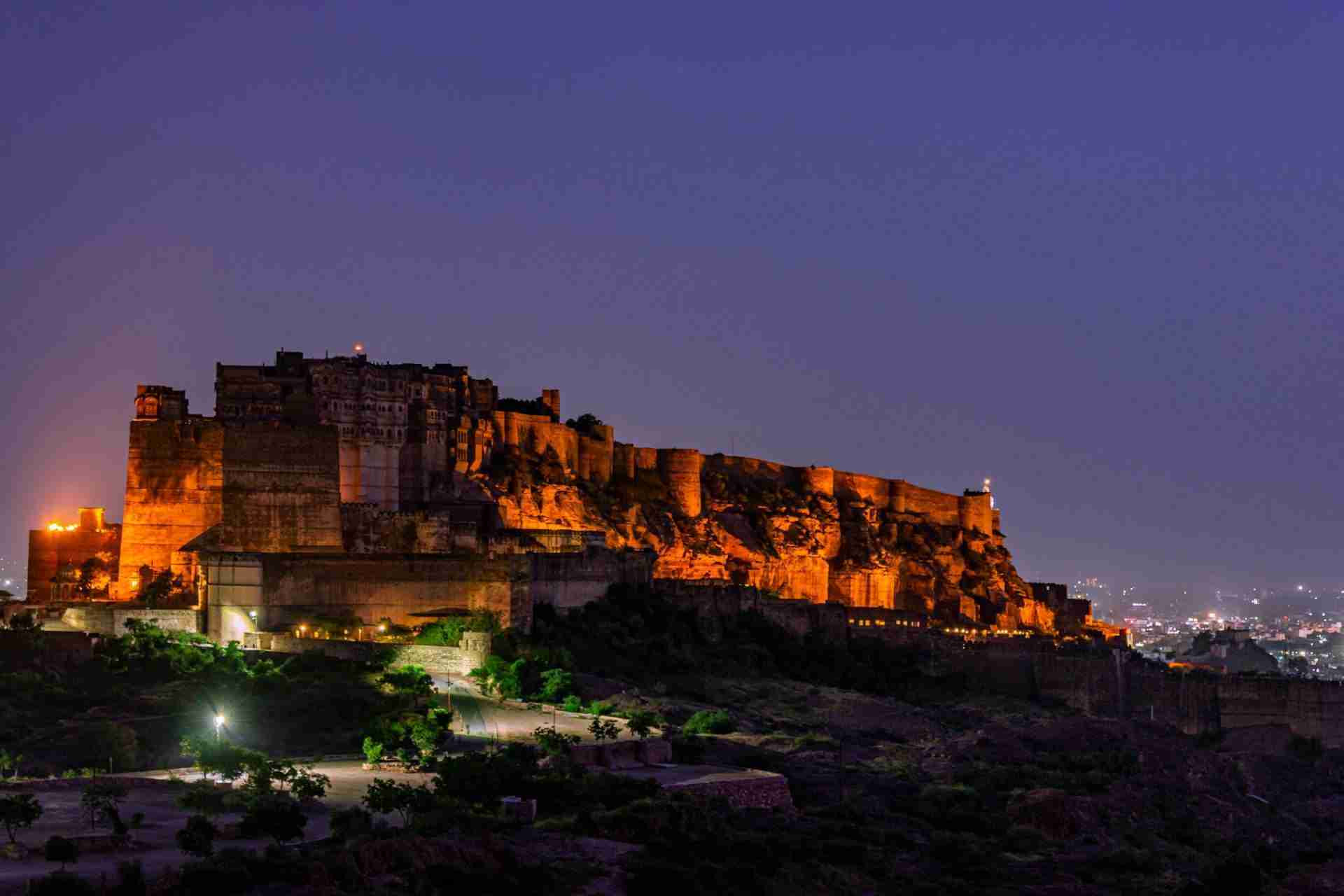
Mehrangarh Fort dominates the landscape from its high perch on a rocky plateau and stretches across the skyline with steep, weathered walls and stacked battlements. The scale of the fort is clear from a distance, but it becomes more interesting up close where sharp textures, long corridors, and changing light make each turn a new frame. Photographers have room to work both the big picture and the tighter angles here. The view down into the city is a favorite, but the interior details, courtyards, and perimeter walkways offer plenty of options away from the usual spots. For both wide scenes and slow, methodical detail work, the fort delivers.
Best Photography Opportunities
• View over the City
The view of Jodhpur from Mehrangarh is one of the clearest wide angles you'll find. The rooftops stretch into the distance, packed with flat surfaces and colored in faded blues and whites. This frame works best from the higher terraces of the fort, where the elevation gives you separation and depth. Morning offers side light and cooler air, while late afternoon softens the tone and deepens the shadow lines across the old city. A short telephoto lens helps compress the city layers, though wider focal lengths give more breathing room if you're including the fort walls.
• Interior Courtyards and Palace Details
Inside the fort, the courtyards and halls hold polished stone, carved lattice work, and a blend of Rajput and Mughal design. These are controlled spaces with more even light, making it easier to shoot handheld. Leading lines and repeated arches help keep compositions tight and clean. Some areas have limited tripod use, so fast primes or image stabilized lenses are helpful. Early in the day, before the crowds arrive, is the best window to photograph the smaller passages without waiting for clear views.
• Perimeter Walls and Long Shadows
Walking the edge of the fort gives you views that are less photographed, where you can work the textures of the stone walls and frame against the open sky. These areas often fall into deep shadow late in the day, which adds contrast if you're shooting for black and white or looking for drama. The high angles and long paths also give space for environmental portraits or documentary style street frames with staff and visitors. Expect harsh midday light and reflective surfaces on sunny days, but the structure holds up well in overcast or hazy conditions too.
• Gates and Entryways
The fort has several gates, each of which gives a different angle on height and compression. Framing upward from the base creates a sense of scale and tension, especially when the sky is clear or low clouds add atmosphere. These shots work well at wider focal lengths, keeping the geometry clean and using the stone color as a base. If you're working close to the walls, be ready to correct distortion in post. Early morning has the softest light, though even hard sun can work here thanks to the texture and depth in the stone.
• Museum Exhibits
Inside the fort, the museum galleries contain weapons, armor, palanquins, and textiles that provide strong subject matter for detail photography. These rooms tend to be dim and lit with a mix of window light and spot illumination. A fast lens and steady hands go a long way, as tripods are not permitted in most indoor spaces. Shooting these scenes in color gives you more from the painted surfaces and glass cases, but black and white holds up well if you're isolating shape and form. Be discreet and avoid blocking other visitors when setting up shots.
Best Time to Visit
The light at Mehrangarh Fort changes quickly due to its height and the depth of the city below. Early morning is best for lower temperatures, fewer crowds, and clean light across the blue city. The east facing side of the fort starts to catch light just after sunrise, with long shadows on the outer walls. Late afternoon brings warmer tones and directional side light into the courtyards, along with increased foot traffic. Winter months offer the best visibility, while summer haze and midday heat can make conditions difficult, especially on the exposed walkways. Overcast skies reduce the impact of the city view but help control contrast for interior frames.
How to Get There
Mehrangarh Fort sits just above central Jodhpur and is easily accessible by car, rickshaw, or on foot for those staying nearby. The access road winds up from the city and leads to a parking area near the main gate. From there, you enter through a series of uphill paths and gates into the fort proper. Entry requires a ticket, and separate fees apply for photography. Tripods are generally not allowed in the museum interiors and some courtyards, though exterior shooting is unrestricted. Plan for several hours to explore the entire site with enough time to catch changing light. Guided access is available but not required to move freely through most areas.
Recommended Photography Gear
A standard zoom lens (24–70mm or similar) is ideal for moving between wide scenes of the city and tighter courtyard compositions. A fast prime lens around 35mm or 50mm is useful for interior spaces where light is low and tripods are not allowed. A telephoto lens in the 85–135mm range works well for compressing the city view or isolating details on distant structures. A small cleaning kit helps manage dust, especially on windy days. A polarizing filter can improve color contrast in stone and sky, but use sparingly to avoid uneven skies. Lightweight gear is better here since some climbing and walking is involved.
Nearby Photography Locations
Just a short walk from the fort, this white marble cenotaph sits beside a lake and offers clean reflections in still water. The building is quiet in the morning and works well for symmetry and light detail. From its grounds, you can also frame Mehrangarh from below with a strong sense of elevation.
A geometric stepwell located in the old part of town. Its layered steps and changing light create sharp patterns that work well in both color and black and white. Early morning and late afternoon are best to avoid deep shadows across the lower levels.
This busy area is packed with movement, color, and commercial life. It's best for handheld street shooting, quick portraits, and documentary scenes. The Clock Tower itself can be photographed from multiple side streets for scale and shadow play.
Located beside the fort, this area has maintained trails, desert plant life, and clean sightlines back toward Mehrangarh. It's a solid early morning landscape location with minimal foot traffic and soft directional light.
A short drive north of the city, these gardens contain temples and monuments with unique shapes and less tourist density. The site works well for shadow play, texture, and frames that break from the visual tone of the fort.
Comments
Loading comments…