
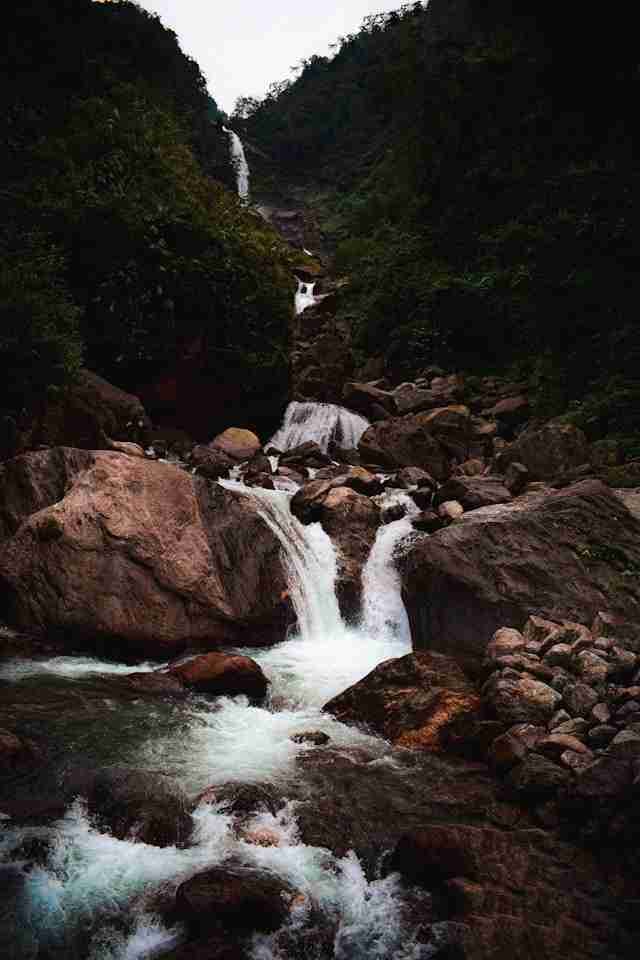
Nestled along the winding roads of North Sikkim, Naga Waterfalls is a dramatic and multi-tiered cascade that plunges in foamy sheets down a rocky cliffside, framed by dense Himalayan forest and steep green slopes. Located between Mangan and Chungthang, this powerful waterfall is easily visible from the roadside, yet its photogenic qualities go far beyond a quick stop. Naga's segmented flow, twisting drops, and ever-changing volume depending on the season make it one of Sikkim's most dynamic and rewarding locations for landscape photographers. Whether you're shooting wide to capture the full scope of the fall or honing in on textures of water and stone, this is a site where nature's raw energy becomes your composition.
Best Photography Opportunities
• Full-Length Wide Shot from the Roadside Pull-Off
: This is the most direct view of Naga Waterfalls and provides the opportunity to capture its full vertical structure from top to base. From the pull-off, the waterfall can be seen in all its tiered glory as it spills across the dark cliffside and down into the roadside gorge. Using a wide-angle lens from this perspective allows you to include the lush forest flanking either side of the falls, giving a strong sense of scale and geographical placement. On overcast days, the diffuse light brings out subtle contrasts in the foliage and reduces blown highlights in the whitewater, allowing for more dynamic range. The composition works particularly well after heavy rainfall, when the volume of water increases and the plume becomes more pronounced. Including the stone guardrail or road in the foreground can provide helpful context and scale for viewers unfamiliar with the setting.
• Mid-Tier Detail Compositions with Long Exposures
: Closer inspection of the midsection of the waterfall reveals a more intricate structure of chutes, rivulets, and rock terraces. This zone is ideal for abstract and intimate compositions that isolate one or two segments of the cascading water. Using a mid-range zoom lens, you can focus on areas where the water fans out or curves dramatically across ledges, creating visually interesting forms. With a tripod and ND filter, long exposures soften the water into misty ribbons that contrast beautifully against the rigid, moss-coated stone. This technique allows you to explore the waterfall not just as a whole, but as a set of flowing, evolving micro-landscapes. Be mindful of footing, as the rocks can be slick and uneven, particularly after rain.
• Upward Angle for Power and Scale
: By descending slightly and standing near the base of the falls, you can aim your lens upward to emphasize the towering height and force of the descending water. This perspective distorts the vertical lines of the rock face and water flow, making the falls appear even more imposing. This composition is most effective with a moderate focal length, which allows you to include both the base splash zone and the upper ridges of the cliff in one tight frame. The visual impact is amplified when mist rises from the lower pool and catches the light, especially during morning hours when sunlight filters through the surrounding trees. This is also one of the few vantage points where you can incorporate the upper canopy into the frame, further reinforcing the height and jungle-like setting.
• Abstract Textures in Rock and Water
: Naga Waterfalls offers a wealth of opportunity for photographers who enjoy focusing on smaller, abstract compositions. Sections of the cliff reveal intricate textures where mineral deposits, moss growth, and water movement interact. Using a telephoto or macro-capable lens, you can hone in on the interplay between water droplets splashing across lichen, or on the contrasting tones of smooth flow against jagged stone. These kinds of images work best in low light or overcast conditions when the details are less likely to be obscured by reflective highlights. By capturing small fragments of the waterfall, you create images that emphasize texture, motion, and mood rather than scale, offering viewers a more immersive, almost tactile experience of the location.
• Seasonal Atmosphere and Mist-Enhanced Mood Shots
: One of the most rewarding aspects of photographing Naga Waterfalls is how dramatically it transforms with the weather and season. In the early morning or during the monsoon months, dense mist envelops the waterfall and the surrounding hills, creating a ghostly, atmospheric effect that softens edges and desaturates colors into pastel tones. From slightly elevated or offset angles, you can use this fog to layer your compositions, with parts of the waterfall emerging from the haze like veiled forms. A telephoto lens compresses the landscape and increases the visual density of the mist, allowing for dreamy, painterly images. Including elements like nearby trees, roadside silhouettes, or a lone traveler adds scale and a narrative quality to an otherwise elemental scene. This is where Naga becomes more than a natural feature—it becomes an emotive landscape.
Best Time to Visit
The best time to photograph Naga Waterfalls depends on what kind of mood and water flow you're aiming to capture. From June to September, the monsoon brings maximum volume to the waterfall. The cascade becomes thunderous, shrouded in mist, and visually overwhelming in its energy. These months are perfect for dramatic, full-force compositions and moody weather scenes, though light levels are lower, and access may be trickier due to slick roads.
In October and November, post-monsoon conditions offer a happy medium: strong water flow, clearer skies, and easier travel. The surrounding vegetation is still lush, and there's often residual morning mist that adds dimension without fully obscuring the scene. This is an ideal time for both wide landscapes and close-up texture work.
Spring (March to May) offers clearer skies and more predictable lighting, but the water flow is less intense than during monsoon or immediately afterward. On the upside, the reduced volume reveals intricate patterns in the rock face and makes it easier to get closer without excessive spray.
Winter months (December to February) see reduced flow, but snowfall at higher elevations can enhance the setting if you're lucky with timing. Morning frost, bare trees, and cooler color palettes shift the mood toward stark minimalism. Early mornings are best year-round, both for optimal lighting and reduced traffic along the mountain road.
How to Get There
Naga Waterfalls is located along the main road between Mangan and Chungthang in North Sikkim, approximately 18 kilometers beyond Mangan and 6 kilometers before Chungthang. The falls are visible from the roadside, making them one of the most accessible large waterfalls in the region.
From Gangtok, the capital of Sikkim, the drive takes around 4.5 to 5 hours depending on road conditions. The route is scenic but winding, with narrow mountain roads that require cautious driving, especially during the monsoon. Most travelers hire local taxis or book North Sikkim permits through tour operators, as this region falls under a protected border area and requires an Inner Line Permit (ILP) for all non-residents.
There is no entry fee to visit the waterfall, and parking is typically available in the small roadside pull-off near the base. However, the area can become congested during peak tourist seasons, and parking may be limited to a few vehicles at a time. Be cautious when exiting or walking along the road, especially around blind curves or during foggy conditions.
Recommended Photography Gear
A wide-angle zoom (16–35mm) is essential for capturing the full scale of the waterfall from the roadside, as well as for immersive shots that place the falls within the surrounding landscape. Pair this with a mid-range zoom (24–70mm) for more controlled framing and environmental details.
A telephoto lens (70–200mm) allows you to extract abstract patterns from within the cascade, isolate splashes and textures, and compress depth when shooting through fog or across the valley.
A sturdy tripod is indispensable for long exposure shots, especially when working near the base of the falls or in dim conditions. Combine this with a 6- or 10-stop ND filter to control shutter speed even during bright daylight.
A circular polarizer is helpful for reducing glare on wet rocks and enhancing the saturation of moss and forest foliage. Because mist and spray are ever-present, bring lens cloths, a weather-sealed cover, and a microfiber towel to keep your equipment dry.
In monsoon or winter, pack rain gear and waterproof boots. The terrain is rocky and often wet, so traction and stability are key to getting into position safely.
Nearby Photography Locations
: Located en route from Gangtok to North Sikkim, this set of seven cascading streams provides a grand multi-tiered subject framed by rock and forest. It's best viewed during or after monsoon, and the volume of water varies dramatically by season.
: Just past Naga Falls, this confluence of the Lachen and Lachung rivers creates a dramatic meeting point of jade-colored waters. It's a great place to capture river dynamics with Himalayan cliffs rising in the background.
: North of the waterfall, the road leads toward the high-altitude village of Lachung, where you'll find terraced fields, monastery overlooks, and snow-capped peaks. The journey itself provides ample opportunities for roadside stops and layered mountain compositions.
• Bhutia Villages near Singhik
: South of Mangan, the village of Singhik and its surrounding area offer more intimate human-environment scenes—traditional homes, prayer flags, and panoramic views of Mount Kanchenjunga in the distance on clear days.
: A lesser-known but tranquil alpine lake located near Mangan, this peaceful spot is ideal for reflection photography, especially in the early morning when the water is still and cloud banks drift across the surface.
Naga Waterfalls is more than a scenic roadside attraction—it's a raw, untamed cascade that reflects the rugged energy of North Sikkim's landscape. Whether you approach it with a sweeping landscape lens or close in for painterly details of water on stone, this is a place where power and serenity flow together, offering photographers a chance to slow down and immerse themselves in the rhythm of Himalayan nature.
Comments
Loading comments…