
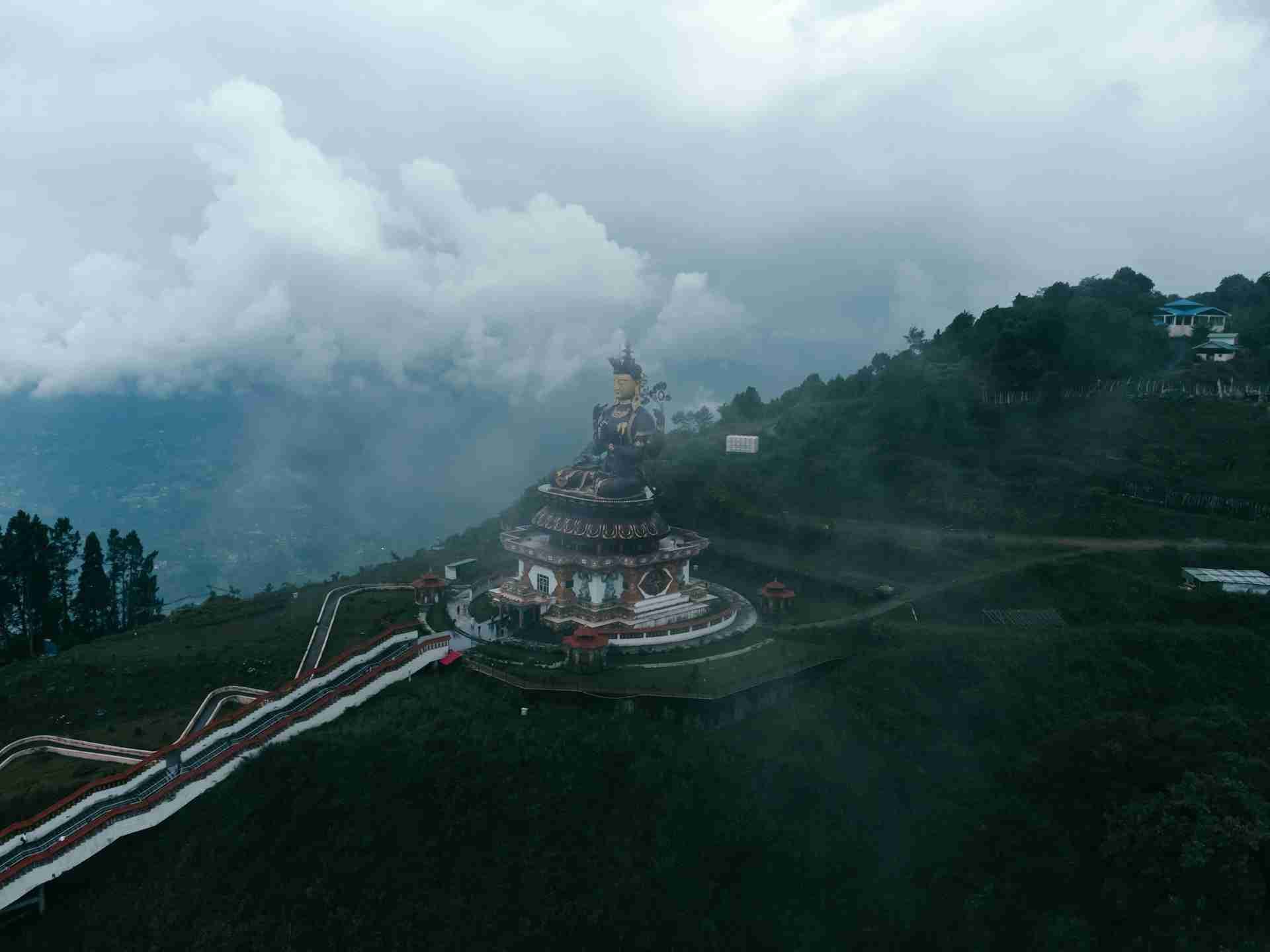
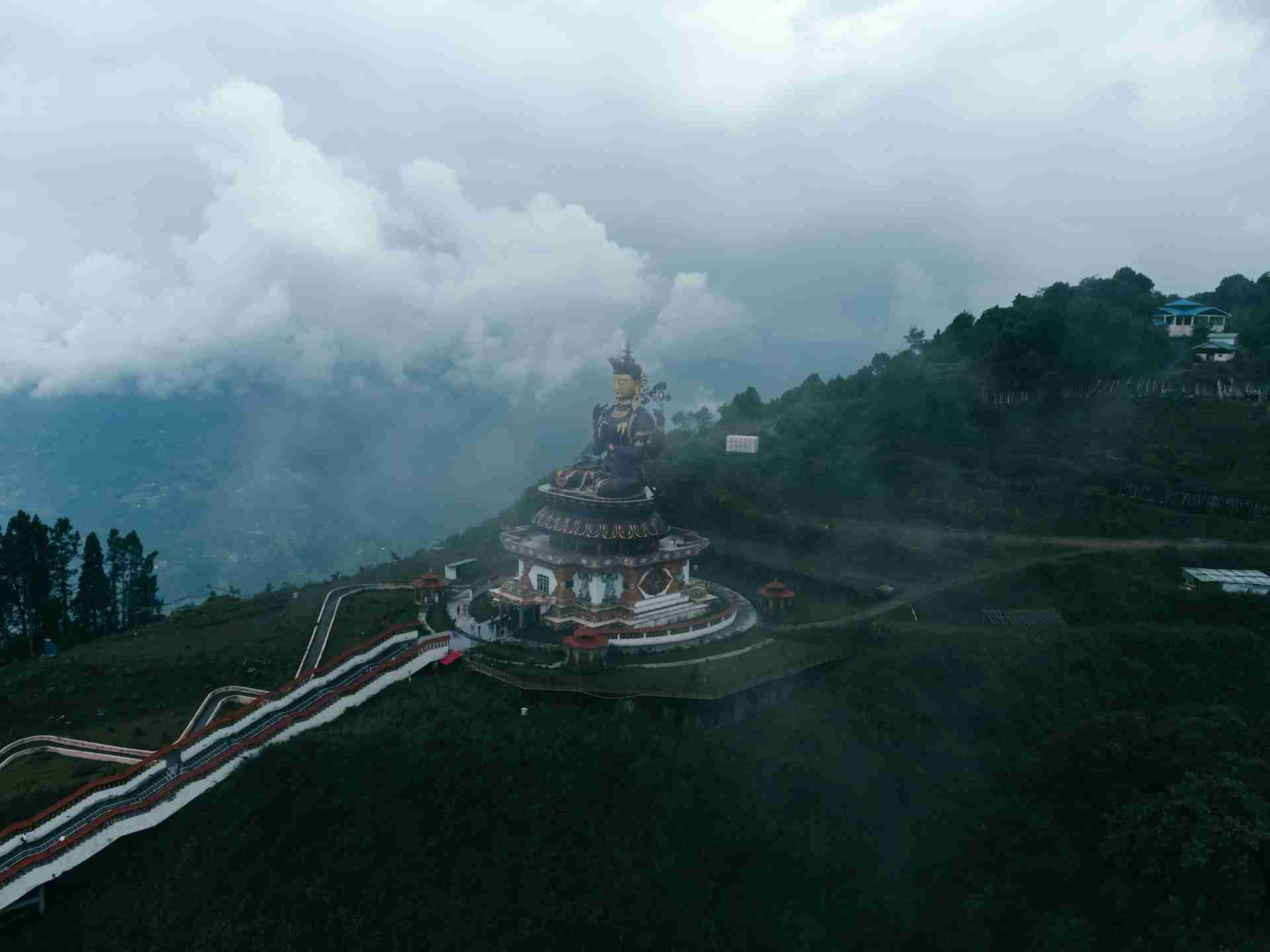
Perched at nearly 7,200 feet above sea level, the Sky Walk in Pelling offers one of India's most striking high-altitude photographic locations. As India's first glass-bottom skywalk, it stretches out toward the vast Himalayan skyline, providing sweeping views of the towering Chenrezig statue—the fourth tallest of its kind in the world—along with plunging valleys and distant peaks that include the mighty Kangchenjunga on clear days. Flanked by fluttering prayer flags and encircled by mountain mists, the Sky Walk offers an unusual blend of architectural boldness and spiritual tranquility. For photographers, it's a rare opportunity to capture depth, motion, and cultural symbolism all in one frame, set against the grandeur of Sikkim's highlands.
Best Photography Opportunities
• Glass Walk with Leading Lines and Prayer Flags
: The transparent walkway itself is a visual centerpiece and an exceptional compositional tool. Standing on the glass panels, you can frame a deep perspective shot that draws the viewer's eye directly toward the towering Chenrezig statue at the far end. The walkway narrows in the distance, creating a natural vanishing point, while rows of prayer flags flutter rhythmically on either side, adding movement and cultural texture. To maximize this perspective, shoot low with a wide-angle lens (16–24mm) and consider using a vertical orientation to stretch the frame upward toward the statue and sky. In the early morning, golden side light softly illuminates the walkway and flags, giving the image a gentle vibrancy without harsh contrast. For more dynamic results, include a person walking ahead or stopping mid-path for scale—this human element accentuates the vastness of the setting while drawing attention to the experience of standing quite literally above the clouds.
• Framing the Chenrezig Statue with Foreground Architecture
: The Chenrezig statue stands at over 135 feet tall and is richly adorned, but it's the surrounding elements—stairs, ornamental gates, and decorative railings—that help create more compelling compositions. By backing up or descending slightly, you can use these architectural features to naturally frame the statue. A mid-range zoom (24–70mm) allows you to fine-tune your framing and control background compression. Morning and late afternoon light adds dimension to the folds of the statue's robes and enhances the sheen of the gold finish. Shooting through archways or between stone balusters creates a visual layering effect, drawing attention to both scale and context. This technique works particularly well when there are clouds swirling behind the statue or when shadows from prayer wheels and gateposts fall into the foreground.
• Aerial-Like Views of the Valley Below
: The skywalk's position along a mountain ridge gives you an excellent downward-facing perspective into the vast valleys of West Sikkim. Use a telephoto lens (70–200mm) to compress the depth of the terrain into graphic, layered shots that highlight the gradations of forest, farmland, and hillside villages. These scenes are especially atmospheric in the early morning when mist clings to the trees and ridgelines stack against each other in varying shades of blue and gray. This effect—common in the Eastern Himalayas—lends a painterly quality to your frames. Late afternoon light from the west casts long shadows and brings warmth to the valley floor. Look for human-scale elements like a solitary farmhouse or a winding mountain road to anchor your composition. During monsoon or post-monsoon seasons, the valley often transforms into a cloud sea, creating surreal conditions where only mountaintops and pagodas poke through.
• Cultural Detail Shots in the Courtyard Area
: The area surrounding the skywalk is filled with vibrant Buddhist architectural details—hand-painted columns, spinning prayer wheels, ornamental gates, and colorful mandalas inlaid into the courtyard tiles. These elements allow for tightly framed, texture-rich compositions that tell the cultural story of the site. Use a fast prime lens (35mm or 50mm) with a wide aperture (f/2.8 or faster) to isolate individual carvings, textural contrasts, or weather-worn colors. These shots are most effective in diffused light—cloudy mornings or late afternoons—when shadows are soft and colors are naturally saturated. This area is also a prime location for candid portraits of pilgrims or monks in traditional dress, especially during Buddhist festivals or ceremonies. Be respectful when photographing people and always ask permission first. A subtle documentary approach will yield powerful images that balance cultural richness with visual intimacy.
• Panoramic Views with the Statue and Walkway
: For a full, sweeping composition that includes both the statue and the entirety of the glass walkway, step off to the side of the main viewing axis or descend slightly to a vantage point that offers a more diagonal frame. A wide-angle lens (14–24mm) is best here, allowing you to place the statue to one side while letting the walkway lead through the composition. This angle lets you emphasize the grand scale of the installation, the open sky beyond, and the surrounding mountains that often form a hazy silhouette in the distance. If the clouds are active, consider using a 6-stop ND filter to introduce motion blur to the sky while keeping the architectural elements sharp. This adds a dynamic element to an otherwise still frame. Sunset is an excellent time for this composition, especially during the dry months from October to March, when alpenglow sometimes touches the distant peaks and the warm sky gradients frame the scene in luminous contrast.
Best Time to Visit
The best time to photograph the Sky Walk in Pelling is from late October to early April, when the skies are clearest and the Himalayan range is most visible. During these months, the dry air reduces haze and increases visibility, making it more likely you'll see Kangchenjunga and other distant peaks. Mornings are especially recommended—not only to avoid crowds but to capture soft side-light on the statue and crystal-clear views before afternoon clouds gather.
The monsoon season (June through September) brings frequent fog and rain, which can obscure long-range views but add mood and drama to detail shots—prayer flags in the mist, glistening tiles, or drifting fog along the valley edges. Be prepared for slippery surfaces and erratic lighting if you shoot during this period.
Golden hour is less predictable in the mountains due to shifting cloud cover, but when it does occur, it bathes the Chenrezig statue in warm light and often illuminates the clouds in pink and orange hues. Overcast days offer flat, shadowless light ideal for texture-focused compositions of architecture and statues.
How to Get There
The Sky Walk is located in Upper Pelling, a popular hill station in West Sikkim. From Gangtok, the state capital, the journey takes about 4 to 5 hours by road, covering approximately 115 kilometers via Ravangla or Namchi. The route winds through hilly terrain, so travel time can vary based on road conditions and weather.
Once in Pelling, the Sky Walk is easily accessible by car, taxi, or local jeep services. It is located just above the Helipad Ground and directly beneath the massive Chenrezig statue, which can be seen from much of the town. There is a ticket counter near the parking area at the base, and from there, visitors either walk a short uphill path or take a brief set of stairs to the skywalk entrance.
There is an entrance fee, though it is modest and subject to change. The site is typically open daily during daylight hours, but access may be limited during festivals, maintenance, or poor weather. Footwear with good grip is recommended, particularly during the monsoon season when the glass surface may become slippery.
Recommended Photography Gear
Bring a wide-angle zoom (16–35mm) for glass walkway compositions, panoramic views, and immersive scenes that include foreground prayer flags and sweeping backgrounds. A mid-range zoom (24–70mm) is perfect for architectural framing, human subjects, and environmental portraits around the statue and cultural installations.
A short telephoto lens (70–200mm) is ideal for compressing mountain layers and isolating distant peaks, prayer flags, or abstract cloud movement. If the day is clear, you'll be able to use this to pick out Kangchenjunga from the haze and capture the fine textures of the ridgeline.
A tripod is useful for early morning, low-light shots or if you want to experiment with long exposures during foggy conditions. However, tripods may be restricted during peak visitor hours or on the glass walkway itself, so bring a compact model and be respectful of site regulations.
A polarizer can help cut reflections on the glass panels of the walkway and enhance cloud contrast. Consider bringing lens wipes or a microfiber cloth, especially during the monsoon when mist or humidity can fog up glass surfaces quickly. Lightweight rain protection for both gear and self is also essential.
Nearby Photography Locations
: Just a few kilometers from the Sky Walk, this 17th-century monastery offers richly colored murals, intricately carved interiors, and panoramic views of the valley below. Early morning light strikes the main prayer hall beautifully, creating a moody, reverent atmosphere.
: A short uphill hike from Upper Pelling, this secluded monastery is often surrounded by mist and prayer flags. The location provides peaceful sunrise compositions with silhouettes of monks, fluttering flags, and Himalayan outlines on clear days.
: Roughly 15 minutes from Pelling, this traditional Sikkimese village offers a different photographic pace. Document rural life, terraced farms, and mountain homesteads under changing weather patterns that add dimension and drama to every frame.
: The remains of Sikkim's ancient capital lie hidden in a forested ridge near Pelling. The moss-covered stone structures, scenic overlooks, and encroaching trees offer haunting compositions in mist or low light.
: About an hour's drive from Pelling, this sacred lake is believed to be wish-fulfilling. Its glassy surface and surrounding forest make it ideal for reflection photography, particularly during calm early mornings when the lake is still and shrouded in fog.
The Sky Walk in Pelling is more than just a high-altitude attraction—it's a photographic encounter with elevation, atmosphere, and cultural expression. Whether you're capturing the powerful serenity of Chenrezig beneath a Himalayan sky or experimenting with reflections and lines along the glass walkway, this location rewards both patience and creative risk. With nearby sites steeped in monastic history and valley views that shift with every hour, Pelling offers a concentrated, elevated experience for photographers who want their landscapes to speak with a spiritual voice.
Comments
Loading comments…