
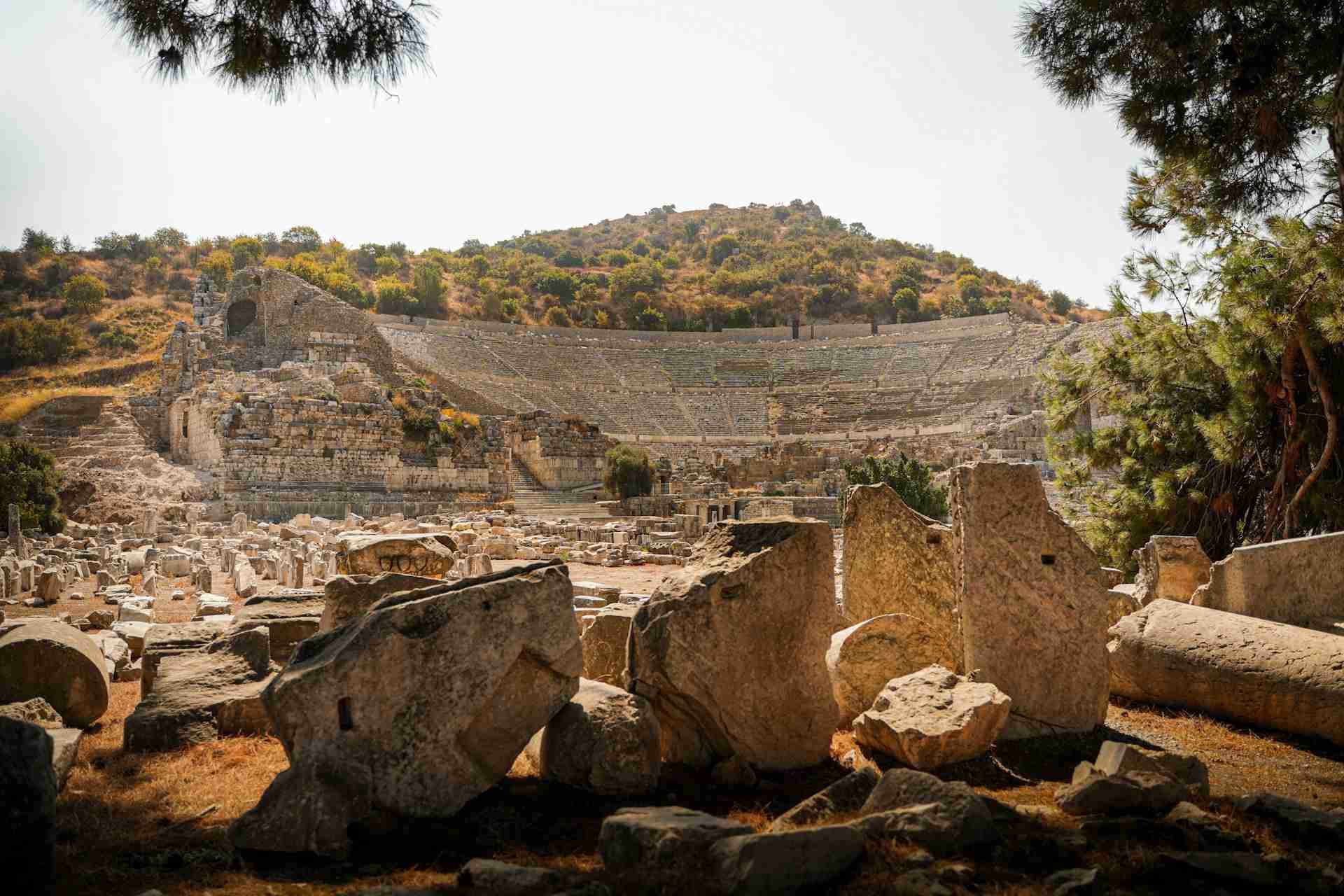
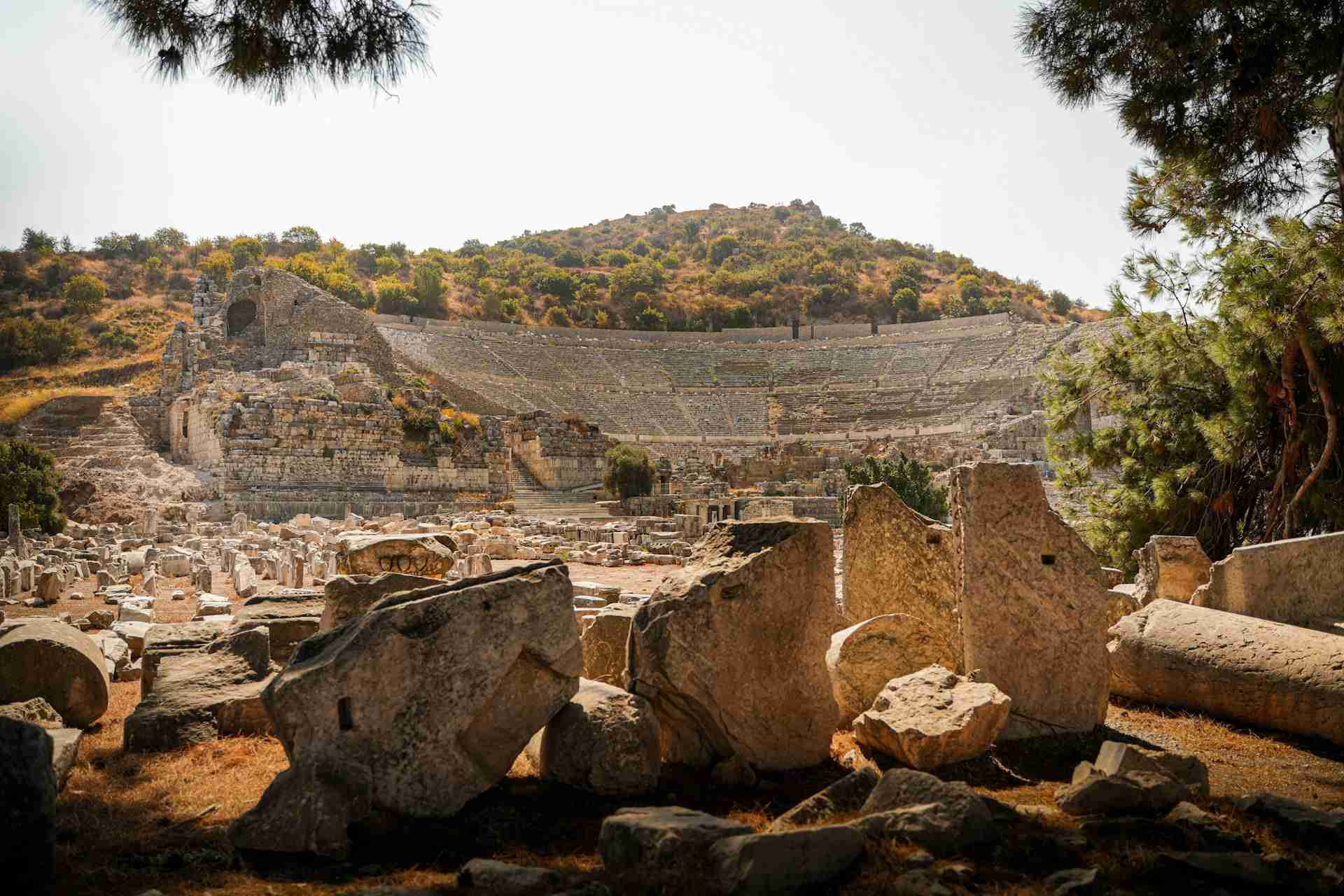
The ancient theatre of Ephesus stands as one of the most visually commanding remnants of Greco-Roman civilization in modern-day Turkey. Nestled into the slope of Panayır Hill within the ruins of the Ephesus Ancient City, this amphitheater once held more than 20,000 spectators and continues to impress with its sheer scale and detail. For photographers, it offers more than historic interest. The semicircular structure, tiered seating, and distant views toward the old harbor create a natural convergence of lines, shadows, and elevation. Morning mist, midday sun, and the long shadows of evening transform the theatre's worn marble and stone into shifting patterns of light and geometry. Whether you're seeking symmetry, storytelling, or abstraction, the Ephesus theatre offers all three.
Best Photography Opportunities
• High Vantage from the Upper Seating Tiers
Climbing to the upper rows of the theatre rewards you with a sweeping view not only of the entire stage and seating arrangement but also of the Curetes Street and the broader ruins in the distance. From this angle, the curved geometry becomes clear and impressive. Early morning is best here, when the light grazes across the stone benches and highlights their texture. Use a wide-angle lens to exaggerate the scale of the theatre and to bring in the surrounding landscape. Including a figure seated alone or walking below adds a strong sense of scale and solitude.
• Stage-Level Symmetry Facing Upward
Standing at stage level and facing the theatre's full semicircle creates one of the most symmetrical and powerful compositions in the site. The ascending lines of the seating tiers naturally lead the viewer's eye upward, making this an ideal location for centered framing. Midday light can be harsh here, but it also brings out the contrast between sunlit upper seats and shadowed lower tiers. A standard or slightly wide prime lens allows you to work with depth and alignment without excessive distortion. Watch for birds or passing clouds to break up the sky and add dynamic elements to your frame.
• Side Profile View from the Eastern Entrance
From the eastern entrance to the stage, you can capture the full depth of the theatre from an oblique angle. This position works well in the late afternoon, when the sun moves behind you and lights the seating and stage evenly. The stone surface often reflects a warm tone in this light, and textures become more pronounced. Shooting diagonally across the theatre helps highlight its curvature and the precision of its construction. This angle is especially effective with a mid-telephoto lens for compressing lines and focusing attention on repeating architectural patterns.
• Close-Ups of Weathered Stone and Inscriptions
Scattered throughout the theatre are blocks etched with ancient Greek and Latin inscriptions. These make for compelling detail shots that connect the viewer with the people who once gathered here. Use a macro or standard lens to isolate letters, carvings, or tool marks in the marble. Pay attention to how side lighting brings out shadow and relief in the carved surfaces. These small elements can add richness to a broader visual narrative, especially when sequenced alongside wide shots of the full theatre.
• Backstage Passageways and Archways
Tucked behind the stage are arched tunnels and passageways once used by performers and workers. These darker, enclosed spaces create contrast with the open bowl of the theatre. They are especially photogenic in early morning or late afternoon when beams of light cut through the shadow and strike the dusty stone floors. A fast lens with good low-light capability is helpful here, and handheld shooting works well due to the limited space. This part of the theatre often goes unnoticed by casual visitors, giving you space and time to work deliberately.
Best Time to Visit
The best seasons to photograph the theatre in Ephesus are spring and autumn when the light is clean and the temperatures are moderate. From April through early June, mornings often begin with soft fog that burns off slowly, creating opportunities for atmospheric backdrops behind the structure. The light from the east is particularly favorable between 7 and 9 a.m. as it highlights the seating rows and the stage with clear directionality. In September and October, the sun sits lower in the sky for more of the day, which brings out strong textures in the stone and reduces midday glare. Summer offers long daylight hours but can be overwhelming due to heat and high visitor numbers. Winter is quieter and more relaxed for photography but may include cloudy skies that flatten contrast. Sunrise remains the best overall time to photograph the theatre with minimal foot traffic and low, directional light.
How to Get There
Ephesus Ancient City is located near the town of Selçuk in western Turkey, about an hour from İzmir by car or train. From Selçuk, the site is easily reached by taxi, bicycle, or minibus. Most visitors enter through the lower gate, which places you close to the theatre after a short walk along the Marble Road. Parking is available near both the lower and upper entrances to the archaeological site. A ticket is required to enter the site, which grants access to all main structures including the theatre. Photography is allowed throughout the area, although tripods may be restricted in certain areas during peak hours. Arriving early gives you the most freedom to explore and work without interruptions. Wear supportive shoes, as the theatre seating can be steep and the marble surfaces are often slick.
Recommended Photography Gear
A wide-angle lens in the 16–35mm range is essential for capturing the scale of the theatre from within, especially when working from stage level or the upper rows. A mid-range zoom like a 24–70mm is excellent for flexible compositions as you move through the site. For distant details or compressed shots of the seating rows and architectural features, bring a 70–200mm lens. A fast prime between 35mm and 85mm works well for low-light shooting in passageways and for isolating carvings. Since parts of the site are in full sun and others in deep shade, bring a circular polarizer to control glare and deepen shadows. A lens cloth is helpful for dust, especially on windy days. Tripods are not always allowed, so a camera with strong image stabilization or a monopod is useful. Consider packing a neutral density filter if you plan to do long exposures during bright daylight.
Nearby Photography Locations
Just a short walk from the theatre, this monumental library façade is one of the most photographed structures in the ancient city. Early morning or late afternoon provides soft light that enhances the depth of the columns and decorative carvings. From certain angles, you can frame the library through arches or columns for layered compositions.
Lined with column fragments and fallen marble, Curetes Street stretches downhill from the theatre to the library. It is ideal for leading lines and street-level shots that show the texture and rhythm of ancient construction. Side lighting works especially well here to bring out contrast in the broken stone.
This small but well-preserved temple includes decorative friezes and finely detailed reliefs. The shadows in this area are more dramatic due to the partial coverage of the structure, making it a great spot for experimenting with contrast and partial silhouettes.
These homes, built into the hillside, offer intricate floor mosaics, frescoes, and detailed wall structures preserved under protective roofing. A fast lens and a willingness to work with mixed lighting make this area rewarding for interior photography. Tickets to this section are separate from the main entrance, and access is limited, which helps keep the space quiet.
Just outside the archaeological site, Selçuk itself offers worthwhile shooting opportunities. The castle on the hill can be photographed from a distance during golden hour, while the mosque provides rich textures and quiet courtyards perfect for architectural detail work.
Photographing the theatre of Ephesus is an opportunity to work with structure, history, and light in a setting that rewards patience and attention. Every direction reveals a new relationship between human design and natural landscape, and each shift in sunlight changes how the stone interacts with its surroundings. Whether you are building a portfolio or simply chasing the feeling of timeless space, this ancient arena offers something that remains deeply visual and deeply human.
Comments
Loading comments…