
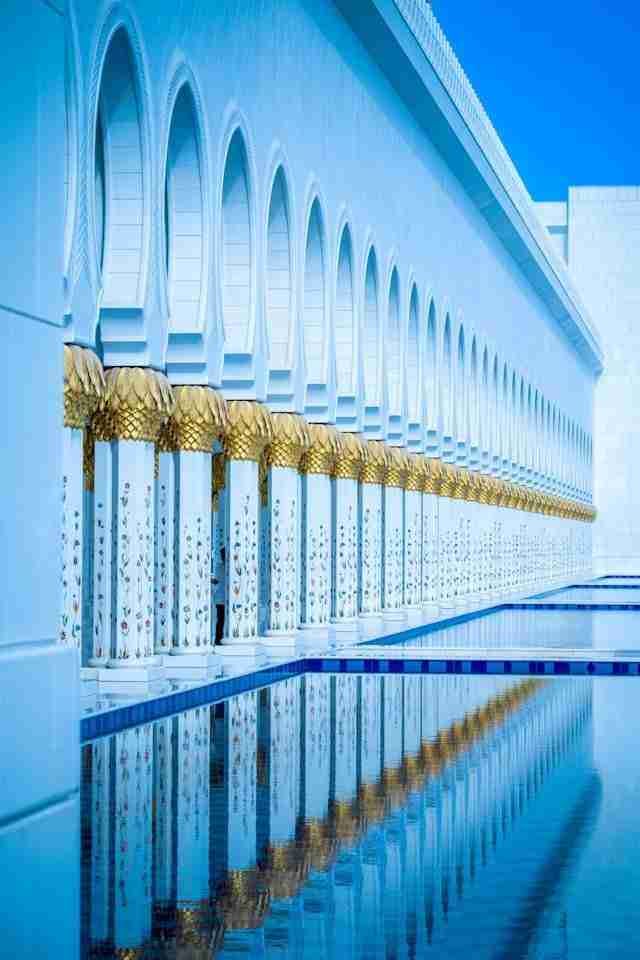
One of the most visually breathtaking religious sites in the world, the Sheikh Zayed Grand Mosque in Abu Dhabi is a triumph of Islamic architecture on a monumental scale. Completed in 2007 and named after the founding father of the United Arab Emirates, the mosque combines Mughal, Moorish, and Persian design influences, executed in brilliant white marble and adorned with intricate inlays, gold accents, and vast symmetrical courtyards. With its 82 domes, 1,000 columns, and the world's largest hand-knotted carpet, the mosque is a masterpiece of detail and proportion—and a dream for photographers drawn to symmetry, texture, and light. Whether at golden hour or by moonlight, it presents a perfect balance between spiritual serenity and architectural grandeur.
Best Photography Opportunities
• Main Courtyard and Reflective Pools
: The vast marble courtyard, with its floral inlays and symmetrical archways, is the central canvas for wide-angle compositions. Shooting here at sunrise or sunset captures the interplay of soft light with the mosque's white marble, creating gentle tonal gradients and long shadows. At night, the mosque is beautifully lit and reflected in still pools that run along the perimeter—perfect for mirror compositions that double the domes and arches.
• Domes and Minarets in Symmetrical Frames
: The mosque's skyline is defined by its 82 domes and four towering minarets. Using a telephoto lens to compress these elements enhances their alignment, especially when framed through archways or from low angles. From the plaza, photographers can also position themselves to catch the perfect symmetry of the domes rising behind the entrance colonnade.
• Interior Prayer Hall and Carpet Details
: The main prayer hall is one of the most ornate interior spaces on earth. A tripod is not allowed, but handheld shots using natural light from chandeliers and clerestory windows can capture the world-famous chandelier and the detail of the hand-knotted carpet. The vastness of the space, combined with the subdued color palette and gold accents, allows for beautifully layered images.
• Colonnade Arches and Floral Columns
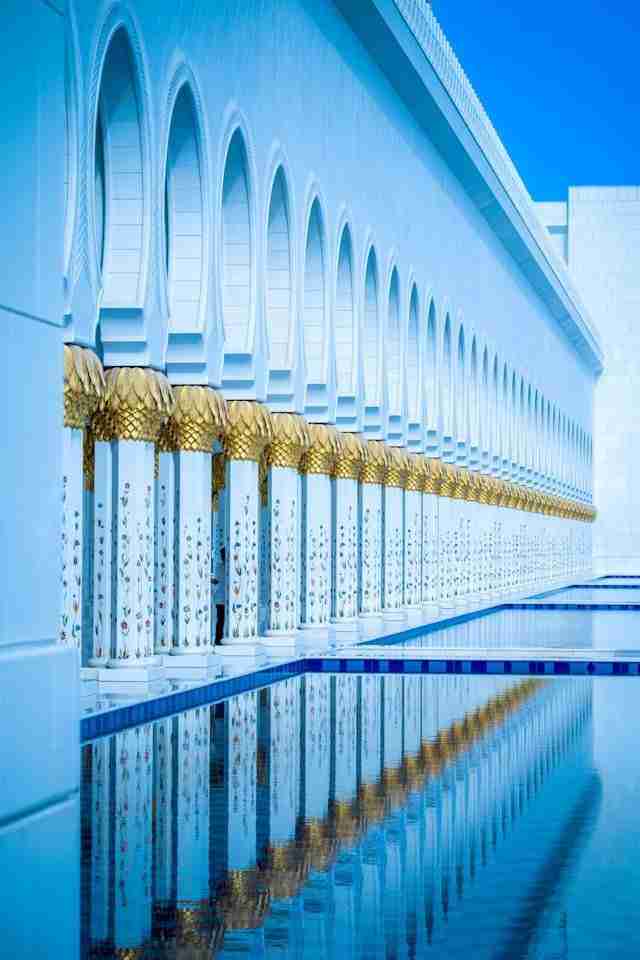
: Along the mosque's eastern corridors are rows of white marble columns inlaid with semi-precious stones, topped with golden palm capitals. These spaces offer opportunities for repetition and perspective. Shooting down the length of the arcade creates strong leading lines, especially when the golden light hits the columns at a low angle. Details of the floral inlay work also make for abstract or macro-style compositions.
• Twilight and Full Illumination Shots
: At blue hour, the mosque takes on a different character. The lighting system casts a cool, almost celestial glow that contrasts with the deepening blue of the sky. Using long exposures from across the water or from the entrance plaza creates soft gradients and glowing contours, particularly on the domes and colonnades. Shooting during a full moon adds an ethereal dimension when the minarets are silhouetted against the sky.
Best Time to Visit
The best time to photograph the Sheikh Zayed Grand Mosque is during the early morning or late afternoon, when sunlight is low and warm. At sunrise, the eastern-facing façade glows with soft pastel hues, while the colonnades remain peaceful and uncrowded. Sunset, meanwhile, bathes the domes and marble courtyard in golden light, perfect for texture-rich compositions and natural contrast.
Blue hour is also exceptional. The mosque's lighting system shifts subtly in color temperature as night falls, with cooler light intensifying the building's serene atmosphere. This is the perfect time for long exposures that highlight the interplay between architecture and sky.
While daytime shooting is possible, mid-day light can be harsh due to the intense desert sun. On overcast or hazy days, however, the marble takes on a diffused glow that works well for shooting finer details and reducing glare. Visit early in the morning during the cooler months (November to March) for the best conditions and fewer crowds.
How to Get There
The Sheikh Zayed Grand Mosque is located on Sheikh Rashid Bin Saeed Street (also known as Airport Road), about 20 minutes from downtown Abu Dhabi and 75 minutes from Dubai by car. Taxis and ride-sharing services are widely available and are the most convenient way to reach the mosque. Abu Dhabi's local bus system also services the mosque via several lines.
Entry to the mosque is free, but online pre-registration is recommended, especially during weekends or holidays. Visitors must pass through a security screening area at the underground visitor center before accessing the mosque via a covered walkway.
Dress modestly: long sleeves, ankle-length trousers or skirts, and a headscarf for women are required. Photography is allowed throughout most public areas, though tripods are not permitted without prior authorization. Drones are strictly prohibited.
Exploring the Surrounding Area
Though the mosque itself is the centerpiece, the surrounding grounds also offer visual variety. The landscaped gardens around the parking and visitor center provide compositional foregrounds of palms, walkways, and water features leading toward the mosque's brilliant silhouette. Walking around the perimeter yields unique angles, particularly from across the reflective pools and along the garden edges where the domes rise above the horizon.
The inner courtyard, visible once you pass through the colonnades, is one of the largest in the world and is filled with opportunities to experiment with human scale. Using small figures within the frame—especially during quieter times—can amplify the scale and grandeur of the architecture.
Nearby Photography Locations
: Just a short drive away, this modern presidential palace offers its own opulent architecture and grand interiors. The massive dome, ornate chandeliers, and mirrored marble halls make it a complementary stop for architectural photographers.
: Located on the Corniche, this site honors Sheikh Zayed and features the Constellation monument—an abstract sculpture made of suspended geometric shapes that photograph beautifully at night.
: Directly opposite the mosque, this war memorial offers the best elevated view of the Grand Mosque reflected in still pools—especially compelling at night. It's one of the most iconic angles for long-exposure photography of the mosque.
: A more natural contrast to the architectural grandeur, this area features wooden boardwalks, calm waters, and kayaking routes through the mangroves—great for early morning nature photography.
: An hour away on Saadiyat Island, this architectural marvel offers clean lines, soft natural light, and art-infused minimalist spaces under a floating dome—ideal for contemporary contrast with the classical beauty of the mosque.
The Sheikh Zayed Grand Mosque is one of those rare locations that offers both overwhelming scale and intimate detail. Every column, dome, and patterned surface is a study in craftsmanship and symmetry, illuminated by natural light and shaped by spiritual design. For photographers, it's a place where silence becomes composition, and light becomes the subject. Whether you're documenting grandeur or chasing the nuances of shadow on stone, the mosque delivers a deeply rewarding visual experience unlike any other.
Comments
Loading comments…