
A Winter Wonderland of Frozen Methane Bubbles
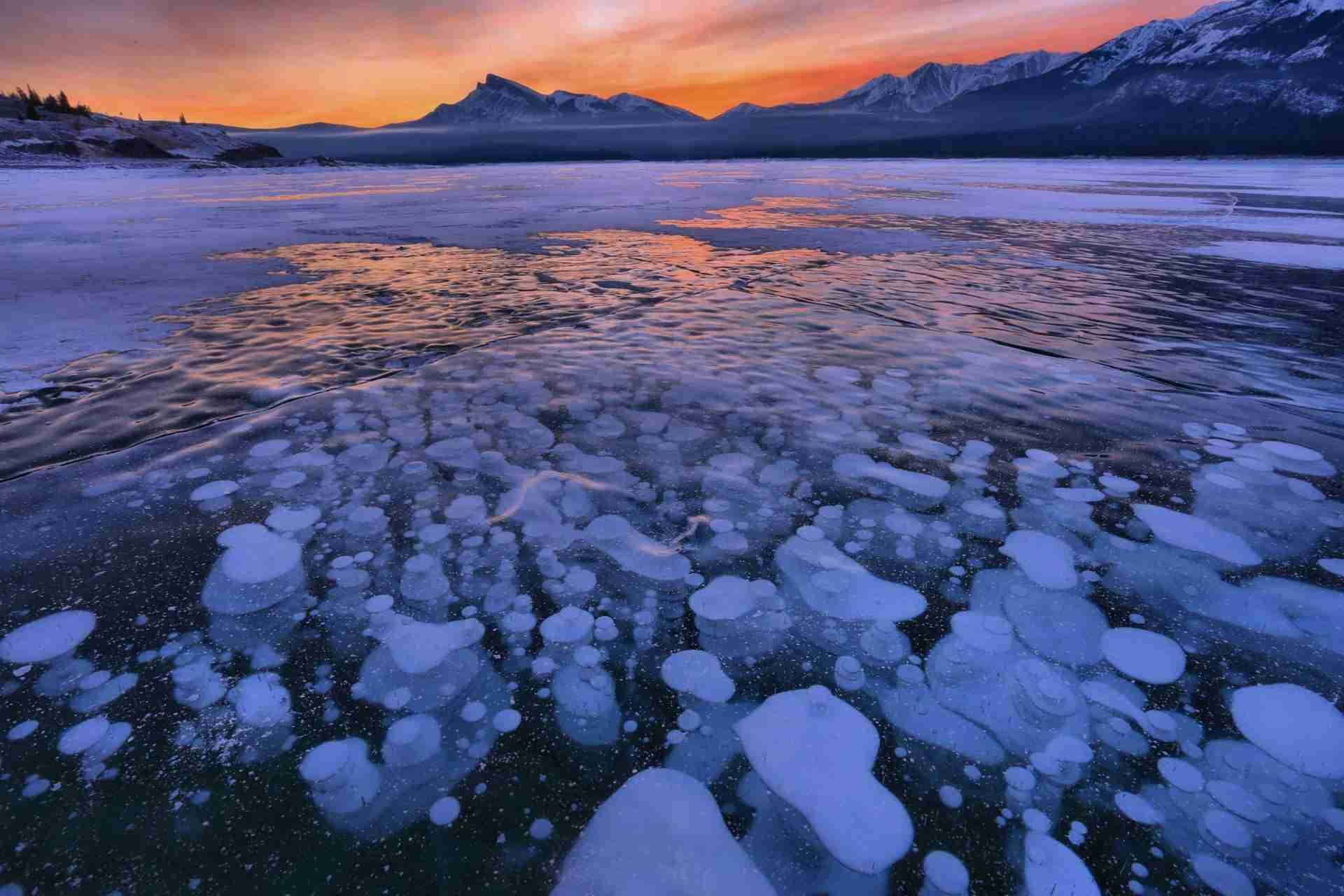
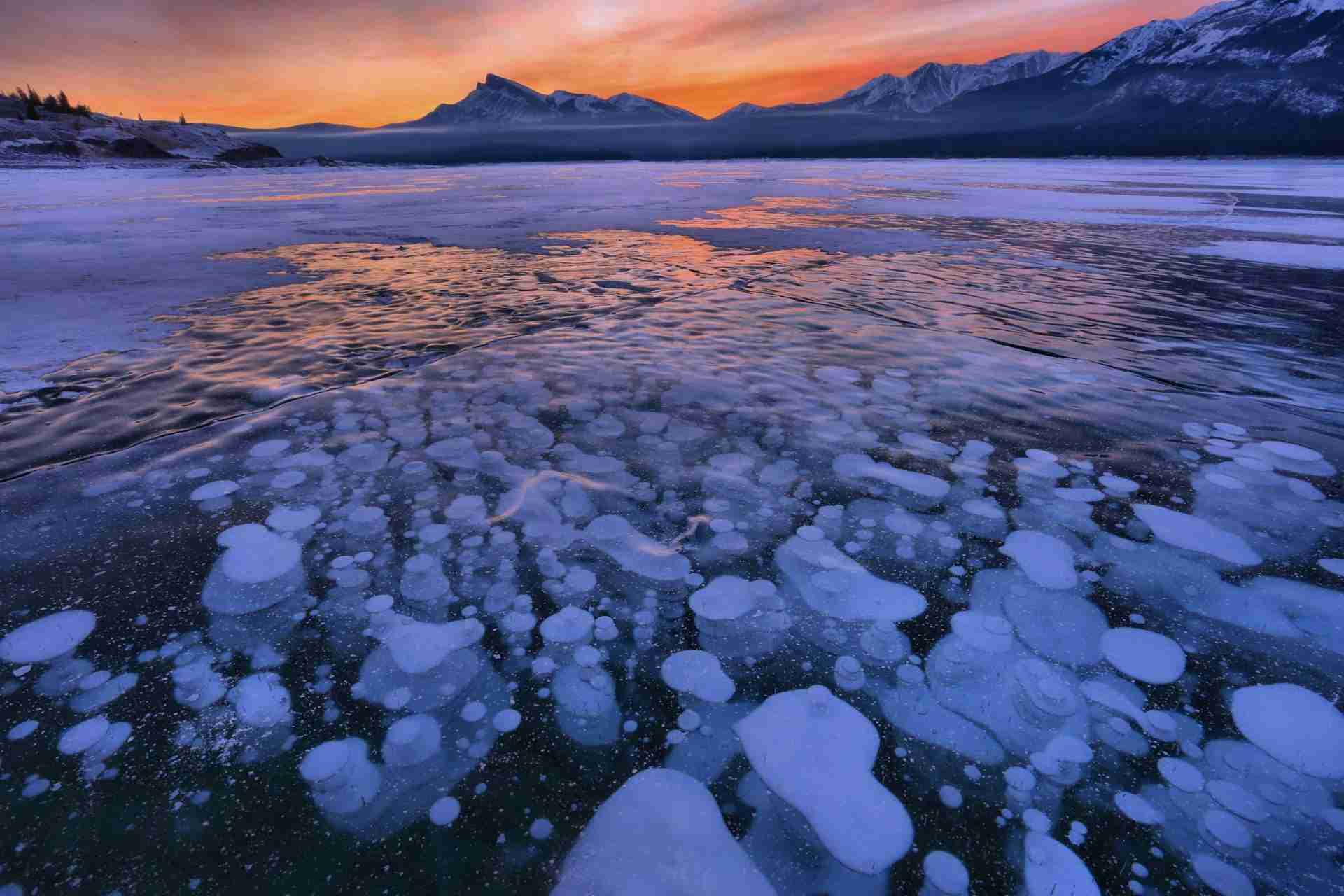
Abraham Lake, located along the David Thompson Highway near Cline River, Alberta, is a stunning artificial reservoir renowned for its breathtaking winter landscapes and year-round natural beauty. Created in 1972 by the Bighorn Dam on the North Saskatchewan River, the lake stretches over 32 kilometers and is known for its striking turquoise waters, similar to the glacial-fed lakes of Banff and Jasper National Parks. During the warmer months, Abraham Lake is a fantastic destination for capturing vibrant mountain reflections, dramatic storm clouds rolling over the Rockies, and crystal-clear waters that shift in hue depending on the season. The rugged shoreline, dotted with rocky outcrops and wildflowers, provides excellent foreground elements for compositions. In the fall, the surrounding forests and foothills transform into a stunning mosaic of golden aspen and deep green evergreens, offering striking contrast against the lake's cool tones. However, it is in winter that Abraham Lake truly stands apart, as the water freezes over and reveals the mesmerizing trapped methane bubbles that make this location a premier photography destination.
Best Photography Opportunities & Best Time to Visit
The frozen methane bubbles at Abraham Lake create endless creative possibilities for photographers, with their circular, layered formations resembling abstract art beneath the crystal-clear ice. Wide-angle shots emphasize the vastness of the lake, while macro and close-up compositions highlight the intricate details of the bubbles. Strong winds in the region frequently clear the ice of snow, ensuring photographers have unobstructed views of the frozen patterns.
The best time to capture this natural phenomenon is from December to early March when the ice is thick enough to support foot traffic, but before heavy snowfall obscures the formations. Sunrise and sunset provide the most dramatic lighting, as the warm hues of the sky contrast beautifully against the cool blues of the ice. Golden hour reflections of the surrounding Rocky Mountains on the lake's surface further enhance the scene. Night photography is also exceptional here, with the ice bubbles illuminated beneath a starry sky or even the northern lights on particularly clear winter nights.
During the warmer months, Abraham Lake's turquoise waters make it an excellent location for landscape and adventure photography. The lake is a popular spot for kayaking, canoeing, and paddleboarding, allowing photographers to capture dynamic water-based compositions with the dramatic mountains in the background. Strong winds often create choppy waves, adding a sense of movement to shots, while calm mornings provide mirror-like reflections of the surrounding peaks. Fall is another spectacular season for photography, with golden foliage lining the shore and crisp, clear skies enhancing the contrast between the vibrant trees and the deep blue water.
Safety is a key concern when exploring Abraham Lake in winter, as ice thickness can vary due to fluctuating temperatures and water currents beneath the surface. It is recommended to wear ice cleats for traction, check local conditions before venturing onto the ice, and avoid areas where ice may be thin or cracked.
How to Get There
Abraham Lake is situated along Highway 11 (David Thompson Highway), approximately 30 km southwest of Nordegg and about a three-hour drive from Calgary or Edmonton. There are multiple access points along the highway, with some of the best locations for photographing ice bubbles found near Preacher's Point, Hoodoo Creek, and Belly of Abraham. The lake is easily accessible by car, but winter driving conditions can be challenging, so proper preparation and winter tires are essential.
About the Icefields Parkway Region
Although not part of Banff or Jasper National Park, Abraham Lake sits along one of Canada's most scenic driving routes, offering photographers a wealth of stunning landscapes. The Icefields Parkway and David Thompson Highway are lined with dramatic mountain peaks, frozen waterfalls, and deep canyons, making this region a paradise for winter photography.
Nearby Photography Locations
• Preacher's Point – One of the best spots to photograph the frozen methane bubbles, with easy access to the shoreline and a spectacular backdrop of snow-covered peaks. Sunset provides particularly stunning reflections here.
• Crescent Falls – A breathtaking two-tiered waterfall that partially freezes in winter, offering striking contrast between flowing and frozen water. Long-exposure shots enhance the silky effect of the moving water.
• Mistaya Canyon – A deep, narrow canyon carved by glacial waters, featuring swirling ice formations and jagged rock walls. The canyon's depth and shadows create excellent opportunities for dramatic lighting effects.
• Peyto Lake Viewpoint – A world-famous overlook along the Icefields Parkway, offering an unforgettable panoramic view of the glacier-fed lake and surrounding peaks. Winter transforms the scene into a pristine white wonderland.
• David Thompson Highway Viewpoints – Numerous roadside pullouts provide breathtaking views of the Rockies, with endless opportunities for winter landscape photography. Low clouds and misty conditions often add dramatic mood to the compositions.
With its mesmerizing frozen methane bubbles in winter, stunning turquoise waters in summer, and vibrant foliage in fall, Abraham Lake is a must-visit destination for photographers exploring Alberta's wild and rugged landscapes. (Cline River, Alberta, Canada)
Comments
Loading comments…