
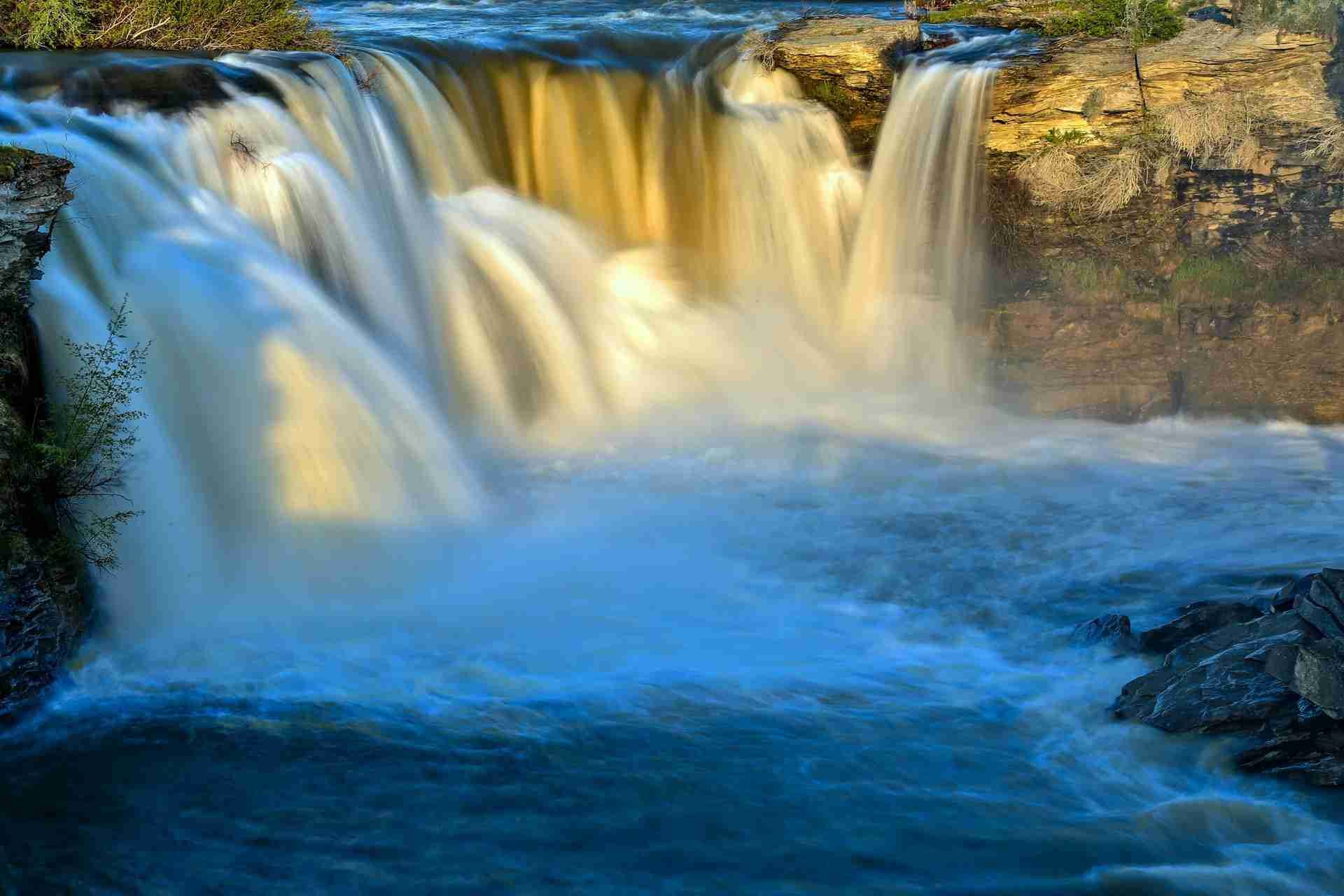
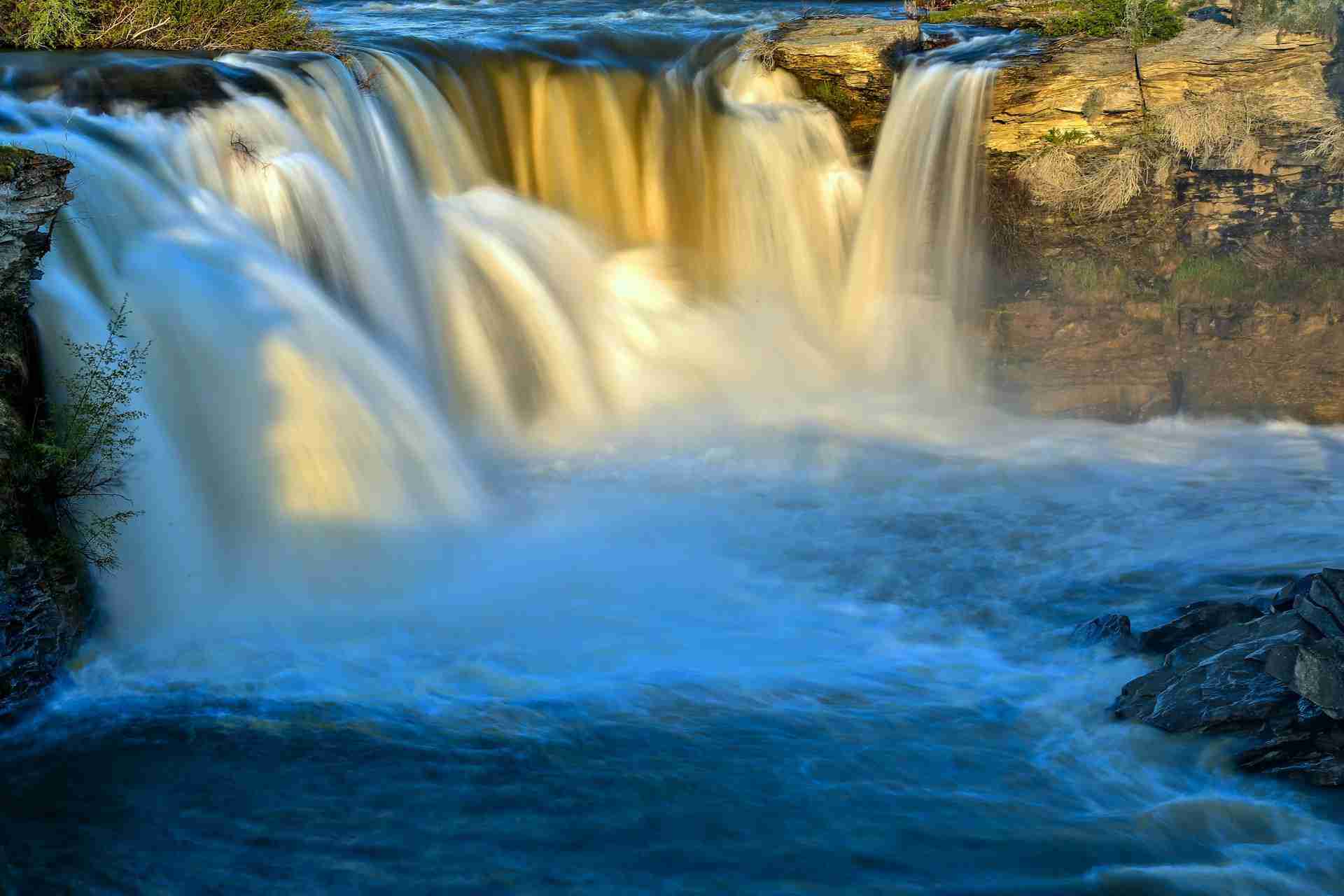
Lundbreck Falls offers a clean, accessible location for waterfall photography with defined cliff lines, fast-moving water, and open sky that responds well to changing light. Situated along the Crowsnest River just off the highway, the falls split into two main channels that drop over layered stone ledges before flowing downstream through a rocky canyon. The scene is small enough to manage with a single visit but varied enough to support multiple compositions, including long exposure work, compressed details, and wide environmental frames. Surrounding rock faces and the shape of the riverbanks give structure to foreground and midground elements, allowing photographers to experiment with depth and leading lines. Whether arriving during early light, after rain, or on a calm evening with cloud movement, this location rewards steady, thoughtful shooting.
Best Photography Opportunities
Main Overlook from the East Side Viewing Platform
This designated platform provides a full, elevated view of the falls from above, with both branches of the waterfall in clear sight. A wide-angle lens helps include the curve of the river, the exposed layers of stone, and the surrounding grass or snow depending on the season. Early morning is the best time for soft side light, while overcast conditions allow for even exposure across the water and cliff. Use a tripod for long exposures of one to three seconds to blur the water without losing texture in the surrounding rock. The platform is safe and stable, allowing time to fine-tune angles without foot traffic interfering with the setup.
River-Level Framing from the West Bank
A short trail leads down from the west side of the parking area toward the base of the falls, giving access to river-level compositions. This is a strong position for working with slow shutter speeds, tight detail, or reflections in calm water near the edges. A 24 to 70 millimeter lens is ideal here, providing flexibility between tighter compositions of the water's edge and wider frames that include the falls in context. Cloud cover or indirect light is best for this angle, since direct sun can create harsh contrast across the stone and water. Watch for wet rocks and plan your position with care to avoid unstable footing.
Compressed Details of Water Flow and Stone Pattern
Using a longer lens, such as a 70 to 200 millimeter, you can isolate sections of the waterfall where the flow cuts across individual ledges or drops vertically into narrow channels. These shots benefit from even light and medium shutter speeds to balance motion blur with texture. Focus carefully on where the water strikes the rock or spreads over the edge, and frame tightly to avoid clutter from the banks or sky. This approach works in any season, though spring and early summer provide the strongest flow. Compositions here often rely more on rhythm and tone than scale, making them suitable for print or series work.
Wide Environmental Composition with Bridge and Horizon
From several points along the trails and banks, you can include the highway bridge and open prairie beyond the falls. These frames benefit from expansive sky and clean air, particularly in the evening when clouds stretch low over the landscape. A wide-angle lens between 16 and 35 millimeters allows you to emphasize foreground rock or grass while keeping the waterfall and bridge within the frame. Late golden hour is best for color and separation between elements. If conditions are calm, the water below may hold partial reflections, adding texture to the lower half of the image.
Night or Blue Hour Long Exposure from the East Ridge
If you stay into the evening, the falls can be captured with smooth water flow and soft fading sky as the background. A tripod is essential here, along with a remote shutter or delay timer to reduce vibration. Use a low ISO and small aperture to extend the exposure and control the highlights in the water. Including the silhouetted cliffs or trees on the ridge helps hold the frame and reduce visual noise. These images work well when processed with cool tones and subtle contrast, and the location remains quiet after dark, allowing for longer sessions without interruption.
Best Time to Visit
Lundbreck Falls can be photographed throughout the year, but late spring through early autumn offers the widest range of conditions and access. In May and June, the water flow is at its strongest due to snowmelt, creating powerful drop lines and dense mist at the base of the falls. Morning and late afternoon are the best times for directional light, particularly when the sun strikes from the east or low from the west, adding warmth to the rock and lifting the water detail.
Summer provides longer shooting windows and more stable weather, though midday light can flatten the frame. Work around this by using partial shade or waiting for light cloud cover. In autumn, the surrounding grass and scrub shift to gold and brown tones, softening the color palette and giving more contrast to the water. Winter visits are possible, with ice forming along the edges of the falls and snow adding texture to the banks. Access may be limited depending on road and trail conditions, so plan ahead if snow or ice is present.
Wind can shift water spray across the platform and trails, especially during high flow. Bring weather protection for your gear and wipe lenses regularly. Changing cloud cover also alters mood and exposure quickly, so be prepared to adapt your settings on short notice.
How to Get There
Lundbreck Falls is located in southern Alberta, just off Highway 3 near the town of Lundbreck. From the highway, a signed turnoff leads directly to the day-use area and parking lot. The site is less than five minutes from the main road and fully accessible by car. The falls are visible from the lot, with a short path leading to the viewing platform and other informal trails heading down toward the river.
There is no fee to access the area, and photography is permitted from all public spaces. Tripods are allowed and commonly used. Most of the ground is gravel or packed dirt, though river access points may involve loose rock or damp surfaces. The area is maintained but not staffed, so arrive with everything you need for your session.
Recommended Photography Gear
Bring a sturdy tripod and remote shutter release for long exposure work from both the platform and riverbank. A wide-angle lens such as a 16 to 35 millimeter is essential for capturing the full scene or environmental shots that include sky and foreground. A 24 to 70 millimeter zoom is ideal for flexible composition, especially when shifting between overview and detail. A 70 to 200 millimeter telephoto helps isolate sections of water flow or rock structure and supports tighter framing from a safe distance.
Use neutral density filters between three and six stops to slow shutter speeds during daylight without overexposing the highlights in the falls. A circular polarizer helps manage glare on wet surfaces and brings out tone in the rocks and sky. Pack a lens cloth, as spray from the falls can collect on your glass quickly when shooting close to the water. Protective footwear and a waterproof bag insert are helpful if you're working near the river or during early season melt.
Nearby Photography Locations
Just west of Lundbreck Falls, this mountain corridor offers dramatic ridge lines, weather-worn trees, and wide valley views. These subjects respond well to changing light and cloud movement, especially during sunset.
This rockslide area is visually striking, with massive boulder fields and layered hills in the background. The mix of scale and texture offers strong black and white potential as well as muted color studies.
Located a short drive west, this calm lake reflects surrounding peaks and is best visited early in the morning when the water is still. The light here is soft and balanced during sunrise and golden hour.
A quiet, forest-edged lake framed by open sky and distant ridges. Useful for sunset compositions, long exposure reflection work, and layered natural scenes with few visual distractions.
This wide-open reservoir is backed by ridgelines and sky, with access to water-level shooting positions and quiet inlets. It is especially productive during golden hour or in early morning when the surface is calm and reflections are clean.
Lundbreck Falls offers photographers a practical and flexible location with strong natural structure and access to light from every angle. Whether you're building a long exposure study or stopping briefly while traveling through southern Alberta, the falls give you a mix of movement, edge, and shape that holds together in any season.
Comments
Loading comments…