
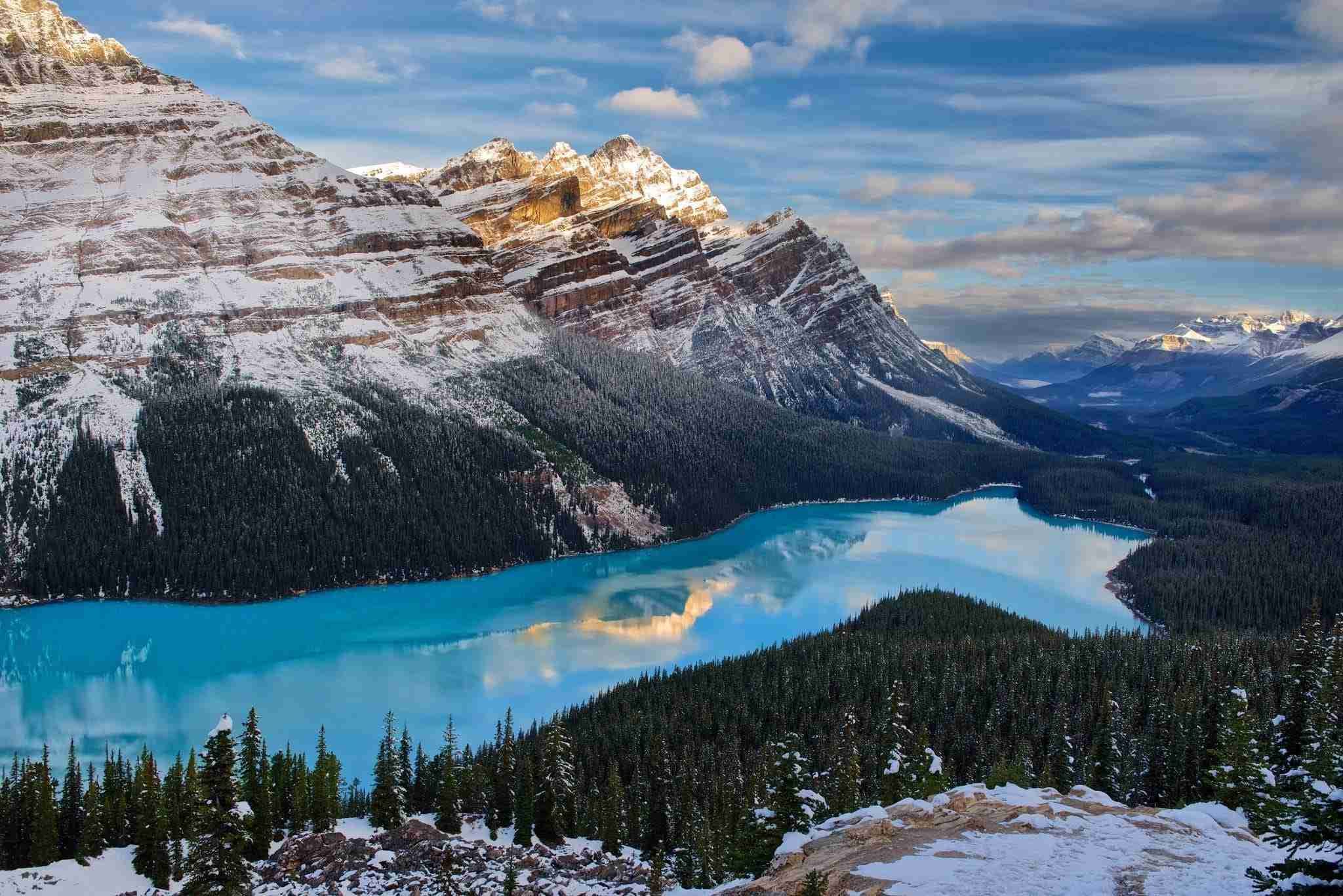
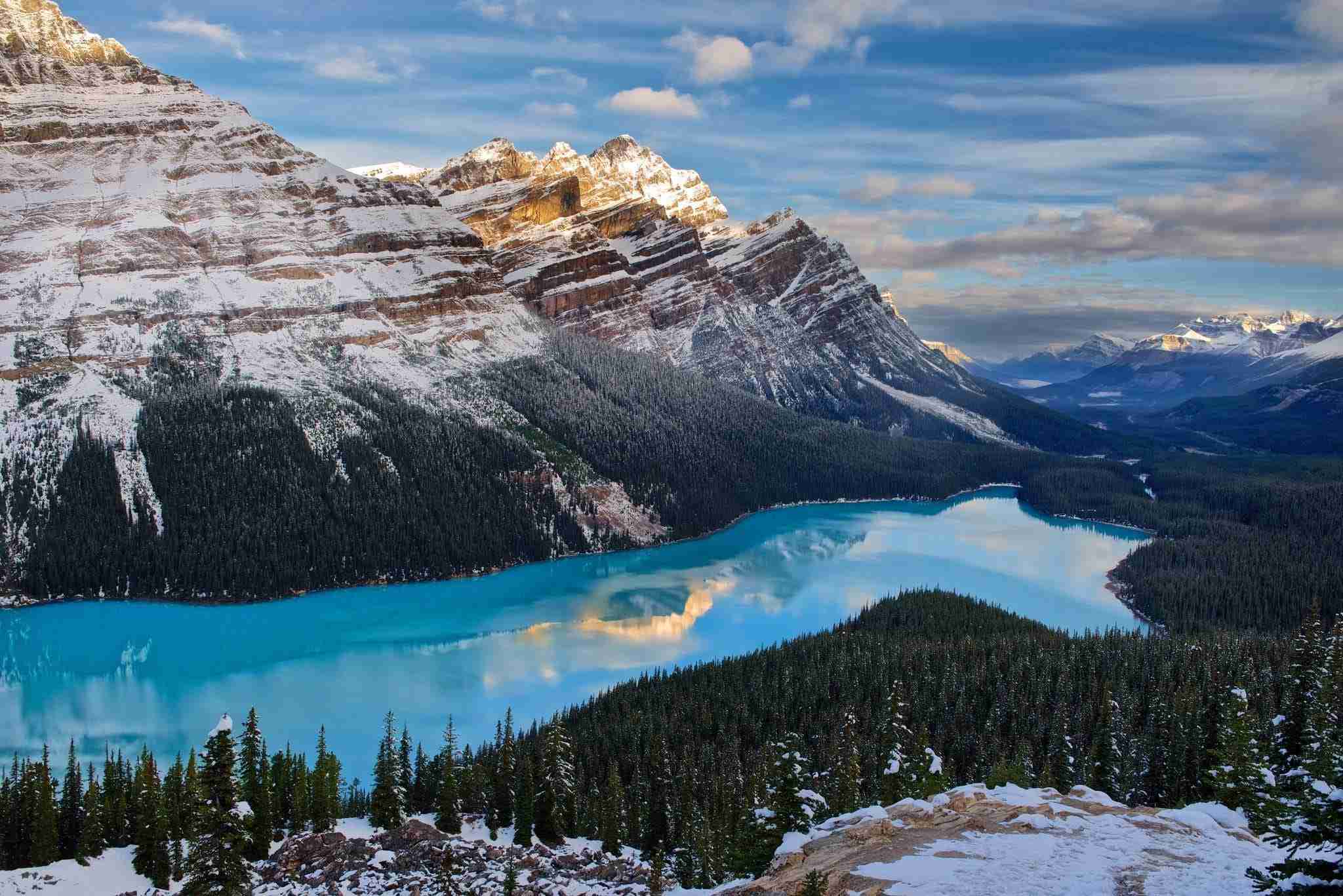
One of Banff's Most Iconic Views
Nestled in the heart of Banff National Park, Peyto Lake is one of the most photographed alpine lakes in Canada, renowned for its striking turquoise color and dramatic mountain backdrop. The lake is fed by glacial meltwater, which carries fine rock particles known as rock flour, giving the water its brilliant blue-green hue. Its distinctive wolf's head shape, as seen from above, adds to its unique and recognizable appearance. Named after Bill Peyto, a legendary trail guide and trapper, the lake is a must-visit destination for photographers, offering breathtaking vistas from easily accessible viewpoints.
Best Photography Opportunities
The Peyto Lake Viewpoint, located just a short walk from the Icefields Parkway, provides the most famous and accessible perspective of the lake. From this elevated vantage point, photographers can capture the full expanse of the lake, framed by towering peaks and dense evergreen forests. For those looking for less crowded angles, hiking a bit farther along the Bow Summit Lookout Trail reveals alternative perspectives with a higher and more expansive view of the valley. The best compositions include wide-angle landscape shots, long-exposure images that capture the lake's smooth, reflective surface, and seasonal variations, such as golden larches in autumn or snow-covered peaks in winter.
Best Time to Visit
Peyto Lake is best visited from late spring through early fall, when the vibrant turquoise waters are at their most striking. Early morning and late afternoon provide softer light and fewer crowds, while midday offers the most vivid color contrasts, as sunlight enhances the lake's brilliant hue. In winter, the lake is often frozen, creating a stunning yet entirely different atmosphere, with the icy surface blending into the surrounding snowy peaks.
The Icefields Parkway – A Scenic Route to Peyto Lake
Peyto Lake is easily accessed from the Icefields Parkway (Highway 93), one of the most scenic drives in the world. Stretching between Lake Louise and Jasper, this breathtaking route winds through glacier-carved valleys, towering peaks, and pristine alpine meadows, offering countless photography opportunities along the way. Whether stopping at glacial waterfalls, vast icefields, or hidden hiking trails, the Icefields Parkway is a dream for landscape photographers and road trip enthusiasts alike.
Nearby Photography Locations
For those looking to explore more of Banff National Park's natural wonders, nearby photography spots include:
• Bow Lake – A stunning glacier-fed lake with crystal-clear reflections of Crowfoot Mountain and Bow Glacier, located just a short drive from Peyto Lake. The lake's calm waters provide excellent opportunities for sunrise and sunset photography.
• Mistaya Canyon – A dramatic slot canyon carved by rushing glacial waters, featuring smooth rock formations and powerful rapids. Long-exposure photography works beautifully here, capturing the motion of the swirling currents.
• Waterfowl Lakes – A pair of serene alpine lakes along the Icefields Parkway, surrounded by towering peaks and lush forest. The reflection of Mount Chephren in the still waters creates breathtaking compositions, especially in the early morning light.
• The Athabasca Glacier – One of the most accessible glaciers in North America, offering incredible ice formations and sweeping mountain views. The surrounding Columbia Icefield provides endless opportunities for capturing the raw beauty of glacial landscapes.
Comments
Loading comments…