
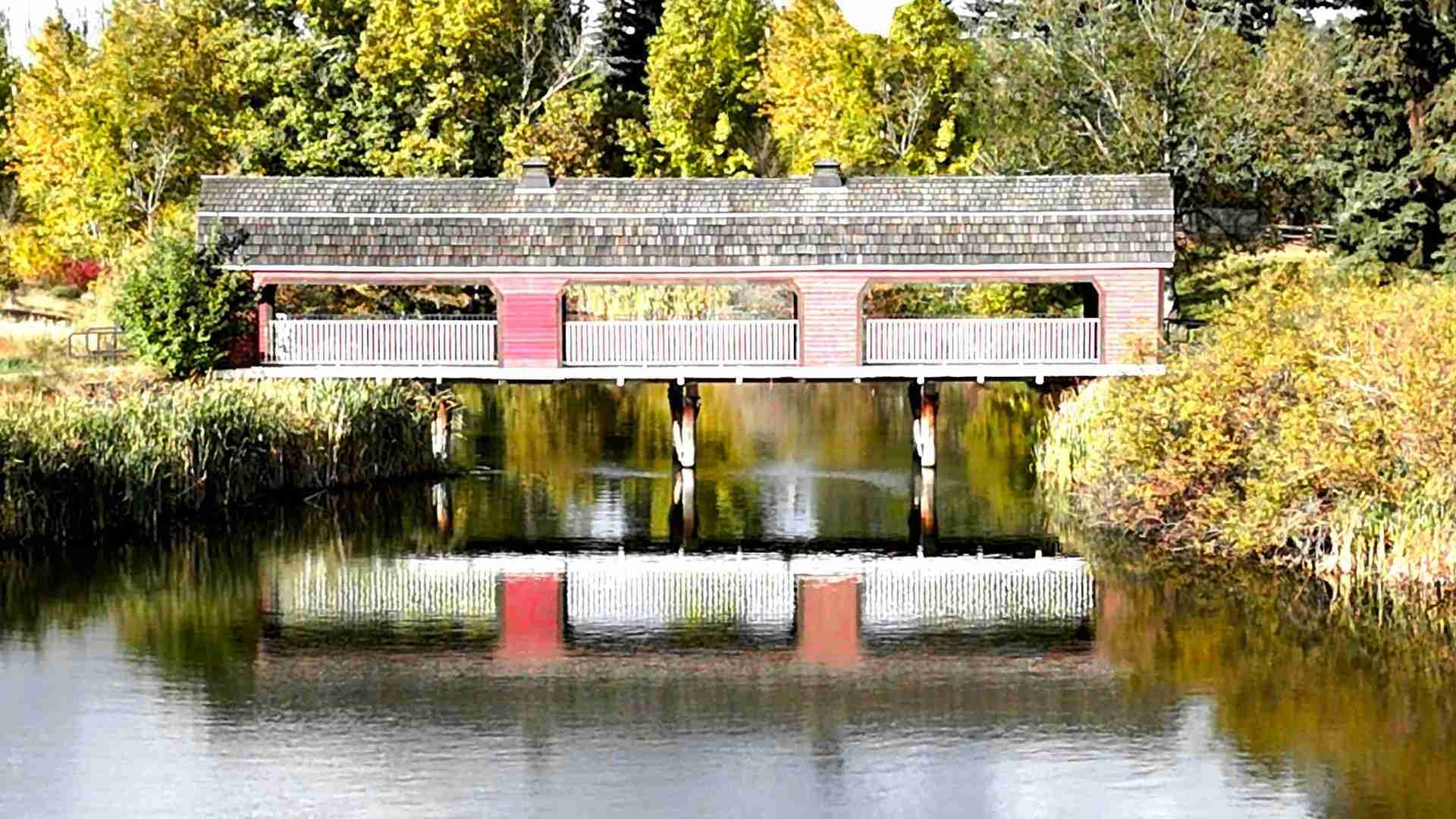
Tucked within a residential corner of Sherwood Park, the Woodbridge Farms Covered Bridge is a small but rewarding spot for photographers who enjoy working with symmetry, texture, and reflections. Spanning a slow-moving creek, the bridge connects walking paths and neighborhood green space, with red painted walls, exposed beams, and repeating vertical lines that hold up well in almost any light. The surroundings shift seasonally, with soft greens in spring, golden tones in autumn, and snow-covered stillness in winter. While the structure itself is compact, its photographic value lies in its simplicity. It gives you a clean framework for studying light, working with mirrored compositions, and building strong images from subtle changes in angle and atmosphere.
Best Photography Opportunities
• Full Bridge Reflections Across the Creek
From either bank, you can frame the entire bridge reflected in the water below. Calm conditions early in the morning are ideal for capturing symmetrical shots with soft, mirror-like detail. A standard or wide-angle lens helps you include both the structure and its surroundings, especially if you want to anchor the frame with trees, grass, or seasonal foliage. Overcast skies work well for reducing glare and keeping the red paint from blowing out in bright conditions. For golden hour, shoot from the west bank to catch warm light hitting the bridge directly, while the water stays cool and dark.
• Walking Path Approaches with Leading Lines
The paved paths leading toward the bridge on both ends offer solid opportunities for using natural lines in your composition. Wooden railings, fence posts, and shadows from nearby trees can all act as leading elements that guide the eye toward the structure. These scenes are best shot with a standard zoom or slightly wider lens from a low position, using the path to build foreground depth. Late afternoon is a good time to shoot this angle, as long shadows help separate the bridge from the background and give shape to the scene.
• Interior Detail and Frame Repetition
Inside the bridge, the exposed beams and red-painted interior offer a simple and repetitive pattern that lends itself well to centered, symmetrical compositions. Shoot from one end straight through to the opposite opening, allowing the repeating posts and beams to carry the viewer's eye through the frame. A tripod helps here, especially in lower light or during overcast days when shutter speeds slow down. This interior also photographs well in snow, when white ground and diffused light balance the strong color of the wood.
• Creek-Level Angles from the Shoreline
If conditions are dry and safe, step down toward the creek edge to find low angles that include rocks, reeds, and reflections. From below, the underside of the bridge and its supporting posts give a different sense of scale and shape. Use a wide-angle lens and stop down for depth of field to keep both foreground and background sharp. A polarizer can help reduce reflections or bring out color in the water and leaves, depending on your direction of light. These shots are strongest in spring and early autumn, when water levels are stable and plant life adds texture to the edges.
• Winter Snow and Morning Stillness
In winter, the bridge transforms into a clean, graphic subject surrounded by soft white. The creek often slows or partially freezes, creating layered compositions of snow, ice, and reflection. Early morning is best for this kind of shooting, when the light is cool and clear, and the neighborhood is still quiet. Expose carefully to avoid losing detail in the snow, and consider bracketing if you're working with both shadow and highlight in the same frame. These scenes also lend themselves well to black and white conversion, emphasizing line, contrast, and structure without relying on color.
Best Time to Visit
The covered bridge can be photographed year-round, but each season brings a different look and set of conditions. Spring offers clean greens and crisp light, often with slight mist or frost in the early mornings. Summer light can be more direct and challenging, but early hours and late evenings offer warm tones and long shadows that work well with the bridge's simple form.
Autumn is the most rewarding season overall. The red of the bridge contrasts naturally with gold, orange, and fading green foliage, and reflections are often at their strongest in the still morning water. Winter brings a completely different atmosphere, with snow flattening the landscape and muting the surrounding color. Light is lower throughout the day, allowing longer shooting windows and more flexibility with exposure.
Wind plays a role in reflection quality, so aim for early or windless days if you want clean water symmetry. The area is usually quiet early in the morning and during weekdays, giving you more space to set up and work without interruption.
How to Get There
Woodbridge Farms Covered Bridge is located in Sherwood Park, Alberta, within the residential neighborhood of the same name. From Edmonton, take Highway 16 east, then head south on Sherwood Drive. Turn into Woodbridge Farms neighborhood and follow signage toward the park area along Woodbridge Way or Woodbridge Crescent. Street parking is available in the surrounding residential streets, with walking paths leading directly to the bridge.
Access is free and the entire area is open to the public year-round. The footbridge connects two sides of a community park and is easy to reach on foot from any nearby parking location. The surrounding paths are paved and level, making it accessible for tripods, rolling bags, or those carrying heavier gear. While the bridge is often quiet, it is occasionally used by walkers and cyclists, so be ready to adjust your framing or timing when people enter the frame.
Recommended Photography Gear
A 24–70mm zoom lens will give you the flexibility to frame both wide and medium shots of the bridge and its surroundings. Bring a wide-angle lens in the 16–35mm range if you plan to shoot from low creek-side positions or want to exaggerate foreground and structure depth. A short telephoto in the 70–200mm range is helpful for isolating details, compressing the scene across the water, or picking out repeated elements inside the bridge.
A tripod is useful for long exposures, overcast shooting, and symmetry-focused compositions. Bring a circular polarizer to manage reflections on the creek surface and enhance natural color contrast in foliage. In winter or early mornings, pack a lens cloth to manage condensation and snowflakes. A small, weather-resistant backpack is all you need to carry gear along the short paved paths that surround the bridge.
Nearby Photography Locations
Just a few minutes away, this large park offers lake reflections, tree-lined paths, and urban wildlife in a more open setting. Early morning is ideal for fog or soft backlight across the lake, especially during spring and fall.
• Bev Facey Community Trail
This wooded path behind the local high school features footbridges, wooden fences, and subtle elevation changes. It is a good spot for working with filtered light through trees and capturing textures in both summer greens and fall color.
Located west along the river valley, this site mixes wide prairie views with river-edge paths and industrial ruins. It is excellent for photographers who like open sky compositions or minimal subjects framed by large landscapes.
A bit further northwest, this modern pedestrian bridge over the North Saskatchewan River offers strong architectural lines, long shadows, and reflective water surfaces. Sunset and blue hour sessions here work well with long exposures and skyline frames.
South of downtown Edmonton, this urban ravine offers forested paths, old railway trestles, and a mix of light and shadow that shifts constantly with the time of day. It's a strong contrast to the clean structure of the Woodbridge Farms bridge and pairs well for a second shoot on the same day.
The Woodbridge Farms Covered Bridge might be small, but its strength lies in its clean lines, changing surroundings, and the calm setting it provides. Whether you're after full reflections, interior rhythm, or seasonal shifts in light and color, this quiet spot gives you the time and space to build the kind of image that holds up beyond the frame.
Comments
Loading comments…