
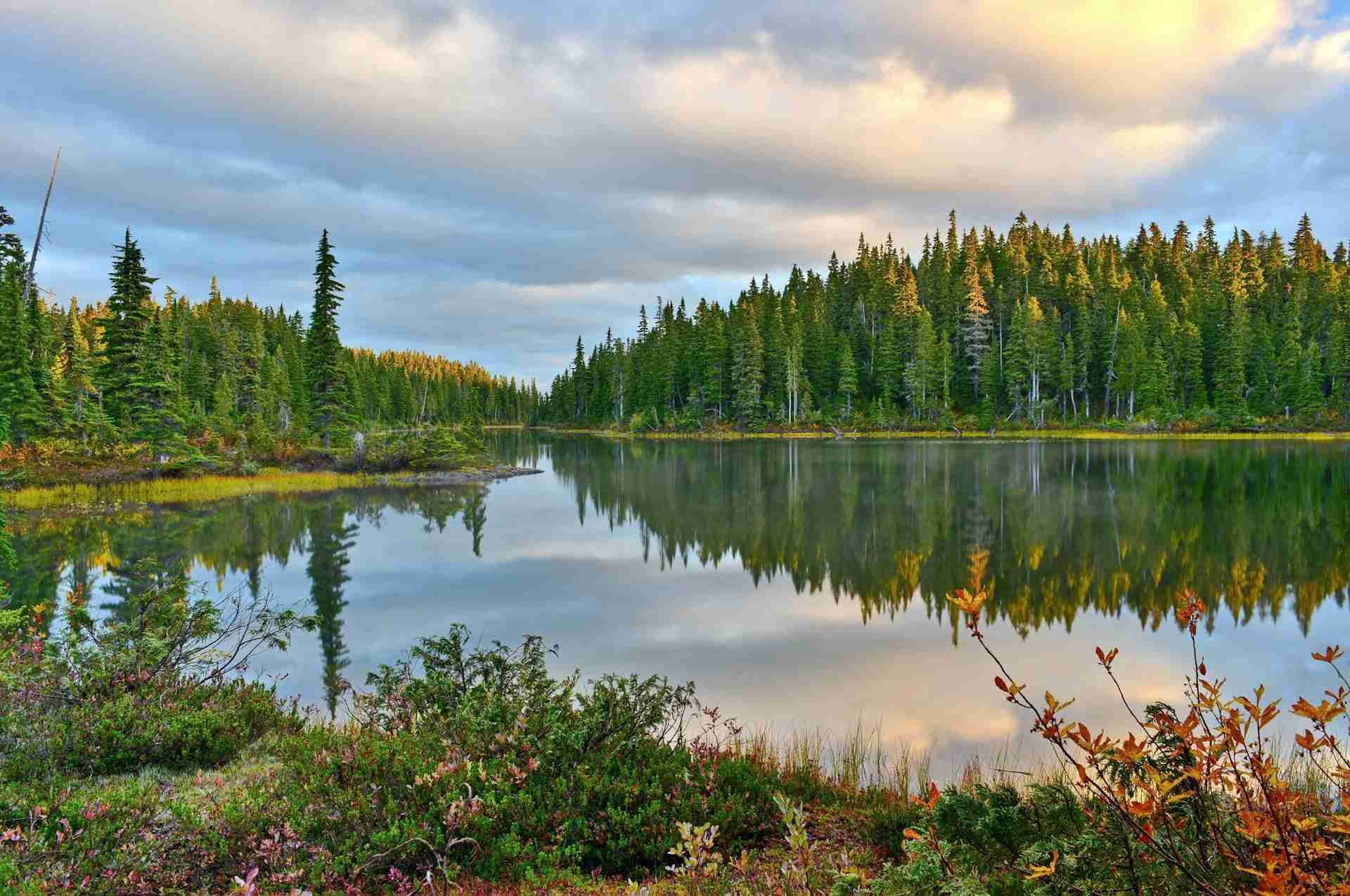
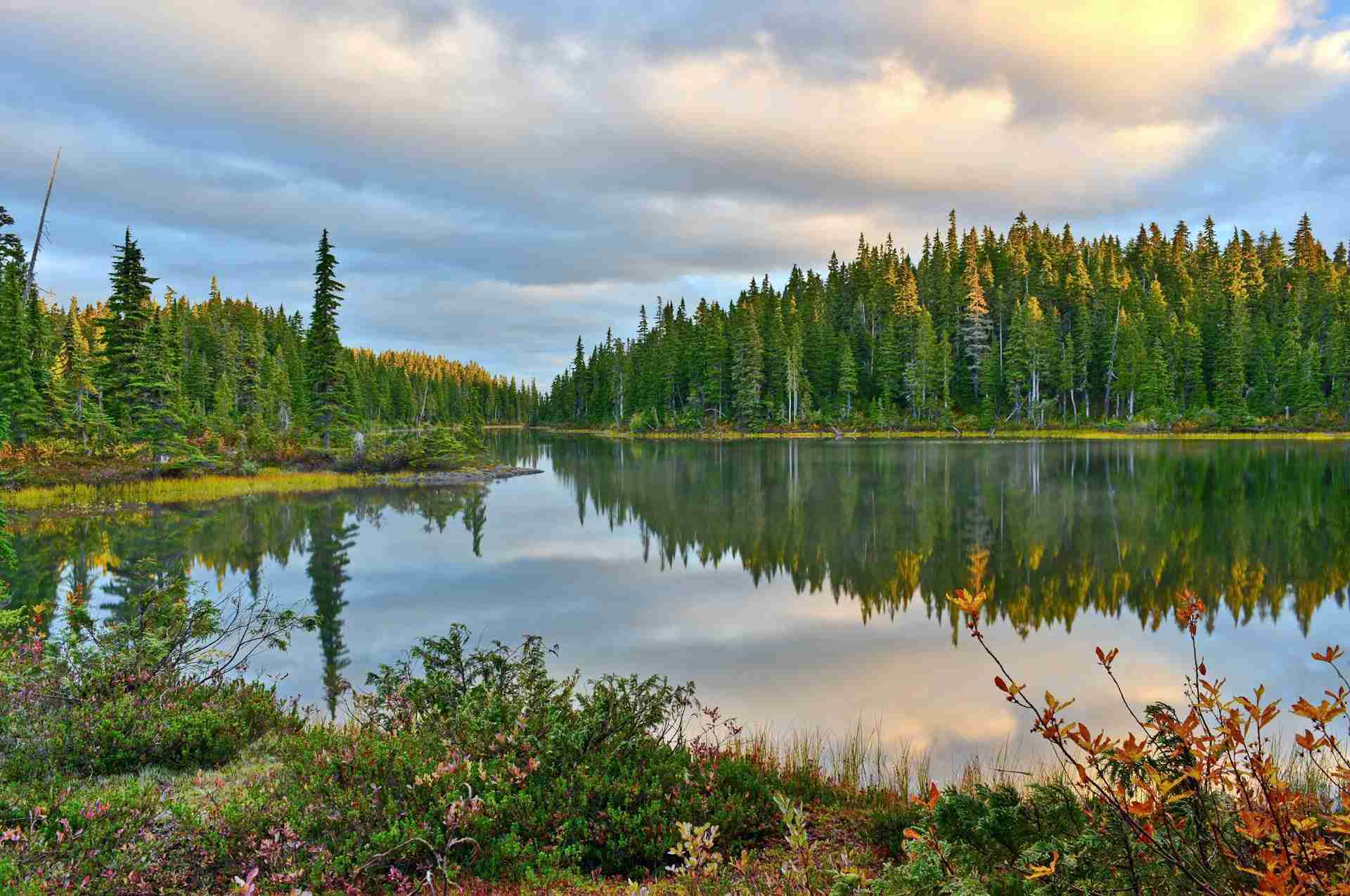
Tucked into the Forbidden Plateau of Strathcona Provincial Park on Vancouver Island, Battleship Lake is a serene alpine waterbody surrounded by dense conifer forest and mountain meadows. Its name comes from the long, narrow shape that resembles a warship cutting through calm waters. The lake is easily accessible yet feels remote, offering photographers still reflections, soft mountain light, and seasonal color changes that transform the scene throughout the year. Framed by the rugged landscape of Vancouver Island's oldest provincial park, Battleship Lake provides an ideal mix of accessible tranquility and wild backdrops, making it a rewarding subject for both intimate nature studies and expansive landscape compositions.
Best Photography Opportunities
• Mirror-like reflections from the shoreline
: The calm, sheltered waters of Battleship Lake create nearly perfect reflections of surrounding trees and mountains. From the lakeshore trails, especially on still mornings, you can capture symmetry between sky and water that emphasizes the elongated shape of the lake. A wide-angle lens allows you to include shoreline elements such as grasses or rocks as foreground anchors. Shooting during the blue hour or at sunrise gives the most balanced tones, while evening light reflects warm colors across the surface. Even on cloudy days, the lake's reflective quality produces strong minimalist compositions.
• Seasonal color in the alpine meadows
: In late summer and early autumn, the meadows around Battleship Lake turn vivid with reds, oranges, and golds from berry bushes and grasses. These seasonal colors frame the lake beautifully, especially when combined with evergreen trees that provide contrast. Close-up studies of foliage along the water's edge can be paired with wide shots of the lake to create a complete narrative of the season. Low morning light enhances saturation, while backlighting in the evening emphasizes translucence in the leaves. Macro lenses can capture details of alpine flowers in spring and summer, providing more intimate compositions alongside grand landscapes.
• Boardwalk and trail perspectives
: The access trail to the lake includes sections of boardwalk that wind through forest and marsh. These wooden lines serve as strong leading elements, guiding the viewer toward the water and mountains beyond. Wide-angle compositions here emphasize perspective and scale, especially when the path disappears into the distance. Early morning fog is common in this area, and when it lingers among the trees or across the lake, it adds mystery and depth. Overcast conditions work well too, softening contrast and allowing subtle tones to emerge in both wood and vegetation.
• Winter snowscapes
: During winter, Battleship Lake becomes a peaceful snowscape, with frozen water and snow-covered trees transforming the scene into a monochrome study of texture and form. Snowshoe access is possible, and the open expanse of the lake provides space for minimalist compositions. A telephoto lens can pick out details such as snow-laden branches or distant ridges softened by fog. In low winter light, shadows carve texture into the snow, while sunsets reflect pastel hues across the frozen surface. This is also one of the quietest times to photograph the lake, with few visitors and a sense of pristine isolation.
• Wildlife encounters
: The forests and meadows around Battleship Lake are home to birds, deer, and smaller mammals that can add life to your compositions. Patient photographers may capture loons gliding across the lake or dragonflies hovering above the shallows in summer. A telephoto lens is necessary for wildlife work, allowing you to isolate subjects without disturbing them. Early morning is the most active time for birds and mammals, when the light is soft and the lake surface undisturbed. Including wildlife within broader landscape frames helps convey the vitality of the alpine ecosystem.
Best Time to Visit
Battleship Lake offers distinct photographic opportunities in every season. In spring, snow begins to melt, feeding streams and adding reflections of fresh greenery to the water. Summer provides the longest days and warm evenings, with wildflowers blooming in meadows and calm nights ideal for twilight reflections. Autumn is one of the most rewarding times, as the alpine shrubs turn fiery red and orange, contrasting beautifully with dark green conifers and the lake's reflective surface. Early mornings in autumn are especially productive, with mist rising from the water in cool air.
Winter, while requiring more effort, delivers some of the most atmospheric conditions. Snowshoeing access allows photographers to capture frozen, silent landscapes under soft low sun. The short days of winter bring golden light throughout much of the afternoon, reducing harsh contrasts and adding warmth to compositions. Overall, mornings are the most consistent time of day to photograph the lake, as wind is often minimal, producing calm reflections. Evenings are also excellent, especially in summer when the long golden hour lights the landscape and the lake surface simultaneously.
How to Get There
Battleship Lake lies within Strathcona Provincial Park, near Mount Washington on Vancouver Island. From Courtenay, the drive takes about 45 minutes along Highway 19 to the turnoff for Mount Washington Alpine Resort. From there, follow signs to the Paradise Meadows trailhead, where parking is available. The hike to Battleship Lake is relatively easy, taking about 30 to 45 minutes along well-maintained trails and boardwalks through forest and meadow. The path is accessible in summer for hikers of most abilities, though wet conditions can make sections slippery. In winter, the route is popular with snowshoers, and while the lake is accessible, proper winter gear and preparation are essential. There is no fee to access the trails or lake, though visitors should respect park regulations and stay on marked paths to protect fragile alpine environments.
Recommended Photography Gear
A wide-angle zoom in the 16 to 35 millimeter range is ideal for capturing full reflections of the lake and the surrounding alpine landscape. A mid-range zoom such as a 24 to 70 millimeter allows flexibility for both trail perspectives and tighter frames of vegetation and shoreline detail. A telephoto lens up to 200 millimeters is useful for isolating sections of the landscape, compressing reflections, and photographing wildlife discreetly. A tripod is essential for dawn, dusk, and winter photography, especially when working with long exposures in low light.
Filters play an important role at Battleship Lake. A polarizer reduces glare on the water and enhances the depth of reflections. Neutral density filters allow for longer exposures, particularly useful for smoothing ripples and capturing soft, painterly skies mirrored in the lake. In winter, lens hoods and weather-sealed equipment are advisable, as snow and condensation can quickly affect gear. Waterproof footwear and breathable layers are recommended year-round, since the trail often crosses wet or snowy terrain. A compact backpack makes carrying equipment along the hike manageable, while keeping hands free for balance on uneven ground.
Nearby Photography Locations
: Directly accessible from the same trailhead as Battleship Lake, Paradise Meadows is a broad expanse of alpine wetlands and forest with boardwalks threading through it. Morning mist and seasonal wildflowers make it an excellent complement to the lake.
: A short hike beyond Battleship Lake, this larger alpine lake offers sweeping views framed by mountains and meadows. Its broader expanse makes it ideal for panoramic work, especially at sunrise or sunset.
: In summer, the resort's trails lead to viewpoints with wide vistas over Strathcona Park. In winter, the snowy slopes and surrounding forest are excellent for minimalist compositions and aerial perspectives.
: Further within Strathcona Park, this longer trail provides access to deep valleys, waterfalls, and rugged mountain scenery. It is best suited for multi-day photographers seeking wilderness landscapes.
: Located deeper in Strathcona Park, Buttle Lake is framed by dramatic mountains and offers strong compositions at both sunrise and sunset. Its large surface area reflects sky and peaks, contrasting well with the intimacy of Battleship Lake.
Battleship Lake is a place where simplicity meets drama, where still waters reflect the vast skies of Vancouver Island's alpine heart. Its accessibility combined with its quiet atmosphere makes it a rewarding destination for photographers seeking both peaceful reflection and the chance to explore broader alpine landscapes within Strathcona Provincial Park.
Comments
Loading comments…