
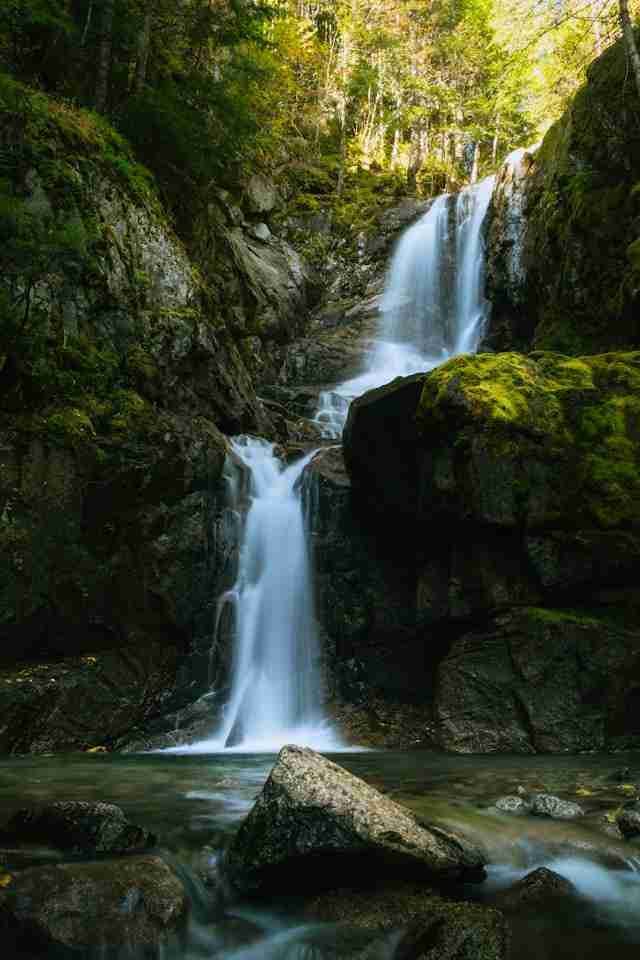
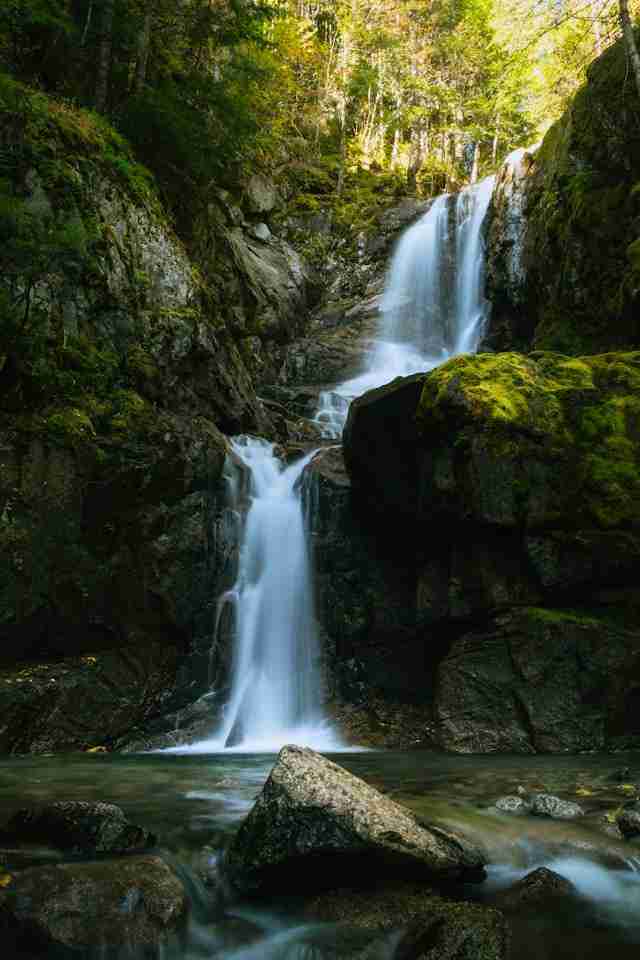
Bosumarne Falls is a quiet, forested waterfall located just off Chilliwack Lake Road in the Fraser Valley of British Columbia. Nestled in a shaded ravine surrounded by thick moss, conifer roots, and damp rock, the falls are a short but rewarding destination for photographers who prefer working in intimate landscapes with strong texture and steady water flow. The setting feels enclosed and calm, with light filtering softly through the forest canopy above and a narrow trail that brings you in close to the falls without needing a long hike. What Bosumarne lacks in height or dramatic volume, it makes up for with well-shaped flow, consistent conditions, and natural compositions formed by rock, water, and wood.
Best Photography Opportunities
• Frontal View of the Main Cascade
The primary drop of Bosumarne Falls consists of several tight tiers that spill into a shallow basin surrounded by mossy stone. A wide-angle lens allows you to take in the entire structure from the base of the falls, with space in the foreground for including leaves, wet rock, or reflections if conditions allow. The falls flow year-round, but spring and early summer offer the most volume without obscuring the shape. Overcast skies are ideal, as they soften contrast and reduce glare from wet surfaces. Use a tripod and a slow shutter speed to blur the flow while keeping the surrounding details crisp.
• Vertical Composition from the Creekbed
Approaching the falls from just downstream gives you a clean vertical perspective, with the water descending through the center of the frame and trees or boulders framing either side. This angle benefits from standing low in the creek or just along the bank, depending on water levels. A mid-range zoom lens works well here, letting you adjust quickly without needing to reposition across the uneven terrain. Early morning is the best time to avoid hotspots on the stone, and the natural V-shape of the gorge helps guide the viewer's eye directly to the waterfall.
• Close-Up Textures of Moss and Rock
The stone surrounding the falls holds deep grooves and patches of vibrant moss, often wet enough to shine under soft light. These textures are excellent subjects for tight compositions, especially where green moss overlaps gray rock or where water has carved shallow patterns into the surface. Use a short telephoto or macro lens to isolate these features. Cloudy days or gentle rain are ideal for shooting these details, as moisture enriches color and keeps surfaces reflective without producing harsh highlights.
• Low-Angle Reflections in the Foreground Pool
At the base of the falls, a small pool collects water and can act as a subtle mirror when the flow is steady. If wind is calm and light is soft, you can use the still surface to reflect part of the falls or the surrounding trees. Get low with a standard lens and keep the foreground clean of clutter or floating debris. A circular polarizer allows you to fine-tune the strength of the reflection and balance it against the detail in the water or stone beneath the surface.
• Woodland Stream Scenes Upstream from the Falls
Above the main cascade, the creek continues through a forested section with fallen logs, ferns, and clear flow over smooth rock. This area is quieter and more abstract, ideal for building compositions from repeating forms, soft movement, and layered texture. Long exposures work well here, especially when combined with filtered light and naturally cool color palettes. These upstream scenes are best framed with a tripod and a wide or standard lens to keep the visual elements simple and intentional.
Best Time to Visit
Bosumarne Falls can be photographed year-round, but the best conditions come in spring and early summer when water flow is strong and the forest holds a full range of green tones. During this time, the falls are well defined, and the pool at the base is clear. Autumn brings softer light and fallen leaves, which can add color to the forest floor and water surface, though lower flow may reduce the strength of the main cascade.
Rainy or overcast days are ideal for this location. The canopy above keeps most direct sunlight out, but cloud cover flattens contrast even further and helps prevent harsh glare from wet rock. Early mornings are quiet and cool, with minimal wind and a higher chance of undisturbed water surfaces. In winter, access may be limited due to snow or icy trails, and the falls can partially freeze depending on conditions, creating a different but more difficult photographic setting.
How to Get There
Bosumarne Falls is located off Chilliwack Lake Road, roughly 30 kilometers southeast of Chilliwack, British Columbia. There is a small pullout near the trailhead, located on the north side of the road, not far from the entrance to the Bosumarne Falls Recreation Site. From the roadside, the trail is short, typically under 10 minutes, and leads directly to the base of the falls.
There are no entrance fees, and the area is open year-round. However, trail conditions can vary, especially after heavy rain or during freeze-thaw cycles. The ground is often slick with mud, moss, or exposed roots, so solid hiking shoes are recommended. The trail is not maintained to high standards, but it is manageable with a light camera pack and tripod. Cell service in the area is unreliable, so plan accordingly and save offline maps before you go.
Recommended Photography Gear
A 24–70mm zoom lens will handle most compositions here, from waterfall overviews to mid-range forest scenes and foreground detail. A 16–35mm wide-angle lens is helpful when working up close or including both the cascade and its surroundings in a single frame. A macro or short telephoto lens gives you flexibility for isolating textures, moss, or water patterns on nearby rock.
A sturdy tripod is essential for long exposures and low-light work under the canopy. A circular polarizer helps cut through glare on wet stone and enriches the green tones in the moss and ferns. Bring a 6-stop ND filter if you plan to work with longer shutter speeds, particularly in brighter overcast conditions. Pack a microfiber cloth to manage lens moisture and a weather-resistant bag to protect your gear in wet or humid weather. Waterproof boots are useful, especially if you plan to shoot from the creekbed or across soft ground.
Nearby Photography Locations
Roughly 20 minutes southeast of Bosumarne Falls, this alpine lake offers clean, wide compositions with forested slopes and mountain peaks reflected in still water. Early morning is ideal for glassy conditions and soft shoreline light. A long lens works well here for compressing background layers.
A short but moderately steep hike leads to this turquoise alpine lake surrounded by steep rock faces and dense forest. The water color is striking on overcast days and contrasts well with the dark surrounding vegetation. Great for reflection work and tight shoreline compositions.
Near Cultus Lake, this forested trail includes whimsical elements along the path and ends with views over the lake and valley. While not a direct match for waterfall work, it provides contrast and elevation, with late afternoon side light through the trees.
For a more open scene, the drive up toward the Elk Mountain trailhead includes several pullouts with views over the Fraser Valley, especially during morning inversion layers. This location works best at sunrise or sunset when the light is low and layered.
• Vedder River
Flowing through the heart of Chilliwack, the Vedder River offers wide compositions, long exposure potential, and varied subjects ranging from bridges to driftwood. Use this location as a secondary shoot when clouds move in or when you want a break from enclosed forest work.
Bosumarne Falls may not be the largest or most photographed waterfall in British Columbia, but its shape, location, and soft forest setting give you the tools to work quietly and deliberately. It is a place for thoughtful composition, for watching how water folds across stone, and for building images that rely on patience and subtlety rather than scale. If you time your visit well and work the scene with care, you will come away with images that hold weight through their balance and calm.
Comments
Loading comments…