

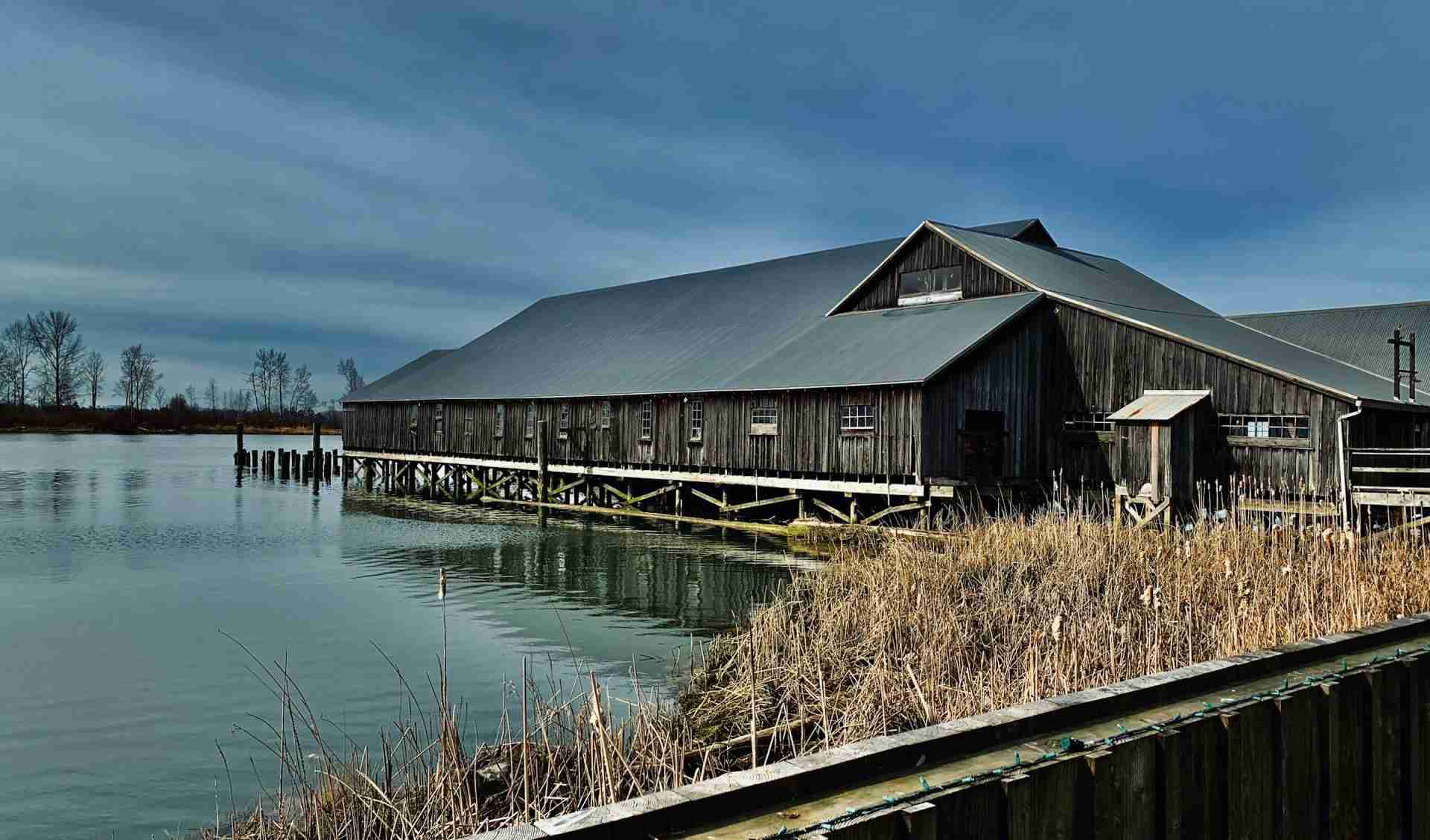
Britannia Shipyards sits along the Fraser River in Steveston, preserving one of the most important historic fishing communities on Canada's west coast. The site contains a cluster of weathered wooden buildings, docks, and industrial structures that once supported a busy salmon canning and boat building industry. Today the area remains remarkably intact, offering photographers a chance to explore boardwalks, heritage buildings, and river views that reflect more than a century of coastal history. The combination of aging wood textures, calm river water, and open sky creates a setting where architectural and documentary photography naturally come together. With the Fraser River flowing quietly beside the buildings and distant mountains often visible on clear days, Britannia Shipyards offers a layered scene that rewards careful composition and attention to detail.
Best Photography Opportunities
• Heritage Buildings Along the Boardwalk – The cluster of historic wooden buildings lining the boardwalk forms the heart of Britannia Shipyards and provides some of the most compelling photographic subjects in the area. Many of these structures date back to the early twentieth century and still display the weathered textures and simple construction that defined the fishing industry during that time. Photographing from the boardwalk allows you to capture the buildings in a row while including the river beside them, creating strong horizontal compositions. Early morning light often illuminates the wooden walls from the side, revealing the grain and age of the materials. Taking time to move slowly along the walkway allows photographers to find angles where the buildings overlap slightly, adding depth and rhythm to the scene.
• Chinese Bunkhouse – One of the most historically significant buildings at Britannia Shipyards is the Chinese Bunkhouse, which once housed workers involved in the local fishing industry. The exterior offers strong architectural lines with its long wooden structure raised slightly above the ground. Inside the building, preserved rooms and wooden partitions tell the story of the workers who lived there, creating opportunities for documentary style photography. Window light filtering through the structure can produce gentle highlights and shadows across the interior walls. Photographers who pay attention to these details can capture images that communicate both the physical space and the human history connected to it.
• Fishing Boats and River Reflections – Along the edge of the shipyard, the Fraser River provides a calm surface that often reflects nearby boats, docks, and buildings. Fishing vessels tied along the shoreline add color and scale to the scene while also connecting the historic site to the continuing maritime culture of Steveston. Calm mornings tend to produce the best reflections before wind begins to ripple the surface of the water. Positioning the boats within the lower portion of the frame while the shipyard buildings rise behind them can create balanced compositions. Watching the movement of the water also helps photographers time moments when reflections appear clearer.
• Weathered Wood and Industrial Details – Beyond the larger buildings, the shipyard contains many smaller details that reward close observation. Rusted metal hardware, old ropes, wooden beams, and dock structures provide interesting textures that reflect decades of coastal use. Photographers can isolate these elements using tighter compositions to highlight patterns and surface detail. Soft light during overcast conditions works particularly well because it prevents harsh shadows while preserving subtle tones in the wood and metal. These quieter images often help tell the story of the site in a more intimate way.
• Boardwalk Leading Lines – The long wooden boardwalk that runs through the site naturally guides the viewer's eye toward the river and surrounding buildings. Using the boardwalk as a foreground element can create strong leading lines that draw attention deeper into the composition. Shooting from a lower position can emphasize the lines of the planks while still including the historic structures on either side. As people walk through the area they sometimes become part of the scene, adding scale and life to the image. The repeating pattern of the walkway and railings provides a simple but effective structure for many compositions.
Best Time to Visit
Morning is often the most productive time to photograph Britannia Shipyards. Early light tends to illuminate the buildings from the east, revealing the textures of the wood and creating gentle shadows along the boardwalk. The area is also quieter during the morning hours, which makes it easier to photograph the structures without large crowds moving through the scene.
Spring and summer bring longer daylight hours and more activity around Steveston, while autumn often introduces softer light and occasional mist rising from the Fraser River. Winter can also be appealing for photographers who prefer quieter conditions and cooler tones across the water and sky. Overcast days are especially helpful for architectural photography because the softer light preserves detail in the wooden structures without creating strong contrast.
How to Get There
Britannia Shipyards National Historic Site is located in Steveston, a historic fishing village within the city of Richmond, British Columbia. The site sits directly along the Fraser River and is easily reached from central Richmond or Vancouver. The shipyards are located slightly east of the main village area along the waterfront. Parking is available near the site, and several walking paths connect the historic buildings and boardwalk areas.
Visitors can explore the outdoor areas of the site freely, while some of the interior exhibits may have seasonal hours or entry policies depending on the time of year. Access to the grounds and waterfront viewpoints is free, though special exhibits or guided experiences may sometimes require admission.
Recommended Photography Gear
A wide lens is particularly useful at Britannia Shipyards because many of the compositions include both the historic buildings and the surrounding boardwalk environment. This type of lens helps capture the relationship between the structures, the river, and the open sky above. A mid range zoom lens is also helpful for isolating details such as windows, ropes, dock hardware, or architectural patterns within the buildings.
A tripod can be useful for early morning or evening photography when light levels begin to drop along the riverfront. A circular polarizing filter helps reduce glare on the water surface and can strengthen reflections of boats and buildings along the Fraser River. Because many of the most interesting details involve aged wood textures, photographers may also benefit from a lens capable of focusing relatively close to highlight smaller elements within the scene.
Nearby Photography Locations
• Steveston Harbour
is a working fishing port filled with commercial vessels, docks, and waterfront activity. The harbor offers excellent opportunities for photographing boats, reflections, and the everyday rhythm of the local fishing industry. Early morning often provides calmer water and softer light across the docks.
sits at the mouth of the Fraser River where the water meets the Strait of Georgia. The wide shoreline and open sky create strong sunset photography opportunities with distant mountain views across the water. Driftwood and rocky sections of beach provide useful foreground elements for coastal compositions.
runs along the outer edge of Richmond and offers long views across tidal marshes and open water. Photographers walking along the trail can capture layered scenes of marsh grasses, water channels, and distant mountain ranges. The area is also known for bird activity, which adds wildlife photography opportunities.
features a long jetty extending far into the Strait of Georgia, creating one of the most distinctive leading lines in the region. The straight path draws the viewer toward the horizon and works particularly well for minimalist landscape compositions. On clear days photographers can also capture distant mountain views across the water.
• Terra Nova Rural Park offers open agricultural fields and walking paths that contrast with the maritime scenes around Steveston. Photographers can capture wide landscapes with crops, grasses, and views across the Fraser River toward Vancouver. Sunset light often spreads across the fields and river, creating warm tones across the landscape.
Comments
Loading comments…