
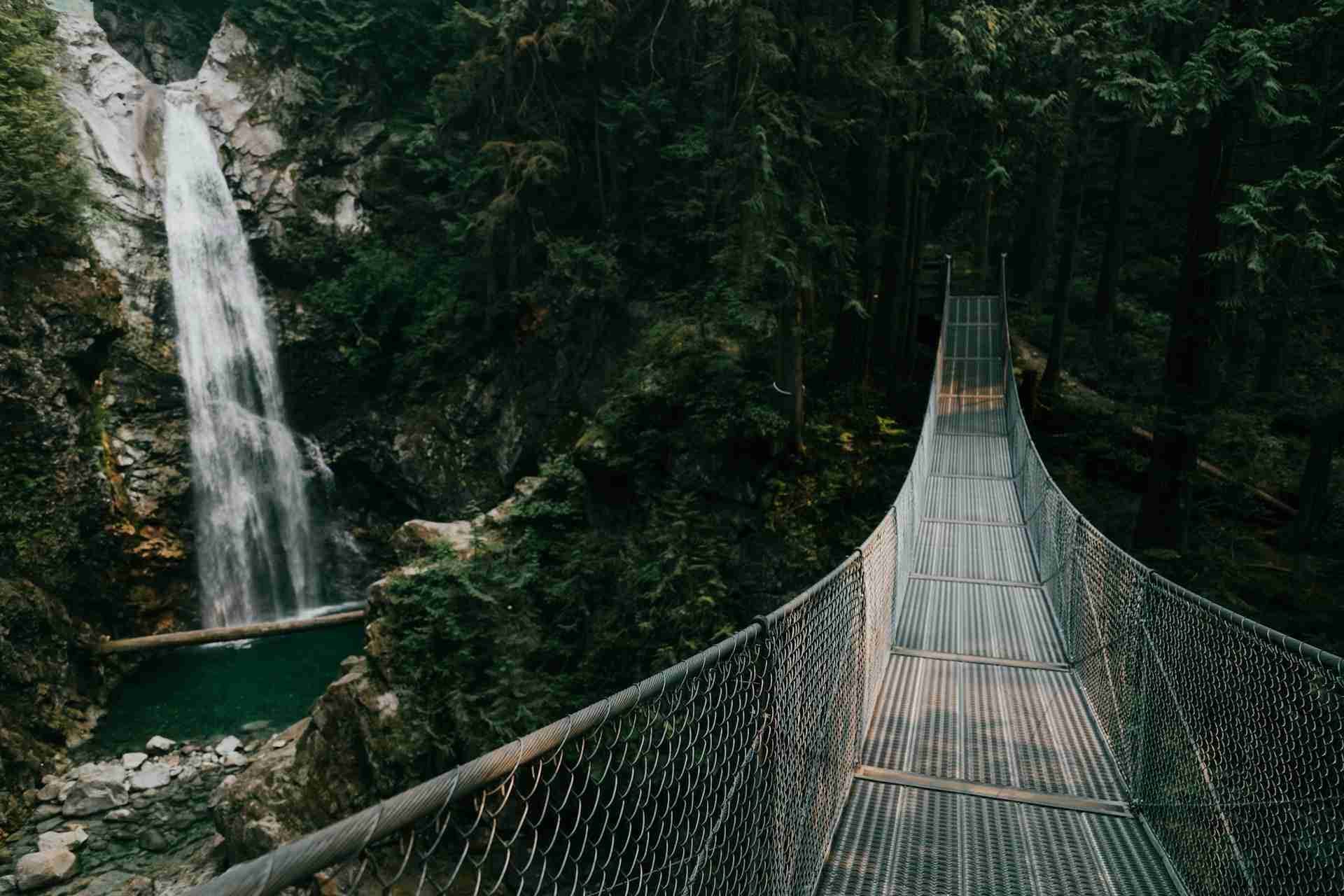
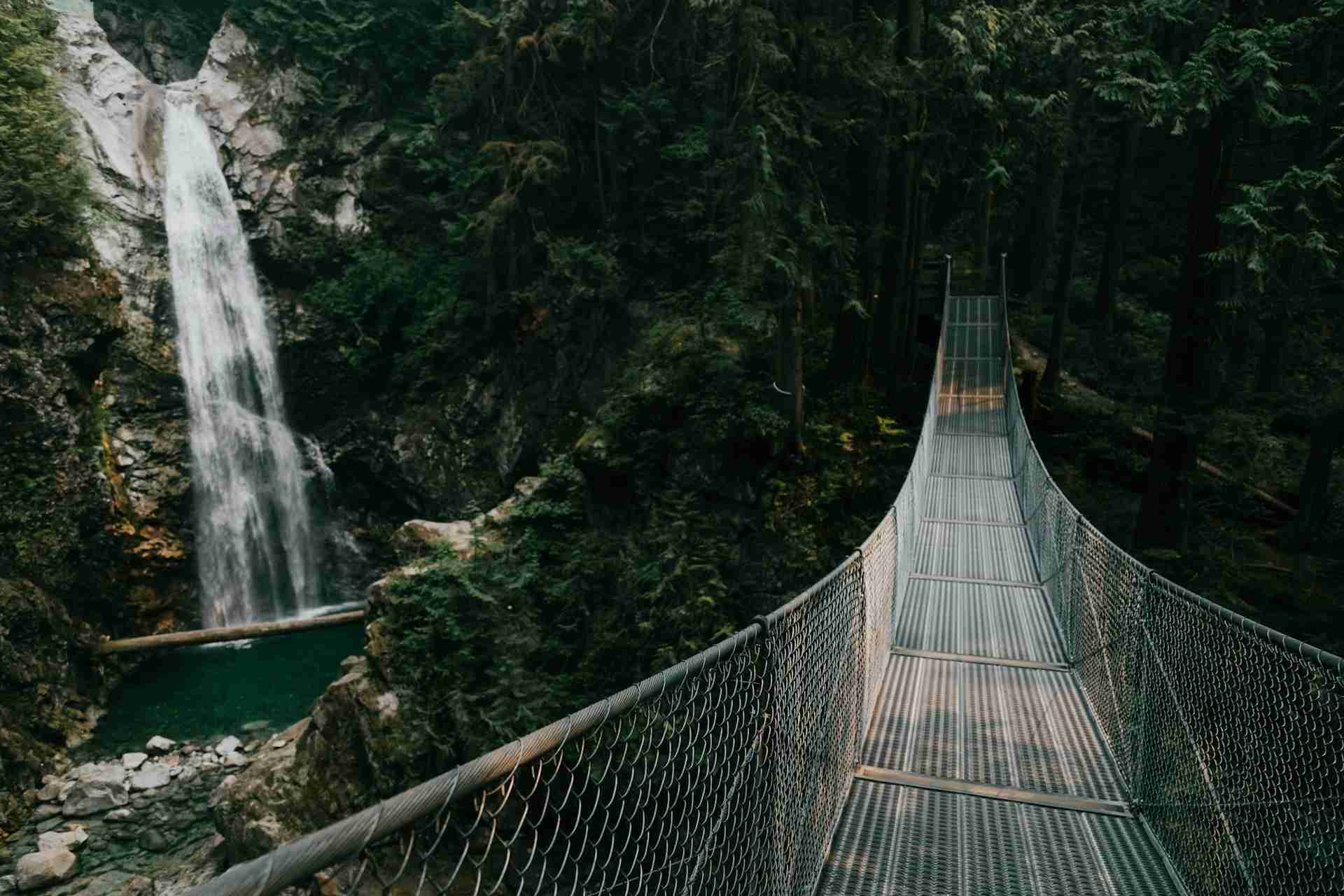
Nestled in the forested foothills of the Fraser Valley, Cascade Falls Regional Park offers photographers a rewarding mix of dramatic waterfall scenery, moss-covered forest, and rugged terrain all within a short walk from the trailhead. The centerpiece of the park is Cascade Falls, a 30-meter waterfall that plunges into a deep canyon, framed by dense evergreens and sheer rock walls. A suspension bridge spans the gorge, offering striking views both upstream and down. The forested trails and flowing creeks that lead to the falls create opportunities for both grand landscape shots and intimate detail work. Whether you're chasing misty long exposures or crisp forest textures, this compact but photogenic park delivers strong compositions in all seasons.
Best Photography Opportunities
• Cascade Falls from the Suspension Bridge
The most dramatic vantage point is from the narrow suspension bridge that crosses directly in front of the falls. A standard zoom lens allows you to capture the entire cascade from this elevated perspective while including surrounding forest and canyon walls. Golden hour light, especially in the late afternoon, strikes the upper part of the falls and illuminates mist in the air. Shooting from a slightly angled position on the bridge gives better depth and avoids flattening the waterfall against the rock face. The bridge does sway slightly with movement, so use a fast shutter speed or wait for calm moments to capture sharp images.
• Base of the Falls from the Lower Lookout
A short trail descends to a wooden viewing platform near the base of the falls. This spot is ideal for long-exposure photography, with the water flowing powerfully into a deep emerald pool. A wide-angle lens helps include foreground boulders, spray, and surrounding ferns, while a neutral density filter is essential for smoothing the water. The light here is often diffused by forest canopy, making it workable even under bright midday conditions. Framing the image to include the foot of the waterfall along with leading rocks or logs creates a dynamic composition.
• Forest Trails and Creekside Details
The trail to the falls winds through a lush second-growth forest filled with mossy trunks, ferns, and smaller streams. This area is perfect for slower, detail-oriented work. A macro or short telephoto lens lets you isolate textures, water droplets, and the interplay of light and shadow through the undergrowth. Overcast or light rain enhances color saturation and reduces harsh highlights, making it easier to photograph without glare. Tree trunks and boulders along the creek also offer natural leading lines that guide the eye toward the water.
• Upstream Views and Overhead Light Shafts
From the area above the waterfall, looking back toward the gorge allows for a different take on the scene. Here, sunlight sometimes breaks through the forest canopy, casting beams of light into the mist-filled ravine. Capturing these shafts requires careful positioning and fast exposure settings to freeze the light while keeping shadows controlled. A polarizer helps manage reflections on wet rocks and enhances contrast in these high-dynamic-range conditions. This is an especially good opportunity for mood-driven compositions with a sense of mystery and depth.
• Autumn Color and Seasonal Atmosphere
In late September and October, the forest begins to shift into rich autumn tones. Maple and alder trees near the creek provide bursts of yellow and orange that contrast with the evergreens and the white of the waterfall. Composing from the lower viewing platform with colorful leaves in the foreground can create layered seasonal images. A mid-range zoom lens allows for flexibility between wide context shots and tighter framing of color against rock and water. Fallen leaves on rocks or floating in eddies offer good opportunities for subtle, close-up scenes that convey the time of year.
Best Time to Visit
Cascade Falls is accessible year-round, but photographic conditions vary by season. Spring and early summer bring the highest water volume, with the falls at their most powerful and misty. During this period, forest greens are also at their brightest, and the trails are wet but highly textured. Summer offers consistent lighting conditions, dry trails, and easier access to the lower viewing area, though the falls may have reduced flow in particularly hot months.
Autumn provides the richest colors in the surrounding forest, and overcast skies during this season enhance mood and detail in both the trees and water. Winter access is more limited due to snow or ice on the trails, but when conditions allow, the waterfall and surrounding rocks can be partially frozen, offering striking contrast between flowing water and crystalline surfaces.
The best light typically occurs in the early morning or late afternoon, when sunlight filters horizontally through the forest and adds warmth and shape to the scene. Overcast days are also excellent for consistent exposure, especially in the forest or at the base of the falls, where dynamic range can be challenging under direct sunlight. After rainfall, both the creek and the foliage are more vibrant, and the falls are at full force, but trails may be slippery.
How to Get There
Cascade Falls Regional Park is located near the small community of Deroche in British Columbia's Fraser Valley, about a 20-minute drive from Mission and roughly 90 minutes east of Vancouver. The park is clearly signposted off BC-7 (Lougheed Highway), with paved access roads leading to a well-maintained parking lot. From the lot, a 1-kilometer trail leads uphill through forest to the waterfall and suspension bridge.
The hike to the falls is short but moderately steep, with steps and occasional uneven ground. Photographers carrying tripods or heavier gear should allow extra time for the ascent. There are no entrance fees, and the park is open year-round, although conditions may vary in winter due to snow or ice. Restrooms are available near the parking lot, but there are no services deeper in the park. Cell service is limited in parts of the trail, so it's worth downloading maps in advance or bringing offline navigation.
Recommended Photography Gear
A sturdy tripod is essential for long-exposure shots at the base of the falls and for early morning or shaded conditions along the trail. A wide-angle lens is ideal for capturing the full height of the waterfall and surrounding forest. A standard zoom in the 24 to 70 millimeter range works well for framing compositions from the bridge and platform, while a telephoto lens can help isolate tree shapes or water movement from a distance.
A circular polarizer is highly useful for reducing glare on wet rocks, enhancing color saturation in foliage, and managing reflections on the water. A neutral density filter is necessary for controlling exposure times and creating smooth, flowing water effects. Waterproof covers or a rain sleeve are recommended due to constant mist at the falls and potential for rain, especially in spring and autumn. Footwear with solid traction is important for navigating wet and sometimes muddy trails.
Nearby Photography Locations
A short drive west of Cascade Falls, Rolley Lake offers quiet lakefront scenes, forest trails, and a small waterfall of its own. The lake is especially reflective in the early morning and ideal for misty compositions.
• Stave Lake Lookout
Located further north near Mission, this rugged viewpoint provides panoramic views of the lake and surrounding mountains. It's best reached by 4WD or hiking and is particularly striking at sunrise or sunset.
• Nicomen Slough and Fraser River Valley
Closer to Deroche, the Fraser River's side channels and sloughs offer calm water reflections, bird photography, and long-lens landscape opportunities with Mount Cheam in the background on clear days.
Near Hayward Lake, this smaller but powerful waterfall is accessible via a short trail and surrounded by lush forest. It's a good option for longer exposure waterfall photography in a quieter setting.
About an hour to the west, Golden Ears offers towering peaks, alpine lakes, and dense forest environments. The park's varied elevation and dramatic terrain make it a strong addition to any multi-day photo itinerary in the region.
Cascade Falls Regional Park is the kind of location that rewards thoughtful pacing and attention to detail. With its dramatic waterfall, lush Pacific Northwest forest, and easily accessible trails, it provides a balanced mix of dynamic scenery and quiet natural texture. For both quick day trips and part of a longer regional photography tour, it's a reliable and rewarding destination.
Comments
Loading comments…