
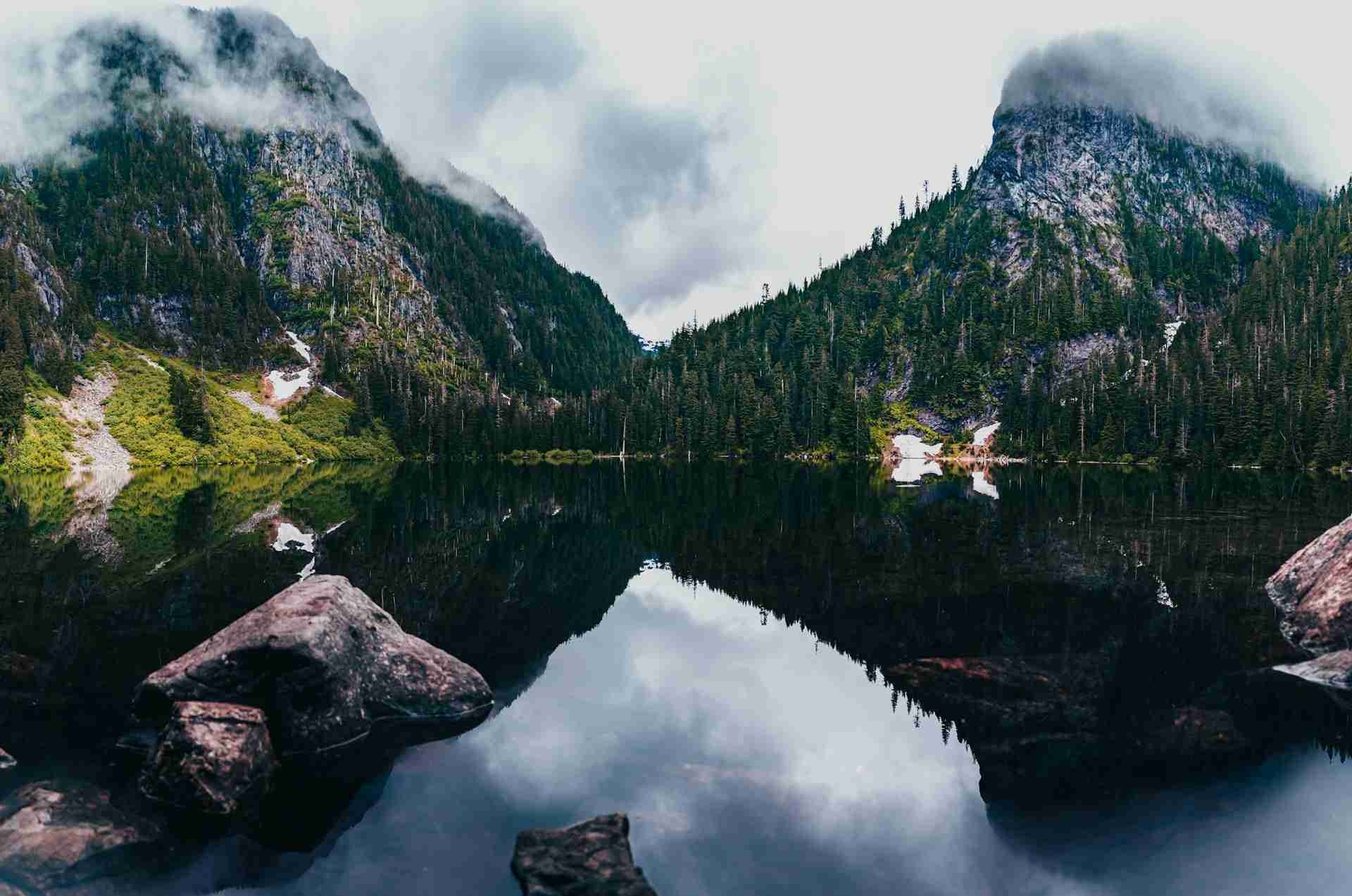
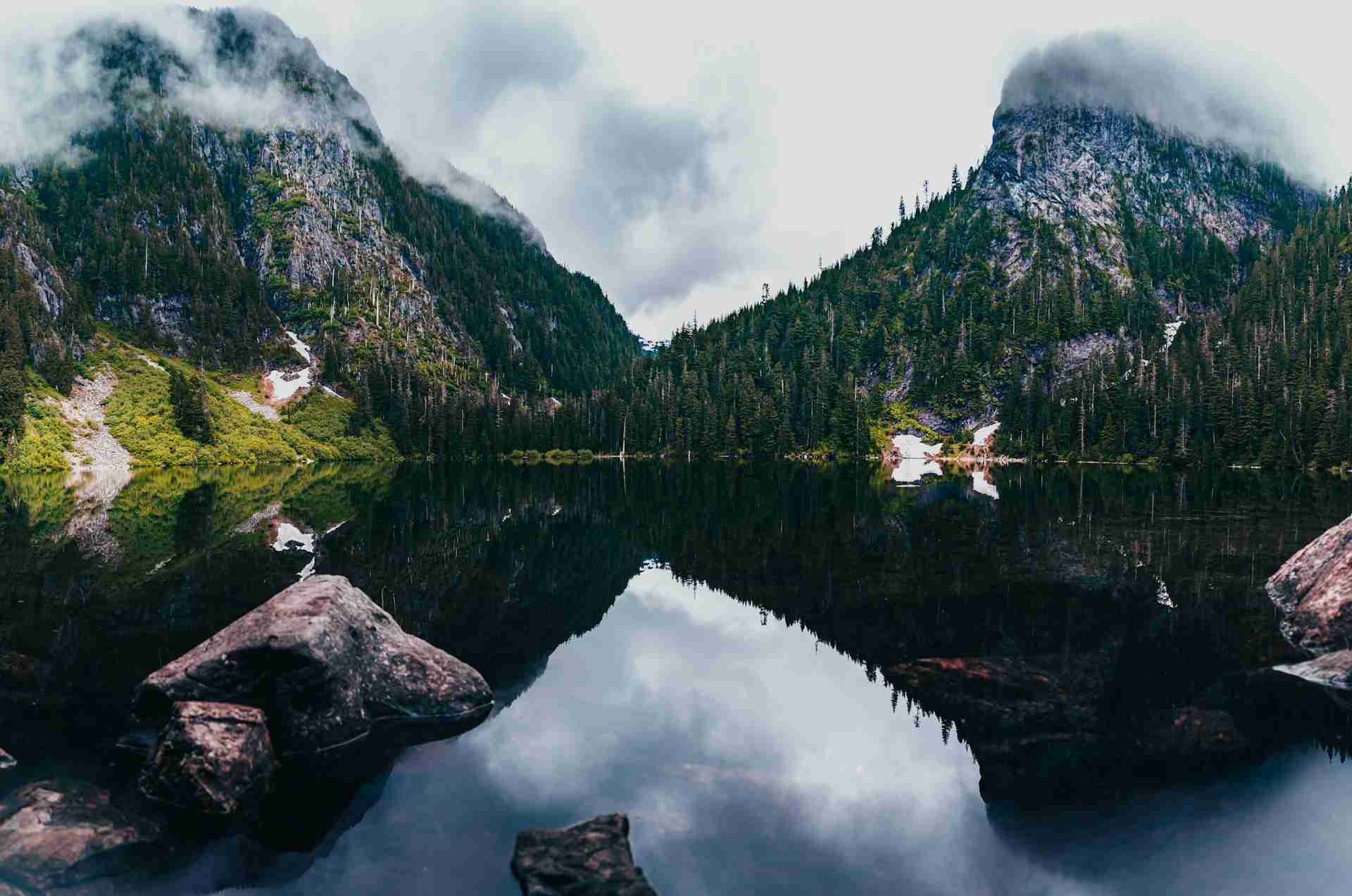
Deeks Lake is a quiet alpine lake tucked into the rugged terrain between Vancouver and Whistler, located in the Squamish-Lillooet region of British Columbia. The lake sits beneath the dramatic slopes of Mount Windsor and Deeks Peak and is surrounded by thick forest, rocky outcrops, and distant views of peaks. It takes some effort to reach but rewards photographers with peaceful water scenes, mountain reflections, and the chance to shoot in a truly remote feeling environment. Because of its elevation and location in the backcountry, Deeks Lake feels far removed from the highways and towns below. It is an ideal place for landscape photography that focuses on raw nature, quiet scenes, and the contrast between still water and dramatic terrain.
Best Photography Opportunities
Morning Reflections from the Shoreline
One of the most rewarding images at Deeks Lake comes from standing right along the shoreline early in the morning. When the wind is calm and the water is still, you can get near perfect reflections of the surrounding forest and ridges in the lake surface. A 24mm or 35mm lens works well for capturing both the water and the wider landscape. Try placing a piece of shoreline or a rock in the foreground to add depth and help guide the viewer into the scene. The lighting is soft and cool early in the day which helps bring out the greens and blues naturally found in this alpine setting.
Wide Landscapes with Mountain Backdrop
As you move around the lake, you will find a few small clearings that let you pull back and show the surrounding peaks above the treeline. These spots are great for wide compositions that include the lake, forest, and ridgelines. A wide-angle lens between 16 and 24mm helps bring in the whole scene while still allowing for creative foreground choices like shrubs, rocks, or small pools. The contrast between the still lake and the rough peaks above makes for a strong visual balance. These shots are especially good during golden hour when the light is angled and starts to add color and shape to the hills.
Detail Shots of Rocks, Trees, and Water Surface
Not all shots at Deeks Lake need to be grand. There are a lot of chances to slow down and focus on smaller subjects like roots, lichen covered boulders, or the ripples on the lake's surface. These textures change depending on light and wind and often come out best under overcast skies when shadows are soft. A standard lens like a 50mm or a short telephoto around 85mm gives you enough reach to isolate interesting forms without compressing the background too much. These images can add variety to your shoot and tell a fuller story of the location.
Camping Scenes and Human Scale
Because Deeks Lake is a backcountry camping spot, you might have the chance to shoot some camping scenes as part of your trip. Tents or gear placed near the shoreline help show the size of the lake and give a relatable point of reference. Shooting in the soft light of early morning or late evening keeps everything gentle and natural. These images work well with a 35mm or 24mm lens and often benefit from keeping the frame simple with just one or two key elements. It is a good way to mix human presence into a mostly wild setting.
Cloud and Light Movement Over Time
The weather at Deeks Lake can change quickly with clouds rolling in over the mountains and light breaking through at odd angles. This gives you the chance to capture time-based shifts in the scene such as fog lifting off the water or sunbeams passing through tree branches. A tripod is helpful for longer exposures or if you want to try time-lapse or bracketed images. These changes happen quickly so it helps to be patient and stay alert. These shots add a sense of mood and make the images feel less static.
Best Time to Visit
The best time to photograph Deeks Lake is during the late spring through early fall when the trail is mostly snow free and the lake is accessible. Snow can linger well into May or even early June depending on the year and conditions. From mid June through September, you are more likely to find dry trails and calmer weather. This window also gives you the most flexibility for sunrise and sunset photography without dealing with snowpack or frozen ground.
Morning is the best time for reflection shots when the wind is low and the light is cooler and even. Evening can also be good especially when the light starts to hit the peaks above the lake but the trail is steep and takes time so an early start or an overnight trip helps. Cloud cover is common in the region and can be helpful for soft light and moodier shots. Autumn can bring golden grasses and fewer bugs though days are shorter and cooler. Winter access is limited and requires snow travel experience so it is not recommended unless you are very familiar with the terrain and equipped for backcountry conditions.
How to Get There
Deeks Lake is accessed by hiking the Deeks Lake Trail which begins just off Highway 99 near Lions Bay. There is a small trailhead area that connects to the forest service road used to reach the start of the hike. This hike is considered moderate to difficult depending on your pace and experience and includes steady elevation gain over rocky and sometimes muddy terrain.
Parking is limited and sometimes gated so it is a good idea to check current access details ahead of your visit. There are no fees to hike to the lake or camp but backcountry etiquette applies. You should carry out all waste and follow Leave No Trace guidelines. Water is available at the lake but should be filtered or treated. There is no cell reception in most of the area so plan ahead and bring a map or GPS. The trail can be steep and slippery in places so good footwear and trekking poles are recommended for carrying camera gear safely.
Recommended Photography Gear
A lightweight but flexible camera kit is best for Deeks Lake since you will be hiking in with all your gear. A wide-angle zoom like a 16 to 35mm covers most of the landscape work while a 24 to 70mm lens gives you flexibility for both wider views and closer details. A small telephoto like a 70 to 200mm is helpful if you want to isolate parts of the mountains or shoot across the lake without walking around.
A sturdy tripod is useful for long exposures and morning reflections and it helps with composition if you are waiting for changing light. Filters like a circular polarizer or neutral density filter are helpful for managing reflections and smoothing water. Bring lens cloths since mist or light rain is common. A weather-resistant bag with enough support for hiking is important since the trail is rocky and uneven. Extra batteries and memory cards are a must since there is no way to charge or offload anything once you are at the lake.
Nearby Photography Locations
Located not far from the Deeks Lake trailhead, this hike offers stunning views over Howe Sound and the Sea to Sky Highway. It is especially rewarding at sunrise or sunset when light hits the ocean and islands below.
This much steeper and more advanced hike leads to one of the tallest peaks in the area. It is a good option for experienced hikers looking for alpine ridge shots and wide views of the coast mountains.
An easy stop along the highway with access to one of the tallest waterfalls in British Columbia. The flow is strong in spring and early summer and works well for long exposure shots with a tripod.
A waterfront stop south of the trailhead with driftwood beaches and views of Howe Sound. It is good for early morning or evening light and offers contrast to the forest and alpine scenery inland.
Sea to Sky Gondola
If you are looking for a more accessible mountain view, the Sea to Sky Gondola in nearby Squamish brings you to a ridge with panoramic views and maintained trails. Great for wide landscapes and aerial style shots without a long hike.
Deeks Lake offers a quiet place to shoot landscapes where the focus is on natural elements and time spent outdoors. The hike makes you work for it but the setting feels peaceful and untouched once you arrive. Whether you are chasing reflections, mountain light, or just a few thoughtful frames from a quiet campsite, this lake gives you the space and stillness to slow down and take your time with the camera.
Comments
Loading comments…