
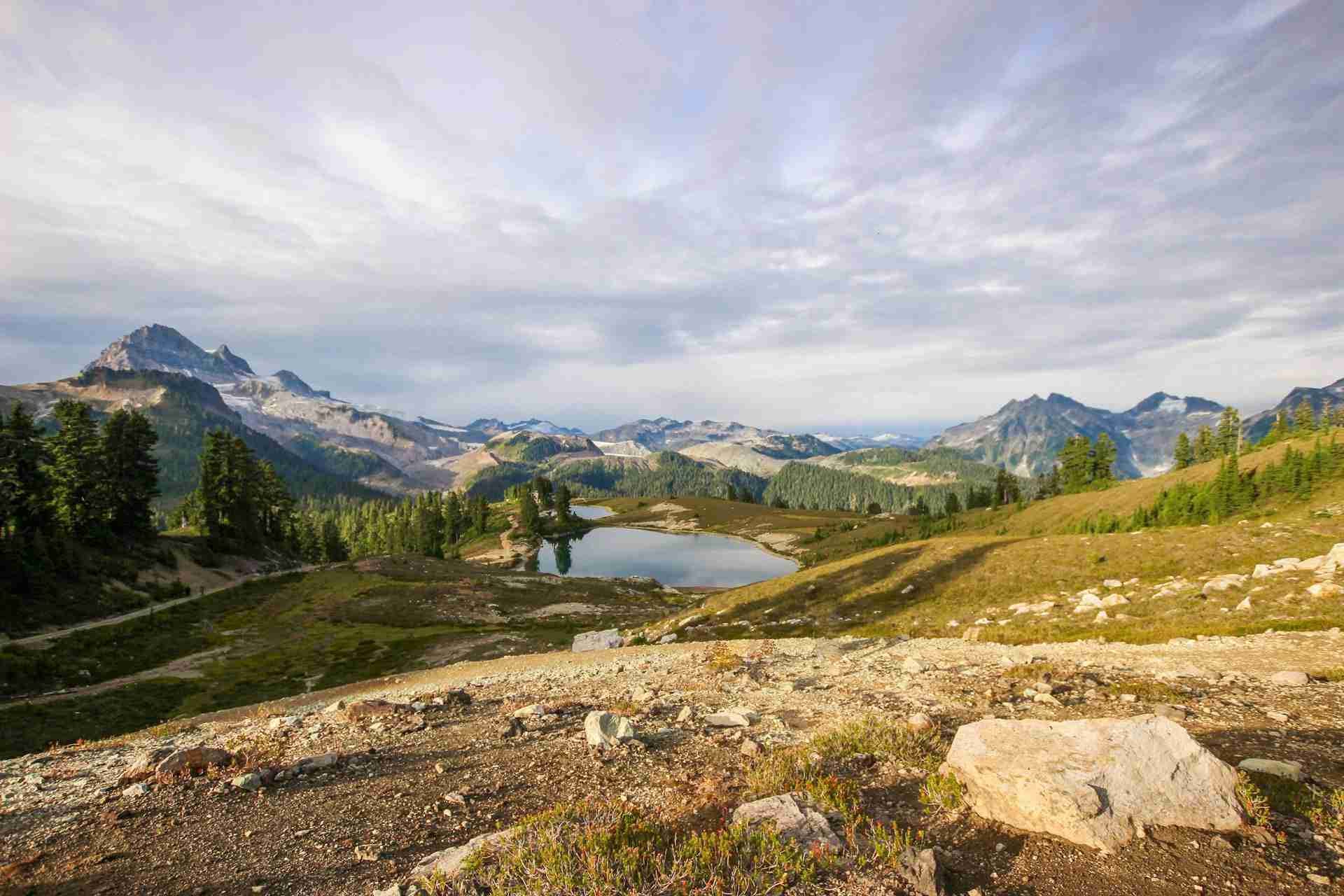
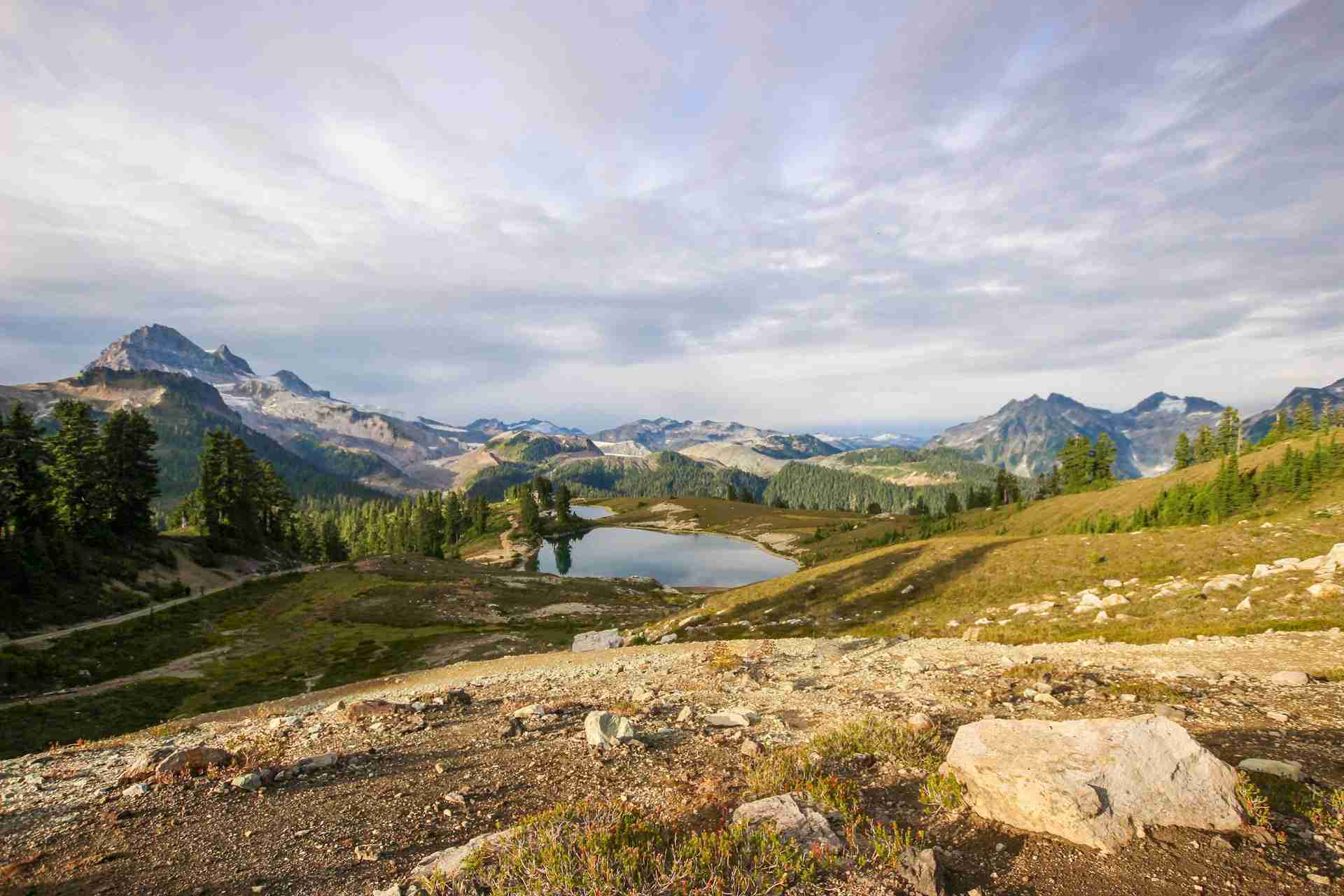
Elfin Lakes sit high in the alpine of Garibaldi Provincial Park, offering a striking pair of turquoise basins surrounded by distant peaks, wide meadows, and glacier-fed ridges. Reached via the well-maintained Elfin Lakes Trail, this location is a favorite for backcountry hikers, but it also holds immense appeal for landscape photographers seeking high elevation scenes without technical climbs. The two lakes sit in a wide saddle above the treeline, perfectly placed to catch morning light, dramatic clouds, and long reflections. Photographers visiting Elfin Lakes are rewarded with a mix of intimate details and expansive views, all shaped by changing light and the surrounding wilderness.
Best Photography Opportunities
Twin Lake Reflections at Sunrise
The most rewarding scene comes just after sunrise, when the sun climbs above the ridgeline and casts soft, angled light across the alpine basin. The upper lake is often still at this time, making it ideal for mirror-like reflections of the sky and surrounding peaks. A wide angle lens works well to frame both lakes with foreground interest from rocks, grass, or the trail itself. Including the hut in the distance or subtle human elements adds a sense of scale without distracting from the landscape. Timing is critical, so it is best to be in position well before first light.
The Elfin Lakes Hut and Backcountry Camp Area
Just above the lakes, the backcountry hut is a clean, functional structure that adds a splash of color and human presence to the scene. Shooting from below places the hut against the sky or distant ridgelines, while side light highlights the texture of the roof and surrounding terrain. A midrange lens helps you balance the hut with the lakes or trail in the same frame. Including tents or hikers adds narrative and connects the shelter to the experience of being in the backcountry. This area is especially good in the golden hour when light softens the sharp angles of the landscape.
Mountain Layers and Compression
Behind the lakes, mountain ridges rise in layered formations that become more dramatic with shifting clouds and angled light. A telephoto lens is useful for compressing these layers and focusing on subtle relationships between peaks, snowfields, and tree lines. These compositions are strong even without the lakes in the frame, especially when clouds create light pockets across the landscape. Working from slightly above the lakes provides the best perspective to align these elements. Early morning or just before sunset adds warm contrast and shadow depth.
Trail Views and Framing Through Meadows
The approach to the lakes includes sweeping views across meadows, alpine heather, and open sky. These sections of trail are excellent for leading line compositions, especially when hikers are visible in the distance. Wildflowers bloom in late summer and can be used to frame the trail in the foreground or add splashes of color to wider shots. A wide lens at ground level captures these small details while keeping the ridgelines and sky in frame. Light cloud cover is helpful for reducing contrast and preserving detail across the full range of the scene.
Minimal Compositions at the Water's Edge
On still days, the upper lake becomes a simple surface reflecting sky, shape, and color with almost no distortion. This is a good opportunity for clean, minimal compositions that rely on color balance and symmetry. A standard zoom or short telephoto lens works well for isolating reflections or working with negative space. Including only a rock, branch, or ripple as a focal point adds subtle tension to the frame. These images are best built slowly and benefit from small changes in camera height and orientation.
Best Time to Visit
The prime season for visiting Elfin Lakes is from mid July through early October, when the trail is snow-free and the alpine is fully accessible. During this period, the lakes are full and clear, and the meadows along the trail are at their most colorful. July and August bring long days, stable weather, and blooming wildflowers. September often has the clearest skies and the warmest morning light, while also offering fewer crowds. By October, cooler temperatures and light snow can begin to return, making access less predictable.
Sunrise is the best time of day for shooting reflections and soft light across the lakes and ridges. The eastern sky often colors well before the sun appears, so arriving early is worth the effort. Sunset can be productive when clouds hold color, but light tends to drop quickly behind the surrounding hills. Midday is less ideal unless weather conditions bring shifting light or interesting cloud patterns. Overcast days help reduce glare on the water and work well for macro and detail work near the trail or shore.
How to Get There
Elfin Lakes is located in Garibaldi Provincial Park and accessed via the Elfin Lakes Trail, which begins at the Diamond Head parking area near Squamish, British Columbia. To reach the trailhead, follow Mamquam Road from downtown Squamish to its end, where a gravel road continues uphill to the parking lot. The gravel section is rough in places, and a high clearance vehicle is recommended, especially after heavy rain. From the parking area, the trail to Elfin Lakes is about eleven kilometers one way with steady elevation gain and well maintained switchbacks.
The route is popular with hikers and snowshoers and is clearly marked year round, though access is only possible in summer without winter gear. The Elfin Lakes shelter near the lakes provides indoor sleeping space and cooking facilities, while nearby campsites offer tent pads with panoramic views. A backcountry permit is required for overnight stays but not for day hiking or photography. There are no services beyond the trailhead, so visitors should bring all their food, water, and equipment. The trail is open, exposed, and weather can change rapidly, so being prepared is essential.
Recommended Photography Gear
Hiking to Elfin Lakes requires balancing lightweight gear with creative flexibility. A wide angle lens, such as a 16 to 35 millimeter, is essential for lake reflections, landscape framing, and trail views. A 24 to 70 millimeter lens covers midrange compositions that include the hut, meadows, or layered backgrounds. A short telephoto lens between 70 and 200 millimeters is ideal for isolating ridgelines, compressing mountain layers, or working with light pockets in the landscape.
A sturdy but lightweight tripod is important for sunrise sessions, long exposures, or shooting in low light before and after golden hour. A circular polarizer helps manage reflections on the lake and brings out sky contrast when clouds are present. A lens cloth, rain cover, and extra batteries are essential, especially if you are staying overnight or hiking during unsettled weather. Footwear should be supportive and suited for rocky, uneven trails, while a compact backpack with water and snacks will keep you comfortable during long sessions. If you're camping, pack light and keep gear accessible for early or late shooting without needing to unpack completely.
Nearby Photography Locations
Found along the lower section of the Elfin Lakes Trail, this area offers soft morning light, wildflowers, and long views over the Squamish Valley. It is ideal for slower compositions and is often misty in the early morning.
Located in a different section of the park, this glacier-fed lake is known for bright turquoise water, steep valley walls, and reflections that work well at sunrise. The long trail in makes it a full day or overnight trip.
A challenging hike beyond Garibaldi Lake, this ridge offers one of the best high elevation views in the region. It is ideal for wide vistas, sunset sessions, and layered landscape compositions from above.
A more remote and lesser visited lake deeper into the park, Mamquam Lake offers solitude and dramatic scenery. It is best accessed on a multi-day trip and is perfect for wilderness storytelling and atmospheric light.
Closer to town, the Stawamus Chief offers dramatic views over Howe Sound and the coastal mountains. These cliffs are best photographed at golden hour, especially with cloud cover or low fog over the water.
Elfin Lakes is a location that rewards both effort and patience. Whether you hike in for the day or spend the night to catch first light, the lakes and surrounding ridges offer enough variety to keep every frame fresh. With the right light and a careful approach, the high alpine quiet of this place becomes something you can see and feel in every photograph.
Comments
Loading comments…