
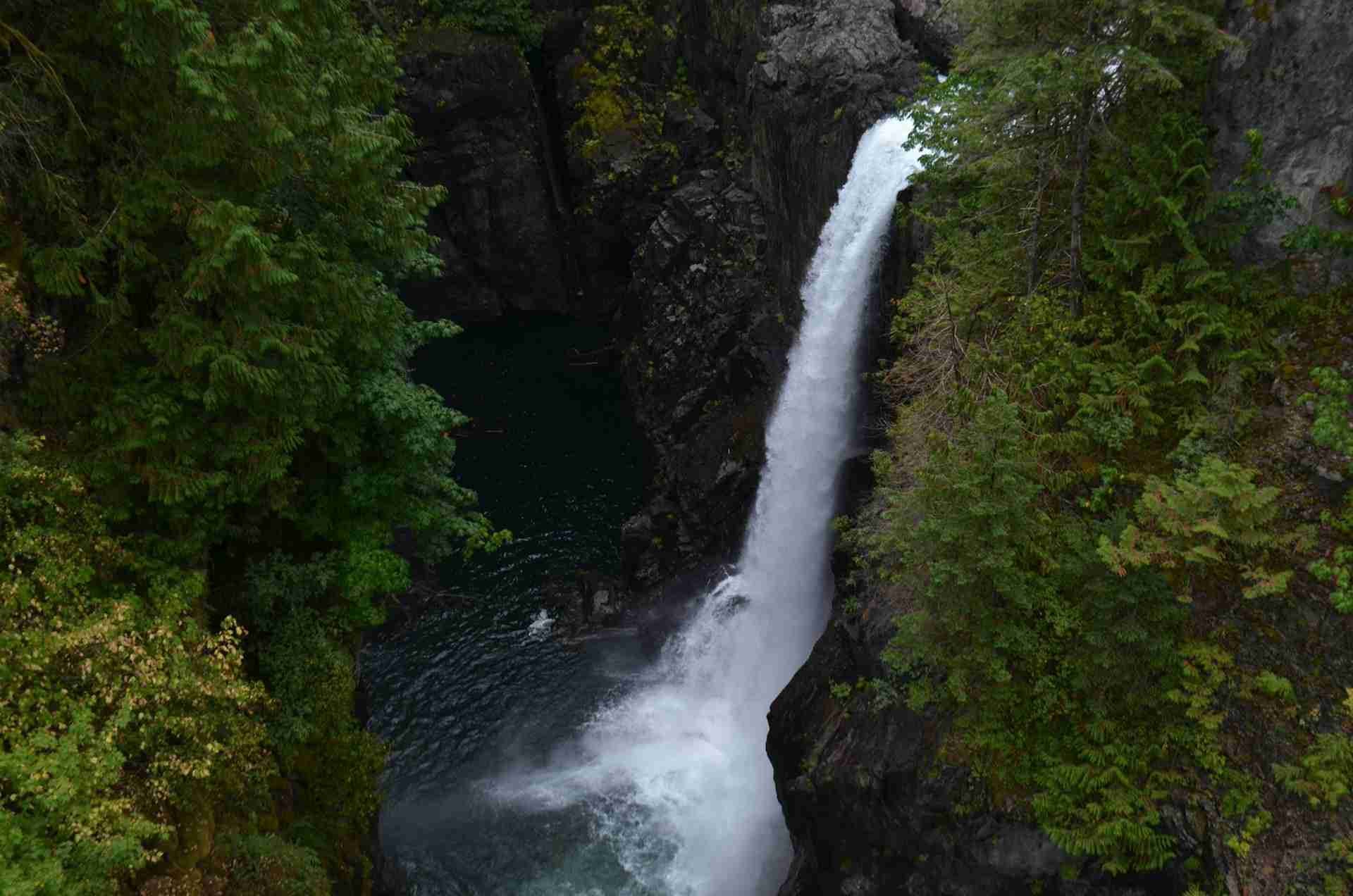
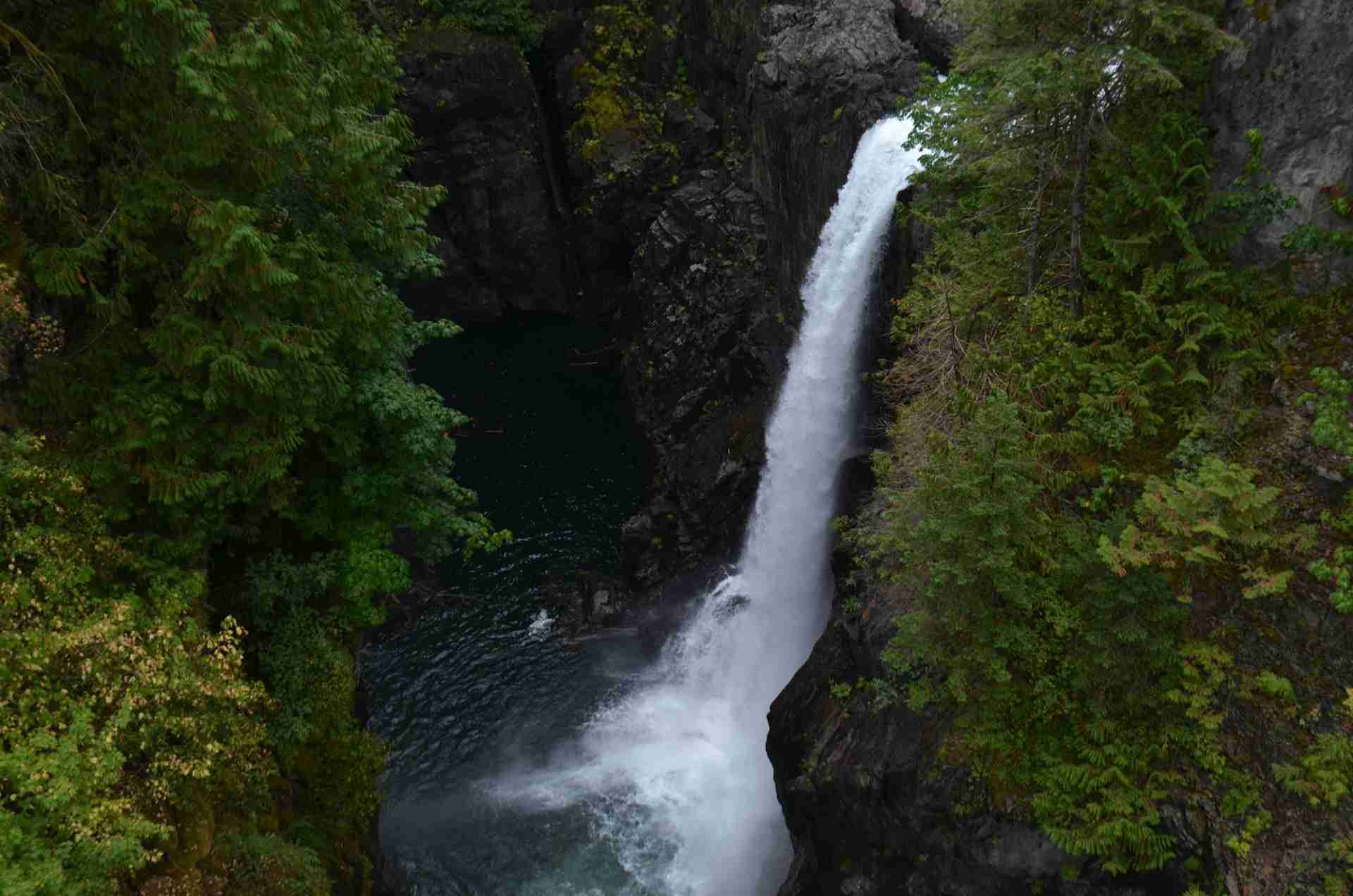
Elk Falls is the main draw of Elk Falls Provincial Park. This 25m waterfall plunges into a deep rocky canyon, surrounded by thick forest and accessible from a well-maintained trail system. What sets Elk Falls apart for photographers is the perfect combination of height, power, and proximity. With the suspension bridge and multiple viewing platforms, you can shoot the falls from above, across, or downstream with ease. Mist often lingers in the gorge, catching the light and adding depth to every composition. It's a rewarding location whether you're chasing golden hour contrast, long exposure water flow, or moody forest conditions.
Best Photography Opportunities
• Suspension Bridge Perspective
The suspension bridge at Elk Falls offers a dramatic, straight on view of the waterfall from high above the canyon. From this angle, you can capture the full drop of the falls along with the churning plunge pool and sheer rock walls. Use a midrange zoom lens to adjust your framing as the light changes or the mist thickens. This is one of the best spots for a sense of scale, especially if you time your shot when someone walks across the bridge for added context. Sunrise and late afternoon work well here, when side light hits the water and enhances the texture in the gorge.
• Long Exposure from the Viewing Platform
A dedicated viewing platform near the falls provides a more stable setup for tripod work and long exposures. From here, you're slightly offset from the main drop, which gives a nice angle to show both the water's motion and the canyon's depth. Use a 6 stop or 10 stop ND filter to stretch your exposure time and smooth out the flow of the falls. A polarizer can help reduce glare from the wet rock walls, especially on bright days. This platform is popular, so arrive early if you want uninterrupted shooting time.
• Downstream Canyon Views
Below the main falls, the canyon continues with smaller rapids, boulders, and calm pools that work well for more abstract or quiet compositions. This is a good area to switch lenses and look for detail shots like ripples in the current, foam patterns, or reflections in slower-moving water. The light is often softer down here, filtered through the forest canopy, which makes it ideal for low contrast, evenly exposed frames. Look for spots where branches or boulders naturally frame the water to help lead the viewer's eye.
• Fog and Overcast Forest Scenes
Even if the falls themselves are partially obscured by mist or rain, the surrounding forest delivers plenty of opportunity. Fog often settles into the park in the morning, creating soft light and clean separation between trees. The mix of Douglas fir, cedar, and moss-covered understory gives a rich texture to wide or telephoto forest compositions. This is also a great time to shoot handheld with a fast lens, focusing on small vignettes like water droplets on leaves or fog drifting between trunks. Rainy or overcast days are actually ideal here, making the colors pop, the contrast gentle, and the whole park takes on a quieter feel.
• Trail Details and Environmental Shots
The approach to Elk Falls includes boardwalks, stairs, and well kept dirt trails that wind through the forest. These offer excellent chances to build environmental shots that show the journey to the falls rather than the destination itself. Use leading lines like handrails, tree trunks, or light filtering through the canopy to build compositions. These frames are perfect for storytelling sequences or setting the scene in a more editorial or documentary style. A wide angle lens is especially useful here to include both foreground trail elements and the forest beyond.
Best Time to Visit
Spring is one of the best times to photograph Elk Falls, thanks to high water levels from snowmelt and fresh growth in the surrounding forest. The falls are at their most powerful from April through June, and the trails are less crowded than in peak summer months. Morning shoots tend to offer the best light, with soft skies and a higher chance of mist or fog. Summer brings more direct sunlight, which can create deep shadows and harsh contrast, but it also delivers long golden hours and the occasional rainbow in the spray.
Fall is another strong option, especially in early October when the forest starts to change color. While the fall foliage isn't as vibrant as in other parts of Canada, the golden tones of the leaves add warmth and contrast to the scene. Winter visits are possible, but trails may be icy and light levels much lower throughout the day. Overcast days are consistently good for waterfall and forest photography here, offering even exposure and allowing for longer shutter speeds without needing heavy filters.
How to Get There
Elk Falls is located just west of Campbell River, BC. From Highway 19, take the turnoff for Highway 28 and follow signs for Elk Falls Provincial Park. The main parking lot is at the end of Brewster Lake Road, with access to both the falls and the suspension bridge via well-marked trails. The walk from the lot to the falls takes about 15 to 20 minutes and includes some stairs and incline sections, but it's not overly difficult for anyone used to carrying a basic camera kit.
There are no entrance or parking fees, and tripods, and handheld gear are all allowed. There are restrooms and picnic areas near the trailhead, but no services deeper into the park, so plan accordingly if you're staying through sunset. Cell signal is generally reliable throughout the trail system.
Recommended Photography Gear
A midrange zoom like a 24 to 70 millimeter lens is a solid starting point for this location, giving you coverage from forest scenes to tighter waterfall compositions. A wider lens in the 14 to 24 range is useful for interior forest shots, trail scenes, and the base of the falls. A longer zoom in the 70 to 200 range is handy for detail work, especially downstream or across the canyon when isolating flow or rock textures.
Bring a sturdy tripod, especially for long exposures from the viewing platforms or canyon edge. A full set of ND filters, including a 6 stop and a 10- top, will help manage waterfall motion even in brighter conditions. A circular polarizer is especially useful for cutting glare from wet rock and deepening color in foliage. Comfortable waterproof shoes and a backpack for stairs and narrow trails will help you move freely without compromising your gear.
Nearby Photography Locations
Located just a few minutes from Elk Falls, this area offers river scenes with salmon runs in the fall. It's a great location for wildlife photography and water reflections, especially during early morning fog.
Accessible from the same road system, the lake and dam area offer calm water and forest views, with good golden hour light along the shoreline. It's a quieter location with easy access, ideal for wide landscape scenes or intimate forest reflections.
• Campbell River Waterfront
The town's shoreline has working docks, fishing boats, and views across Discovery Passage. It's a great spot for urban-meets-nature compositions, especially at sunrise or blue hour when the lights from the harbor are still visible.
About 20 minutes away, this park offers peaceful lakeside photography with forest reflections, loons, and the occasional moody morning fog. It's a strong option for quiet, low-contrast scenes.
Farther inland, this park offers alpine lakes, rugged peaks, and a completely different look from Elk Falls. It's more of a hiking commitment, but well worth the effort if you're looking to expand your shoot with mountain scenes.
Elk Falls offers the kind of variety that rewards both quick stops and longer sessions. Whether you're building a portfolio of long exposures or just chasing light through the trees, it's a location that keeps delivering. The combination of power, access, and atmosphere makes it one of the strongest waterfall shoots on Vancouver Island.
Comments
Loading comments…