

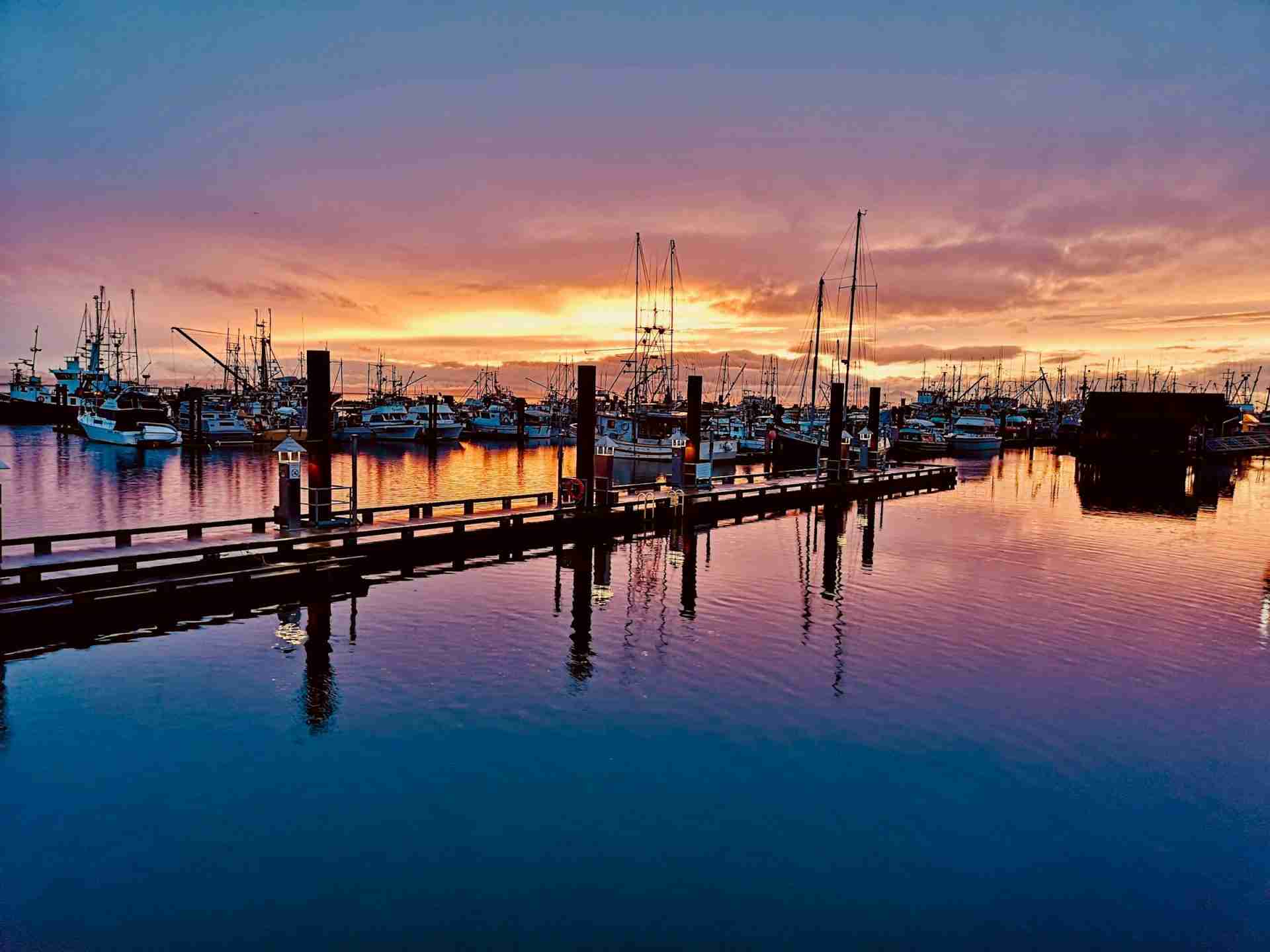
Fishermans Wharf in Steveston Harbour is one of those places that feels easy to settle into the moment you arrive. Set along the waterfront in Richmond, it blends a working fishing dock with a relaxed village atmosphere where people stroll, stop for seafood, and watch boats come and go. The docks are lined with fishing vessels, some freshly painted and others showing years of use, which gives the area a sense of history without feeling staged. You can walk right alongside the water, with open views across the harbour and plenty of small details to notice along the way. It is the kind of place where you can take your time, wander without a plan, and still come across something worth photographing.
Best Photography Opportunities
• Dockside Boat Compositions
The harbour is filled with fishing boats of different sizes, colours, and conditions, which creates a naturally varied scene. You can move between tight detail shots of ropes, nets, and worn surfaces, and wider frames that show multiple boats layered together. Shooting from slightly off centre helps introduce depth and prevents the composition from feeling too static. Reflections in the water can add another dimension, especially when conditions are calm early in the day. Because the boats shift subtly with the movement of the water, timing becomes important if you want clean spacing between elements. Taking time to observe before shooting will help you capture more balanced frames.
• Working Harbour Candid Moments
This is a functioning harbour, which means there are constant opportunities to capture real moments rather than staged scenes. Fishermen unloading catch, repairing equipment, or speaking with customers create natural storytelling situations. Using a longer focal length allows you to photograph these moments without interfering or drawing attention. Light direction is key, as side lighting can bring out texture in clothing, hands, and equipment. These moments can change quickly, so being ready to shoot without overthinking is important. The result is imagery that feels authentic and rooted in the location.
• Boardwalk Leading Lines And Layers
The wooden boardwalk creates a strong directional element that can guide the viewer through your frame. By positioning yourself along the edge, you can build layers using railings, people, and boats in the background. Including movement, such as people walking through the frame, adds life without needing a defined subject. Adjusting your height slightly changes how the lines interact with the horizon and surrounding elements. This makes it easier to refine compositions depending on how busy the scene is. The mix of fixed structure and moving subjects keeps each frame slightly different.
• Reflections And Water Texture
Water conditions shift throughout the day, which gives you different visual options depending on timing. Calm water allows for clearer reflections of boats and dock structures, adding symmetry and depth to your images. When the surface becomes more active, it introduces texture that can make the scene feel more dynamic. Shooting closer to the edge of the dock can emphasize these qualities, especially at a lower angle. Managing exposure is important, as highlights from the water can easily become too bright. This is a good place to experiment with both clean reflections and more abstract compositions.
• Environmental Portraits With Coastal Context
The harbour provides a strong sense of place for portrait work, with boats and dock activity adding context without needing to stage anything. Positioning your subject near the edge of the walkway allows you to include background elements while keeping the focus clear. Using a wider aperture helps separate the subject while still showing enough detail to establish location. Light from the open water can be bright, so careful positioning helps maintain balanced exposure; early and late in the day offer the most flattering conditions. Casual portraits are generally fine in this public space, but for professional shoots it is necessary to confirm permissions ahead of time.
Best Time to Visit
Early morning is one of the most effective times to photograph here. The harbour is quieter, the water is often calmer, and the light is softer, which helps with both reflections and overall balance. Late afternoon and early evening bring warmer tones and increased activity, which can add energy to your images. Midday light can be harsh, especially with reflections from the water, so it requires more careful positioning and exposure control.
Seasonally, summer offers the most consistent activity, with more boats operating and a steady flow of visitors. Spring and early autumn provide a good balance between activity and manageable crowd levels. Winter is quieter, which can be useful if you want simpler compositions with fewer people. Overcast conditions are often helpful here, as they reduce contrast and make colour easier to manage, while clear skies create stronger highlights and deeper shadows.
How to Get There
Fishermans Wharf is located in Steveston, a waterfront neighbourhood in Richmond, just south of Vancouver. It is easily reached by car, with several public parking areas nearby, though they can fill up quickly during weekends and peak travel periods. Arriving earlier in the day gives you a better chance of finding parking and allows for a more relaxed start to your shoot.
Public transit is also a reliable option, with bus routes connecting Steveston to central Richmond and nearby Canada Line stations. From the main village area, it is a short and straightforward walk to the harbour. There are no fees required to access the public boardwalk or view the docks, though certain areas may be restricted as they are still part of a working harbour. The layout is easy to navigate on foot, making it simple to move between different shooting spots without needing to travel far.
Recommended Photography Gear
A standard zoom lens in the 24 to 70mm range works well for capturing both wider harbour scenes and tighter compositions of boats and details. A longer lens such as a 70 to 200mm is useful for candid moments and compressing layers of boats and activity without getting in the way. A fast prime lens can be helpful for portrait work, especially when you want to separate your subject from a busy background.
A polarizing filter is especially useful in this setting, helping to control reflections on the water and bring out colour in the boats and sky. A tripod can be helpful in lower light conditions or if you want to refine compositions carefully, though it is not essential. Bringing a cloth to keep your lens clean is a good idea, as moisture from the water can build up over time. Keeping your setup simple allows you to move freely and respond quickly to changing conditions.
Nearby Photography Locations
Garry Point Park offers wide open waterfront views with clear sightlines across the water and toward the horizon. It is especially strong at sunset, when the sky becomes the main subject and the foreground stays clean and uncluttered. The scale of the space gives you room to simplify your compositions compared to the busier harbour.
• Britannia Shipyards National Historic Site
This location preserves a collection of historic fishing buildings and dock structures that reflect the area's past. The consistent architecture and weathered materials make it easier to create cohesive images with strong lines and textures. It is a good contrast to the active harbour, offering a quieter and more controlled setting.
Terra Nova Rural Park offers open fields, walking trails, and views toward the water, creating a very different environment from the harbour. It is useful if you want cleaner compositions with more space and fewer built elements. The variety of landscapes within the park allows you to shift your approach without travelling far.
London Heritage Farm offers a more traditional setting with historic buildings, gardens, and views across the river. It provides a softer and more structured environment that works well for portrait sessions. The contrast between this location and the working harbour adds variety to a single outing.
Imperial Landing Pier extends out into the Fraser River, giving you a different perspective looking back toward Steveston. It is a strong location for leading lines, especially with the pier guiding the viewer toward the horizon. The open exposure to the water also makes it a good place to work with changing light conditions, particularly later in the day.
Comments
Loading comments…