
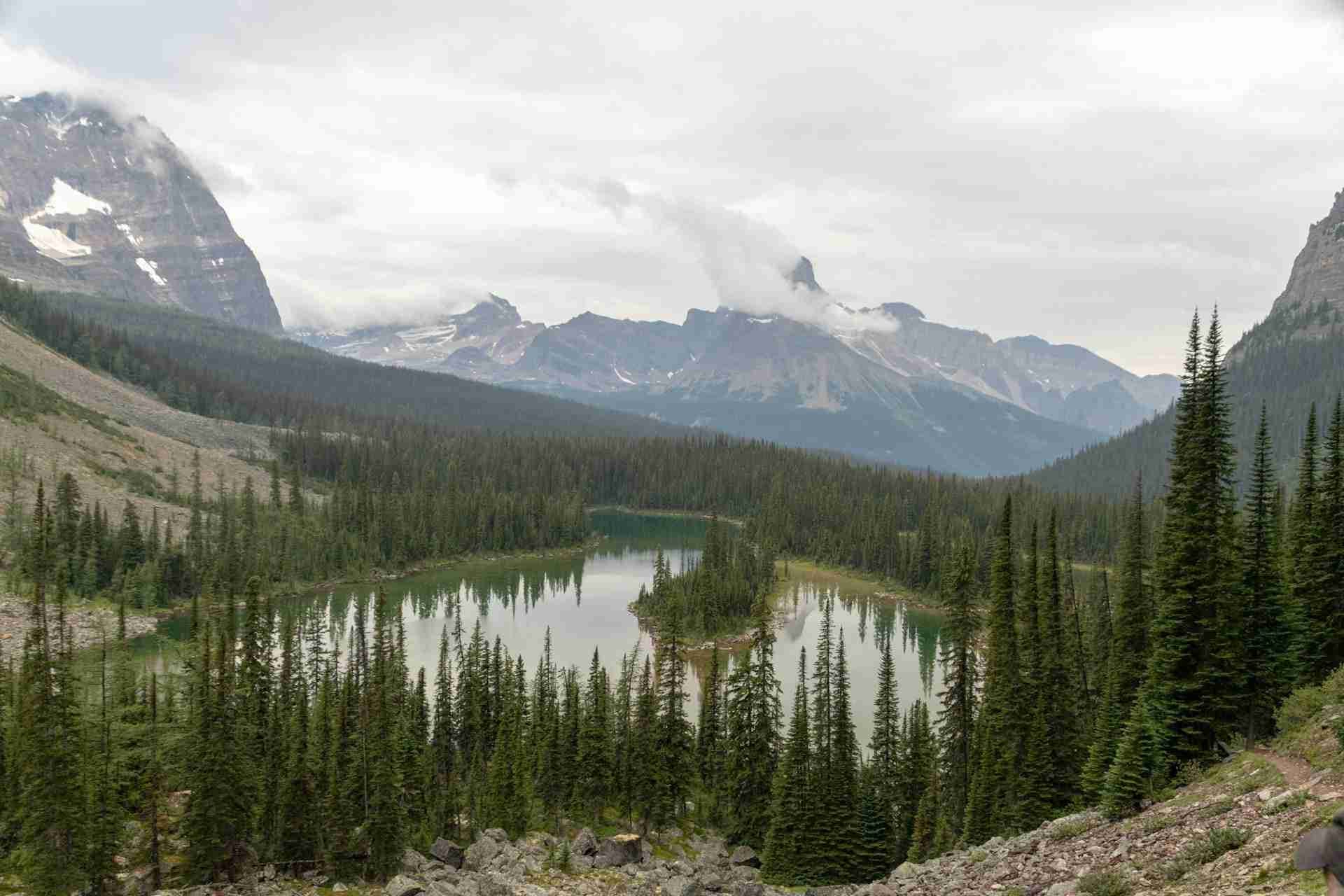
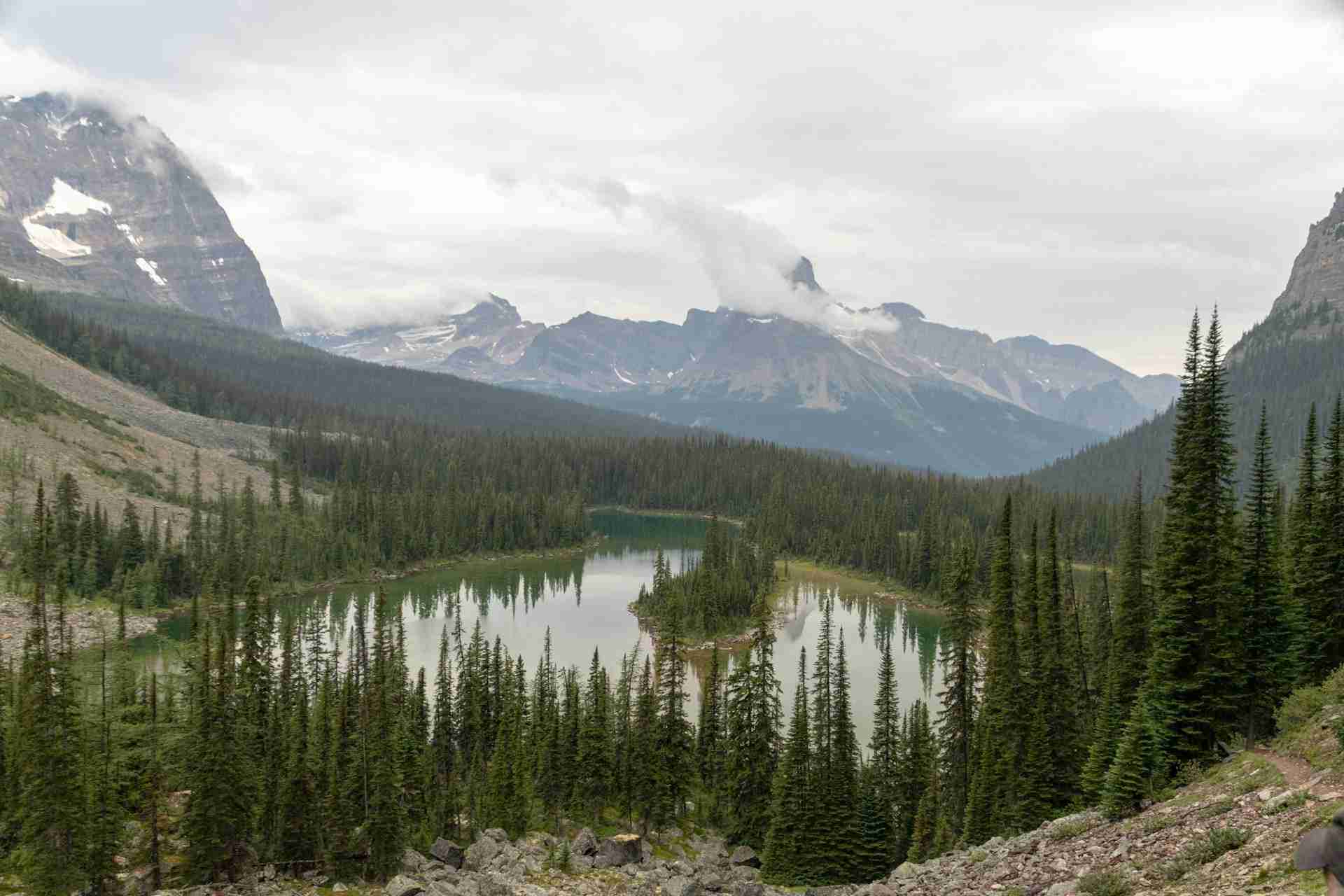
Tucked within the Selkirk Mountains of British Columbia's Columbia-Shuswap region, Mary Lake is a secluded alpine gem that rewards photographers willing to go off the beaten path. Known for its mirror-like surface, dense conifer forests, and craggy mountain backdrops, the lake offers a tranquil scene untouched by development or heavy tourism. What sets Mary Lake apart isn't just its pristine setting, but its clarity—both in the water and in the air. Reflections here can be nearly symmetrical, and the interplay of light on the lake's still surface brings a quiet precision to landscape photography that's difficult to find elsewhere in the region. With the surrounding peaks rising sharply from its shoreline and wildflower meadows blooming nearby in summer, Mary Lake is a location that feels as intimate as it is expansive.
Best Photography Opportunities
• Sunrise Reflections from the Northern Shore
: The northern end of Mary Lake provides the cleanest, most open view across the water toward the peaks beyond. Arriving before first light allows you to set up as the ridgelines catch early sun while the lake remains in shadow, giving you a soft, pastel-toned gradient across your frame. The water is often perfectly still at this hour, producing crisp reflections that hold detail even at long focal lengths. A wide-angle lens allows you to capture both foreground texture and sky, while a polarizer helps manage glare on the surface. Pay attention to composition changes as the light shifts—this is a location that rewards patience and minor adjustments.
• Backlit Trees and Golden Hour Contrasts
: In the evening, the western shore catches the full warmth of the setting sun. Small larch trees, mossy boulders, and low alpine shrubs catch golden light that contrasts beautifully with the cool, shaded lake surface. This is an ideal time to shoot with a 50mm or 85mm lens, isolating small scenes or creating layered compositions with rich tones. Reflections are less predictable in the evening due to increased wind, but even partial reflection shots are striking when paired with direct sun hitting the vegetation and rocks.
• Trail-Level Perspectives with Lake O'Hara in the Background
: From the higher trail sections near Opabin Plateau, it's possible to frame Mary Lake in the foreground with distant glimpses of Lake O'Hara, Mount Schaffer, and surrounding ridges in the background. This high-angle view compresses the entire basin and works well for grand landscape compositions. Shooting in the late afternoon enhances shadow texture in the cliffs while still catching enough directional light on the lake to create contrast. A mid-range zoom (24–105mm) is especially effective for finding balance between spatial compression and depth.
• Cloud Reflections and Mist After Rain
: Following afternoon storms or during early autumn mornings, Mary Lake often fills with a low, thin mist that hovers just above the water's surface. This adds atmosphere to reflections and simplifies complex backgrounds. Cloud banks reflecting in the water are best captured with slow shutter speeds to smooth ripples, making a tripod essential. These moody scenes benefit from subtle color grading in post and careful exposure control. If conditions are right, consider returning to the same spot at intervals to capture how light, mist, and color evolve through the morning.
• Early Autumn Color and Larch Transitions
: In late September, the larches surrounding Mary Lake shift from green to vibrant yellow. While the coverage is more subtle than in nearby areas like Lake McArthur, the warm tones bring new depth and contrast to the typically cool-toned alpine landscape. Use a telephoto lens to isolate golden trees against the deep blue of the water or the neutral grey cliffs behind them. The color contrast is strongest in overcast light or shortly after sunrise when the foliage glows without being washed out by midday brightness.
Best Time to Visit
Mary Lake is most accessible and photographically productive from late June through early October. In June and early July, snowmelt may linger on shaded slopes, adding white accents to your compositions and feeding streams that sometimes ripple into the lake's edge. Wildflowers begin to emerge at this time as well, especially in the meadows just above the shoreline, offering delicate foreground interest in wide frames.
By mid-summer, the area experiences longer golden hours and more stable weather. Late July through August brings the clearest skies and calmest wind conditions, making early mornings ideal for full-lake reflections and soft directional light. This is also the period when the surrounding ridgelines are most reliably lit at both sunrise and sunset. Mornings tend to be cool and still, while afternoons may bring short bursts of wind or clouds that add drama to wide compositions.
Autumn, particularly from mid to late September, introduces subtle color changes and frequent misty mornings. Larch trees begin to turn gold, and cold nights help maintain clear air and calm water into the early hours. Light becomes lower and softer throughout the day, reducing contrast and allowing for all-day shooting, especially in shaded areas around the lake. Access can become limited by early snow in October, so always check trail conditions and weather forecasts before planning a late-season shoot.
How to Get There
Mary Lake is located within Yoho National Park, near the Lake O'Hara region in British Columbia. Access begins from the Lake O'Hara parking lot, just off the Trans-Canada Highway (Highway 1), approximately 13 kilometers west of the town of Field. From the parking area, visitors must board the Parks Canada shuttle bus to reach the Lake O'Hara trailhead. Access to the shuttle is by reservation only and must be booked months in advance during the main season (mid-June to early October).
Once at the Lake O'Hara Lodge or campground, Mary Lake can be reached by hiking the well-marked Opabin Plateau Trail. The hike is roughly 2.5 kilometers one way, with moderate elevation gain. The trail begins with a climb through forest before opening up to meadows, ridgelines, and views of both Mary Lake and Lake O'Hara. Photographers should plan for at least half a day to explore the area properly, allowing time for changing light, weather shifts, and detours to other nearby lakes.
There are no fees to access Mary Lake itself, but shuttle and lodging fees apply if staying overnight or using the bus service. Backcountry camping is available by reservation in designated areas, and the Lake O'Hara region has strict limits on visitor numbers to preserve its fragile alpine environment. Day hikers without shuttle reservations can hike the 11-kilometer access road to reach the trailhead, but this significantly lengthens the approach. Always pack bear spray, water, and layers for changing weather, as conditions in the alpine can shift quickly, even in summer.
Recommended Photography Gear
Photographing Mary Lake benefits from a light but versatile kit suited to changing elevation, mixed light, and the quiet precision that the lake's stillness requires. A full-frame mirrorless or DSLR camera with strong dynamic range will help you handle the extremes of shadow and reflection, especially during golden hour or when shooting into low sun angles. A wide-angle lens between 16 and 35 millimeters is essential for lake-level compositions and capturing full reflections in a single frame. For more intimate landscapes and isolating distant elements, a 70 to 200 millimeter telephoto zoom is highly effective, particularly when shooting from the Opabin Plateau.
A tripod is recommended for any early morning or late evening photography. Choose one that balances stability with weight, as you will be carrying it on mountain trails. A circular polarizer is especially useful for reducing surface glare and enhancing saturation in both foliage and sky. Neutral density filters are also helpful if you plan to do long exposures in full daylight, particularly when smoothing water reflections or capturing motion in drifting clouds. A lens cloth is a must due to moisture and mist that often collect on lenses during dawn.
If you're shooting macro or close-up scenes of flowers and mossy shoreline textures, a dedicated macro lens or extension tubes will allow you to capture fine detail without losing background context. Weather protection, including a rain cover for your bag and a waterproof layer for yourself, is important even in summer due to fast-moving mountain showers. Extra batteries, high-capacity memory cards, and a remote shutter release will help you stay focused on timing and composition instead of managing gear. Finally, if you plan to be out past sunset or hiking pre-dawn, a headlamp is essential for navigating safely.
Nearby Photography Locations
: Just a short walk from Mary Lake, Lake O'Hara is known for its turquoise color, surrounding peaks, and symmetrical alpine compositions. The best photography happens early in the morning or just after sunset when the lake reflects Odaray Mountain and the surrounding cliffs with glassy clarity. It offers a wide range of compositions from shoreline to elevated trail views.
: Continue along the Opabin Plateau Trail past Mary Lake to reach Opabin Lake, a higher, more rugged basin with clear green water, glacial boulders, and excellent backdrops for minimalist compositions. The light here changes quickly, creating shifting highlights on the surrounding cliffs and ridges. It's especially strong in the late afternoon when warm light contrasts against the cool alpine color palette.
: A lesser-known spot along the Alpine Circuit, Schäffer Lake is quiet and intimate, offering great reflections of Mount Schäffer and the surrounding pine forest. It's an excellent stop for tighter compositions and detail studies in still water. A telephoto lens works well here to compress the scene and isolate light on ridgelines.
: Accessible via a spur trail from the Lake O'Hara area, Lake McArthur is deeper and more vivid in color than most in the region, with a rich cobalt tone and steep cliffs plunging into the water. The best time to photograph it is mid-morning when light begins to illuminate the eastern cliffs, giving strong contrast and edge lighting.
• Cathedral Mountain Overlook
: From the Alpine Circuit, high viewpoints allow for wide compositions of the Lake O'Hara basin with Cathedral Mountain dominating the skyline. These spots offer big, sweeping panoramas and are perfect for mid-telephoto lenses, especially under morning fog or with strong directional light that defines the peaks and valleys.
Mary Lake is the kind of location that reveals itself slowly. Its stillness, clarity, and the sense of seclusion it offers make it a uniquely rewarding alpine subject. For photographers who value subtle shifts in light, balanced compositions, and quiet landscapes with minimal distraction, Mary Lake delivers scenes that are rich, simple, and endlessly revisitable.
Comments
Loading comments…