
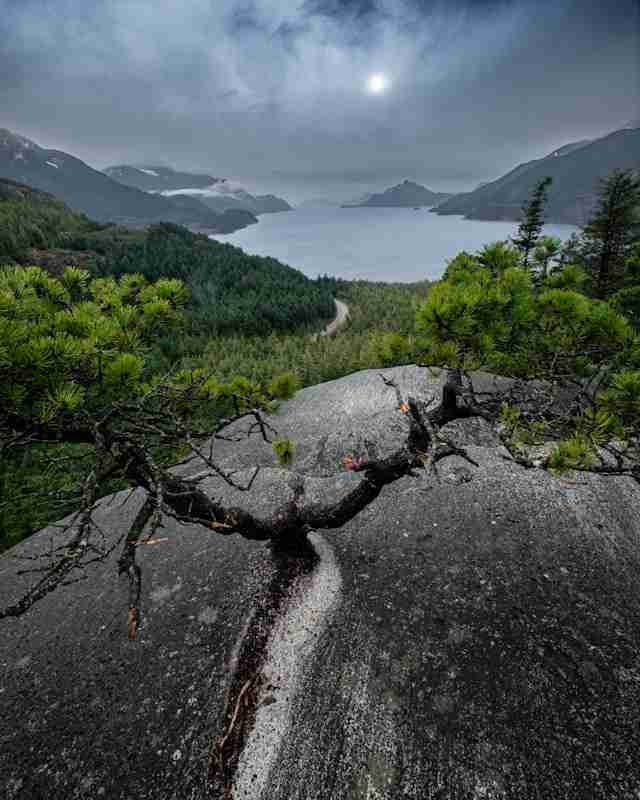
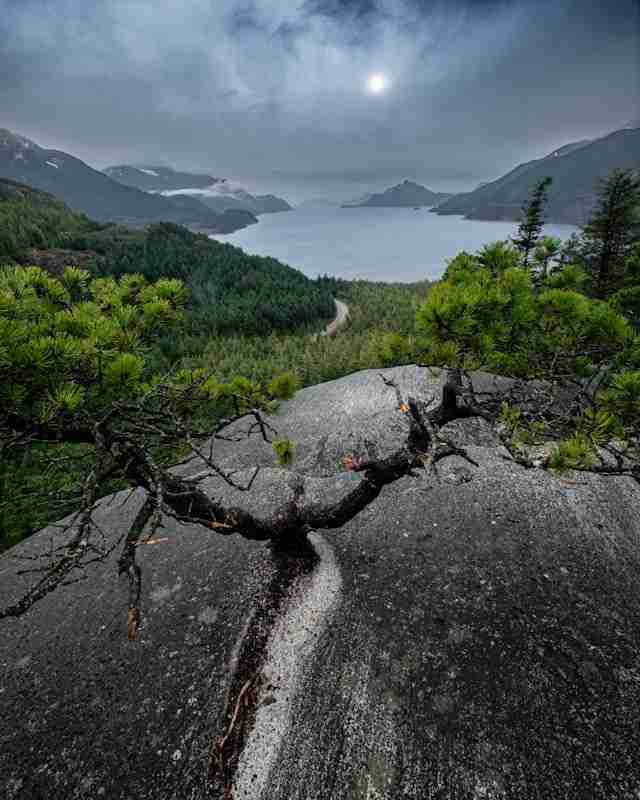
Tucked along the Sea to Sky Highway just south of Squamish, Murrin Provincial Park blends calm lakeside settings with rugged forest trails and elevated granite lookouts. What makes this compact park such a rewarding destination for photographers is the contrast between its quiet, reflective Browning Lake and the exposed viewpoints above, which offer wide, layered views of Howe Sound and the surrounding peaks. Within a short hike, you can shift from shooting forest reflections to working grand coastal landscapes, all while following a trail loop that's dense with texture and variety. The park's mix of boulders, trees, and coastal atmosphere gives photographers a chance to play with depth, lighting, and scale in a way that feels immersive but never overwhelming
Best Photography Opportunities
• Browning Lake Reflections at First Light
The small lake near the parking area is especially still in the morning, offering a mirror-like surface that reflects nearby pines and the occasional cloud cover drifting over the ridge. A wide-angle lens is ideal for placing shoreline rocks or logs in the foreground, giving the reflection added depth. Early light often warms the tops of the trees while the lake remains in shadow, creating a subtle gradient of color that balances the frame. For a clean composition, explore both ends of the lake where the tree lines open up. Calm conditions are key here, and overcast mornings can work well for contrast without losing clarity in the reflection.
• Lookouts Above the Highway Over Howe Sound
A short but steep hike leads to the Quercus Viewpoint and other elevated lookouts that open up wide views of the water, forest, and distant ridges. From these points, you can work with layered coastal scenery and low clouds moving through the sound. The rock platforms provide clean foregrounds, especially when used to anchor leading lines into the background landscape. A standard zoom helps you adjust your composition depending on where the light falls. Late afternoon or golden hour is best when side light starts to hit the surrounding peaks and hillside.
• Granite Walls and Forest Detail Along the Loop Trail
The park is known for its climbing areas, and even if you're not interested in capturing climbers, the vertical rock faces and dense forest create natural compositions with repeated texture. Short telephoto lenses work well here, especially when isolating trees growing from cracks in the granite or when framing narrow forest paths beneath the cliffs. Dappled light during mid-morning adds atmosphere without being too harsh. These shots benefit from handheld flexibility as you move along the trail and react to shifting angles and conditions.
• Trail Overlooks with Rock and Pine Silhouettes
Near the upper loop, the trail passes several outcrops where you can shoot pine trees silhouetted against the sky or distant ridge lines. Use a wide lens to exaggerate the shapes of trees or rock formations against open space. On hazy days or during fog, this area turns into a more minimalist scene where layering and soft focus work better than sharp contrast. Early morning or blue hour can bring out subtle tones in the distant ridges and allow for quiet compositions without foot traffic.
• Autumn Color and Reflected Light Near the Picnic Area
In late September and October, the trees near the lake and picnic area begin to change color. This is one of the most accessible parts of the park and offers plenty of low-angle light in the afternoon. Reflected golds and oranges appear in the lake and across the smooth rock faces along the shore. A polarizer helps control surface reflections and pull detail out of the water's edge. This area is ideal for slower, more deliberate compositions that highlight seasonal transition and color shift.
Best Time to Visit
The best time to photograph Murrin Provincial Park is from late spring through early autumn, when trails are fully open and light conditions are stable. Morning
is ideal for lake shots, with still water and soft sidelight hitting the tree line. Late afternoon into golden hour
works best for the lookouts, where sunlight begins to hit the sound and surrounding ridges at a low angle. Sunset can be rewarding from higher viewpoints, especially if cloud layers form over the horizon and reflect warm light across the water.
Summer
brings longer days and more visibility, though heat and foot traffic pick up later in the day. Autumn
offers color variation around the lake and moodier skies that add atmosphere to forest and overlook shots. Rain is common in this region, especially in spring and fall, but can add richness to tree and rock texture. Avoid midday if possible, when light flattens the scene and the park is at its busiest. The trail to the lookouts can be slick in winter or during heavy rain, so plan accordingly.
How to Get There
Murrin Provincial Park is located about five kilometers south of Squamish along the Sea to Sky Highway (Highway 99). The park entrance is directly off the highway, with a well-marked sign and a modest parking area that fills up quickly, especially on weekends. Parking is free, and from there, Browning Lake is only steps away. The trailhead for the lookout loop is located near the picnic area and includes a steep initial climb before it levels out and connects to multiple viewpoints.
No fees or permits are required to access the trails or photograph within the park. Facilities include restrooms and picnic tables near the lake. The loop trail is relatively short but includes uneven footing, roots, and stone steps, so appropriate hiking footwear is recommended. Bring water and allow time for careful movement between the rock platforms and forest trail sections. The area is open year-round, though trail conditions vary by season.
Recommended Photography Gear
A 16–35mm wide-angle lens is ideal for capturing lake reflections, forest trails, and dramatic sky overviews from the lookouts. A 24–70mm zoom adds flexibility, especially when working mid-range compositions that frame trees, people, or layered views across Howe Sound. For tighter detail shots of rock texture, forest features, or distant mountain ridges, a 70–200mm lens will give you strong reach without needing to move off trail.
A lightweight tripod is useful for early morning lake reflections or golden hour shots from the lookouts. A circular polarizer is particularly helpful for managing glare on the water and deepening sky contrast. Neutral density filters may also be useful if you're shooting longer exposures of water or soft cloud motion. Because conditions can shift quickly, especially at elevation, bring lens wipes and rain protection for your gear. A comfortable, balanced hiking pack will make carrying your setup across the loop trail easier, especially if you plan to stay out until sunset.
Nearby Photography Locations
Just a short drive north, Shannon Falls offers a towering cascade surrounded by lush temperate rainforest. It is ideal for long exposure waterfall photography and works best in low light or overcast conditions.
This nearby attraction offers sweeping alpine views of Howe Sound and Sky Pilot Mountain. A mix of suspension bridge, cliffside walkways, and high-elevation terrain makes it perfect for both wide landscapes and vertical drop shots.
A favorite among hikers and climbers, The Chief offers multiple summits with panoramic views over the Squamish River and valley. Though the hike is strenuous, the top-down compositions and golden hour light are well worth the climb.
South of Murrin, this small historic area offers a mix of coastal landscape and rusted industrial structures. It's a good contrast to the natural textures found in the park and works well for early morning or moody weather shots.
About 20 minutes north, this area features multiple lakes, dense forest trails, and open shoreline views. It's best visited in early morning for misty water scenes and bird activity around the edges.
Murrin Provincial Park may be small, but it packs a surprising range of visual subjects into a short stretch of forest and rock. The mix of peaceful lakeside calm and dramatic coastal overlooks makes it easy to build a varied shoot without venturing far. For photographers looking to balance accessible trails with meaningful landscape work, it's one of the most rewarding stops along the Sea to Sky corridor.
Comments
Loading comments…