
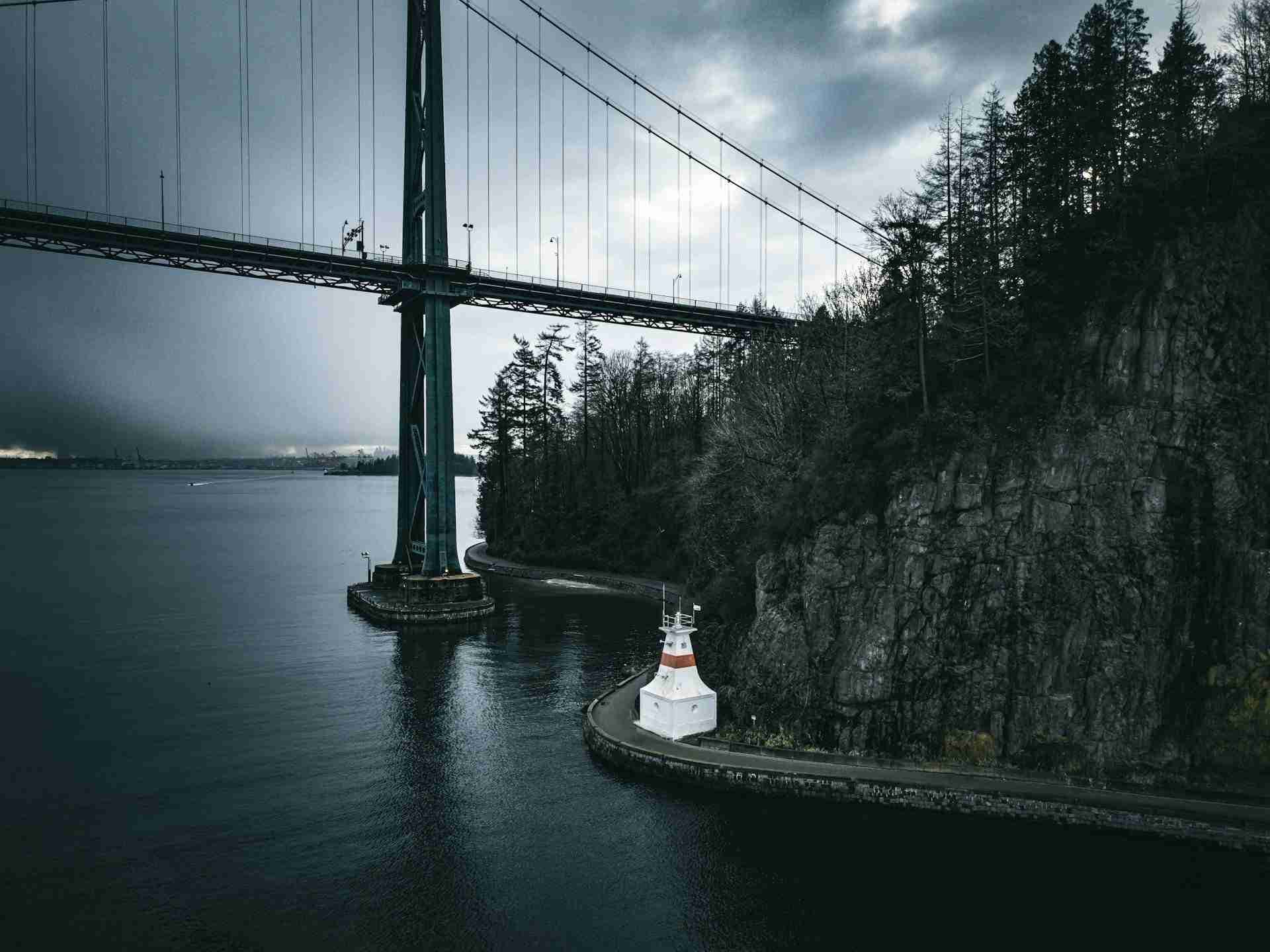
Perched at the northern tip of Stanley Park where the Burrard Inlet meets the Lions Gate Bridge, Prospect Point Lighthouse offers a striking blend of natural and urban photographic elements. This compact, utilitarian structure—painted in stark white and red—anchors a cliffside overlook that feels wild and windswept despite being within one of Vancouver's most visited parks. For photographers, it's a rare location that offers dramatic seascapes, layered compositions with bridge architecture, and moody atmosphere under Pacific light. Whether you're shooting in fog, sun, or storm, Prospect Point Lighthouse provides a constant subject that shifts with the weather and tide.
Unlike some coastal lighthouses that dominate the landscape, Prospect Point blends into its environment, allowing for creative compositions where the lighthouse serves as a focal point among cliffs, forest, bridge cables, and ocean flow. It's a place that rewards patience, particularly during transitional weather and the golden hours that bring contrast and glow to the water and skyline.
Best Photography Opportunities
• Lighthouse and Cliffside Viewpoint
The lighthouse itself is a clean, geometric form with strong contrast between its red cap and white body. Set against the rocky shoreline and dark forest, it works well in compositions that use natural framing from trees or bridge supports. From the seawall below, the lighthouse appears nestled into the base of the cliff, which adds visual drama—especially when the tide is high or waves are active. Shooting from ground level with a wide-angle lens emphasizes its placement in the larger coastal scene.
• Lions Gate Bridge Backdrop
One of the most compelling aspects of this location is its proximity to the Lions Gate Bridge. The lighthouse sits just beneath the bridge's southern anchorage, and compositions that include both structures create a fascinating contrast between old navigation and modern infrastructure. From certain angles, you can use the bridge's towering green girders as leading lines down to the lighthouse. Long exposures here can turn water into mist and traffic on the bridge into light trails after dark.
• Ocean Texture and Vessel Traffic
The Burrard Inlet is active with shipping, ferries, sailboats, and marine wildlife—all of which add motion and context to your frame. Panning shots of ships passing behind the lighthouse offer urban maritime storytelling, while tighter shots of waves crashing along the rocks give you natural drama in changing conditions. A telephoto lens helps compress these elements into layered compositions, often with dramatic mountain backdrops if visibility is clear.
• Atmospheric Conditions and Fog
This section of Stanley Park is often cloaked in low clouds or coastal fog, particularly in the early morning or during changing seasons. The lighthouse takes on a ghostly presence when partially obscured by mist, and the bridge's vertical lines fade beautifully into white. Use a tripod and longer exposures to create moody, minimalist images, or isolate architectural and environmental details as they emerge from the haze.
• Twilight and Blue Hour
After sunset, the area around Prospect Point becomes a tranquil space with cool ambient tones and minimal foot traffic. The lighthouse begins to glow faintly, and the Lions Gate Bridge lights up with a string of green LEDs. This is one of the best times to shoot long exposures that combine still water, glowing bridge lines, and the soft silhouette of the lighthouse. A low ISO, long shutter, and sturdy tripod are essential for clean, high-quality captures.
Best Time to Visit
The best photography conditions at Prospect Point Lighthouse occur during the shoulder hours—shortly after sunrise and especially during golden hour into twilight. Early morning provides calm water, potential fog, and fewer people on the seawall or lookout point, giving you more freedom to set up shots. Sunset is particularly rewarding when the western sky reflects off the inlet and bathes the cliffs and bridge in golden or pink tones.
Winter and spring often bring more dramatic weather, including storms, fast-moving clouds, and low-hanging mist that can make for cinematic seascapes and black-and-white compositions. Summer brings more light but also heavier foot traffic—consider shooting from the seawall below to avoid crowds at the lookout. Overcast days are still excellent for shooting the high-contrast lighthouse against a flat gray sky, particularly when working with minimal, moody aesthetics.
Tides matter. At high tide, waves reach close to the base of the cliff, creating more water movement for foreground interest. At low tide, more shoreline and rock texture are revealed, which works well for layering elements in the foreground.
How to Get There
Prospect Point Lighthouse is located within Stanley Park, accessible by vehicle, bicycle, or foot. From downtown Vancouver, follow Georgia Street west into the park and take the exit toward Prospect Point via Stanley Park Drive. Parking is available at the Prospect Point area above the lighthouse, with a short walk down a set of stairs leading to the viewpoint and nearby seawall path.
For those walking or biking, the seawall route offers several approach angles, with the best views of the lighthouse from the path just below the bridge. This section is paved, but can be slippery after rain. The stairs from Prospect Point Lookout lead down to a lower observation platform with closer views, and you can also continue walking to position the lighthouse beneath the Lions Gate Bridge's massive steel structure.
There is no fee to access the lighthouse or its surrounding viewpoints. While the structure itself is not open to enter, all exterior vantage points are accessible year-round from dawn to dusk. A small café and washrooms are located near the upper parking area. Drones are restricted within Stanley Park, so aerial photography is generally not permitted without special authorization.
Recommended Gear and Shooting Tips
Bring a versatile kit that allows you to adapt to changing conditions. A wide-angle lens (16–35mm) is ideal for capturing the lighthouse with its surrounding cliff, forest, and bridge. A mid-range zoom (24–70mm) will help frame compositions that incorporate both the lighthouse and bridge elements in a balanced way. A 70–200mm telephoto is perfect for compressing scenes and isolating atmospheric moments—such as fog drifting past the bridge or boats sliding behind the lighthouse.
A tripod is essential for twilight and long-exposure work, particularly if you want to capture light trails on the bridge or smooth out choppy water. A circular polarizer helps cut glare off the inlet on brighter days, and an ND filter can allow for longer exposures even during daylight to create silky water effects. Bring a remote shutter or use a 2-second timer to eliminate camera shake on longer exposures.
Keep your gear weather-sealed or protected, as this part of the park is exposed to wind, salt spray, and rain. Microfiber cloths and a rain sleeve for your camera pack will help if conditions turn quickly. If shooting near the waterline at high tide, be cautious of waves and footing, especially when positioning low for foreground interest.
Explore compositions from multiple elevations—shooting down from the cliff, level from the seawall, and even up toward the bridge all offer different visual narratives. Don't be afraid to return in changing conditions—the same frame can shift dramatically depending on the light, cloud cover, or time of day.
Nearby Photography Locations
• Lions Gate Bridge from Below
Just steps from the lighthouse, the underside of the bridge presents a dramatic display of steel geometry and scale. Use wide lenses to capture its vanishing point effect or telephotos to abstract sections of cable and structure against sky or water.
High above the lighthouse, this elevated viewpoint offers sweeping vistas of Burrard Inlet, the North Shore Mountains, and the bridge's full span. Sunset and blue hour are ideal here, with ferry lights and city glow building in the distance.
Located on the western side of Stanley Park, this quiet stretch of shoreline is perfect for sunset silhouettes, wave action, and peaceful long exposures. Driftwood and tide lines add natural interest to minimal beach compositions.
• Brockton Point Lighthouse
At the southeastern tip of the park, this classic red-and-white beacon offers clean lines and views across Vancouver Harbour toward the downtown skyline. A great location for dawn light and a strong complementary subject to Prospect Point.
• Lost Lagoon
Just inside the park's entrance, this reflective body of water is ideal for capturing calm morning scenes with wildlife, city reflections, and seasonal color. Fog here adds an atmospheric element that contrasts well with coastal work near the lighthouse.
Prospect Point Lighthouse is one of those rare spots where industrial, natural, and historical elements converge into a tight frame—offering photographers both technical challenge and creative reward. Whether you're looking to capture the sweeping expanse of Vancouver's coastline or isolate moments of mist and light, this location delivers enduring visual interest in every season.
Comments
Loading comments…