
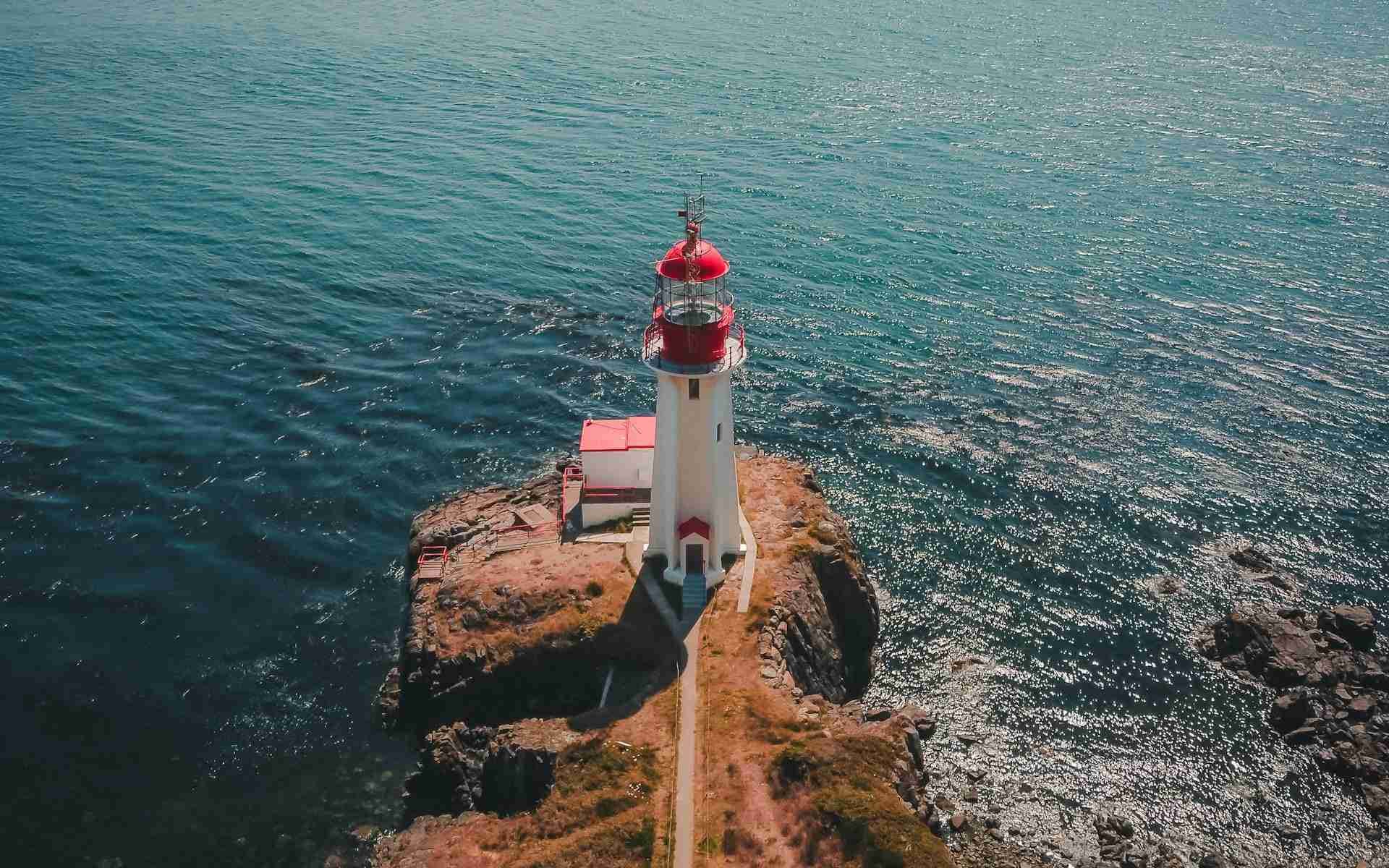
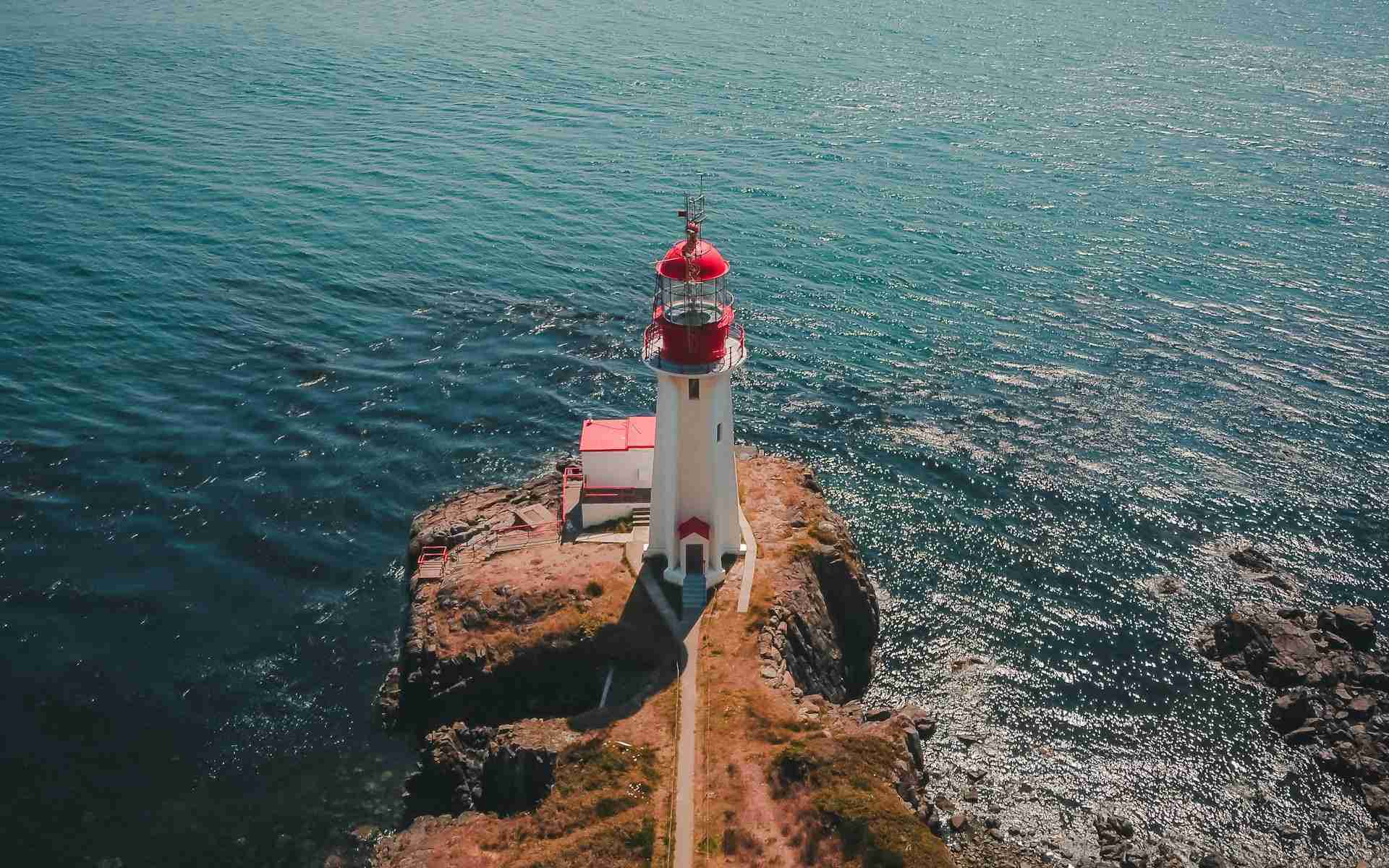
Perched on a rocky headland along the southern coast of Vancouver Island, Sheringham Point Lighthouse stands against the constantly changing Pacific backdrop of the Strait of Juan de Fuca. This active lighthouse offers a bold contrast between the clean geometry of its white concrete tower and the raw textures of the surrounding forest, sea, and stone. The landscape is shaped by wind, salt, and weather, and light moves quickly across the open water and jagged shoreline. For photographers, this is a location that lends itself to both expansive landscape frames and quiet studies of coastal texture. Conditions shift by the hour, with fog, tide, and cloud patterns creating fresh opportunities throughout the day.
Best Photography Opportunities
• Sheringham Point Lighthouse from the Bluff
The most balanced and complete view of the lighthouse comes from a clearing just before the trail reaches the tower. From this slightly elevated position, you can frame the lighthouse cleanly against the open ocean, with coastal rock and low vegetation providing foreground structure. A wide lens allows you to incorporate both land and sea without distortion, while a mid range lens works for framing the lighthouse more tightly. Morning light brings even tone and calm seas, while sunset adds contrast and depth to the cliffs and structure. This location remains strong in overcast light, especially when the sky carries subtle gradients or fast moving clouds.
• Coastline and Wave Action Beneath the Headland
The shoreline beneath the point is carved into rough rock and catches the full energy of the incoming tide. This is the best place to shoot long exposures, particularly in the hour before or after high tide. With the right exposure length, water smooths into soft surfaces while the stone remains sharp, creating a balance of motion and stillness. Tide pools, foam lines, and water flow between rocks offer detail and structure for tighter compositions. These scenes are most effective in soft light, especially during overcast days or shortly before sunset. Wet rocks become reflective, and surface texture becomes more pronounced.
• View Toward the Olympic Mountains
Looking south across the strait, the Olympic Mountains often rise above the horizon, especially during cooler seasons with clear air. When conditions allow, their snow covered ridges offer a distant layer of scale and shape. With a telephoto lens, you can compress the scene and frame the lighthouse against the distant peaks. Early morning is the best time for this angle, when the light is soft and the atmosphere is still. Even if the mountains are partially obscured, low cloud or haze can add mood and separation in the background.
• Storm Light and Rapid Weather Shifts
The headland is exposed to weather systems that move quickly across the water, especially in autumn and winter. Light can shift from soft to dramatic in minutes, creating a short window of strong contrast or bright backlight behind the tower. Staying through changing weather often brings the most striking frames, especially when clouds part just enough to let light fall on the structure. A wide angle setup allows you to capture these rapid transitions, while a mid range lens helps frame tighter moments as the sky changes. Rain gear for both you and your camera is essential in these conditions.
• Close Details Around the Lighthouse
The site includes weather worn signage, rusted fencing, and marine growth that tell the story of years spent on the edge of land and sea. These elements provide strong subjects for detail photography, especially when composed carefully to isolate pattern, wear, or material. With a 24 to 70 millimeter lens, you can work comfortably without switching setups. These scenes work best in soft, even light to avoid harsh contrast. Textures in the concrete tower, metalwork, and coastal plants also make strong subjects for black and white conversions, particularly in overcast or post rain conditions.
Best Time to Visit
The best time to visit Sheringham Point for photography depends on the type of image you are looking to create. Spring and autumn offer the widest range of light, color, and conditions. In spring, new growth along the trails adds texture and variation to the forest edge, and the morning light is softer and longer lasting. Autumn brings cooler air, dramatic skies, and stronger surf, which adds movement and texture to seascapes. In both seasons, the strait often holds fog or cloud banks that move quickly, providing moody atmosphere without fully blocking visibility.
Summer provides consistent light, longer shooting windows, and calm seas. This is the best time for vibrant sunset shots or layered compositions that depend on extended twilight. However, mid afternoon light can be harsh and flat, especially on clear days. Early morning and late evening are most productive in this season.
Winter is ideal for storm watching and dramatic weather photography. Rain, heavy clouds, and active seas combine to create high contrast scenes that work well in color or monochrome. These conditions require preparation, both for gear protection and for navigating slippery paths. On any visit, the lighthouse receives even light throughout the day due to its coastal location, but morning and late afternoon provide the best opportunities for dynamic light and shadow across the structure and coastline.
How to Get There
Sheringham Point Lighthouse is located just outside the small town of Shirley, along the southwestern coast of Vancouver Island, British Columbia. From downtown Victoria, take Highway 14 west through Sooke and continue toward Port Renfrew. The drive is roughly 90 minutes, with the final stretch passing through quiet forest and small coastal communities.
As you approach Shirley, signs for Sheringham Point Road will guide you to the trailhead. A small parking area sits at the end of this road. From the lot, it is a short and clearly marked trail that leads through forest to the lighthouse. The walk takes about 10 to 15 minutes and includes sections with uneven footing and shallow stairs. The site is managed by a local preservation society and is open to the public year round. There is no entrance fee, and tripods are welcome. There are no facilities on site, so bring what you need, especially if planning to stay for sunset or during unsettled weather.
Recommended Photography Gear
A well rounded kit for Sheringham Point should include a wide angle lens in the 16 to 24 millimeter range for capturing full scenes with sky, sea, and land. This focal length works best when shooting from the bluff or shoreline and helps create strong compositions with leading elements. A mid range lens from 24 to 70 millimeters is ideal for tighter views of the tower, trail, or shoreline details. For photographing distant mountain ranges, ships on the water, or compressing landscape layers, a 70 to 200 millimeter telephoto lens is highly useful.
A sturdy tripod is necessary for long exposures near the surf and for stable shooting in wind. Bring a six or ten stop neutral density filter if you plan to work with water movement or passing cloud. A circular polarizer is helpful in managing glare on rocks and water and in deepening sky contrast on partly cloudy days. Lens cloths are essential here, as sea spray can build up quickly on the front element. A rain cover or weather resistant camera bag is also recommended, especially in colder months or when working through storm conditions.
Footwear with good grip is important for moving across rock and wet trail. If you are planning to shoot past sunset or arrive before dawn, a headlamp will help with the return walk through the forest. Because of the proximity to the sea, wind chill can drop quickly, so layers are advised year round. Bring extra batteries and cards, as the conditions often change fast and opportunities can come in quick bursts.
Nearby Photography Locations
Just east of Shirley, this coastal park features a broad beach strewn with driftwood, backed by forest and wide views across the strait. Sunrise and sunset both work well here, and long exposures with water and cloud create soft, open compositions. It is less exposed than Sheringham Point but still offers dramatic seascapes in the right conditions.
A short drive south, this beach includes a small seasonal waterfall that drops directly onto the sand. The walk in is through forest, opening suddenly to a rugged shoreline with strong leading lines and a distinctive curve. Low tide reveals more foreground rock, and overcast light suits the scene well.
• Mystic Beach and the Juan de Fuca Trail
To the northwest, Mystic Beach is part of a longer trail system and features sea stacks, forest paths, and open shorelines. It takes longer to reach but provides more variety for photographers interested in coastal and woodland combinations. Fog and soft light are common in the early morning hours.
Inland from the coast, this river park is carved into rock with pools, ledges, and reflections that work well for abstract or minimalist compositions. Water levels change with the season, and overcast skies are ideal for texture and tonal control. It is a quieter alternative to the more exposed coastal views.
Farther west near Port Renfrew, this location includes expansive tide pools, unique rock textures, and dramatic surf. The intertidal zone here is rich with pattern and detail, and low tide reveals a wide area for exploration. It is a strong location for both close-up work and large scale seascapes.
Sheringham Point Lighthouse offers photographers a compact but deeply varied location where landscape, weather, and built structure come together. Whether you're working with slow shutter speeds on the shoreline or waiting for storm light to break over the tower, this stretch of coast delivers strong compositions in all conditions. With easy access, changing skies, and powerful natural features, it stands out as a reliable and rewarding place to return to across seasons.
Comments
Loading comments…