
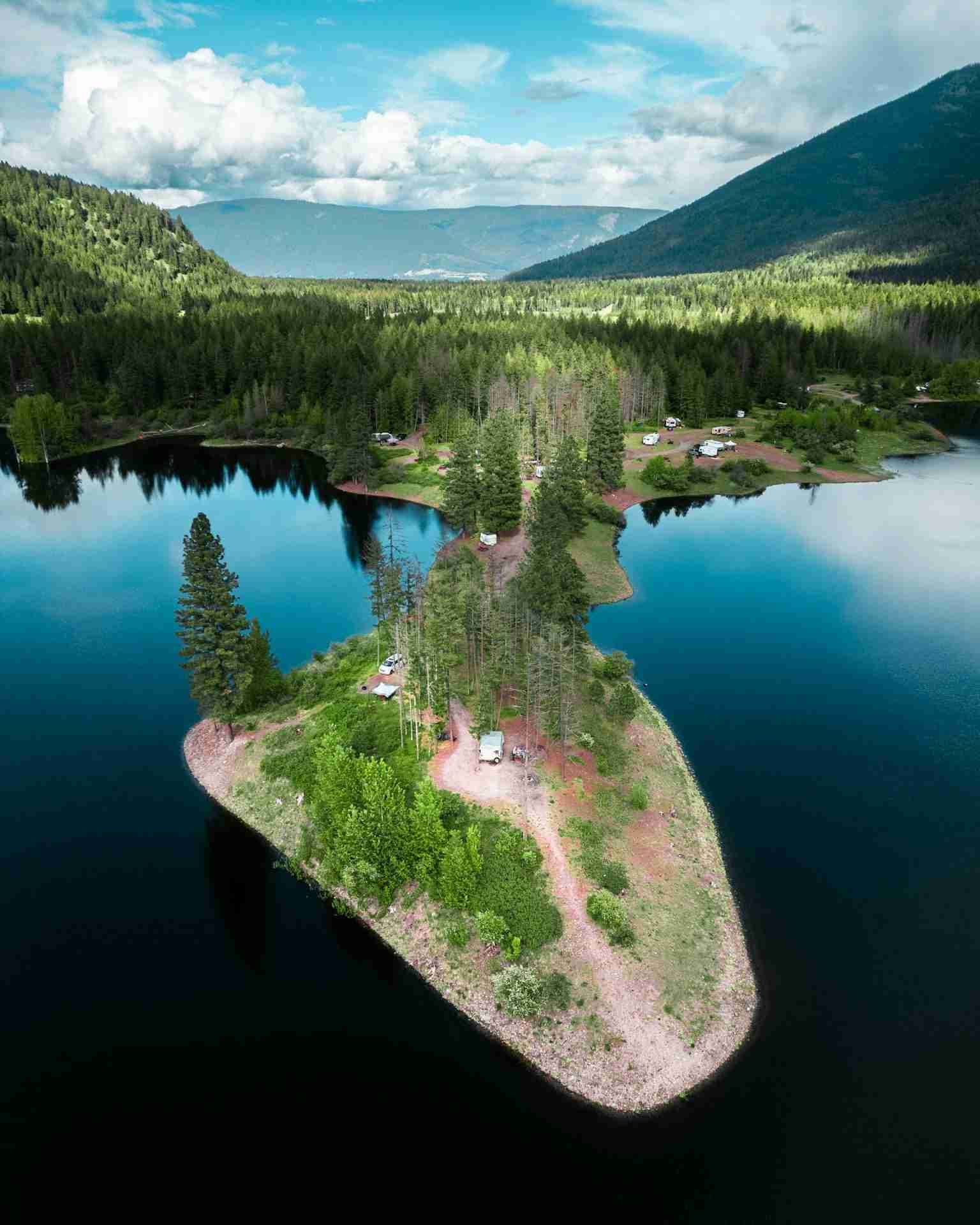
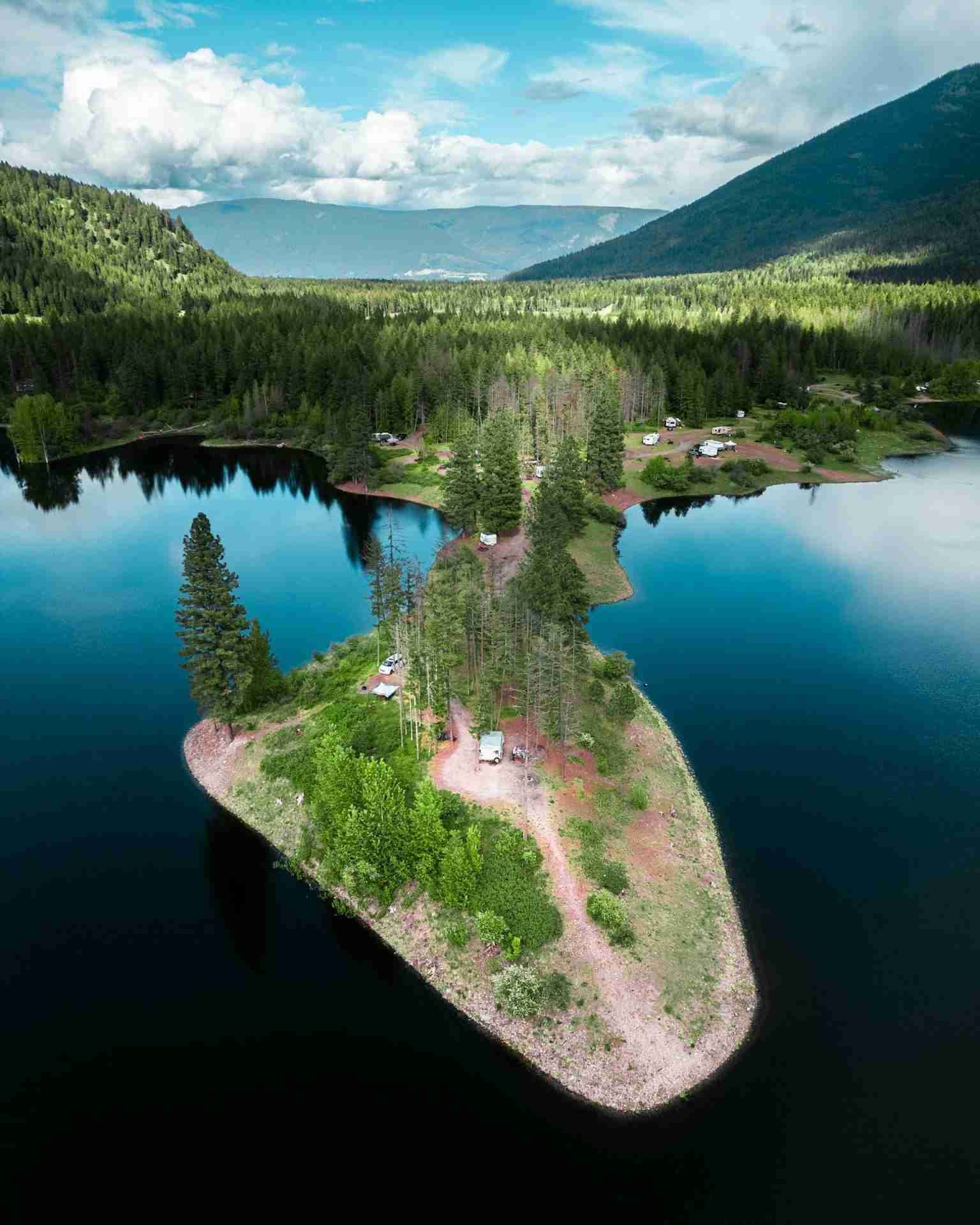
Skimikin Lake rests in a quiet pocket of the Columbia-Shuswap region in British Columbia, surrounded by low forested hills, meadows, and second-growth woods. The lake's small size and sheltered setting create reliable conditions for glassy reflections, soft mist, and a muted color palette that shifts gently through the seasons. It is not a dramatic or towering landscape, but that is part of its appeal. This is a location that lends itself to patient observation and subtle adjustments, where light, water, and trees meet in quiet dialogue. Photographers will find space here to work deliberately, whether they are after fog-wrapped mornings, tonal studies of shoreline detail, or clean mirrored compositions just before sunrise.
Best Photography Opportunities
Morning Reflections from the North Shore
The northern edge of the lake provides an open view across the water toward the opposite treeline, where soft morning light first touches the upper branches. This is the most reliable position for capturing full reflections of the surrounding forest, especially when the air is still and the lake surface remains undisturbed. During early hours, a layer of mist often drifts along the treetops and the waterline, adding atmosphere and visual separation. Wide-angle lenses allow for a symmetrical frame with balanced sky and shoreline, while longer focal lengths can compress the scene and isolate patterns in the mirrored trees. Working from a low tripod position close to the water's edge enhances depth and emphasizes foreground detail.
Fog and Tree Layer Studies in Early Light
Cool spring and fall mornings frequently bring fog to the lake, particularly before sunrise and during the first hour of daylight. From the east or southeast side, you can shoot westward into the lifting mist, using the forest ridges to layer the composition. As light filters through, it creates soft gradations in tone and shadow across the tree line. These conditions are well suited to black and white photography, where tonal contrast and shape take precedence over color. A 70 to 200 millimeter lens is ideal for compressing forest layers and separating individual trees within the haze. Tripod use is recommended, as slower shutter speeds may be necessary in the low light.
Overcast Conditions and Shoreline Detail
Skimikin Lake holds its mood on overcast days, when flat light allows fine textures and subdued tones to emerge without harsh contrast. These conditions are best for photographing shoreline details, such as water plants, roots, driftwood, and the curve of grass at the lake's edge. With soft light reflecting evenly off the surface, photographers can work close to the water without dealing with glare or blown highlights. A polarizer is useful here for cutting reflections and bringing out color and texture in wet surfaces. A mid-range zoom lens offers the flexibility to compose both tight studies and contextual frames with the shoreline and forest beyond.
Autumn Color Reflections
During early to mid-October, the underbrush and low trees surrounding the lake shift to amber and gold, while the pines and firs remain deep green. This natural contrast provides a strong base for layered reflection compositions, particularly along the southern shoreline where color clusters are most concentrated. Early morning light creates a warm glow across the lake, and calm water maintains clean reflections for extended periods. Framing with a medium focal length lens allows for control of proportion and the inclusion of subtle foreground elements such as overhanging branches or grasses at the waterline.
Minimalist Long Exposures in Late Fall
As the season progresses and leaves drop, the lake becomes increasingly bare and quiet. This shift opens up opportunities for minimalist long exposures, particularly during overcast afternoons or shortly after sunset. With fewer visual distractions, photographers can work with simplified compositions that highlight water, sky, and shape. Using a six to ten stop neutral density filter allows for exposures of several seconds to several minutes, smoothing surface texture and softening cloud movement. A tripod and remote shutter release help maintain clean results and sharp structural lines where needed.
Best Time to Visit
The most productive photography conditions at Skimikin Lake occur from late April through mid-October, when forest access is clear and early morning temperatures create frequent mist. In spring, the lake is surrounded by fresh greens, and the light remains low and directional well into the morning hours. These conditions are perfect for reflective compositions and tonal balance. Late May and early June often bring calm skies and cool nights, creating an ideal combination for mist and mirrored surfaces.
Autumn is the most photogenic season at this location. From late September through mid-October, foliage begins to change across the lower forest line and understory, offering warm tones and soft light during the first and last hours of the day. Fog becomes more common, and the lake remains quiet as visitor traffic tapers off.
Summer visits are possible and productive, though light becomes harsher by mid-morning. To make the most of this season, plan to arrive before sunrise and work quickly as the sun clears the ridge and begins to reflect directly off the water. Overcast days are excellent for detail work and shoreline compositions.
Winter photography is less consistent due to snowfall and access conditions, but when the roads are open, the lake offers a quiet, empty landscape with potential for black and white studies and high contrast compositions. Light snow on the treetops or partial ice on the lake surface can add strong visual interest when paired with overcast skies or early morning fog.
How to Get There
Skimikin Lake is located west of Tappen in the Columbia-Shuswap region of British Columbia. From Highway 1, turn onto Skimikin Road and follow it west for approximately ten kilometers. The road transitions from pavement to gravel near the lake and remains well graded for most of the year. A small recreation site on the northern shore provides direct access to the water's edge.
There is no hiking required to reach the lake. Parking is available on site, and most shooting locations are within a few steps of the vehicle. The recreation site is open year-round and does not require a fee for access. Tripods are permitted, and there are few restrictions on photography. While the area is popular with locals in summer, early mornings remain quiet, especially during spring and fall. Winter visits may require caution due to ice and limited road maintenance, so check conditions before planning a cold-season shoot.
Recommended Photography Gear
A wide-angle lens between 16 and 35 millimeters is well suited to reflective compositions, allowing you to frame both the treeline and its mirrored form in one balanced shot. For tighter control of foreground and shoreline relationships, a 24 to 70 millimeter zoom gives you flexibility without distortion. A 70 to 200 millimeter lens is particularly useful for fog studies and detail work across the lake, especially when you want to isolate layers or compress distance in soft light.
A sturdy tripod is essential for long exposures, low light conditions, and precise alignment along the shoreline. A circular polarizer helps reduce surface glare and enhance color separation, especially in wet foliage or driftwood. Neutral density filters in the six to ten stop range allow you to extend shutter speed in bright light for creative smoothing of water or cloud movement.
Footwear should be waterproof and provide good grip, as the ground near the lake is often soft or uneven, particularly after rain. A microfiber cloth and blower are important for managing moisture on your lens, especially on foggy mornings. Carry a weather-resistant backpack and consider a lightweight ground sheet if you plan to work low to the surface. Extra batteries are recommended for cold mornings or extended sessions, and a thermos or warm layer can make early hours more comfortable while waiting for light.
Nearby Photography Locations
Just east of Skimikin, White Lake is a larger, more open body of water with gentle curves and strong reflection potential. It is especially productive in the afternoon when warm light hits the west shore and grasses at the edge catch golden tones. This location works well for minimalist compositions and wide landscape frames.
A short drive northeast brings you to Herald Provincial Park, home to old-growth forest and the photogenic Margaret Falls. This waterfall is set in a narrow canyon and responds well to soft light or overcast conditions. Long exposures are effective here, especially when moss and lichen are visible on the surrounding rock.
Tappen Valley Lookout
This elevated point west of Skimikin offers broad views of the Columbia-Shuswap region, with rolling hills and patchwork forest. Morning light is ideal here for shooting into layered ridgelines with fog or soft sky detail. It is a strong option for panoramic work or compressed telephoto landscapes.
The narrows near Salmon Arm offer long reflections, soft shoreline reeds, and low-angle water compositions that shine in calm conditions. Early morning is best for mirror shots, while late evening brings warm tones across the water and silhouetted hills beyond.
This moderate trail near Sorrento leads to an overlook above Shuswap Lake. It is best in fall when the valley below turns golden and the lake catches low light from the west. It offers a broader landscape view that pairs well with the more intimate work found at Skimikin Lake.
Skimikin Lake is not about spectacle. Its beauty lies in its restraint and the quiet clarity of its light. For photographers willing to slow down and work with the details of water, forest, and sky, it offers a grounded space with consistent conditions and subtle rewards. Whether you are seeking stillness, atmosphere, or soft transitions in tone, Skimikin provides a reliable canvas for careful composition and quiet image-making.
Comments
Loading comments…