
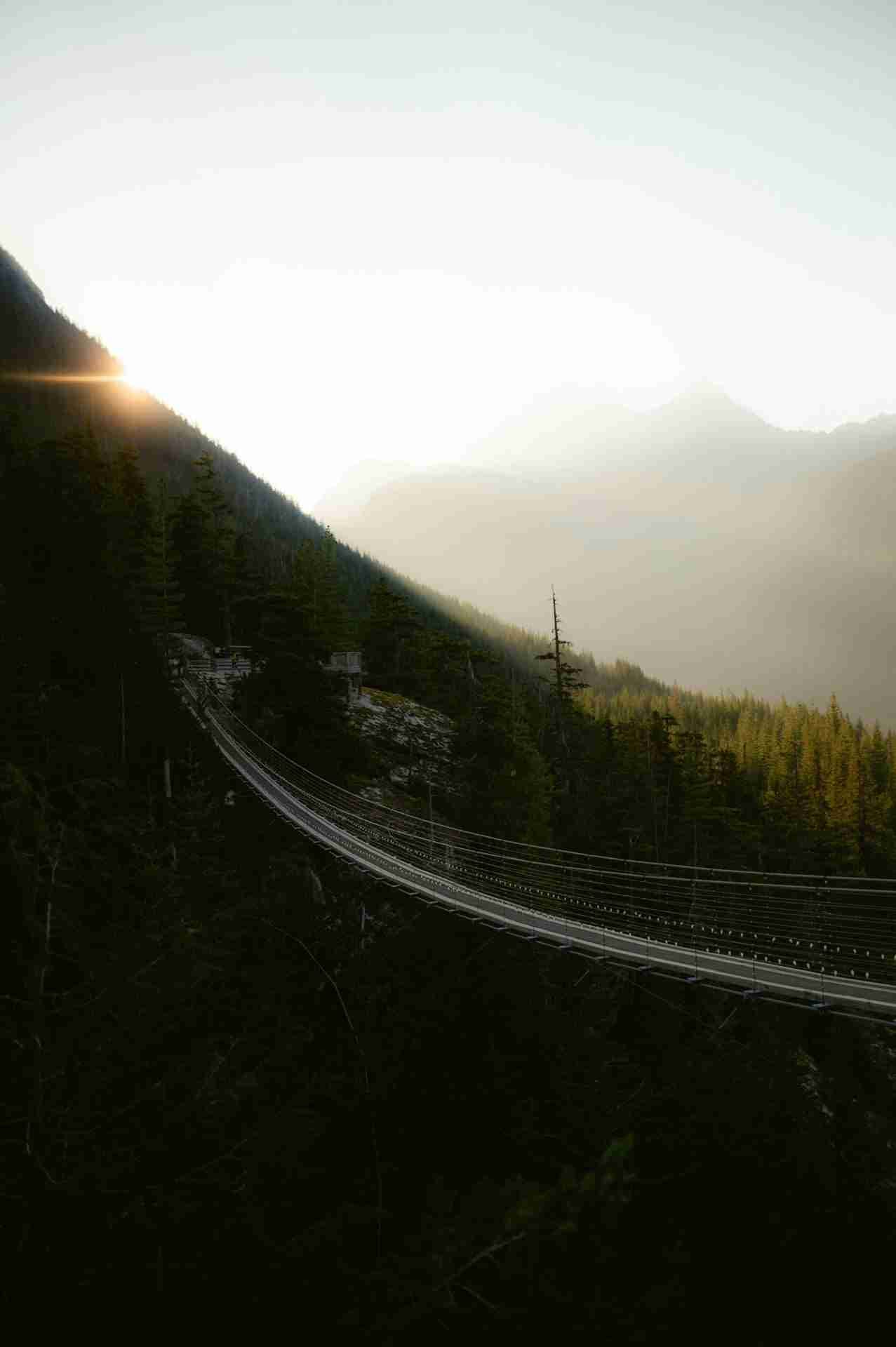
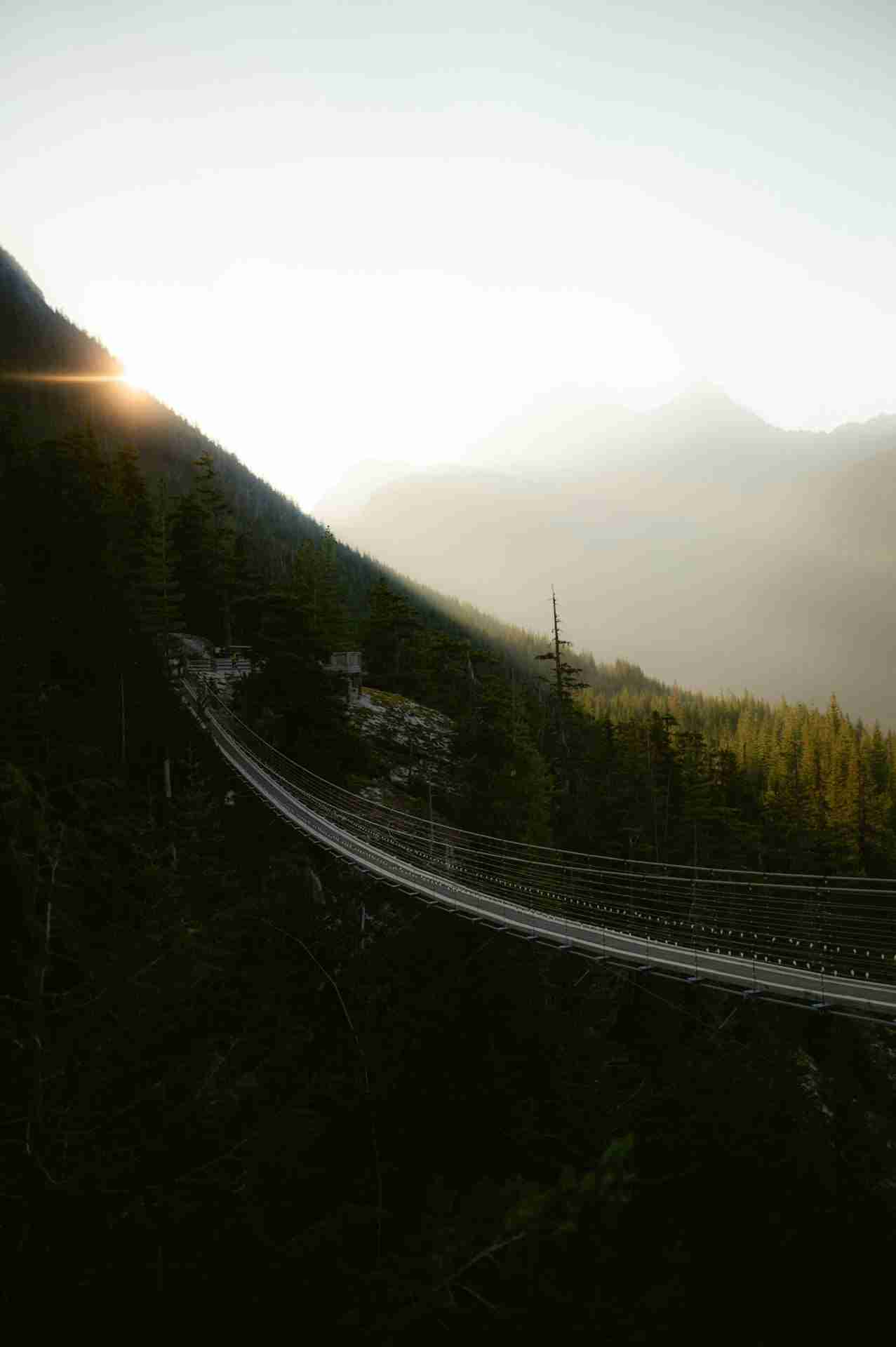
Suspended between craggy alpine cliffs high above Howe Sound, the Sky Pilot Suspension Bridge offers one of the most photogenic elevated walkways in British Columbia. Just outside Squamish and accessed by the Sea to Sky Gondola, this narrow bridge stretches above a dramatic drop, surrounded by snow-dusted peaks, steep rock faces, and shifting weather that can transform the scene from bright and clear to misty and moody within minutes. The views from the bridge and its approach trails are sweeping in every direction, making it a location that suits both wide compositions and layered mountain detail work. For photographers, this site offers a rare blend of controlled access and wild setting, where short hikes lead to big alpine views without requiring technical climbs or long treks.
Best Photography Opportunities
• Looking Across the Bridge Toward Sky Pilot Mountain
One of the strongest compositions here is a direct view across the bridge with Sky Pilot Mountain anchoring the background. The bridge's cable lines and planks create natural leading lines that pull the viewer into the frame. In clear conditions, you'll get sharp contrast between the foreground structure and the rugged mountain peak, especially in the early morning when light spills in from the east. A wide-angle lens allows you to exaggerate depth and keep the entire scene in focus, while a smaller aperture helps retain sharpness across the bridge and the mountains beyond. To emphasize scale, wait for a person to cross and place them mid-span, ideally silhouetted against the sky or ridgeline.
• Side Angles of the Bridge From the Cliff Trail
Several short paths near the bridge offer side views that place the bridge within its surrounding alpine context. These vantage points are ideal for showing the height and isolation of the span, with layers of forest, cliffs, and cloud below. Use a mid-range zoom lens to frame the bridge diagonally across the scene, and position yourself slightly uphill to avoid converging verticals. This angle is especially effective in mist or light fog, when the bridge seems to float above the landscape. Side-lighting during golden hour can bring out the texture in the ropes and surrounding rock.
• Vertical Shots Looking Down From the Bridge Deck
For those comfortable with heights, pointing the lens straight down from the center of the bridge offers a dramatic view of the drop below. Depending on the season, you may see tree canopy, patches of snow, or swirling mist filling the valley beneath. A standard lens or even a wide prime works well here to capture detail while maintaining sharpness edge to edge. These shots are strongest in soft light when contrast between bright sky and shadowed terrain is less extreme. To add depth, include part of the bridge's rope or plank structure in the top of the frame.
• Mountain Layering and Cloud Movement Around the Peaks
On days with mixed weather, the surrounding peaks often drift in and out of low-hanging cloud. This creates opportunities for time-lapse sequences, long exposures, or layered telephoto compositions. Use a long lens to isolate ridgelines, focusing on where light breaks through and adds contrast between different elevations. Even simple frames of rock, snow, and sky become more dynamic under shifting light. This style of shot is especially effective in black and white, emphasizing form and separation.
• Sunset Light Over Howe Sound From the Upper Platforms
The platforms near the gondola terminal offer wide western views toward Howe Sound, which becomes especially photogenic in the last hour of daylight. Low sun hits the ocean and clouds from the side, creating color gradients that can be mirrored in the calm water below. A polarizer helps cut glare if you're shooting across the sound, or you can use a neutral density filter for long exposures that smooth water and streak the clouds. These compositions work well handheld, but a tripod allows for more deliberate setups, especially if you're layering foreground structure into the frame.
Best Time to Visit
The Sky Pilot Suspension Bridge is open seasonally and offers different photographic conditions depending on when you visit. Late spring through early fall
is the most accessible window, with clear trails, manageable crowds, and long daylight hours. Early morning is ideal for shooting east-facing views, including the bridge and Sky Pilot Mountain, before direct sun becomes harsh and wind begins to ripple the valley air. Morning light is also more consistent and less crowded, giving photographers more freedom to work the scene.
Summer
brings high sun and clear visibility, though midday light can flatten the scene unless you're working with cloud structure or dramatic shadows. Autumn
offers cooler air, changing foliage in the valley below, and longer golden hour windows. Winter conditions
occasionally close the bridge or restrict access due to snow and ice, but on clear days, the snow-covered peaks and low-angle sun create strong contrast and high-drama compositions. Wind and cloud often change the scene quickly, so bringing flexibility and patience is key. Fog, especially in the shoulder seasons, can turn ordinary views into minimalist studies if you're prepared for sudden drops in visibility.
How to Get There
The Sky Pilot Suspension Bridge is located just outside Squamish, British Columbia, and is reached via the Sea to Sky Gondola, which departs from a base station off Highway 99. The gondola ride takes about ten minutes and brings you to the summit area, where the bridge and viewing platforms are a short walk from the drop-off point. The area includes multiple hiking trails and side routes, some of which offer additional angles of the bridge and surrounding peaks.
Tickets for the gondola must be purchased on-site or online, and while prices vary, there is no additional fee to access the bridge or photograph in the area. The summit area is open during daylight hours, and seasonal closures may apply due to snow or maintenance. Parking is available at the base, but it fills quickly on weekends, so early arrival is recommended. Drones are not permitted in the Sea to Sky Gondola area due to safety and environmental regulations.
Recommended Photography Gear
A wide-angle zoom lens, such as a 16–35mm, is essential for capturing the bridge's full length and the surrounding mountain backdrop. This focal length allows you to exaggerate the lines of the bridge and include dramatic foreground-to-background depth. A 24–70mm standard zoom is ideal for flexible compositions when shooting from trails or platforms, especially for side angles and framing through trees or cliff faces. For isolating distant peaks or shooting cloud movement across ridges, a 70–200mm telephoto lens will let you compress the landscape and capture subtle shifts in light.
A lightweight but sturdy tripod is useful for long exposures, low light shooting, and layered compositions from the platforms. If you're interested in motion blur or time-lapse work, neutral density filters will help manage exposure times during brighter hours. A polarizing filter is useful for cutting glare, especially when shooting toward Howe Sound or in bright conditions where rock and sky reflect light at harsh angles. Given the elevation and exposed conditions, pack lens wipes and weather protection for both your gear and yourself. A backpack with good weight distribution is recommended, especially if you plan to explore the nearby hiking trails.
Nearby Photography Locations
For those who prefer to hike up instead of using the gondola, this steep trail offers multiple viewpoints along the route. Forest, switchbacks, and cliff-side clearings make for strong environmental and trail photography, particularly in early light.
Located near the base of the gondola, this tall, fast-flowing waterfall is best shot with a long exposure. Use a tripod and wide lens to capture the full drop or isolate textures in the rock and water.
Offering panoramic views over Squamish and Howe Sound, the Chief is accessible via a strenuous hike. The summit areas are ideal for sunset and golden hour light, with sweeping views that pair well with layered compositions.
A short drive south, this site offers industrial textures and historic mining structures in dramatic mountain surroundings. It's a strong contrast to the alpine subjects above and works well for color and detail shots.
Smaller and more intimate, this park includes rock climbing areas, forest trails, and a peaceful lake with strong reflections. It's best in the early morning when the water is still and the light moves softly through the trees.
The Sky Pilot Suspension Bridge combines access and elevation in a way few other locations do. With mountain light, dramatic drops, and fast-changing weather, it's a place that rewards photographers who adapt quickly and look for subtle shifts in structure and scale. Whether you're focused on strong architectural lines or patient mountain studies, the bridge offers both context and drama in every direction.
Comments
Loading comments…