
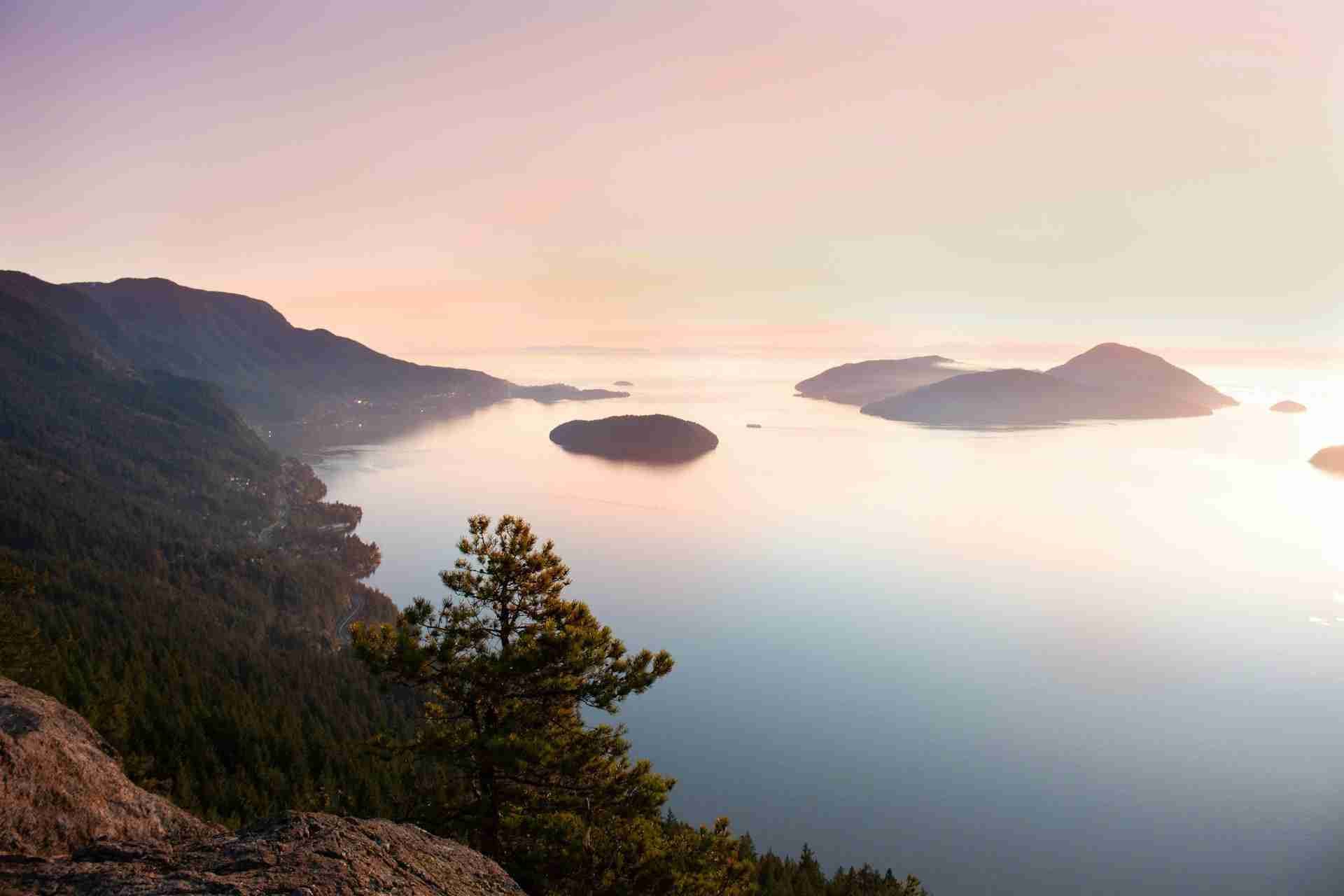
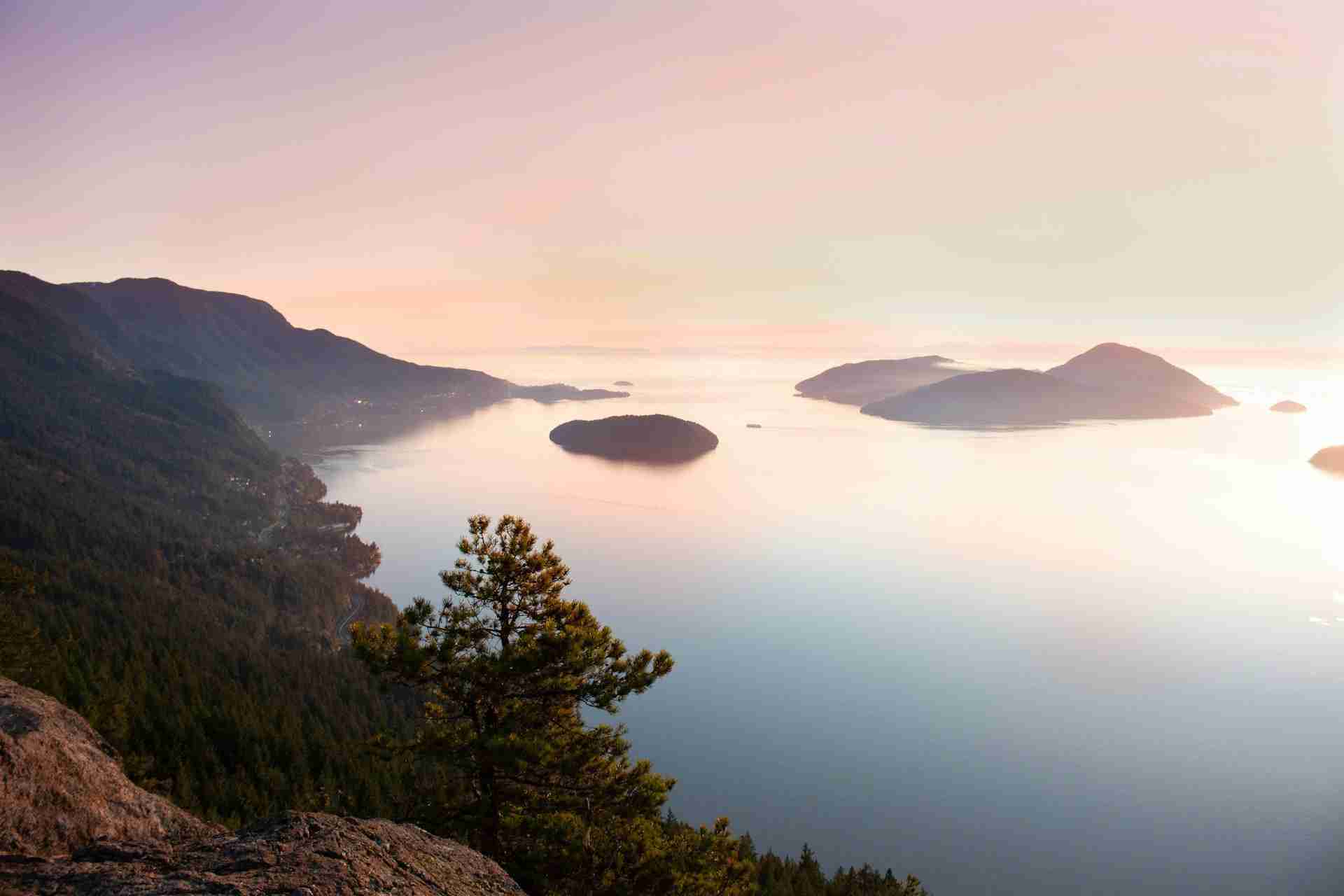
Tunnel Bluffs is one of the most rewarding viewpoints along the Sea to Sky corridor, located above Lions Bay in British Columbia. Perched on a ledge high above Howe Sound, it offers sweeping views of ocean inlets, scattered islands, and distant peaks. The spot is known for its wide, open vantage point that allows photographers to capture the dramatic scale of the coastal landscape. The trail to reach the bluff is moderately steep and takes some time to hike, but the view from the top is one of the best in the region for sunrise, sunset, or mid-day shooting with clear skies. Tunnel Bluffs is a great location for photographers who want to work with layers, light, and the calm expanse of sea meeting mountains.
Best Photography Opportunities
Wide Vistas of Howe Sound
The main viewpoint at Tunnel Bluffs opens up to a classic west coast scene, with forested islands scattered across the sound and mountain ridges fading into the distance. Using a wide-angle lens like a 16 to 35mm allows you to fit in the curve of the shoreline, the islands, and the ocean below. The light here changes quickly, especially in the early morning when the sky begins to glow behind the mountains. To make the most of this, try arriving before sunrise so you can be set up as the light builds. Including nearby trees or rocky edges in the frame helps anchor the scene and add depth.
Sunrise Light Over the Mountains
Sunrise is one of the best times to shoot at Tunnel Bluffs. The sun rises behind or just beside the ridge across the sound, depending on the season, and often casts a warm glow over the peaks. A 70 to 200mm lens helps you isolate distant layers of mountains as the light moves across them. Fog or mist in the valleys adds even more depth and atmosphere. Keep your shutter speed high enough to capture fine detail in the glowing ridgelines. These shots are strongest in the fall and winter when sunrise comes later and the air is often clearer.
Cloud and Weather Changes
Because Tunnel Bluffs sits high above the ocean, the weather can change quickly and create shifting clouds, fog, and patches of sun. This makes it a good place to wait and watch as scenes evolve. Long lenses help you pick out moments of light or shadow on individual islands or ridges. A tripod is useful for bracketing exposures or waiting out cloud cover. These conditions are great for photographers who like building mood into their images with light and atmosphere rather than dramatic color.
Human Scale in the Landscape
Including people in your shots at Tunnel Bluffs can help show the scale of the view. Hikers standing at the edge or sitting on one of the rocky ledges make good natural focal points. These kinds of photos work well with a 35mm or 50mm lens to keep some distance while still connecting the figure to the larger scene. Try shooting just after sunrise when the light is soft or later in the evening as shadows stretch across the bluff. It adds a storytelling element and gives your images a sense of place.
Backlit Trees and Foreground Layers
Around the bluff itself are several small trees and shrubs that work well as foreground layers. When backlit, especially at golden hour, they glow with warm light that helps frame your composition. A 24mm or 35mm lens gives you enough width to include the bluff and background while still getting close to the natural elements nearby. These layers help create separation and make the image feel more three-dimensional. This style works best in low light when shadows are long and soft.
Best Time to Visit
Tunnel Bluffs is accessible year-round but the trail and light conditions vary by season. Sunrise is the best time for photography if you want to capture dramatic light and avoid midday haze. In fall and winter, sunrise happens later and the skies are often clearer with less heat distortion. Spring and early summer offer fresher greens and more color in the foreground but light can be harsher by mid-morning.
Sunset can also be good depending on cloud cover. The viewpoint faces west and slightly south so it catches soft evening color in the sky and across the water. Fog and marine layers are common, especially in summer mornings, which can add atmosphere but also obscure the view. Late afternoon light adds warmth to the bluff and helps show texture in the trees and rocks. Midday light is stronger and flatter but still workable with careful framing and the right lens choice.
How to Get There
The Tunnel Bluffs trail begins just off the Sea to Sky Highway near Lions Bay. The trailhead is located beside a highway pullout but parking is extremely limited. Many hikers now park at the designated lot in Lions Bay and walk an extra short distance to the start. The hike to Tunnel Bluffs is about 6.5 kilometers one way with around 600 meters of elevation gain. The trail is steep in sections but well-marked.
There is no fee to access the trail. Wear good hiking shoes and bring water, especially in summer. Cell service is spotty once you gain elevation so download a map or GPS in advance. The trail is mostly forested until you reach the bluff so the viewpoint opens up all at once near the end. If you are carrying camera gear, a hiking backpack with support and a tripod holder will make the hike more comfortable. There are no facilities at the top.
Recommended Photography Gear
A wide-angle zoom like a 16 to 35mm is the most useful lens at Tunnel Bluffs for capturing sweeping views. A 24 to 70mm lens gives you more flexibility for layering or including people in the frame. A 70 to 200mm telephoto is helpful for isolating ridgelines and distant mountain layers as light changes across them.
A sturdy tripod is important for shooting in low light or making use of changing conditions. A circular polarizer helps reduce haze and reflections over the water. Bring extra batteries and a lens cloth in case of condensation or mist. A weather-resistant backpack is useful for carrying gear on the trail and keeping it protected in case of rain. Because the viewpoint is exposed, a lens hood can also help manage glare and stray light.
Nearby Photography Locations
Just below the trailhead, this small beach offers views of Howe Sound at water level. It is good for sunset color or long exposures of the tide and nearby rocks.
Sea to Sky Gondola
Located in nearby Squamish, this gondola brings you to a ridge with wide views and well-maintained trails. Great for photographers who want mountain landscapes without a long hike.
A difficult hike for experienced hikers, this summit offers even more expansive views over the coast mountains. Best for clear days and long telephoto work.
Whytecliff Park
Down the coast near Horseshoe Bay, this park offers unique rocky shorelines and small islands with good light during late afternoon. A strong contrast to the high alpine views from Tunnel Bluffs.
Just north of the trailhead, this waterfront location offers access to driftwood beaches and open views across Howe Sound. Excellent for golden hour light and night photography.
Tunnel Bluffs gives photographers a high vantage point with big skies, changing light, and the quiet rhythm of the ocean below. Whether you are aiming for layered landscapes, moody weather, or simple wide views, the hike pays off with one of the best scenes on the Sea to Sky route.
Comments
Loading comments…