
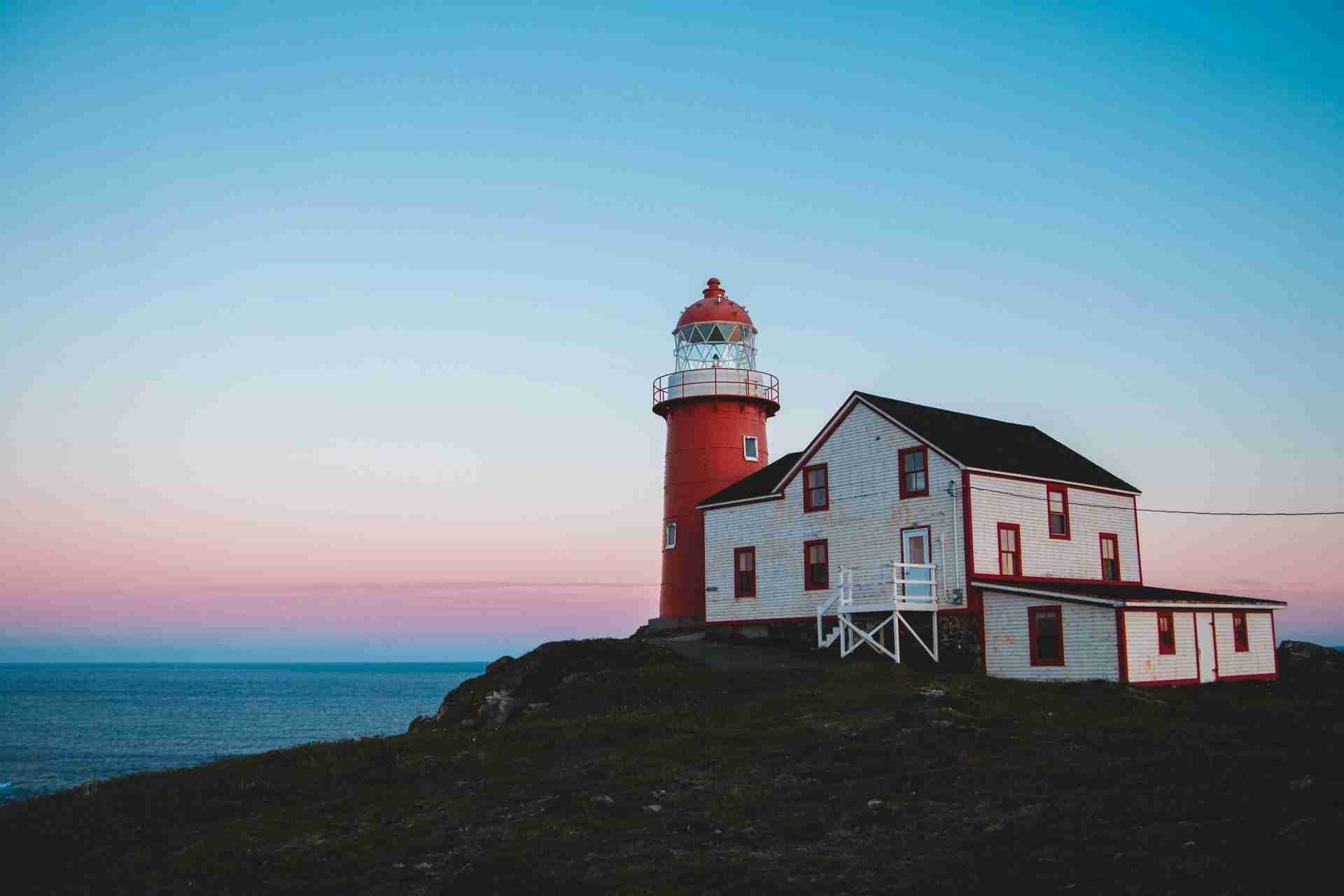
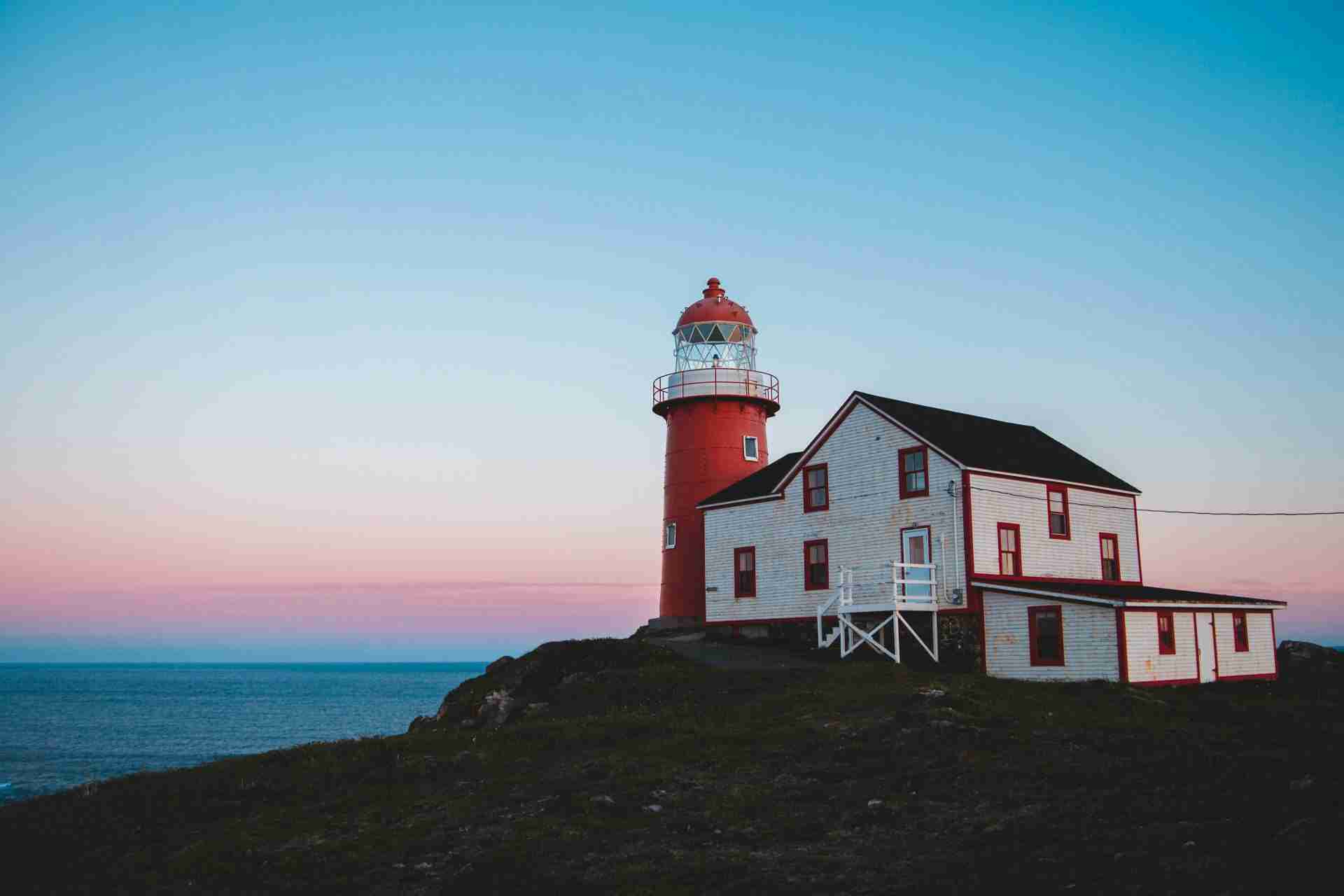
Ferryland Lighthouse stands on a narrow, grassy point just outside the small town of Ferryland along the southern coast of Newfoundland. Perched above the Atlantic with nothing blocking its horizon, the red tower and attached keeper's house offer a clean, colorful subject in an open coastal setting. The surrounding land is wide and windswept, with low vegetation, rough trails, and sea cliffs dropping off just beyond the hill. For photographers, this is a place where shape, color, and light come together in clear compositions. There are no distractions from crowds or modern infrastructure, and the walk out to the lighthouse is easy enough to bring gear, wait out changing conditions, and shoot at your own pace.
Best Photography Opportunities
• Front-Facing Shot from the Hill
The most balanced view comes from the grassy rise just southwest of the lighthouse, where you can frame both the red tower and the white house in one clear composition. The ocean sits behind, and in the early morning or late afternoon, the light comes across from the side, casting soft shadows that give the structure more depth. A standard zoom works well here, with room to back up if you want more sky or foreground. It's the most straightforward and repeatable setup, good for first light or golden hour.
• Side Profiles with Coastal Drop-Off
From either side of the point, you can move slightly down slope and shoot across the profile of the building with the ocean falling away behind it. These shots give a sense of place and scale, showing the lighthouse as part of the larger terrain. Long lenses let you compress the view and bring the waterline closer to the structure. When the sea is rough or fog begins to roll in, this angle becomes stronger. Mist in the background helps separate the red of the tower from the grays and blues around it.
• Close Detail of Architectural Elements
The red tower, multi pane windows, and weathered white clapboard all make good subjects for tighter frames. These work best under soft light or full cloud cover, when shadows are minimal and surface texture becomes more visible. Rust patches, peeling paint, and railings offer good contrast and color variation for abstract shots or quiet detail frames. These compositions hold up well in black and white, especially if you focus on shape and line.
• Backlit Scenes During Sunset or Twilight
Because the lighthouse faces open water to the east and southeast, evening is the best time to shoot backlit frames. The sun drops behind you and lights up the sky with color, while the structure holds shape in shadow. These scenes work well with or without people and are ideal for silhouettes or long exposures. A tripod is essential here to hold detail in low light. Use a narrow aperture to manage flare if the sun is still above the horizon.
• Wide Compositions with Sky and Sea
The open space around Ferryland Lighthouse invites wide angle shots that include the trail, sky, and sea as part of the scene. These images benefit from clear conditions with cloud cover or strong light shifts, especially when the weather moves fast across the coast. With no vertical obstructions, the horizon line is easy to balance. Use the trail or grassy foreground to pull the eye into the frame. This type of shot works best in the middle of changing weather or just after a storm clears.
Best Time to Visit
Ferryland Lighthouse photographs well in most conditions, but the best results usually come in the hours just after sunrise or the hour before sunset. Morning light reaches the front of the tower and house, warming the red and casting soft shadows. Late light works best for sky color, especially when the weather is changing. Summer and early fall give the most stable access, with long days and frequent low clouds. Fog is common but shifts quickly, and patience often pays off. Winter access depends on trail conditions and wind but can offer more dramatic skies and isolation. Midday is less useful unless overcast, as the high sun can flatten the landscape and blow out the highlights on the white walls.
How to Get There
Ferryland Lighthouse is located just outside the town of Ferryland along Route 10, also known as the Irish Loop Drive. From the town, follow signs toward the lighthouse picnic and parking area. A well worn gravel and dirt trail leads from the lot to the lighthouse itself. The walk is about 20 to 30 minutes one way on mostly level terrain. There is no entrance fee to access the grounds, and visitors are free to explore the area around the structure. The trail is exposed, so plan for wind and changing weather even on short visits.
Recommended Photography Gear
A standard zoom lens will cover most shots here, from wider building views to moderate detail. A wide angle lens is helpful for environmental frames and sky-dominant compositions. A short telephoto gives flexibility for tighter profiles and isolating the lighthouse against sea or sky. A tripod is useful for long exposures, twilight work, or if fog brings low light. A circular polarizer can help manage glare off the water and deepen color in the sky but should be used with care to avoid banding. Bring a lens cloth and a weather cover for gear since ocean spray and sudden wind are common even on calm days.
Nearby Photography Locations
North along the coast, boat tours from Bay Bulls or Witless Bay offer access to one of the largest puffin colonies in the Atlantic. With long lenses and fast shutters, you can capture birds in motion or on the cliffs during breeding season.
This narrow pedestrian bridge spans a forested gorge within La Manche Provincial Park. It's a strong subject on its own, but also offers views of rocky coves and coastal paths. Best shot during overcast days or just after rain when the colors deepen.
The easternmost point in North America, Cape Spear features another red and white lighthouse along with exposed cliffs and wide views over the Atlantic. Strong wind and changing light make it best in the early morning or during storms.
A short loop trail offering rugged coastline, old structures, and long views out to sea. Works well for layered landscape compositions or mixed-documentary frames showing nature and history together.
• Signal Hill in St. John's
While farther north, this urban lookout gives strong top down views of the harbor, the Narrows, and the open water beyond. It's ideal for sunset or night photography, with the city lights below and passing ships in the distance.
Comments
Loading comments…