
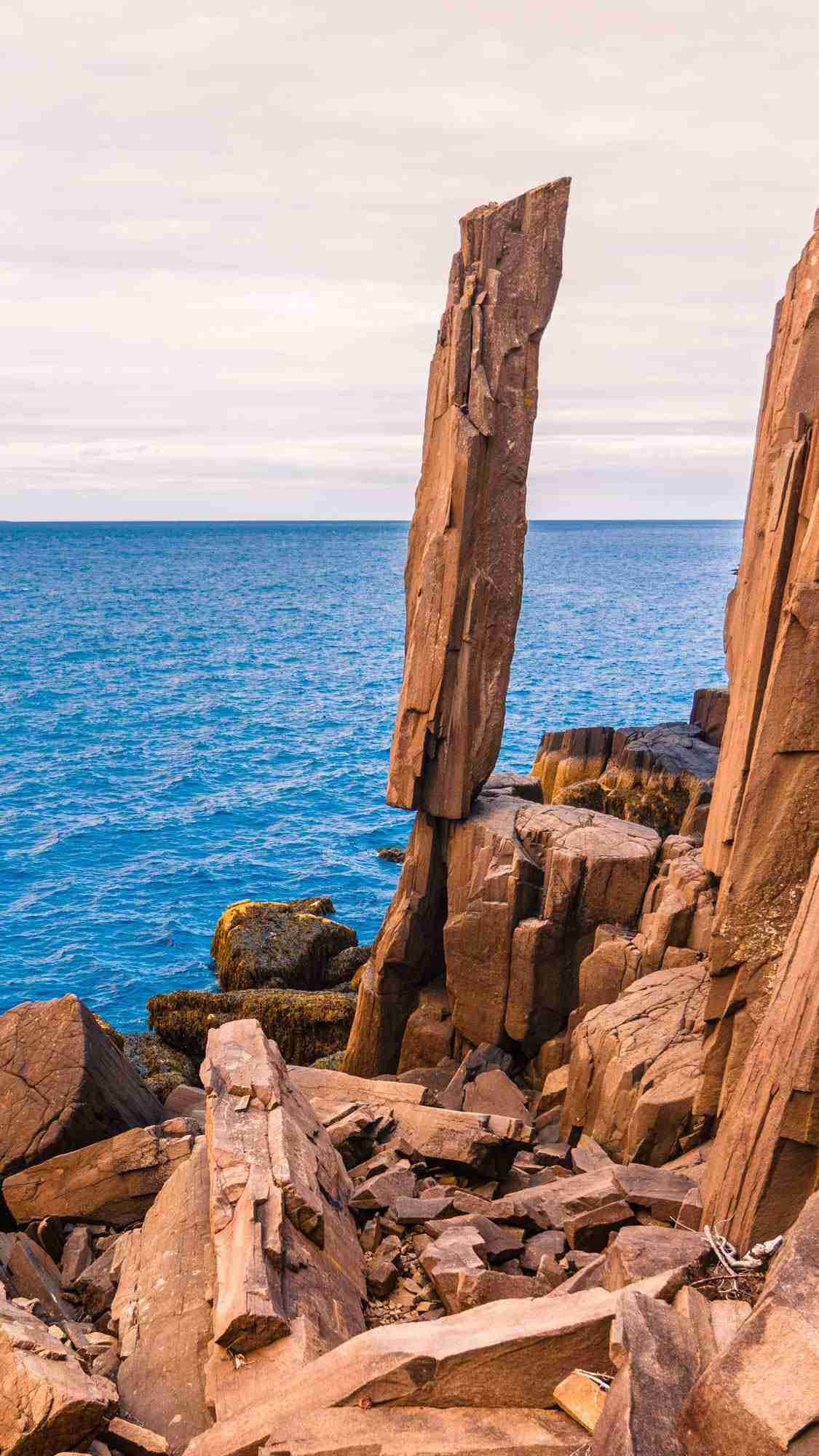
Balancing Rock, one of Nova Scotia's most unique and photogenic natural landmarks, is a gravity-defying basalt column perched precariously on the edge of a cliff overlooking St. Mary's Bay. This remarkable rock formation, shaped by centuries of erosion, stands as a testament to the raw power of nature and provides photographers with an extraordinary subject framed by rugged coastal scenery. Located on Long Island in the Bay of Fundy, Balancing Rock is accessible via a scenic trail that winds through Acadian forests, wooden boardwalks, and a dramatic staircase leading to an oceanfront viewing platform.
Whether capturing the contrast between the sheer vertical column and the jagged coastline, the moody mist rolling in from the bay, or the interplay of light and shadow at sunrise and sunset, this location offers endless opportunities for stunning landscape photography.
Best Photography Opportunities
• Balancing Rock from the Viewing Platform
– The wooden platform at the trail's end provides the best vantage point for capturing the dramatic profile of the rock against the backdrop of the Bay of Fundy. A wide-angle lens works well to include the surrounding cliffs, while a telephoto lens can emphasize the rock's precarious balance.
• Golden Hour and Sunset Silhouettes
– The low-angle light of sunrise and sunset enhances the textures of the rock and cliffs while casting warm hues across the sky and water. Shooting toward the setting sun can create striking silhouettes of Balancing Rock against the fading light.
• Mist and Moody Seascapes
– Fog often rolls in from the Bay of Fundy, creating a mystical atmosphere that enhances the drama of the scene. Overcast and misty conditions work particularly well for black-and-white photography, emphasizing the stark contrast between the rock, sky, and sea.
• Staircase and Boardwalk Leading Lines
– The long wooden staircase and boardwalk that descend to the viewing platform make for compelling compositions. These structures create strong leading lines that draw the viewer's eye toward the rock formation and provide a sense of scale.
• Detail Shots of the Basalt Columns
– The entire coastline around Balancing Rock is made up of basalt formations similar to those found at the famous Giant's Causeway in Ireland. Close-up shots of the hexagonal rock patterns can add texture and geological interest to your collection.
• Wildlife and Nature Along the Trail
– The surrounding forest and coastline are home to various bird species, including bald eagles and cormorants, as well as wildflowers that bloom along the trail in spring and summer. These provide additional subjects for nature and macro photography.
Best Time to Visit
Balancing Rock is accessible year-round, but the best time to visit for photography depends on the atmosphere you want to capture. Summer (June to August) provides long daylight hours and lush greenery along the trail, while autumn (September to November) adds rich golden hues to the landscape. Spring (April to May) offers cooler temperatures and fewer visitors, making it an ideal time for uninterrupted shooting. Winter (December to March) can present unique compositions with snow-covered cliffs, but the trail may be more difficult to navigate.
Sunrise and sunset provide the most dramatic lighting conditions, casting warm tones on the rock and enhancing the coastal scenery. Midday light can be harsh, so overcast days are preferable for capturing details without strong shadows.
How to Get There
Balancing Rock is located on Long Island, which is accessible via a short ferry ride from East Ferry on the Digby Neck. The ferry runs regularly and takes just five minutes to reach Tiverton. From there, a well-marked road leads to the Balancing Rock Trail parking area. The hike to the rock is approximately 2.5 km (1.5 miles) round-trip and takes about 30–40 minutes each way.
The trail begins with an easy walk through a forested path and transitions to a well-maintained wooden boardwalk that protects the delicate ecosystem. The final descent to the viewing platform consists of a long wooden staircase with over 200 steps, so visitors should be prepared for a moderately challenging hike.
There is no entrance fee to visit Balancing Rock, making it a budget-friendly and accessible photography destination. Visitors should wear sturdy footwear, especially if visiting in wet or icy conditions.
Exploring Balancing Rock and the Surrounding Area
Beyond Balancing Rock, the Digby Neck and Islands region offers additional photographic gems. The dramatic coastline, fishing villages, and rocky beaches provide excellent opportunities for landscape and documentary-style photography. The nearby town of Digby is famous for its scallop industry, and its waterfront features colorful boats, historic buildings, and seafood restaurants where visitors can experience authentic maritime culture.
Whale-watching tours operate from the area, offering the chance to photograph humpback, minke, and even rare North Atlantic right whales breaching in the Bay of Fundy. A visit to Brier Island, the westernmost point of Nova Scotia, provides even more rugged coastal landscapes, lighthouses, and wildlife photography opportunities.
Nearby Photography Locations
– A short ferry ride from Long Island, Brier Island offers stunning coastal cliffs, lighthouse views, and excellent whale-watching opportunities. The remote and rugged terrain makes for incredible seascapes and dramatic ocean photography.
– Located at the entrance to Petit Passage, this lighthouse provides beautiful compositions with waves crashing against the rocky shoreline. Sunrise and sunset shots from this location are particularly striking.
– The town of Digby features a picturesque harbor filled with fishing boats, historic buildings, and vibrant maritime activity. Early morning reflections on the calm waters create fantastic dockside compositions.
– A secluded crescent-shaped beach with striking cliffs and driftwood-strewn shores, Sandy Cove is an excellent spot for capturing minimalist coastal landscapes and long-exposure seascapes.
– The waters around Digby Neck are known for some of the best whale-watching in North America. Capturing a humpback whale breaching or a pod of dolphins swimming in the golden light of late afternoon is a dream opportunity for wildlife photographers.
Balancing Rock is more than just a geological marvel—it is a symbol of nature's artistry and resilience. Whether framed against the crashing waves of the Bay of Fundy, bathed in the soft glow of sunrise, or silhouetted against the misty horizon, this iconic formation offers photographers a chance to capture one of Nova Scotia's most fascinating landscapes.
Comments
Loading comments…