
Beulach Ban Falls: A Photographer's Guide to Cape Breton's Hidden Gem
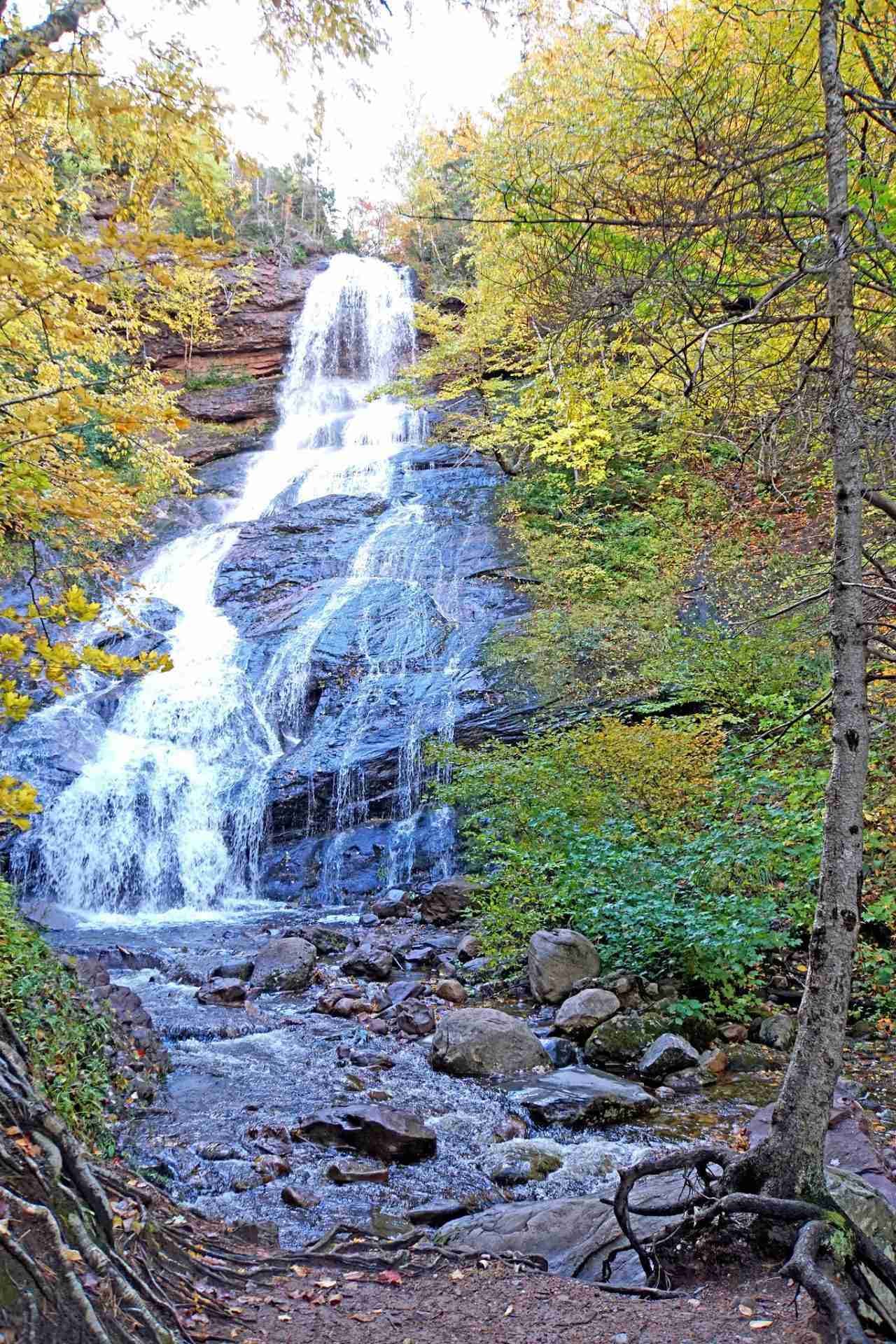
Tucked away in the northern reaches of Cape Breton Highlands National Park, Beulach Ban Falls is one of Nova Scotia's most stunning yet lesser-known waterfalls. Cascading approximately 20 meters (65 feet) down a rocky cliffside, this picturesque waterfall is surrounded by lush Acadian forest, offering a tranquil and immersive nature photography experience. Whether capturing long-exposure shots of the flowing water or framing the falls against the vibrant fall foliage, Beulach Ban Falls provides endless inspiration for landscape photographers.
Best Photography Opportunities
• The Waterfall from Different Angles
– The wide, multi-tiered cascade allows for various compositions, from capturing the entire waterfall framed by forest to zooming in on the smaller streams trickling over rocks. Shooting from a lower angle emphasizes the height and grandeur of the falls, while side perspectives showcase the way the water interacts with the rugged terrain.
• Long-Exposure Waterfall Photography
– Using a slow shutter speed transforms the rushing water into a silky, mist-like flow, enhancing the dreamy and ethereal quality of the falls. A sturdy tripod and neutral density (ND) filter help create the best effect, especially in bright daylight conditions.
• Surrounding Forest and Mossy Rocks
– The dense woodland around the falls provides a magical backdrop, with vibrant green moss, towering trees, and dappled sunlight filtering through the canopy. Incorporating these elements into compositions adds depth and a sense of untouched wilderness.
• Autumn Colors and Seasonal Changes
– In fall, the surrounding forest erupts in brilliant shades of red, orange, and gold, creating a breathtaking contrast with the white cascade of the falls. Winter provides a different but equally stunning scene, with ice formations clinging to the rocks and a serene, frozen landscape.
• Wildlife and Nature Details
– The area around Beulach Ban Falls is rich in wildlife, with songbirds, small mammals, and even the occasional moose wandering through. Close-up shots of delicate ferns, fallen leaves, or water droplets on moss-covered rocks add fine details that enhance storytelling photography.
• Moody and Misty Conditions
– On rainy or foggy days, the mist rising from the waterfall creates an enchanting, almost mystical atmosphere. The soft, diffused light eliminates harsh shadows, making it an excellent time for photography.
Best Time to Visit
Beulach Ban Falls is photogenic year-round, but the best times to visit are during the late spring and early summer when the water flow is strongest or in autumn when the surrounding foliage is at its most vibrant. Mid-morning or late afternoon provides soft, natural light that enhances the textures of the rocks and water without harsh glare. Overcast days work exceptionally well for long-exposure photography, as the diffused lighting prevents overexposed highlights in the water.
How to Get There
Beulach Ban Falls is located within Cape Breton Highlands National Park, accessible via the Cabot Trail near the northern section of the park. From the Cabot Trail, turn onto Beulach Ban Road, a gravel road that leads directly to a small parking area near the falls. The site is easily accessible with a short walk from the parking area, making it one of the more convenient waterfalls to visit in the park. As it is within a national park, visitors should check for park entrance fees and seasonal road conditions before traveling, as access may be limited in winter.
Exploring Cape Breton Highlands National Park
Cape Breton Highlands National Park is one of Canada's most breathtaking natural landscapes, offering a stunning blend of rugged coastal cliffs, deep river valleys, and pristine boreal forests. The park is home to diverse ecosystems, where dense woodlands give way to open barrens, and freshwater streams carve through dramatic highland plateaus. Throughout the seasons, the scenery transforms dramatically, with lush greenery in the summer, vibrant fall foliage, and snow-covered landscapes in the winter.
The park is also a haven for wildlife photography, with opportunities to capture moose, bald eagles, black bears, and a variety of seabirds. Many of the park's quieter trails lead through dense spruce and fir forests, where morning mist and soft, diffused light create an ethereal atmosphere. Coastal areas provide stunning vistas of the Gulf of St. Lawrence and the Atlantic Ocean, where waves crash against rocky shorelines and fishing boats drift in the distance.
For those interested in night photography, the park offers some of the darkest skies in Nova Scotia, making it an excellent location for astrophotography. On clear nights, the Milky Way is often visible stretching across the sky, while reflections on the park's many lakes add an extra layer of beauty to nighttime compositions. Whether exploring its vast wilderness, capturing dramatic weather changes, or simply taking in the quiet beauty of its remote landscapes, Cape Breton Highlands National Park is a paradise for photographers.
Nearby Photography Locations
– One of the most scenic drives in the world, the Cabot Trail winds through Cape Breton Highlands National Park, offering stunning ocean views, mountain landscapes, and countless roadside photography stops. Each turn presents a new breathtaking vista.
– This high-elevation viewpoint provides sweeping views of the Aspy Valley and the distant coastline, making it perfect for capturing Cape Breton's rugged beauty. The overlook is particularly striking in the golden light of sunrise and sunset.
– A stunning beach within the park that features sea stacks, smooth pebbles, and crashing waves. It's an excellent location for seascape photography, especially during high tide when the waves are most dramatic.
• Meat Cove
– The northernmost community in Nova Scotia, offering dramatic cliffside views and a rugged coastline. The remote setting and unspoiled beauty make it a must-visit for landscape photographers.
– A short but rewarding hike leading to another beautiful waterfall deep within the national park. The tranquil forest setting and moss-covered rocks provide excellent opportunities for nature photography.
Comments
Loading comments…