
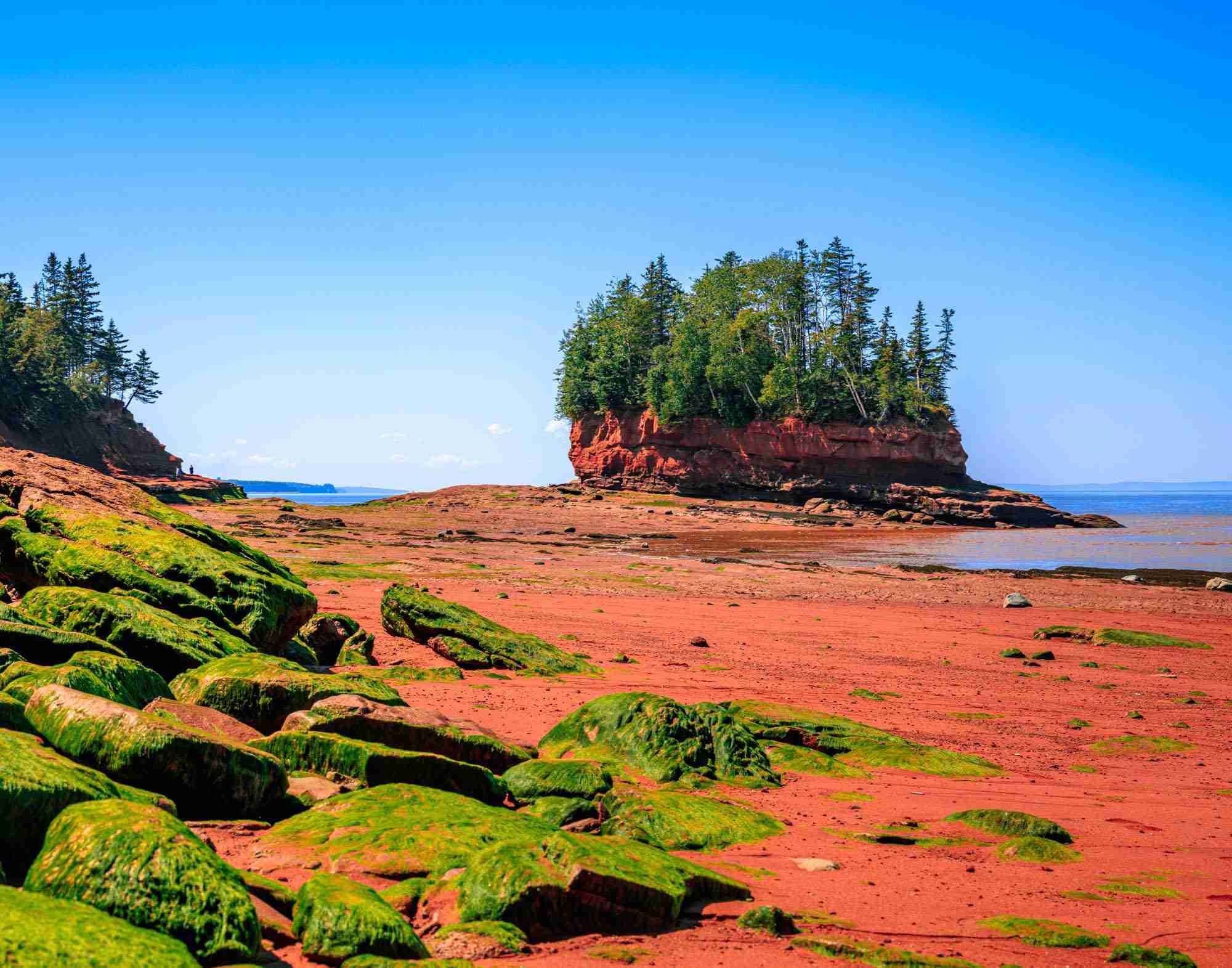
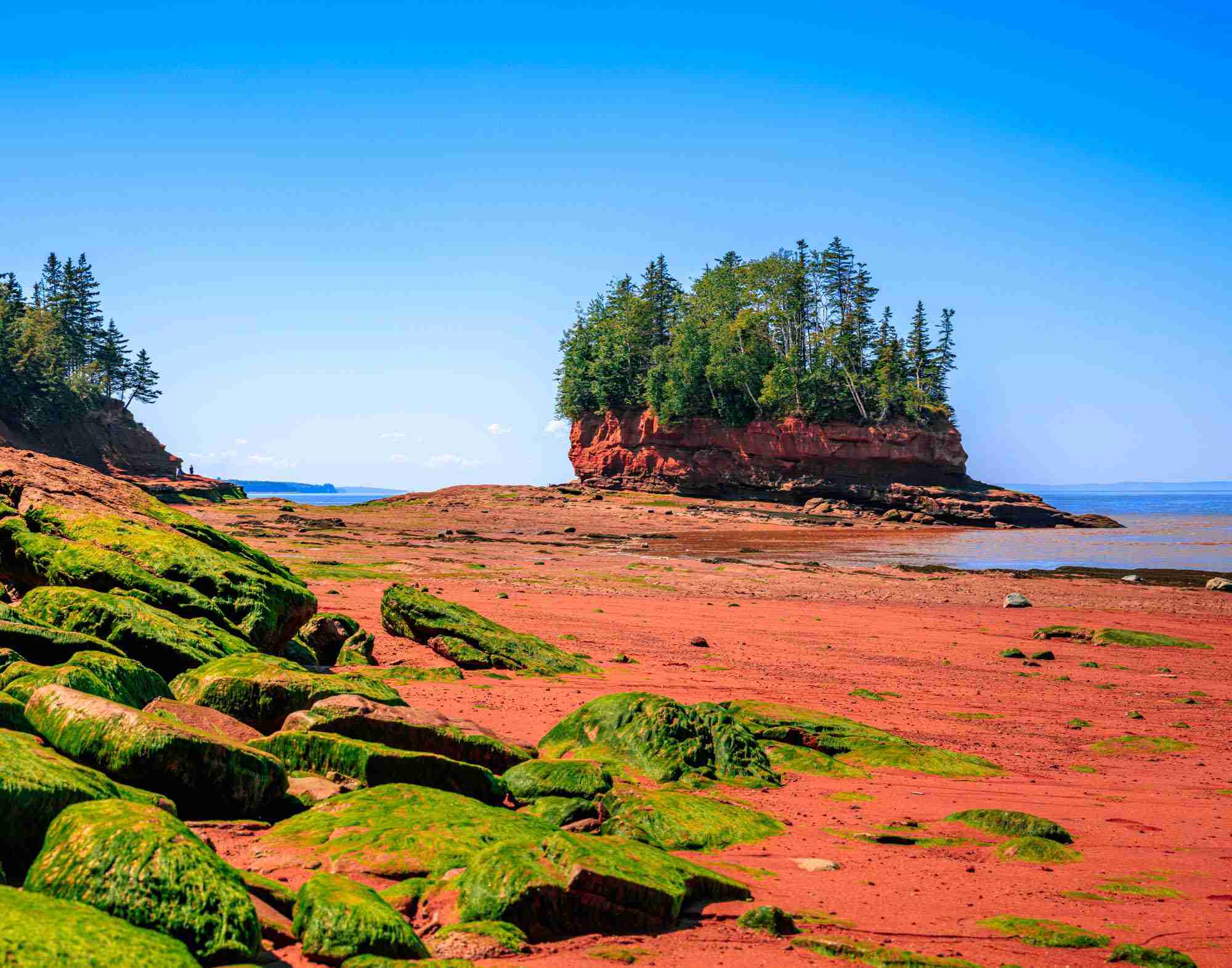
Burntcoat Head Park, located along the shores of the Bay of Fundy in Nova Scotia, is one of Canada's most unique coastal photography destinations. Famous for experiencing the world's highest tides, the landscape transforms dramatically as the ocean rises and falls by up to 50 feet. At low tide, photographers can walk along the exposed ocean floor, capturing vibrant red sandstone cliffs, tidal pools, and towering sea stacks that disappear beneath the waves just hours later.
The striking contrast between the deep red cliffs and the blue waters of the Bay of Fundy makes for stunning compositions, especially during golden hour when the warm light enhances the natural tones. The receding tide reveals intricate patterns in the sand, reflective tidal pools, and marine life, offering endless opportunities for creative shots. Burntcoat Head is never the same place twice, making it a must-visit for photographers looking to capture nature's constant motion and raw beauty.
Best Photography Opportunities
• Sea Stacks and Red Cliffs at Low Tide
– The exposed ocean floor reveals dramatic sandstone cliffs and isolated sea stacks, creating a striking contrast between the deep red rocks and the surrounding blue sky and water. Getting close to the formations allows for strong foreground elements, while a wide-angle shot from a distance showcases their towering presence against the horizon.
• High Tide vs. Low Tide Contrasts
– Burntcoat Head's tides change the landscape entirely within a few hours, providing photographers with a rare chance to capture two completely different scenes from the same location. Side-by-side before-and-after shots or time-lapse sequences can beautifully illustrate the immense power of the tides.
• Sunrise and Sunset Glow
– The warm hues of sunrise and sunset reflect beautifully off the red sandstone, enhancing the natural color of the landscape. Shooting at golden hour also helps bring out the intricate textures in the rock and sand, making compositions even more visually appealing.
• Tidal Pools and Marine Life
– Small pools left behind in the sand after the tide recedes provide perfect reflections of the sky, while also offering a chance to photograph seaweed, crabs, and other marine life. A macro lens can highlight the intricate details of shells and tiny creatures, adding a unique perspective to your coastal photography.
• Silky Water Long-Exposures
– As the tide begins to rise, using a neutral density filter can create smooth, misty water effects that contrast beautifully with the rugged cliffs and rock formations. A tripod and slow shutter speed can further enhance the ethereal quality of the moving water.
• Stormy and Overcast Conditions
– Moody skies and shifting weather patterns can add an extra layer of drama to Burntcoat Head's already striking landscape. The contrast of dark clouds against the rich red cliffs creates a cinematic effect, making this an ideal location for atmospheric and black-and-white photography.
• Winter Landscapes
– While often overlooked, winter provides a unique opportunity to photograph snow-covered cliffs and ice formations along the shore. The frozen tidal pools and mist rising from the water create an otherworldly effect, especially in soft morning light.
Best Time to Visit
The best time to photograph Burntcoat Head Park depends on the tides. To capture the exposed ocean floor and sea stacks, check the tide schedule and visit at low tide, when you can walk directly on the seabed. For dramatic water scenes, visit at high tide, when the cliffs appear to rise straight from the ocean.
Golden hour—shortly after sunrise or before sunset—provides the most flattering light, bringing out the rich reds and oranges of the rock formations. Midday light can be harsh, but overcast days help create even lighting for capturing textures and details without strong shadows.
Spring (April to June) and autumn (September to November) offer cooler temperatures and fewer crowds, while summer (July to August) provides the warmest weather and most accessible conditions for exploring. Winter (December to February) offers a unique and serene view of the landscape, but access to the ocean floor may be limited due to ice and snow.
How to Get There
Burntcoat Head Park is located about 90 minutes north of Halifax, Nova Scotia, along the Bay of Fundy. It is accessible via Highway 215, which follows the scenic coastline through rural farmland and small villages. The park has a designated parking area, making it easy to access the walking trails and shoreline.
There is no entrance fee to visit Burntcoat Head Park, making it an excellent budget-friendly destination for photographers and nature lovers. Visitors should wear sturdy, waterproof footwear, as the seabed can be muddy and slippery, particularly after rainfall.
Exploring Burntcoat Head Park and the Surrounding Area
Beyond the famous sea stacks and red cliffs, Burntcoat Head Park offers walking trails through coastal forests and wildflower meadows, providing additional landscape photography opportunities. The park also features interpretive signs that explain the geological history of the area, giving photographers a deeper appreciation for the dynamic forces that shaped this landscape.
For those interested in astrophotography, Burntcoat Head's remote location and minimal light pollution make it an excellent spot for capturing the night sky. Shooting the Milky Way over the exposed seabed at low tide creates an unforgettable image.
The nearby town of Maitland offers charming maritime scenery, historic homes, and small wharves that provide additional opportunities for coastal and documentary photography.
Nearby Photography Locations
– A short drive up the coast, this park features dramatic coastal cliffs, tidal flats, and panoramic views of the Bay of Fundy. The rock formations are particularly striking at sunset.
– The nearby Shubenacadie River experiences a powerful tidal bore as the incoming tide rushes upriver, creating waves that are perfect for action photography, particularly when capturing tidal bore rafting tours.
– One of Nova Scotia's lesser-known lighthouses, Walton Lighthouse sits on a high bluff overlooking the Bay of Fundy, offering incredible vantage points for coastal photography.
• Advocate Harbour and Cape d'Or
– For those willing to explore further, Advocate Harbour and Cape d'Or offer breathtaking views of the Bay of Fundy's rugged coastline, complete with lighthouses, sea cliffs, and golden sunset reflections.
– A UNESCO World Heritage Site, these cliffs reveal layers of fossils and geological formations dating back hundreds of millions of years, providing a unique blend of scientific and artistic photography opportunities.
Burntcoat Head Park is a landscape photographer's dream, offering an ever-changing environment shaped by the world's highest tides. Whether capturing the raw power of the incoming ocean, the surreal beauty of the exposed seabed, or the tranquil glow of sunset on the cliffs, this location provides endless opportunities for breathtaking photography along Nova Scotia's legendary coastline.
Comments
Loading comments…