
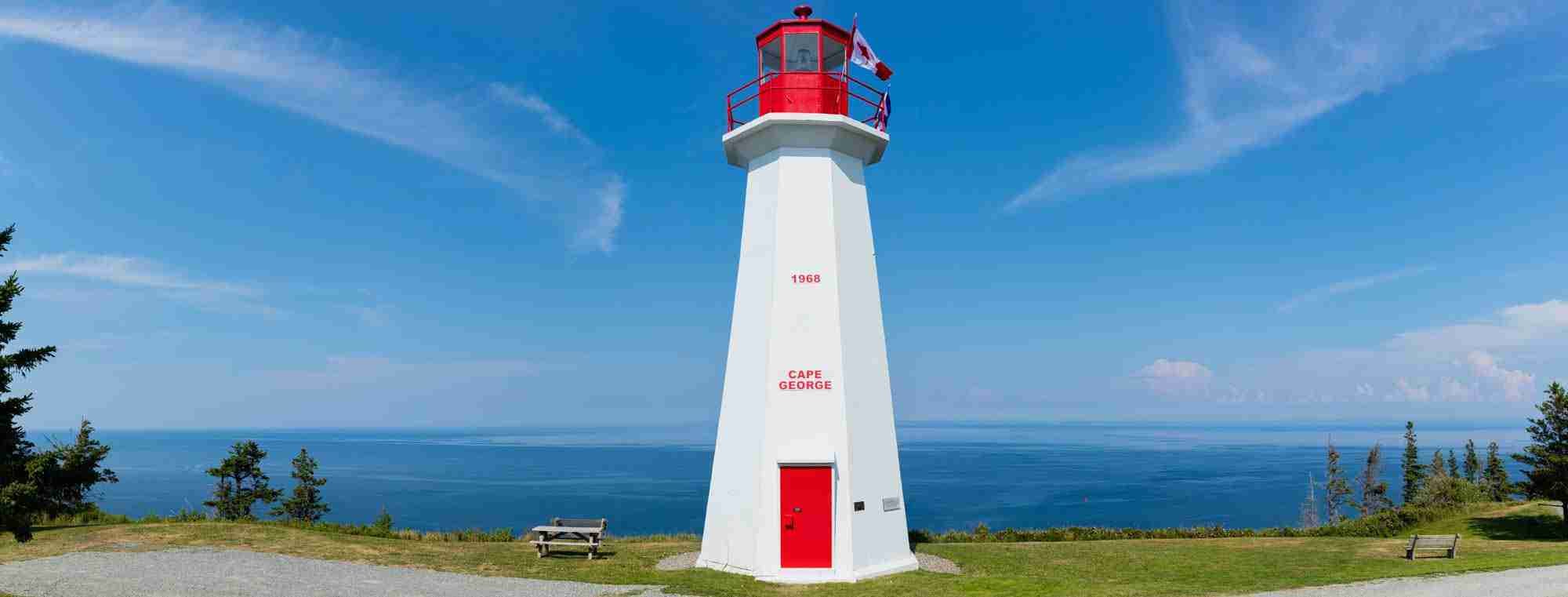
Cape George Point Lighthouse, perched high on a rugged cliff overlooking the Northumberland Strait, is one of Nova Scotia's most breathtaking photography locations. Often referred to as the "Cape Breton of mainland Nova Scotia," this scenic spot offers expansive ocean views, dramatic coastal cliffs, and a charming lighthouse that stands as a beacon of maritime heritage. Whether shooting golden-hour seascapes, stormy skies, or the lighthouse framed by wildflowers in summer, Cape George provides endless inspiration for photographers looking to capture the raw beauty of Nova Scotia's coastline.
Best Photography Opportunities
• Lighthouse and ocean backdrop
– The bright white and red lighthouse stands in striking contrast against the deep blue of the Northumberland Strait. Positioned at the edge of a dramatic cliff, it makes for a strong focal point in both wide-angle and close-up compositions.
• Sunrise and sunset photography
– With unobstructed views of the horizon, Cape George is an ideal location for capturing the warm hues of sunrise or the fiery tones of sunset. The soft morning mist and evening golden light add depth and atmosphere to seascapes.
• Stormy coastal drama
– On windy days, waves crash against the base of the cliffs, creating a dramatic setting. Capturing the lighthouse standing resilient against dark, stormy skies adds a sense of power and isolation to compositions.
• Milky Way and night photography
– The relatively low light pollution in this area makes Cape George Point a fantastic location for astrophotography. On clear nights, the lighthouse can be framed beneath a star-filled sky, making for an unforgettable shot.
• Seasonal beauty
– Spring and summer bring blooming wildflowers and lush green grass that create a vibrant foreground for lighthouse compositions. In autumn, golden and red hues blanket the nearby trees, adding warmth to the rugged coastal scenery.
• Long-exposure seascapes
– The vast ocean stretching beyond the lighthouse is perfect for long-exposure shots. Using a neutral density filter, photographers can create a mist-like effect on the waves while keeping the lighthouse and cliffs crisp.
Best Time to Visit
Cape George Point Lighthouse is photogenic year-round, but the best time to visit depends on the desired mood and lighting. Summer (June to August) offers clear skies, lush greenery, and colorful wildflowers, while autumn (September to October) brings striking foliage and moody coastal conditions. Winter (December to February) can create stunning compositions with snow-covered cliffs and waves crashing against the icy shoreline.
Sunrise and sunset provide the most dramatic lighting, casting golden hues across the lighthouse and sea. Midday light can be harsh, but on overcast days, soft diffused lighting enhances the textures of the cliffs and lighthouse exterior. Nighttime visits are perfect for astrophotography, with the lighthouse serving as a guiding element beneath a sky full of stars.
How to Get There
Cape George Point Lighthouse is located near Antigonish, Nova Scotia, approximately a 40-minute drive north of the town. It is easily accessible via Cape George Road, which winds through scenic countryside before reaching the lighthouse parking area. From the parking lot, a short and easy walk leads to the lighthouse and the cliffside viewpoints.
There is no entrance fee to visit Cape George Point Lighthouse, making it a great budget-friendly destination for photographers and nature enthusiasts. Visitors should be cautious near the cliff edges, especially in windy conditions, as the drop-offs can be steep.
Exploring Cape George Point Lighthouse and the Surrounding Area
Beyond the lighthouse itself, the Cape George region offers additional photographic opportunities. The nearby Cape George Hiking Trail network provides elevated coastal views, dense Acadian forests, and hidden beaches that change beautifully with the seasons. Exploring these trails allows photographers to capture a variety of perspectives, from intimate nature details to sweeping landscapes.
For those looking to extend their trip, the town of Antigonish offers charming maritime scenes, historic architecture, and access to the Northumberland Shore's beaches. The drive along the Cape George scenic loop features rolling farmland, fishing wharves, and distant views of Prince Edward Island, providing plenty of roadside photography stops.
Nearby Photography Locations
– Just a short drive west, this coastal park features striking rock formations, sea caves, and exposed fossil beds. The jagged shoreline provides excellent leading lines for seascape photography, especially when waves crash dramatically against the rocks.
– This long sandy beach near Antigonish is perfect for capturing dune landscapes, coastal sunsets, and birdlife. The shifting patterns in the sand and the contrast between the dunes and the water make it an excellent location for capturing minimalist compositions.
– A picturesque fishing village with a vibrant marina, Ballantyne's Cove is ideal for capturing classic maritime scenes, colorful fishing boats, and reflections in calm harbor waters. The marina also has a seafood market where visitors can capture authentic moments of local fishermen at work.
– The coastline along the Northumberland Strait is known for its warm waters and red sand beaches. Locations such as Big Island and Melmerby Beach provide a softer, more serene coastal contrast to Cape George's cliffs, making them ideal for sunrise or sunset photography.
– A small, quiet wharf located east of Antigonish, this spot offers a glimpse into Nova Scotia's fishing culture, with boats, lobster traps, and a peaceful maritime setting. The changing tides dramatically alter the appearance of the wharf, offering different compositions throughout the day.
Cape George Point Lighthouse is more than just a scenic landmark—it is a symbol of Nova Scotia's rugged coastal beauty. Whether capturing its resilience against stormy seas, the golden glow of a setting sun, or the stars above on a clear night, this location provides endless inspiration for photographers seeking to document the essence of the Atlantic coast.
Comments
Loading comments…