
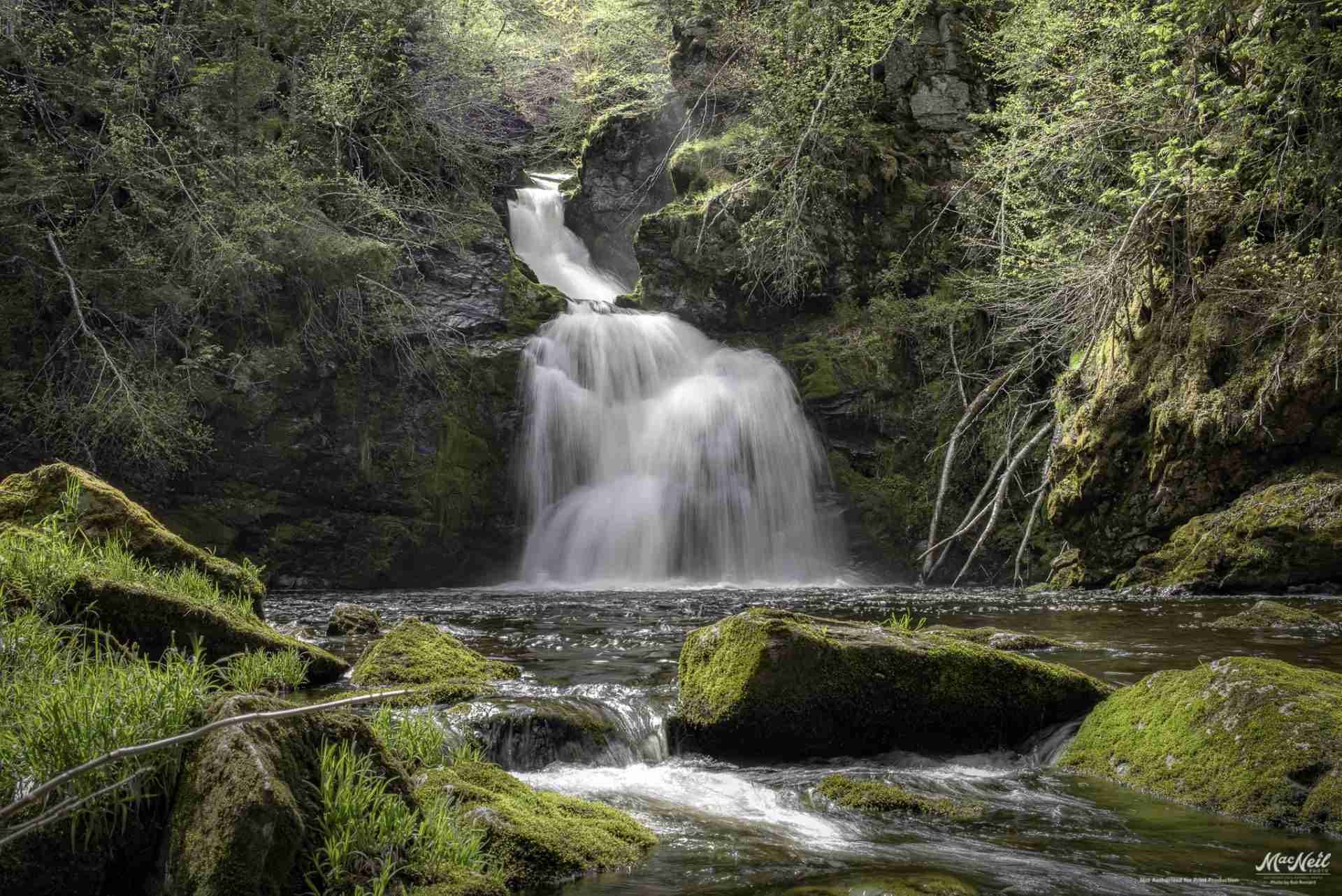
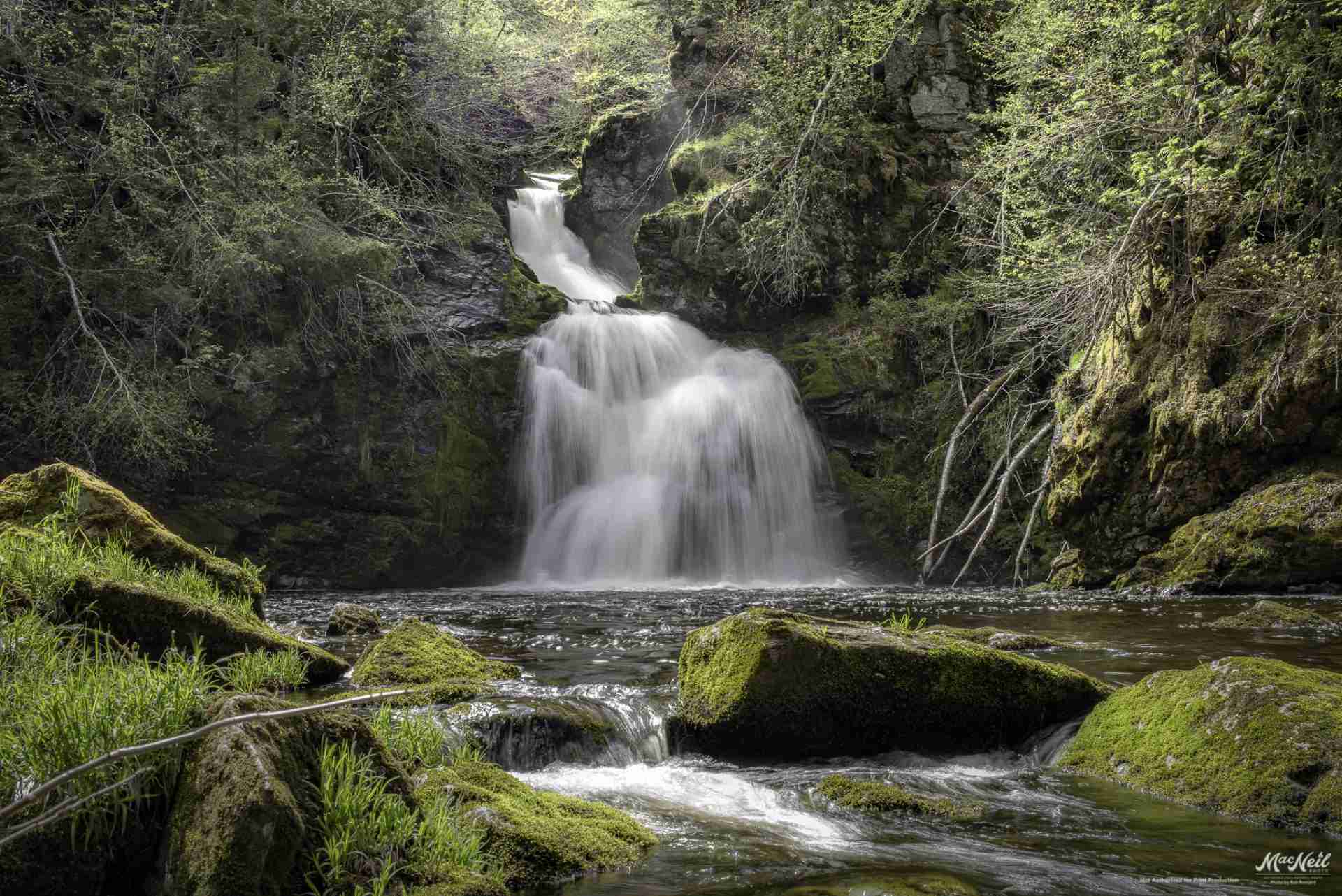
Tucked away in the rugged landscape of Victoria County, Nova Scotia, Gairloch Mountain Falls is a hidden gem for photographers seeking raw natural beauty. This picturesque waterfall cascades down a series of rocky ledges, surrounded by dense Acadian forest, creating a tranquil and unspoiled setting. The remote location ensures an intimate experience with nature, where the sound of rushing water and the scent of fresh pine fill the air. Whether capturing the silky flow of water with long-exposure photography or framing the falls against the vibrant autumn foliage, Gairloch Mountain Falls offers endless inspiration for landscape photographers.
Best Photography Opportunities
• Long-Exposure Waterfall Shots
– The multi-tiered cascades of Gairloch Mountain Falls make it an ideal location for long-exposure photography. Using an ND filter allows for smooth, ethereal water movement while keeping the surrounding rocks and forest in sharp detail. Experimenting with different shutter speeds can create a variety of effects, from a soft misty veil to a more defined rushing stream.
• Framing the Falls with Autumn Foliage
– In the fall, the surrounding trees explode into shades of red, orange, and gold, creating a breathtaking natural frame for the waterfall. A wide-angle lens can capture the full scene, while a telephoto lens can isolate colorful leaves against the white water for an abstract composition.
• Up-Close Textures of Moss-Covered Rocks
– The humid environment around the falls creates a lush carpet of moss on the surrounding rocks and tree trunks. Capturing these details with a macro or close-up lens allows for stunning texture studies, highlighting the contrast between the vibrant greens and the dark, wet stone.
• Reflections and Pools at the Base of the Falls
– After descending the cascades, the water collects in small, crystal-clear pools, which offer opportunities for reflection photography. On calm days, the mirror-like surface can reflect the falls and foliage, adding depth and symmetry to compositions.
• Winter Ice Formations Around the Falls
– In colder months, sections of the waterfall freeze into intricate icicles and snow-covered formations, creating a stunning winter wonderland. Capturing the contrast between flowing and frozen water makes for dynamic and dramatic images, especially in soft, diffused winter light.
• Wildlife and Forest Scenes Along the Trail
– The hike to Gairloch Mountain Falls passes through thick woodlands, where photographers can capture native wildlife such as songbirds, foxes, and deer. The trail itself, lined with towering evergreens and winding pathways, provides excellent opportunities for leading-line compositions.
Best Time to Visit
The best time to photograph Gairloch Mountain Falls depends on seasonal conditions and lighting. Spring and early summer bring the strongest water flow, creating dramatic cascades, while autumn adds stunning color contrasts with its fiery foliage. Midday light can be harsh due to reflections on the water, so visiting during early morning or late afternoon provides softer, more diffused light. Overcast days are particularly advantageous for waterfall photography, as they eliminate harsh shadows and allow for balanced exposure across the scene. Winter visits offer unique frozen compositions, but trails may be icy, requiring extra caution.
How to Get There
Gairloch Mountain Falls is located in Victoria County, Nova Scotia, accessible via a moderate hike through the forest. While the falls remain somewhat off the beaten path, they can be reached by following local trails from nearby roads. The most common access point is from Gairloch Mountain Road, though specific trail conditions may vary depending on the season. Visitors should wear sturdy footwear, as the terrain can be uneven and slippery near the falls. No entrance fee is required, but travelers should check for local updates on trail conditions before heading out.
Exploring Gairloch Mountain Falls and the Surrounding Area
Beyond the falls, the surrounding wilderness offers numerous photographic opportunities. The dense Acadian forest features towering spruce, fir, and birch trees, providing excellent backdrops for nature photography. Nearby rivers and smaller streams offer additional spots for capturing flowing water and reflections. The remote nature of the area ensures minimal light pollution, making it a fantastic location for astrophotography on clear nights. Hiking trails in the region lead to scenic overlooks with panoramic views of Cape Breton's rolling hills, providing even more variety for landscape photographers.
Nearby Photography Locations
– A short drive from Gairloch Mountain Falls, this national park is home to some of the most breathtaking landscapes in Nova Scotia, featuring rugged cliffs, winding coastal roads, and endless hiking trails. The viewpoints along the Cabot Trail offer incredible sunrise and sunset photography.
– Another hidden waterfall gem in Cape Breton, Egypt Falls features a dramatic curtain of water cascading over smooth rock formations. The short but steep hike down adds an element of adventure to the journey.
• Baddeck and the Bras d'Or Lake
– The charming town of Baddeck, located along the shores of Bras d'Or Lake, provides excellent waterfront compositions, marina scenes, and reflections of boats against the tranquil lake. It's also a great location for capturing sunsets over the water.
– Known for its rolling farmland and winding rivers, the Margaree Valley offers classic Nova Scotian landscapes. Foggy mornings along the riverbanks provide a dreamy, atmospheric quality to images.
– The tallest waterfall in Nova Scotia, North River Falls requires a more challenging hike but rewards photographers with a massive cascade surrounded by unspoiled wilderness. This location is perfect for those looking to capture a dramatic, remote waterfall scene.
Gairloch Mountain Falls is a paradise for photographers seeking to capture the raw beauty of Nova Scotia's landscapes. With its cascading waters, dense forest setting, and seasonal transformations, it provides endless opportunities for creative compositions. Whether hiking through autumn leaves, capturing the silky flow of water in spring, or photographing the frozen elegance of winter, this hidden gem offers a truly immersive photographic experience.
Comments
Loading comments…