
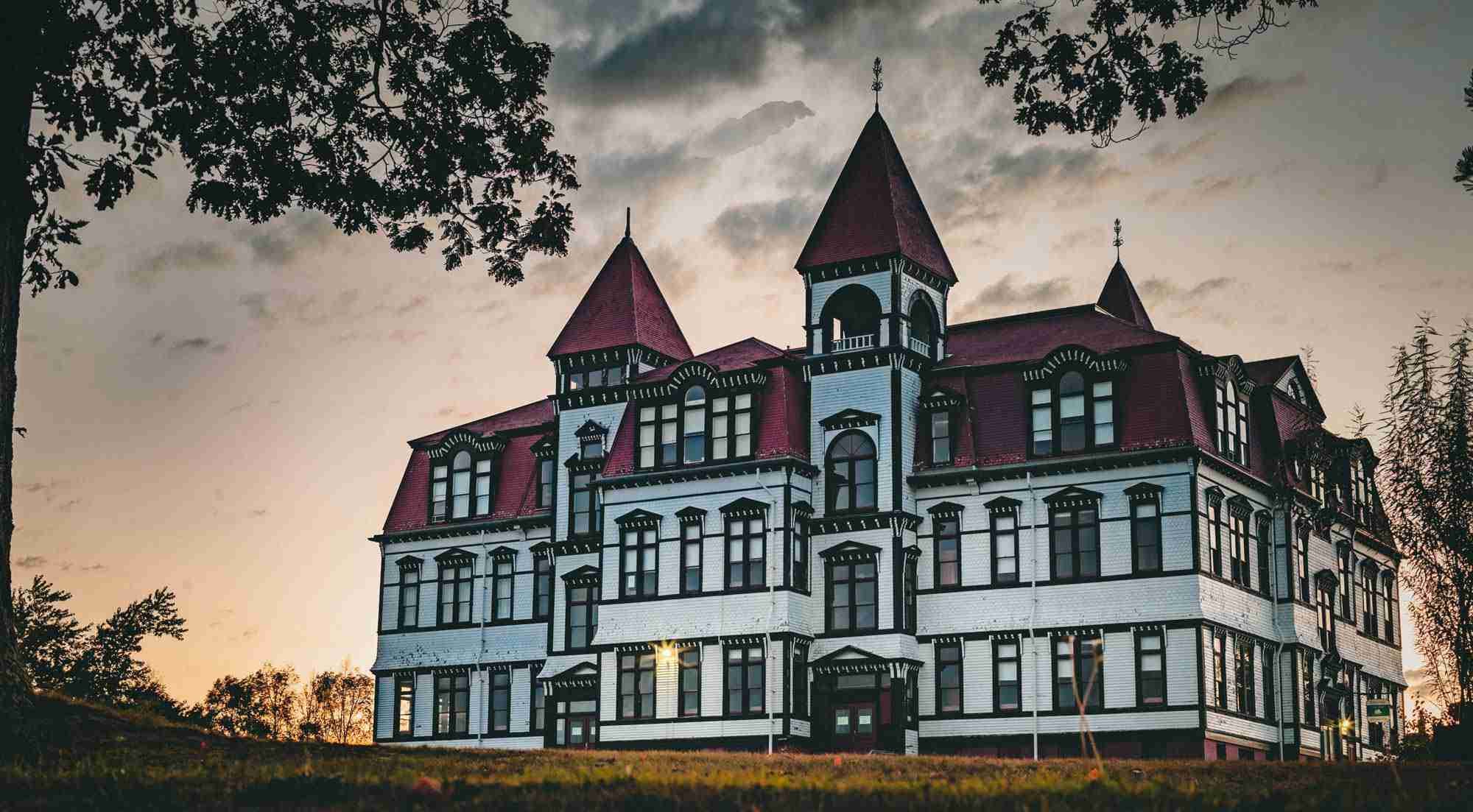
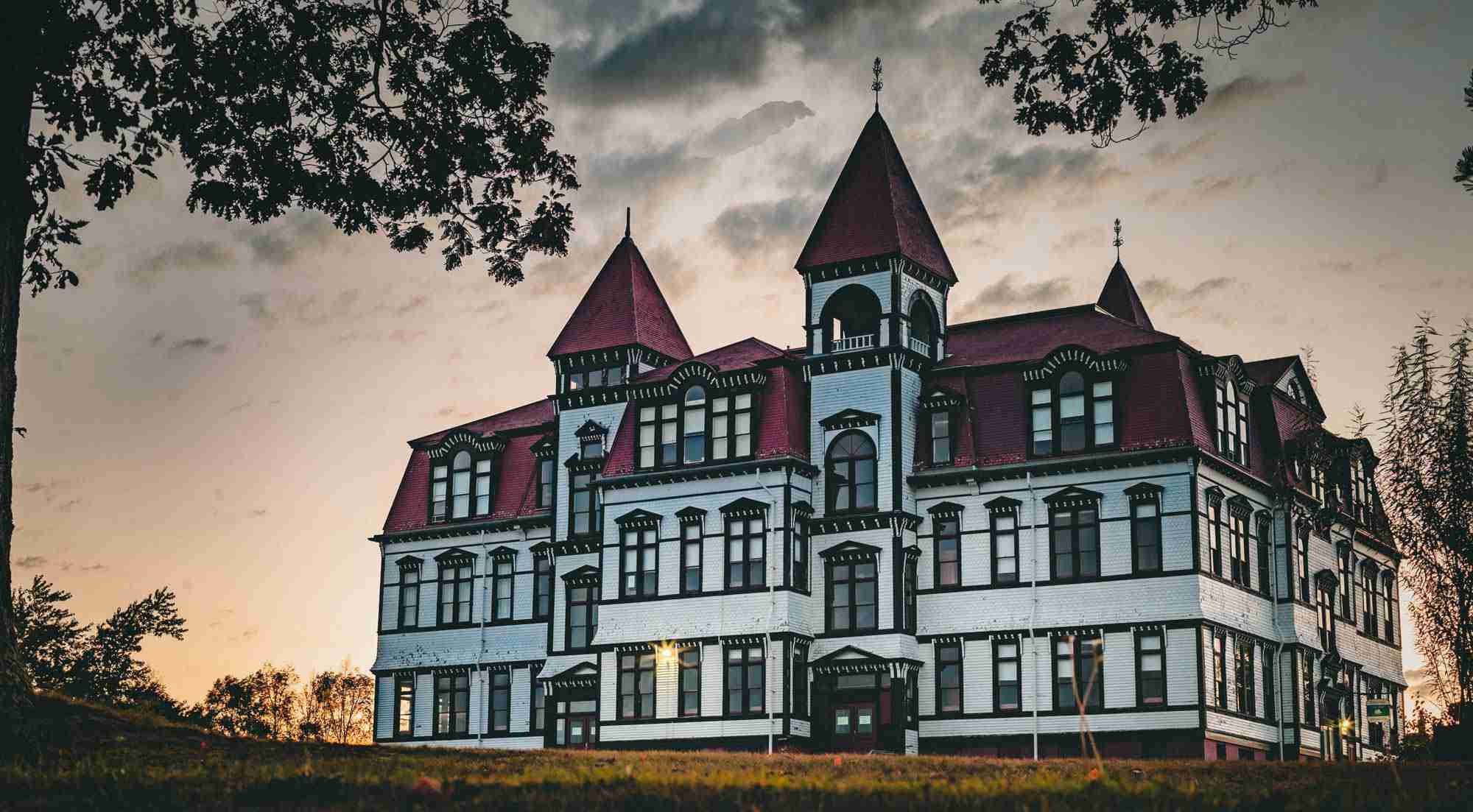
The Lunenburg Academy, an iconic Victorian-era building perched on Gallows Hill, is one of the most striking architectural landmarks in Nova Scotia. Overlooking the UNESCO-listed town of Lunenburg, this grand three-story wooden structure features ornate detailing, a steep mansard roof, and a commanding presence that makes it a dream subject for photographers. Whether capturing its symmetrical façade, the intricate woodwork up close, or its stunning placement against the backdrop of Lunenburg's colorful streets and harbor, the Lunenburg Academy is an essential stop for any photographer exploring Nova Scotia's South Shore.
Best Photography Opportunities
• Grand Front Façade
– The Lunenburg Academy's impressive Victorian architecture, complete with dormer windows and decorative trim, is best captured from the base of Gallows Hill, where its full grandeur is on display. A wide-angle lens is helpful for fitting the entire structure into the frame while maintaining perspective.
• Dramatic Staircase Leading to the Entrance
– The staircase leading up to the academy creates strong leading lines that draw the viewer's eye toward the building. Shooting from a low angle emphasizes the academy's imposing height and historic charm.
• Golden Hour Glow
– At sunrise and sunset, the warm light enhances the rich wooden textures and casts long shadows across the lawn, adding depth and warmth to compositions. The soft evening glow also makes for excellent moody and atmospheric shots.
• Lunenburg Academy with the Town Below
– The elevated location of the academy provides an excellent vantage point for capturing sweeping views of Lunenburg's colorful houses and waterfront below. This perspective highlights both the building's prominence and the town's unique character.
• Black-and-White Architectural Details
– The academy's contrasting dark trim against the crisp white wooden façade makes it an ideal subject for black-and-white photography. Close-up shots of the decorative window frames, cornices, and mansard roof create striking abstract compositions.
• Seasonal Changes
– In autumn, vibrant red and orange foliage frames the academy, creating a warm, inviting contrast to its white exterior. In winter, snow-covered grounds add a magical feel, while spring and summer offer lush greenery that softens the structure's dramatic lines.
• Nighttime Photography
– When lit by streetlights and the glow from its windows, the academy takes on a hauntingly beautiful quality. Long-exposure shots can capture the play of light and shadows, emphasizing its historical significance and slightly eerie ambiance.
Best Time to Visit
The Lunenburg Academy is photogenic year-round, with each season offering a distinct mood. Spring (April to June) brings fresh greenery and bright flowers, while summer (July to September) offers the best weather conditions for capturing the surrounding townscape. Autumn (October to November) adds vibrant foliage to complement the academy's historic aesthetic, while winter (December to February) provides stark, minimalist compositions with snow-covered rooftops and icy reflections.
For the best lighting, golden hour—just after sunrise or before sunset—casts a warm glow on the academy and creates long, dramatic shadows that enhance its textures. Overcast days provide soft, even lighting that reduces harsh shadows and highlights the intricate details of the building's façade.
How to Get There
The Lunenburg Academy is located at 97 Kaulbach Street in the heart of Lunenburg, Nova Scotia, about 90 minutes southwest of Halifax. It is easily accessible by car, with parking available nearby. The town itself is very walkable, allowing photographers to explore different angles and vantage points on foot.
There is no entrance fee to visit or photograph the academy's exterior. The building now serves as a cultural and community space, housing the Lunenburg Academy of Music Performance, a library, and other educational initiatives, making it accessible for interior photography during public events or guided tours.
The Lunenburg Academy Foundation dedicates itself to the care, preservation and restoration of the building. Comprised of former staff and alumni community members and otherwise interested citizens, the Foundation works closely with the Town of Lunenburg to respect the past and ensure the future of the Lunenburg Academy.
Exploring Lunenburg Academy and the Surrounding Area
Beyond the Lunenburg Academy, the town of Lunenburg itself is a photographer's paradise. Known for its colorful, well-preserved 18th- and 19th-century buildings, its vibrant waterfront, and the world-famous Bluenose II schooner, Lunenburg offers countless opportunities for maritime, street, and landscape photography. The town's hilly streets provide elevated vantage points for capturing the iconic red buildings along the waterfront and the boats bobbing in the harbor.
The nearby waterfront boardwalk is perfect for capturing reflections of Lunenburg's historic buildings in the calm harbor waters. The contrast between the bright facades of the town's shops and homes and the deep blues of the Atlantic makes for striking compositions.
Nearby Photography Locations
– The picturesque harbor, home to the Bluenose II and colorful fishing buildings, is one of the most iconic photography locations in Nova Scotia. Sunrise and sunset light reflecting on the water creates stunning compositions.
• Blue Rocks
– Just a 10-minute drive from Lunenburg, Blue Rocks is a charming fishing village known for its slate rock formations, rustic fishing shacks, and serene waters. It's an excellent location for capturing authentic maritime life.
• Mahone Bay
– Famous for its Three Churches, Mahone Bay's waterfront provides stunning reflections and a peaceful coastal atmosphere. The town is ideal for capturing small-town Nova Scotia charm with a mix of architecture and landscape photography.
– A short drive from Lunenburg, this park features dramatic sea caves, rugged coastal cliffs, and crashing waves, making it perfect for seascape photography and adventurous compositions.
– For those seeking a different kind of coastal beauty, Carter's Beach offers white sandy shores and turquoise waters that resemble the tropics. Long exposures can create dreamy, misty seascapes, especially during sunrise.
The Lunenburg Academy is more than just an architectural landmark—it is a symbol of Nova Scotia's rich history and culture. Whether capturing its grand Victorian charm, its place within the colorful town of Lunenburg, or the intricate details of its ornate design, this location offers photographers a chance to document a piece of the province's heritage in an unforgettable setting.
Comments
Loading comments…