
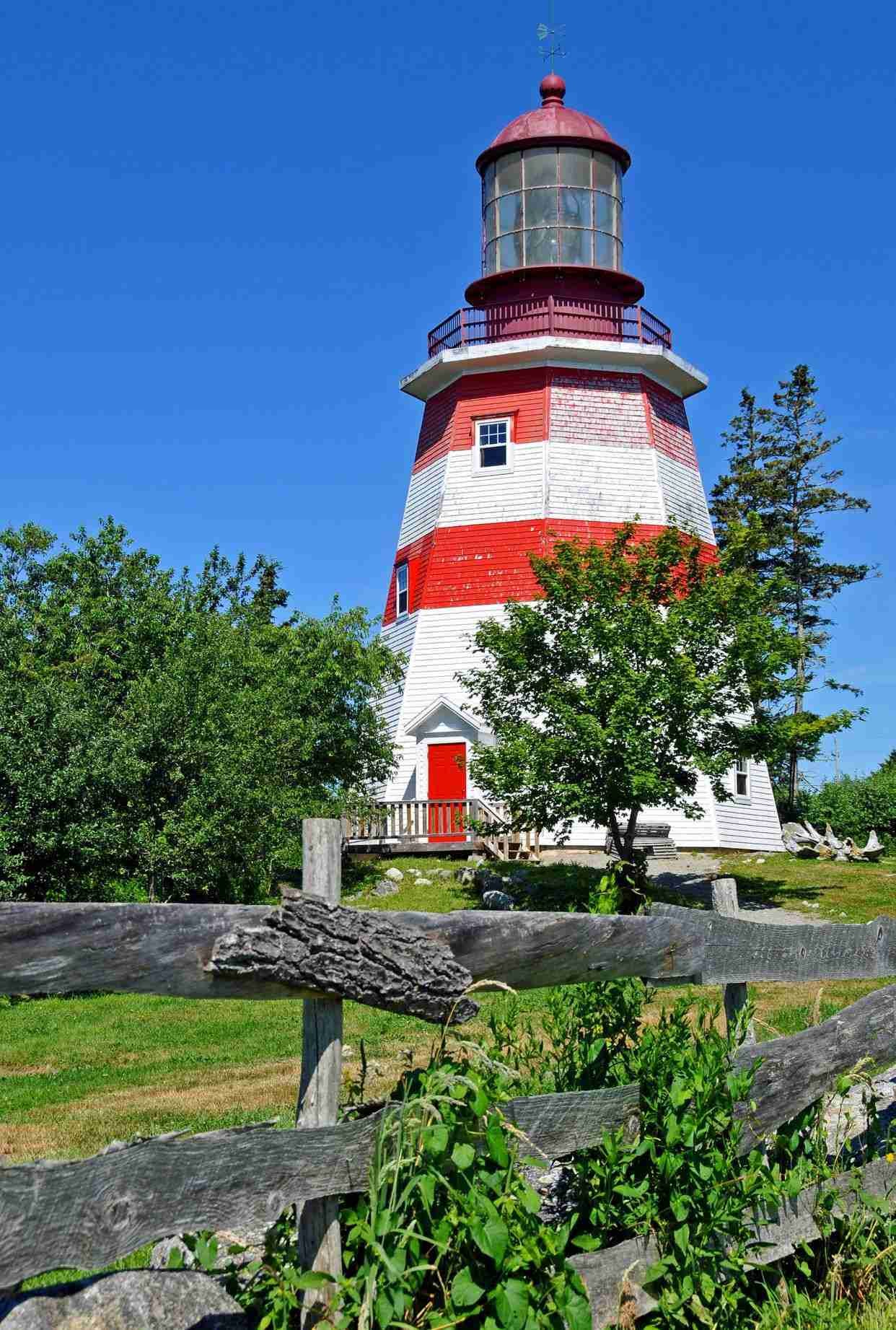
Located in the coastal town of Barrington, Nova Scotia, the Seal Island Light Museum is a fascinating tribute to the province's rich lighthouse history. This unique, six-story museum is a replica of the original Seal Island Lighthouse, which has stood off Nova Scotia's southwest coast since 1831. Housing original artifacts, historical exhibits, and a working lantern room, the museum offers an up-close look at the life of lighthouse keepers. With its charming red-and-white structure, maritime surroundings, and panoramic views from the top, the Seal Island Light Museum provides a compelling mix of architectural, documentary, and landscape photography opportunities.
Best Photography Opportunities
• Golden Hour and Sunset Shots
– The museum's striking red-and-white design stands out beautifully against the warm tones of sunrise and sunset. The golden light enhances the texture of the wooden panels and creates soft, long shadows that add depth to compositions. Capturing the structure with the changing sky colors can create a stunning contrast.
• Architectural Details and Historical Artifacts
– The lighthouse's multi-level design, complete with a working lantern room, offers plenty of opportunities for close-up photography. Inside, original Fresnel lenses, logbooks, and period artifacts provide rich storytelling elements for photographers documenting maritime history. The spiral staircase leading up to the lantern room makes for dynamic perspective shots.
• View from the Top
– Climbing to the top of the museum rewards photographers with panoramic views of Barrington and the surrounding coastline. Framing the landscape through the lighthouse windows creates a dramatic perspective, emphasizing the connection between the lighthouse and the sea.
• Reflections on Rainy Days
– The museum's bold colors pop even on overcast or rainy days, and puddles in the surrounding area can create striking reflections. This technique can add an artistic and symmetrical element to compositions.
• Wildflowers and Seasonal Colors
– During spring and summer, the area around the museum is often surrounded by blooming wildflowers, adding a vibrant foreground to lighthouse shots. Autumn brings rich golden tones to the landscape, offering warm and moody compositions.
• Night Photography with the Lighthouse Lantern
– The museum's working light provides a warm glow at night, making it an excellent subject for low-light and long-exposure photography. Capturing the beacon shining against a starry sky or under the glow of the moon adds a magical, timeless quality to images.
Best Time to Visit
The best time to visit the Seal Island Light Museum for photography is during golden hour, when the soft light enhances the red-and-white lighthouse structure. Spring and summer provide lush greenery and wildflowers for foreground elements, while autumn offers warm tones in the landscape. Overcast days work well for soft, diffused lighting that reduces harsh shadows. For night photography, visiting during a clear evening allows for stunning long-exposure shots with the lighthouse beacon shining.
How to Get There
The Seal Island Light Museum is located in Barrington, Nova Scotia, along Highway 3. It is easily accessible by car, with a parking area nearby. The museum is open seasonally, so it's best to check ahead for visiting hours and admission details. There is an entrance fee to access the museum, which includes climbing to the top for panoramic views. Payment can typically be made on-site, and visitors should verify the latest pricing and operating hours before arriving.
Exploring Seal Island Light Museum and the Surrounding Area
Beyond the museum itself, the town of Barrington is known as the "Lobster Capital of Canada," making it a great spot for capturing working fishing boats, lobster traps, and authentic maritime life. The surrounding coastal areas, including scenic harbors and rugged shorelines, provide additional opportunities for seascape photography. Local wharves and piers offer dynamic compositions with colorful boats and reflections on the water.
Nearby Photography Locations
– While the original lighthouse still stands on Seal Island, it is only accessible by boat. If visiting, photographers can capture the weathered structure set against dramatic Atlantic waves, along with shipwreck remains along the island's shores. The remote location makes for breathtaking maritime photography.
– Home to beautiful sandy beaches, rustic fishing wharves, and the iconic Cape Sable Lighthouse—the tallest in Nova Scotia. Sunset shots here, with the lighthouse silhouetted against the horizon, are particularly striking.
– A unique roadside attraction and historic site, this location commemorates the famous 1967 UFO sighting. It's an interesting stop for documentary and storytelling photography.
– Known for its white sand and exposed ancient tree stumps, this beach provides dramatic and otherworldly compositions, especially during low tide and sunrise.
– A lesser-known but scenic lighthouse with rocky shorelines and crashing waves, providing excellent long-exposure opportunities. The remote setting ensures a peaceful and uninterrupted shoot.
Comments
Loading comments…