
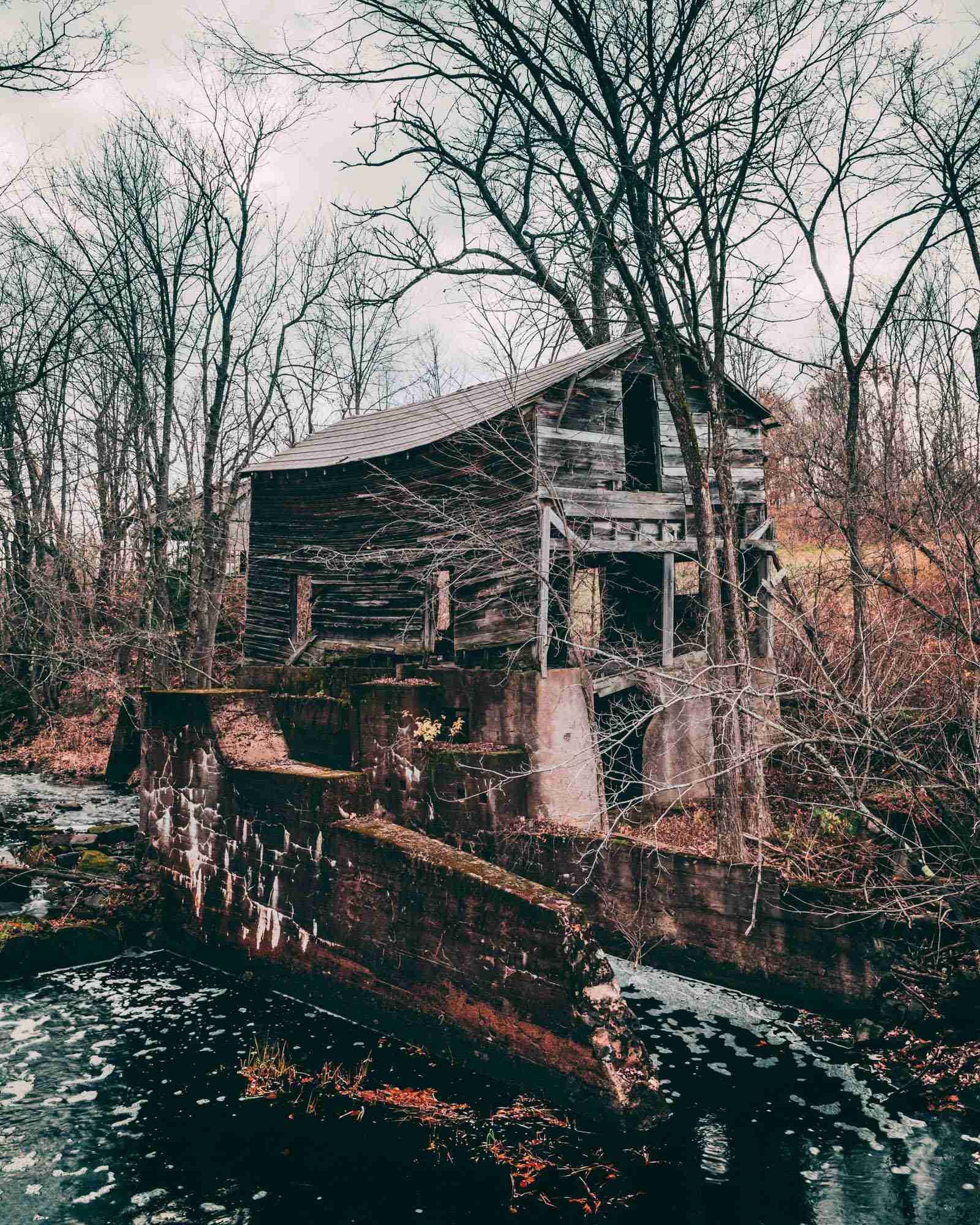
The crumbling remains of the old Card Mill in Parham, Ontario, tell a story of rural industry brought to an abrupt and mysterious end. Once a thriving sawmill operation owned by Harry Card, the mill was shut down in the 1930s after an unknown party dynamited the upriver dam that supplied its water power. With the sluiceway rendered useless and the river's course irreversibly altered, the mill was abandoned, leaving behind a quiet, skeletal frame of timber and stone that still echoes with the sounds of an unfinished legacy.
Today, the mill sits in a semi-wooded clearing on the edge of the river, where nature has reclaimed much of the surrounding area. For photographers interested in rural decay, industrial remnants, and evocative storytelling, the site offers a rare blend of history and texture. The structure's fragmented state, combined with overgrown surroundings and still-visible mechanical elements, creates an atmospheric scene that is both beautiful and haunted.
Best Photography Opportunities
• Main Mill Structure and Waterway Remains
The most compelling compositions center on the remains of the main mill building—weathered timber beams, a partially collapsed frame, and the remnants of machinery slowly decaying into the earth. Wide-angle compositions allow for environmental context, framing the skeletal structure with surrounding trees and the path of the long-dry sluiceway. Early morning light can cast low, golden angles across the decayed surfaces, enhancing texture and revealing hidden forms among the ruins.
• Detail Work: Machinery, Nails, and Timber Grain
Close-up opportunities abound within and around the mill's footprint. Rusting bolts, embedded metal rods, cracked gear housings, and moss-covered wood present excellent material for detail-rich photography. Overcast days are ideal for isolating these textures without harsh shadows. Use a macro lens or a mid-range zoom to highlight surface contrasts, decay patterns, and the slow encroachment of natural elements overtaking the industrial.
• Drone Photography and Site Layout
With the mill's flat layout and cleared area around it, drone photography offers a unique perspective on how the site integrates with the river, trees, and terrain. From above, the footprint of the sluiceway and the crumbling foundation become more apparent, revealing the symmetry and spatial planning once required to operate the sawmill. Early morning mist or autumn color adds atmosphere and depth when viewed from altitude.
• Environmental Portraiture and Storytelling
This site lends itself well to narrative and conceptual photography. The mill's eerie, historical presence makes a strong backdrop for environmental portraits, especially when framed through collapsed walls or within the old foundation. Costuming or styling that references early 20th-century rural life or ghost town themes can amplify the visual storytelling. Use soft natural light to blend subject and environment seamlessly.
• Seasonal Mood and Return Visits
The mood of the Card Mill site changes significantly throughout the year. In spring, new growth and soft green foliage contrast with the dead wood and rust. In autumn, golden light and falling leaves amplify the feeling of faded history. In winter, the bare trees and snow-dusted beams lend themselves to stark, high-contrast black-and-white imagery. Each season reveals different textures and compositions, making this a location worth revisiting for ongoing photographic exploration.
Best Time to Visit
Late spring through early fall provides the best combination of access, light, and foliage conditions. Spring offers soft color and contrast between new growth and the aged structure, while summer delivers stronger light and greater ease of movement around the site. Autumn is especially photogenic, with vibrant leaf color and lower sun angles that create long shadows and warm light across the decayed surfaces.
Early morning and late afternoon are the best times for directional light, especially for capturing surface texture and depth. Overcast conditions also work well, particularly for detail-focused compositions or when shooting interiors or shadowed areas. The site is quiet and isolated, and weekday mornings are usually free of foot traffic, allowing uninterrupted time to work the scene.
How to Get There
The Card Mill is located just outside the village of Parham in Central Frontenac, Ontario. From Kingston, take Highway 38 north to Verona, then follow Road 38 to Parham. The mill is located near the river along a side road just off Wagarville Road or near the original dam route—local landmarks and older maps may still label it as the Card Mill site.
There is no official parking or signage, so finding the mill may require asking locals or referencing topographic information. The structure lies near the water and is reachable on foot from nearby clearings, though the terrain can be uneven and overgrown. Wear sturdy boots and bring insect repellent, especially in the warmer months. Always be respectful of private property and observe from a distance if access is unclear.
Recommended Gear and Shooting Tips
A wide-angle lens (16–35mm) is essential for capturing the full structure and situating it within its natural surroundings. A 24–70mm zoom offers flexibility for framing tighter shots of collapsed walls, machinery, and supporting structures. A drone adds strong top-down context and can reveal details of the sluiceway and river course not visible from the ground.
For detail and texture, a macro or telephoto lens helps isolate rusted elements, wooden textures, and creeping vegetation. A tripod is recommended for early morning or low-light conditions, and a circular polarizer will reduce glare on wet or weathered wood while boosting contrast in surrounding foliage.
Move slowly through the site and scan for interesting visual juxtapositions—nature overtaking machinery, shadow slicing through slats, or lone elements like wheels or broken beams against bright leaves or sky. Watch for trip hazards and avoid entering structurally compromised areas, especially those with sagging beams or hidden pits.
Nearby Photography Locations
• Sharbot Lake and Surrounding Lakeshores
Just west of Parham, Sharbot Lake offers calm, reflective water, forested shores, and dockside textures. Excellent for sunrise, fog, and lakeside minimalism. The old train tracks nearby also provide strong leading lines and industrial history.
• Snow Road Station and Historic Buildings
A short drive north, this former rail stop includes aging cabins, outbuildings, and backroads architecture. Great for rural documentary work and rustic color palettes.
Southeast of Parham, this park blends lake views, hiking trails, and the historic Silver Queen Mine. The trails offer excellent canopy shots and layered landscape compositions with historical context.
• Old Ardoch Road and Backcountry Routes
Rural backroads near Ardoch feature old fences, collapsed barns, and weathered sheds—ideal for ongoing ghost town or abandoned industry series.
• Maberly Abandoned Farmstead
Located northeast of Parham, this overgrown farmstead features a slowly collapsing barn and stone foundations. Photogenic in fog, winter, or golden hour light.
The Card Mill may be little more than beams and memory now, but its story—of quiet ambition, rural ingenuity, and sudden sabotage—remains embedded in the landscape. For photographers, it offers a place to explore the beauty of decay, the legacy of forgotten industry, and the mystery of a site left behind.
Comments
Loading comments…