
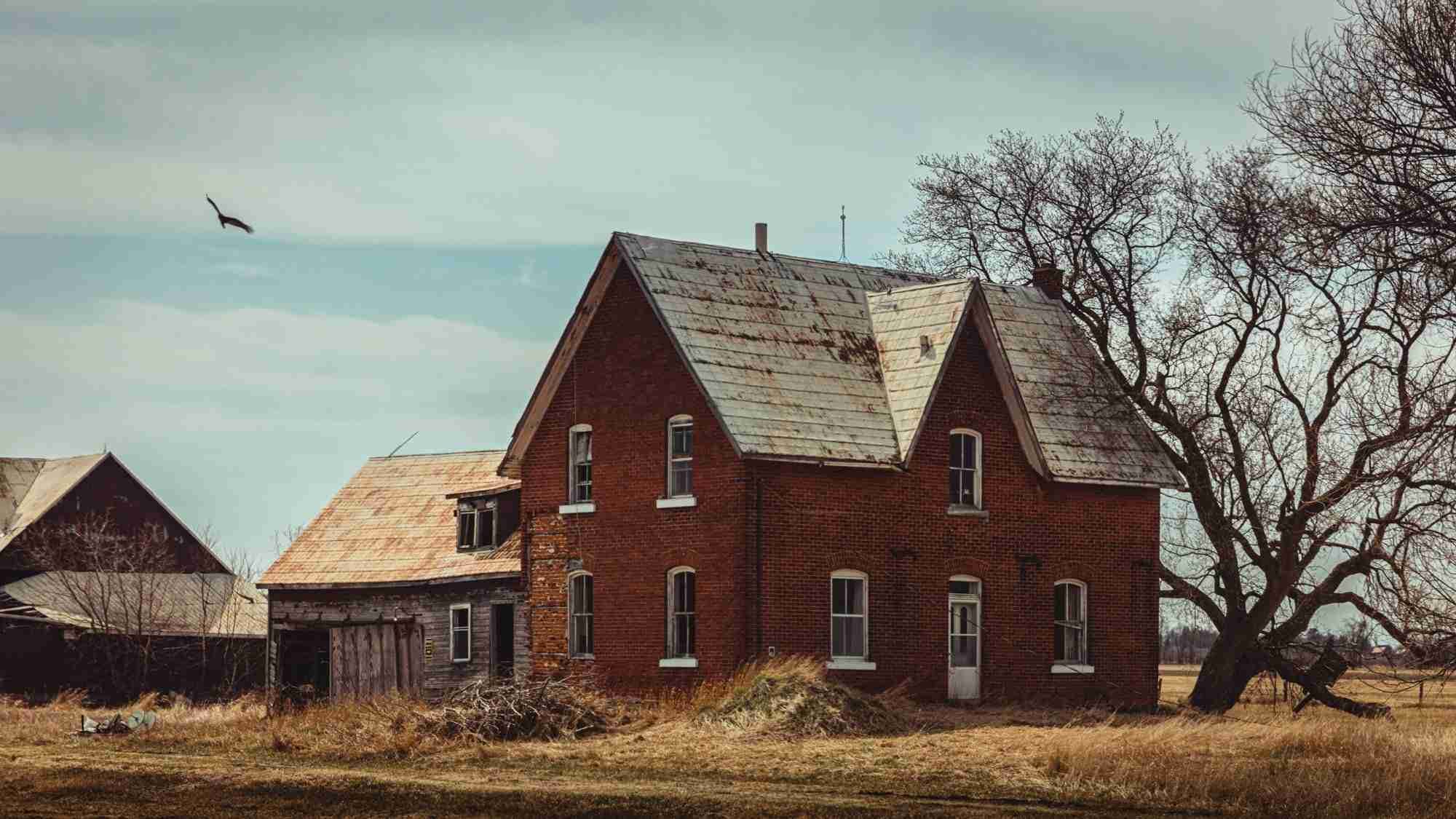
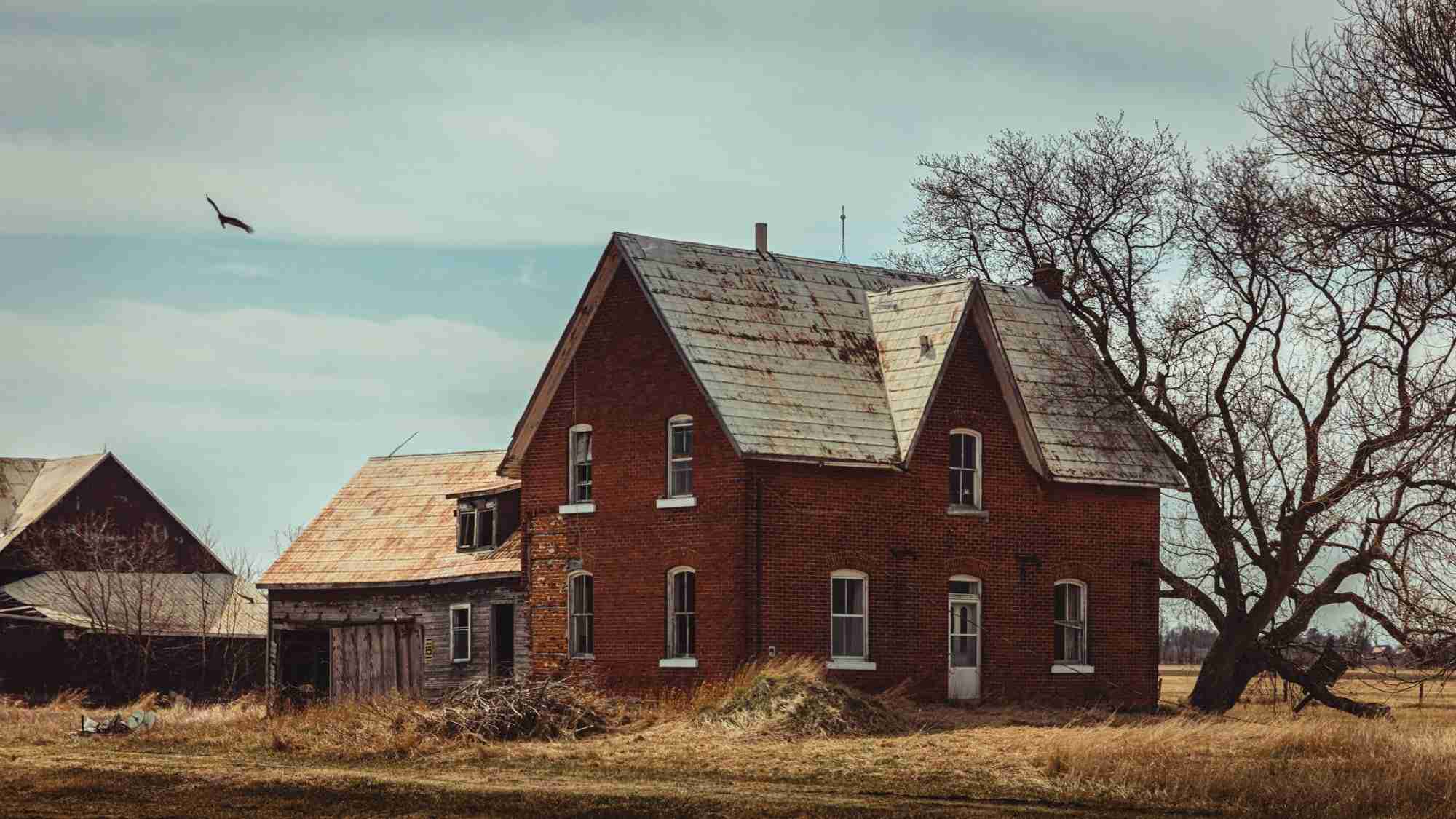
Nestled in the rural landscape near Cobden, Ontario, this abandoned brick farmhouse is a hauntingly beautiful reminder of a bygone agricultural past. Likely once part of a thriving family farm, the house now stands vacant, its brickwork weathered by decades of exposure and its rear extension sagging with age. Nearby barns and outbuildings—long past their prime—lean against the horizon, while gnarled oak trees surround the property like silent witnesses, offering natural framing elements that elevate every photograph.
This location is a hidden gem for photographers who enjoy capturing rural decay, architectural history, and the moodiness that only comes from the slow passage of time. From the textures in the red brick to the skeletal trees that frame the structure in winter, this site is rich with atmospheric potential.
Best Photography Opportunities
• Full House Composition with Tree Framing
The gnarled oak trees around the property provide excellent compositional elements for framing the house. Use a wide-angle lens and position yourself to include sweeping limbs or twisted trunks that draw the viewer's eye toward the building. Early morning or late afternoon light filters through the branches, creating dappled shadows that dance across the facade. In winter, the bare limbs cast dramatic silhouettes and emphasize the isolation of the abandoned house.
• Detail Shots of Brickwork and Decay
The house's red brick exterior is deeply weathered, with portions showing signs of collapse or long exposure to the elements. Use a telephoto lens or mid-range zoom to isolate areas of peeling paint, crumbling mortar, or sagging eaves. Broken windows, rusted metal, and creeping vines all add texture and narrative to close-up compositions. Overcast skies help reduce glare and bring out the full tonal range of the brick and wood.
• Outbuildings and Visual Sequence
The nearby barns and outbuildings, though partially collapsed, offer secondary subjects that extend the story of the property. Capture the house in the background while focusing on a leaning fencepost or the skeletal frame of a barn. These layers of decay work well in a visual sequence, especially when arranged to show depth or movement across the property. Repeating patterns of beams, corrugated metal, or broken boards also make compelling subjects on their own.
• Moody Atmosphere and Seasonal Shifts
This location changes dramatically across the seasons. In autumn, fallen leaves and warm tones contrast with the cool red of the brick and the grey wood of the outbuildings. Winter's snow softens the scene and highlights the geometry of the house and tree limbs. Spring adds overgrowth and renewal, while summer creates a dense green frame that partially obscures the structure, making it feel even more hidden and secretive. Each season shifts the tone of the location from nostalgic to eerie to almost peaceful.
• Black-and-White Storytelling
With its strong contrasts and architectural lines, the site works especially well for black-and-white photography. Stripped of color, the scene takes on a timeless quality, with the textures of brick, bark, and broken glass becoming the central visual language. Use this approach for more abstract or interpretive compositions that focus on form, decay, and negative space.
Best Time to Visit
This location photographs well year-round, but each season brings a different mood. Autumn is perhaps the most rewarding, when the structure is framed by rich golden foliage and filtered light. Winter offers dramatic contrast between snow and brick, and highlights the skeletal shapes of nearby trees. Spring is excellent for texture-focused work, as melting snow and new growth interact with the old stone and wood.
Golden hour—particularly in the evening—is ideal for side lighting that casts long shadows and highlights texture. Morning light works well too, especially if fog drifts through the surrounding fields, adding atmosphere and depth to wide shots. Overcast conditions are perfect for detailed compositions, helping to soften harsh contrast and saturate the natural colors of the site.
As this is a rural location, consider visiting during off-peak hours for quiet shooting and minimal interruption. If you're planning a drone flight or long exposure setup, early morning is the most peaceful and often the most visually dramatic.
How to Get There
This abandoned farmhouse is located near Cobden, Ontario, just west of Renfrew and about 90 minutes from Ottawa. From Highway 17, exit onto Highway 60 or one of the local sideroads and follow rural routes toward the outskirts of Cobden. The house sits near open farmland and is visible from a public road, though it is situated on private land.
There is enough room to pull off safely along the shoulder to photograph from the roadside. Do not enter the property, as the structures are unstable and it is private. Fortunately, the site's layout allows for strong compositions from a respectful distance, especially with a telephoto lens or drone.
Recommended Gear and Shooting Tips
A 24–70mm lens is ideal for capturing both context and tighter architectural framing. A wide-angle lens helps include foreground elements like tree limbs or fence lines, while a 70–200mm telephoto is perfect for isolating detail without crossing onto private land. For drone users, this location is a strong candidate for elevated compositions that reveal rooflines, layout, and tree placement.
A tripod is useful for golden hour and twilight shots, and for black-and-white or HDR bracketed exposures. Bring a polarizing filter to manage glare on windows or wet surfaces and to deepen contrast in foliage or skies. A weather-sealed setup is helpful, especially if you're shooting in damp conditions or after snow.
Move around the perimeter of the site to explore various angles. The structure is asymmetrical, and each side tells a different story. If possible, revisit at different times of day to study how the light interacts with the brick and surrounding trees.
Nearby Photography Locations
• Muskrat Lake Shoreline
Just minutes from Cobden, Muskrat Lake offers calm water reflections, dockside views, and expansive skies—ideal for pairing natural serenity with the moodier farmhouse aesthetic. Early morning mist on the lake adds atmosphere to wide shots.
• Bonnechere Caves and River Trail
Located southeast near Eganville, this site features limestone formations and a scenic riverside trail. It's a good contrast to rural decay work, offering texture-rich nature photography and soft, filtered light beneath tree canopies.
• Foresters Falls and Whitewater Region Roads
The backroads between Cobden and Foresters Falls are dotted with aging barns, meadows, and quiet forest pockets. This stretch is great for spontaneous photo stops and long-lens landscape work with a rural character.
• Renfrew Railway Trestle and Valley Lookouts
Drive a little east to find classic steel trestles, hilltop viewpoints, and soft rolling landscapes. These are strong secondary subjects if you're building a series around heritage and rural architecture.
• Abandoned Structures along Snake River Line
This quiet stretch of road features scattered ruins, derelict houses, and scenic agricultural terrain. Ideal for those who enjoy roadside exploration and uncovering off-map rural photo gems.
The abandoned brick farmhouse near Cobden is a quiet, brooding subject rich in visual potential. With its timeworn surfaces, seasonal variation, and natural framing elements, it invites photographers to slow down, observe, and capture the quiet unraveling of rural memory in one of Ontario's most underrated corners.
Comments
Loading comments…