
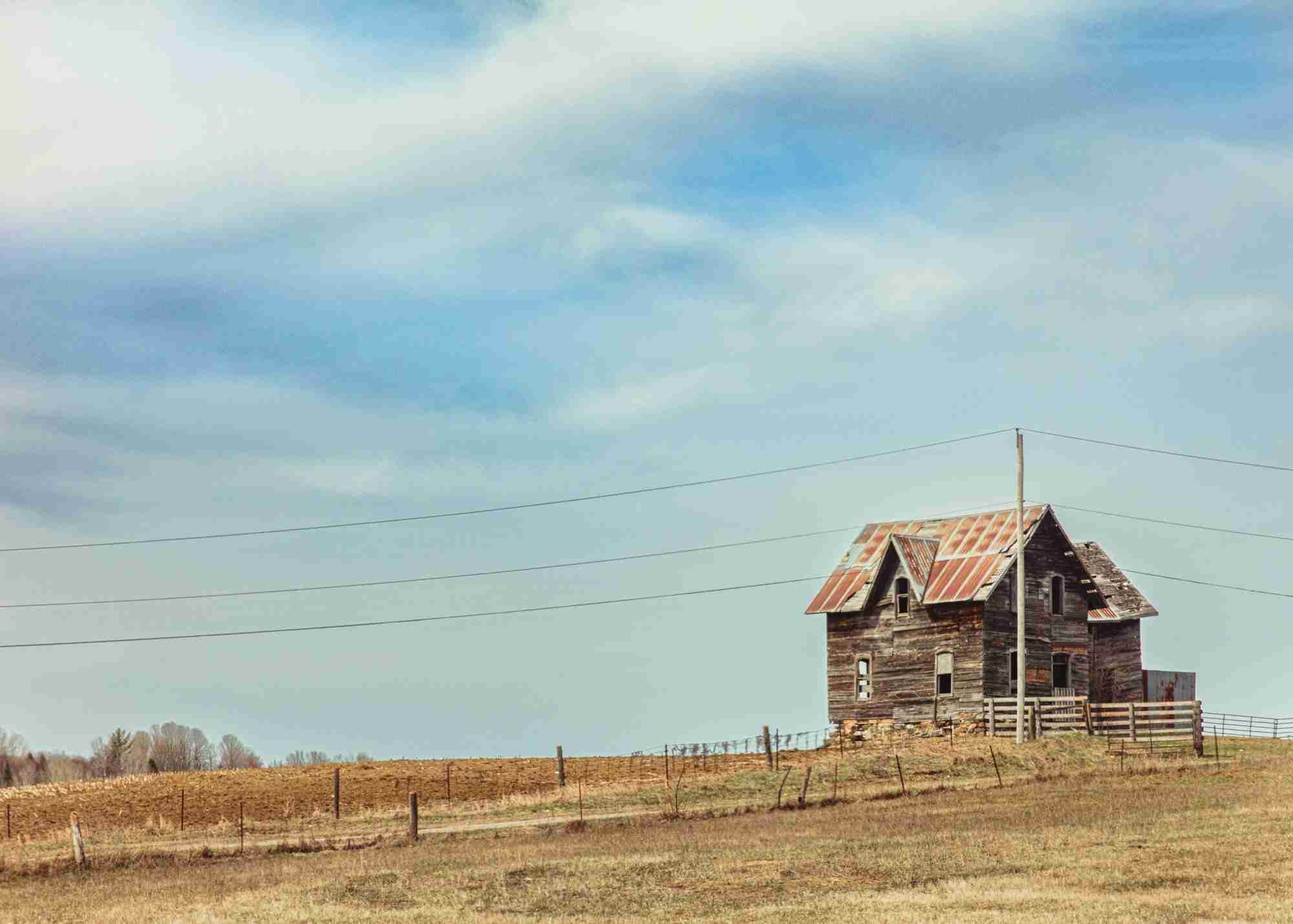
Perched alone atop a rolling hill in the Whitewater Region of Ontario, this abandoned farmhouse offers one of the most striking and atmospheric rural photo subjects in the area. Though the farm around it remains active, the house itself has long since been left to the elements. Its steeply pitched roof, broken windows, and sagging eaves are hallmarks of a timeworn structure that seems to resist collapse purely out of habit.
Surrounded by open skies and farmland, this house sits in a compositionally powerful position. The exposed location makes it a natural focal point for weather and seasonal change. In wind, the loose metal of the deteriorating roof taps and clatters, adding a haunting soundtrack to your shoot. This is a location that speaks as much to mood and atmosphere as to form—and for photographers who specialize in abandoned subjects, it offers a haunting beauty that's rare to find so cleanly set apart from modern intrusion.
Best Photography Opportunities
• Full House Silhouette Against the Sky
With the house set atop a bare hill, it creates an ideal opportunity for stark, sky-dominant compositions. Framing the structure low in the frame allows you to emphasize dramatic clouds, sunsets, or incoming storms. Golden hour light, especially in the evening, grazes across the textured wood and accentuates the decay with warmth and shadow. Try shooting from low on the hill with a wide-angle lens to exaggerate the slope and create a sense of isolation.
• Detail Work: Roof Panels, Siding, and Windows
The house's deteriorating tin roof, with flapping panels and rusted seams, makes an excellent subject for close-up work. Similarly, the chipped paint on the siding and broken window frames offer strong linear compositions and layered texture. Use a mid-range zoom to explore these areas without needing to get too close—particularly useful if you're shooting from public access points or roadside vantage.
• Long Lens Isolation of Architectural Elements
From farther back or across adjacent fields, a 70–200mm lens or longer allows you to isolate parts of the structure—such as a single window frame against the clapboard, or the peak of the roof with sky behind. This approach works well in fog or light rain when contrast is low and the mood is subdued. The repetition of lines and aging materials make for excellent minimalist compositions.
• Foreground Framing With Field Grasses or Fencing
If you're shooting in spring or summer, tall grasses or wildflowers can be used to frame the house subtly. Kneel down and shoot through them for a natural vignette effect. Old fencing or agricultural equipment near the road can also serve as compositional anchors, particularly when included at the edges to lead the viewer's eye toward the farmhouse.
• Moody and Seasonal Atmospheres
This location excels in transitional weather—overcast skies, early frost, or light snowfall give the house a melancholic feel that pairs perfectly with its shape and siting. Morning fog softens the hill contours and makes the structure appear to float above the field. In winter, a fresh snowfall turns the landscape into a minimalist canvas that emphasizes the strong geometry of the home.
Best Time to Visit
This location can be photographed year-round, but early morning or late afternoon offers the best light for both structure and landscape. The house is positioned to catch side lighting during golden hour, revealing texture across the roofline and vertical planks. In summer, early light also minimizes heat shimmer off the surrounding fields.
Autumn is especially strong, with rust-colored grass and dramatic skies that mirror the tones of the rusting metal roof. In spring, new growth in the surrounding pastures contrasts with the decay. Winter provides an excellent backdrop for stark compositions, especially just after snowfall when the hill is smooth and unbroken.
Windy days add motion and sound to the shoot, though a tripod becomes essential in those conditions. Fog or mist after rain gives the house a haunted presence, especially when combined with diffuse lighting and long exposures.
How to Get There
This farmhouse is located in the Whitewater Region of Renfrew County, Ontario, set back slightly from a rural road that winds through active farmland. While the house sits on private property, it is visible from the roadside and can be photographed respectfully from a public vantage. There is no formal parking lot, but wide shoulders and low-traffic conditions typically allow for brief roadside stops.
From Ottawa, the site is roughly a 90-minute drive west. Take Highway 417 toward Renfrew, then connect to Highway 17 and turn onto local concession roads leading toward Westmeath or Beachburg, depending on your starting route. Use satellite view or a pre-marked offline map to locate the house, as cellular coverage may drop in parts of the region.
Be discreet and respectful—this is part of a working farm. Do not attempt to enter the building or walk through fields without explicit permission. All photography should be done from the road or other clear, non-intrusive viewpoints.
Recommended Gear and Shooting Tips
A 24–70mm zoom is ideal for general coverage, giving you flexibility to frame the house within its landscape or focus on details from the road. A wide-angle (16–35mm) lens helps exaggerate the hill and sky, especially in sunrise or sunset compositions. A telephoto (70–200mm or longer) is invaluable for isolating parts of the house or compressing stormy sky layers behind the structure.
Use a polarizer to control sky reflections and deepen color in grasses or clouds, especially on brighter days. A neutral density filter can allow for long exposures in changing light, which is especially useful if you want to capture motion blur in grass or passing clouds. A tripod is strongly recommended for low light or long focal lengths.
Pack extra batteries, especially in colder weather. Keep your gear weather-sealed or bring a rain cover if the conditions are changing quickly. Given the remoteness, also bring a phone or GPS for safety, and always respect property boundaries.
Nearby Photography Locations
• Beachburg Road Barns
Just minutes away are several photogenic barns in various states of decay. Framed by open fields and old maple trees, these make excellent complementary locations for a rural decay photo loop.
The small town of Foresters Falls features remnants of older industrial buildings and outbuildings near the river, offering stone textures and ironwork suited to tighter compositions.
A high point overlooking the Ottawa River Valley, this ridge provides a stunning vista at golden hour and is ideal for wide-angle landscapes with silhouetted trees or farmland layers.
• Cobden Grain Elevators
Located near Highway 17, the grain elevators and industrial relics around Cobden offer gritty details and steel tones—ideal for photographers working in monochrome or documentary styles.
• Mink Lake Shoreline
For a softer contrast to the abandoned aesthetic, the nearby lake provides peaceful morning reflections and foggy atmosphere, best just after sunrise or during calm weather conditions.
The hilltop farmhouse in Whitewater Region is more than just a structure—it's a conversation between wind, light, and memory. With patience and respect, photographers can capture not just a decaying building, but the layered feeling of a rural Ontario landscape slowly reclaiming what was once a family home.
Comments
Loading comments…