
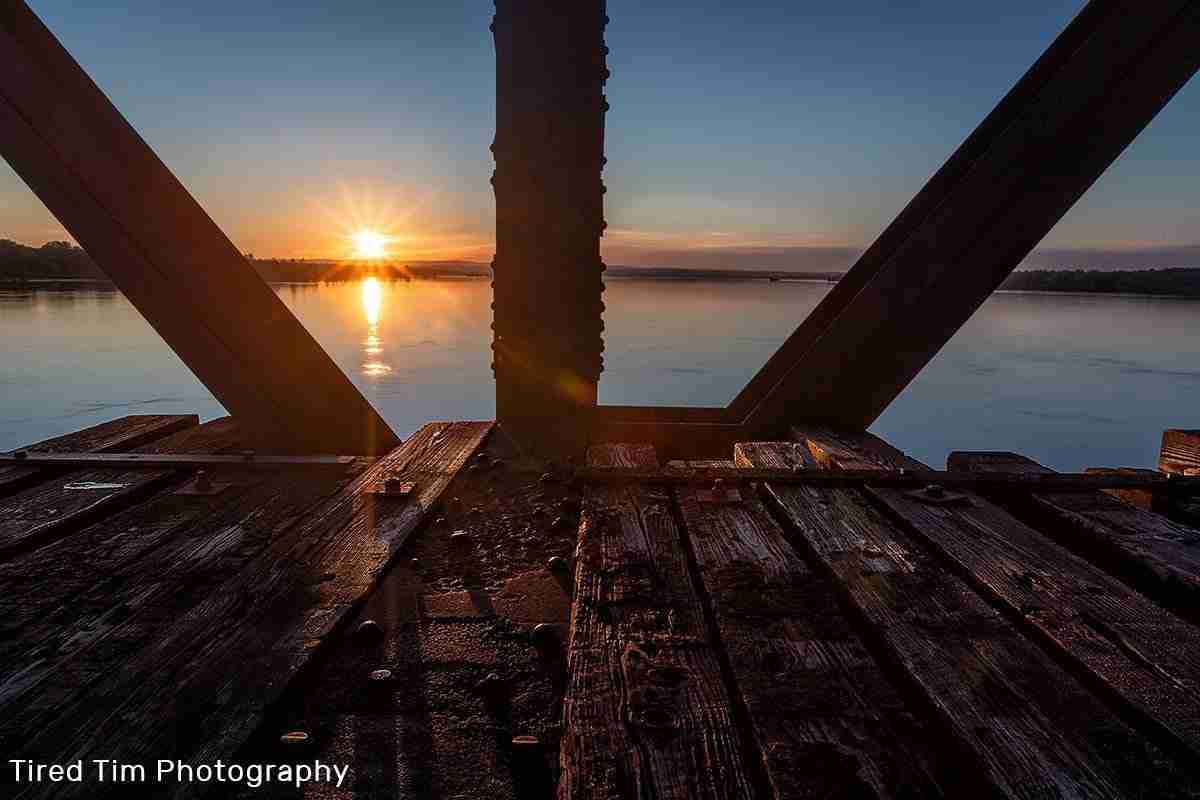
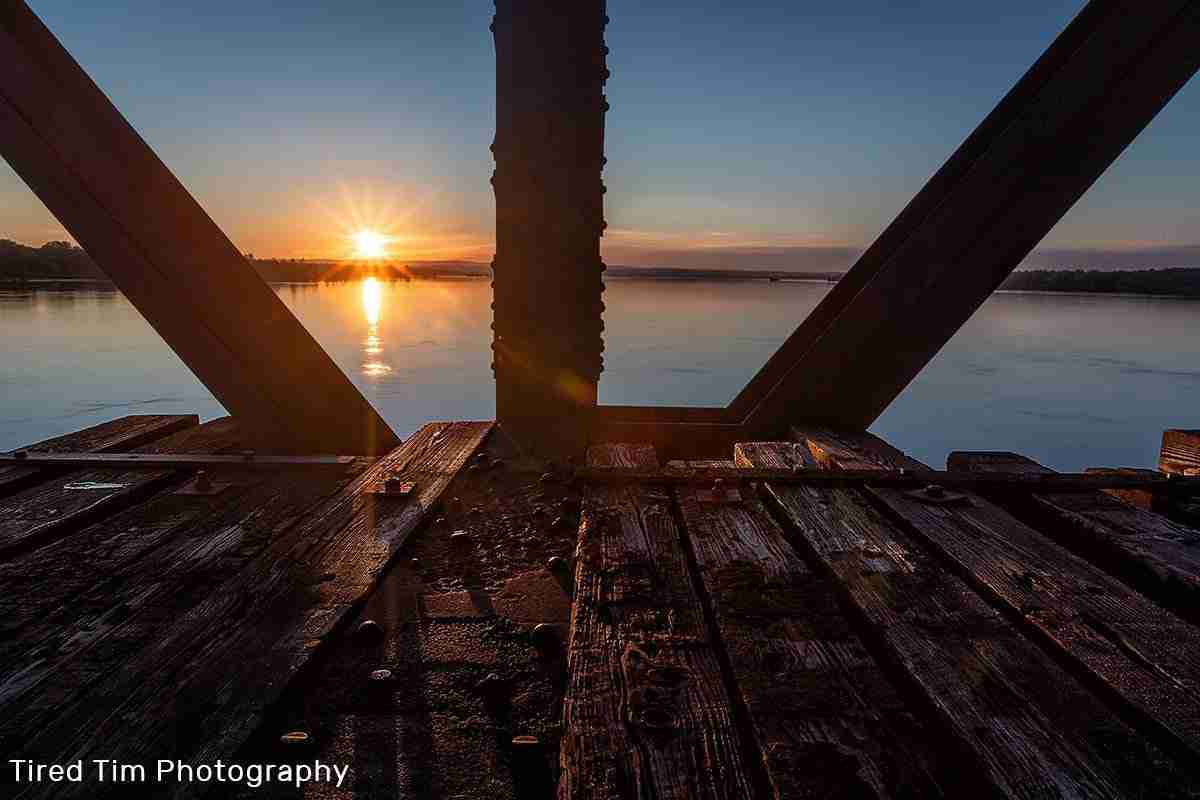
Spanning the wide and slow-moving Ottawa River between Ontario and Quebec, the abandoned rail bridge near Morris Island Conservation Area offers a striking blend of industrial geometry and natural serenity. No longer active, this historic steel truss bridge stretches across the provincial boundary in visual defiance of time, with its weathered metal frame standing stark against the sky and water. For photographers, it's an evocative subject—part monument, part mystery—ideal for long exposure landscapes, architectural studies, and atmospheric compositions. Whether viewed from the shoreline, from the bridge itself, or reflected in the river below, this location is a quiet, powerful space where history and landscape merge.
Best Photography Opportunities
• Bridge Silhouettes at Sunrise or Sunset
: The bridge's orientation along the Ottawa River makes it highly photogenic during both sunrise and sunset. Golden hour light rakes across the trusses and stone piers, casting dramatic shadows and emphasizing the structure's rusted patina. Shooting from the Ontario side near Morris Island Conservation Area provides excellent angles to frame the bridge against colorful skies. Use a wide-angle lens to capture the full span or a telephoto to compress its repeating patterns into abstract layers.
• Reflections and Long Exposures from Shore
: On calm days, the Ottawa River becomes a mirror for the bridge's angular form. Long exposures here can create silky water surfaces that reflect both structure and sky, especially in the early morning when the light is soft and winds are minimal. Position driftwood, rocks, or riverbank grasses in the foreground for depth and contrast. An ND filter and sturdy tripod will help extend shutter speeds for dramatic results.
• Underneath the Trusses for Abstract Symmetry
: Walk along the access path under the first spans of the bridge to shoot directly upward into the frame, where crisscrossed steel beams create dynamic patterns. This angle lends itself well to architectural studies and minimalist compositions. Overcast skies provide even lighting for this kind of work, highlighting the geometry without harsh shadows.
• Black-and-White Textural Studies
: The decaying steel, rivets, and stonework of the bridge make it an ideal subject for monochrome photography. Whether you're shooting fine detail of weathered bolts or broader environmental shots of the structure fading into the horizon, the bridge's character comes through beautifully in grayscale. Foggy mornings or stormy skies amplify the mood.
• Environmental Portraits and Editorial Work
: The bridge and its surroundings offer a dramatic setting for moody portraiture or stylized shoots. Use the structure as a visual anchor behind your subject, or place them directly on the bridge for a narrative feel. Early or late in the day offers the best light for this kind of work, particularly when paired with muted tones or natural color palettes.
Best Time to Visit
The bridge is accessible throughout the year, but its photographic appeal is strongest from spring through late autumn. In spring, mist and rising river levels can create ethereal foregrounds and dramatic skies. Summer offers lush vegetation and long, golden evenings. Autumn brings bold foliage along both shores, adding rich contrast to the steel and water.
Sunrise sessions are ideal for soft backlighting and still water, while sunset provides glowing warmth and more saturated skies. Cloudy days can be especially rewarding for black-and-white work or moody storytelling, and calm, windless conditions offer the best chance for mirrored reflections.
Winter access is possible but requires caution—ice along the path and near the shoreline can be treacherous, and heavy snow may obscure key features. However, if accessible, the stark forms of the bridge against frozen river surfaces can result in minimalist, graphic compositions well-suited for high-contrast work.
How to Get There
The abandoned rail bridge is easily accessible from Morris Island Drive near the hamlet of Vydon Acres, just west of Ottawa. From Highway 417, exit onto March Road and follow it west toward Galetta, then turn onto Canon Smith Drive and continue along Morris Island Drive until you reach a small pull-off area near the bridge approach.
There is no formal parking lot, but there are informal roadside parking spots along Morris Island Drive. From there, it's a short walk along a trail or utility access path to reach the bridge site. The terrain is generally flat, but uneven in places—wear sturdy footwear and watch for loose rock or soft ground near the water.
The bridge is no longer in use, and while parts of it can be safely approached for photography, some areas may be unstable or overgrown. Use caution when exploring around or beneath the structure, and avoid climbing onto the active spans without proper safety gear. As the site lies on a mix of public and utility land, it's best to approach with respect and avoid disturbing any posted areas.
Exploring the Site and Its Surroundings
The bridge is the main visual draw, but the surrounding riverscape and conservation land offer plenty of photographic potential. From the Ontario shore, you can wander along the water's edge and photograph the bridge at multiple angles—side views framed by trees, wide shots that include both riverbanks, and vertical compositions using foreground reeds or boulders.
Morris Island Conservation Area, just to the west, offers forested trails, marshland, and boardwalks that wind through wetlands—perfect for contrasting natural textures with the hard lines of the rail bridge. Wildlife is also common here: great blue herons, kingfishers, and the occasional osprey patrol the river's edge, especially in early morning or late afternoon.
If you're exploring both sides of the river, note that the bridge once connected to the rail lines near Luskville, Quebec. Though access from the Quebec side is more limited, a scouting trip or drone session could reveal new framing possibilities and add a layer of narrative depth to your photo series.
Nearby Photography Locations
• Morris Island Conservation Area
: Just minutes from the bridge, this tranquil natural area features forest trails, small lookouts, and boardwalks through the wetlands. Excellent for golden hour light, reflections, and wildlife photography, especially in spring and fall.
: A short drive south, Fitzroy Harbour offers views over the Ottawa River with docks, small inlets, and riverside parkland. Ideal for capturing softer light and relaxed water scenes with a more pastoral feel.
• Galetta Falls
: Located nearby on the Mississippi River, this small waterfall and hydro station provide a mix of natural and industrial elements. Great for long exposures and seasonal change, especially in late spring.
: Southeast of Vydon Acres, this riverside heritage site features 19th-century stone buildings, open fields, and views across the river toward Quebec. Ideal for moody environmental portraiture or layered historic landscape work.
• Constance Bay and Torbolton Forest
: This riverside community and adjoining forest area offer peaceful sand beaches, winding trails, and sunset-facing views across the Ottawa River—perfect for broader landscape sessions before or after a visit to the bridge.
The abandoned rail bridge near Morris Island is more than a forgotten span—it's a structure that stands as a visual reminder of movement, memory, and stillness. Whether wrapped in fog, bathed in sunset light, or mirrored in the calm river below, it's a subject that invites thoughtful composition and rewards patient exploration. For those drawn to quiet drama and structural beauty, this river crossing is well worth the journey.
Comments
Loading comments…