
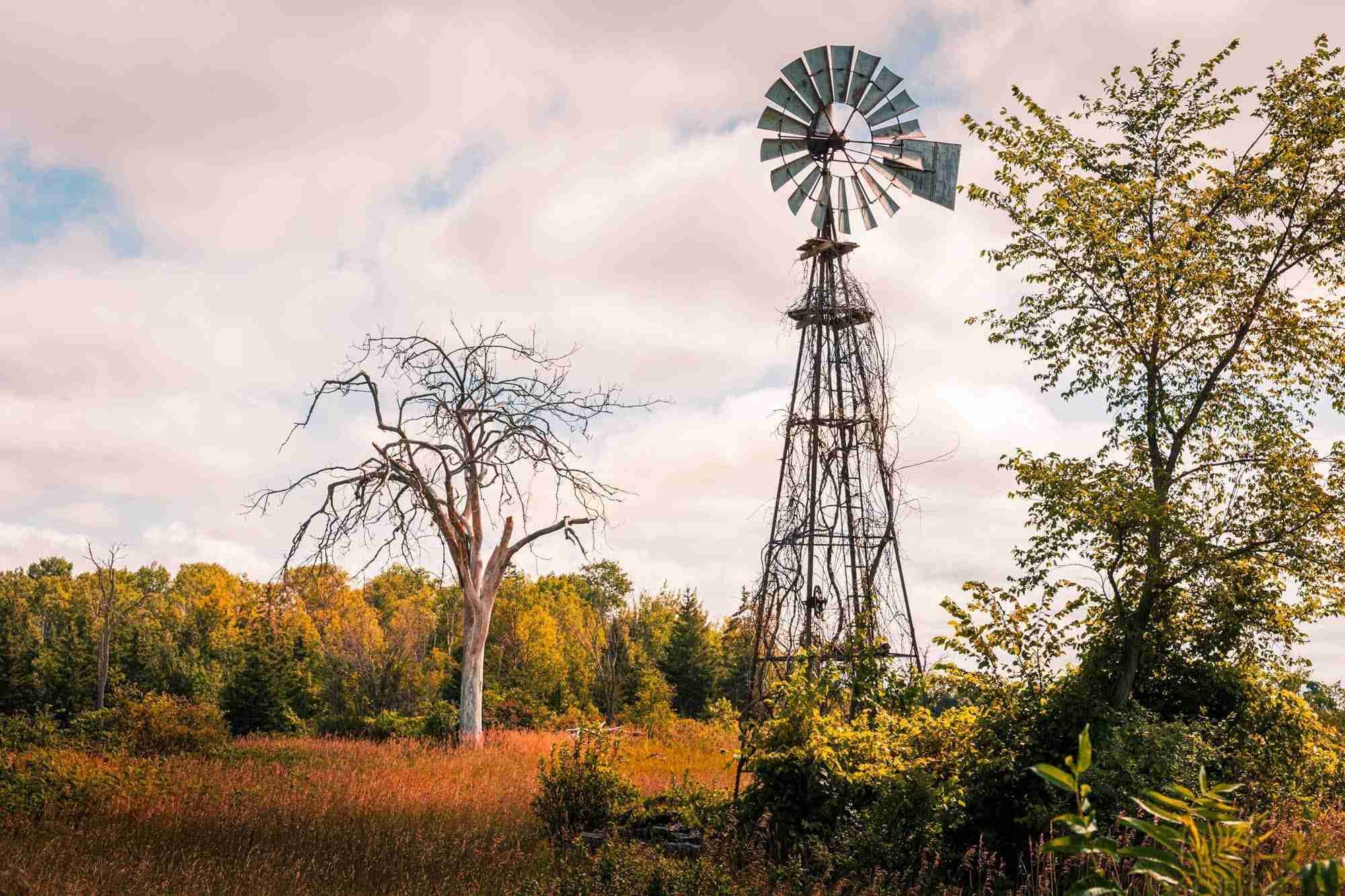
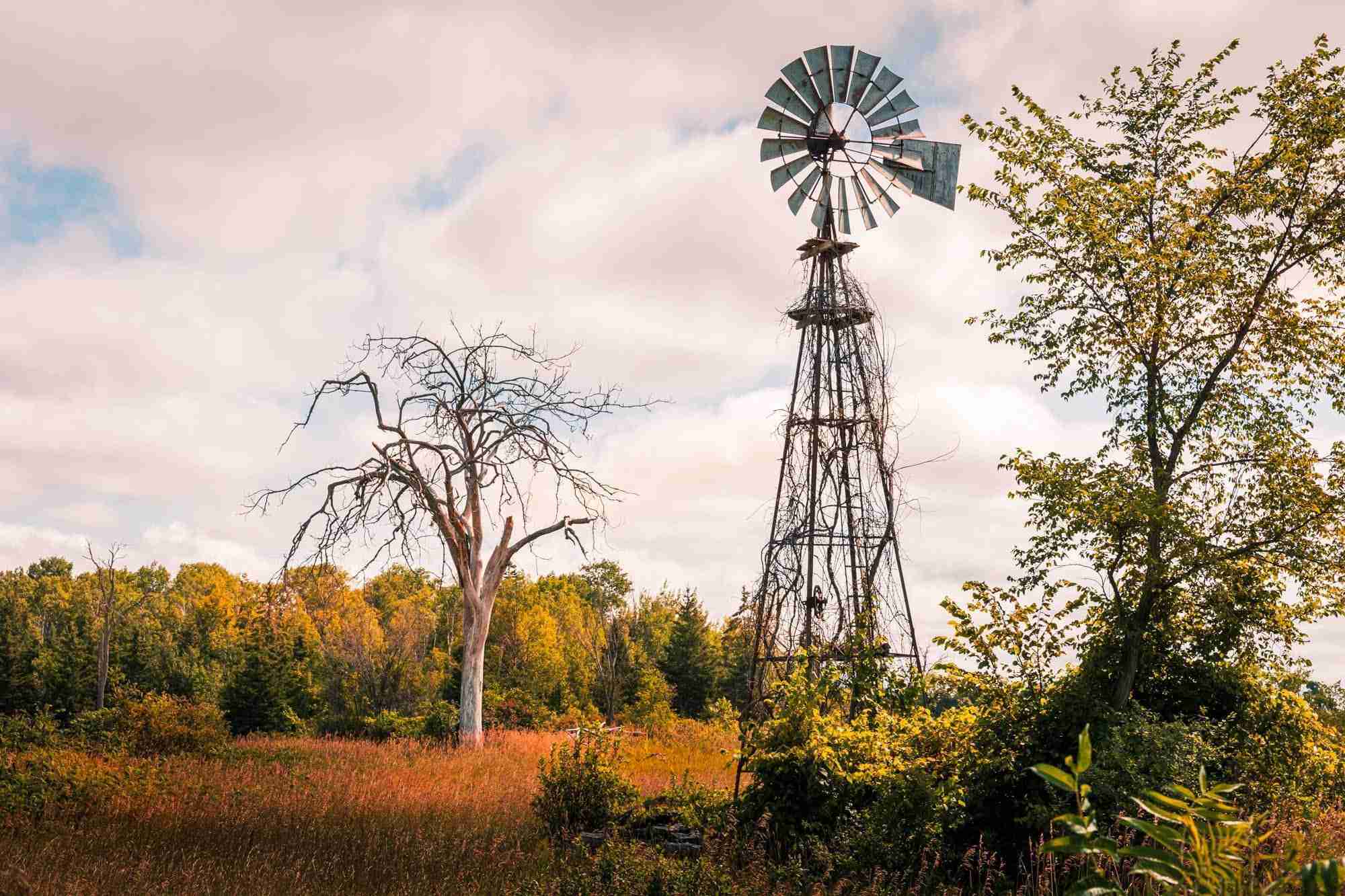
In the quiet farmland near Dalrymple, Ontario, an aging windmill rises modestly above the countryside—a skeletal reminder of a time when wind powered water pumps and aeration systems across Ontario's rural landscape. One of several scattered in the region, this particular windmill is especially photogenic thanks to the mature trees that frame it, their branches arching around the tower like a natural vignette. Standing amid open fields and low rolling terrain, the scene evokes a deep sense of place and a quiet appreciation for the heritage of working farms.
Though the structure is no longer functional, it has not been abandoned. Its rusted blades, lean metal frame, and weathered patina are maintained just enough to keep it upright, giving it the kind of aged dignity that rural photographers often seek. For those drawn to quiet icons of agricultural history, the Dalrymple windmill is a small but meaningful subject.
Best Photography Opportunities
• Full Windmill Framing with Woodland Backdrop
From the roadside, you can capture the full height of the windmill framed by mature trees on either side. Use a mid-range or wide-angle lens to emphasize the symmetry of the setting—especially in spring or fall when foliage either buds out or bursts into color. Early morning or golden hour light filters through the branches and hits the windmill from the side, casting long shadows and highlighting its delicate lattice frame.
• Close-Up Details of Blades and Texture
The windmill's aging metal blades, bolts, and faded paint offer excellent opportunities for close-up photography. Use a telephoto or zoom lens to isolate these elements and create abstract compositions out of texture and shape. On overcast days, the even light brings out the subtleties in rust patterns and softens the contrast, allowing the windmill's finer structural details to emerge.
• Framing Through Branches and Grasses
One of the best ways to emphasize the windmill's connection to the landscape is by shooting through nearby tree limbs or tall grasses. These natural elements form soft foregrounds that help guide the eye toward the central structure, while also enhancing the sense of depth. In winter, bare branches can be used as graphic elements to create minimalist or monochromatic images with stark contrasts and delicate structure.
• Silhouettes and Atmospheric Light
The windmill's spindly frame and open design make it a perfect subject for silhouette work. Position yourself against the light at sunrise or sunset and expose for the sky to create dramatic outlines against orange or blue gradients. Low fog or early morning mist adds a layer of softness to the composition and amplifies the mood.
• Seasonal Context and Storytelling
The windmill takes on a different presence in each season. In summer, it rises above a carpet of green and buzzing insect life. In autumn, it stands sentinel among a wash of orange and red. In winter, frost clings to its frame and the surrounding trees, offering clean, crisp contrasts and a more introspective mood. Use these environmental shifts to create a small series or to return with different photographic goals throughout the year.
Best Time to Visit
Early morning and golden hour offer the most flattering light, with side illumination that brings out both texture and form. The eastern exposure of the location means that sunrise tends to light the windmill first, while late afternoon light creates silhouettes and backlight through the surrounding trees.
Autumn is a particularly beautiful season here, as the trees frame the windmill in deep reds and yellows, enhancing its rusty tones and bringing warmth to the scene. Winter offers stark, high-contrast compositions with snow on the frame and bare trees acting as a clean backdrop. Summer can be challenging due to midday light and heat shimmer, but early or late in the day, it still produces rich green contrast and golden tones.
Weekday mornings or late evenings are best for quiet conditions. Because the location is roadside, it's easy to shoot quickly and respectfully without needing access beyond the public right-of-way.
How to Get There
The windmill is located along one of the rural concession roads near Dalrymple, in the Kawartha Lakes region of Ontario. From Orillia, take Highway 12 south, then head east on Kirkfield Road (County Road 6). From there, use local side roads toward Dalrymple to find the windmill near open farmland. It is visible from the road, especially as you pass through wooded patches with breaks that open into fields.
There is no formal signage or pull-off, but low-traffic gravel shoulders nearby offer space to stop safely for a brief photography session. Always remain on the public roadside and avoid trespassing onto adjacent private land. The windmill is close enough to the road to allow strong compositions without needing to cross fences or disturb the property.
Recommended Gear and Shooting Tips
A 24–70mm zoom lens is ideal for both full structure shots and tighter compositions that isolate parts of the windmill or its surroundings. A 70–200mm telephoto allows for more compressed frames and fine detail work, particularly from the roadside. For close-up shots, a macro lens or telephoto with a close focusing distance will help highlight the blades, fasteners, and rust patterns.
A tripod is useful during low light or for shooting long exposures when incorporating cloud movement or low-lying mist. A circular polarizer helps reduce glare and increase contrast between the windmill and sky, particularly useful on sunny days or when shooting through branches. In winter or early spring, bring a lens cloth to deal with condensation or frost on the front element.
Frame with intention—consider the balance between tree line, sky, and structure. Use environmental cues like leaning fenceposts, rows of hay, or foot-worn tracks to draw visual paths toward your subject.
Nearby Photography Locations
• Lake Dalrymple Shoreline
Just a short drive from the windmill, the lake's shoreline features wooden docks, boathouses, and peaceful water reflections. Ideal for soft, lakeside compositions during sunrise or foggy mornings.
• Cedarhedge Trail and Forest Edges
Nearby walking trails through hardwood and mixed forest provide excellent opportunities for woodland compositions and nature textures, especially in fall or spring bloom.
• Kirkfield Lift Lock and Canal Corridor
A unique structure on the Trent-Severn Waterway, the Kirkfield Lift Lock offers a strong geometric contrast to rural subjects. Great for architectural framing, water reflections, and industrial heritage photography.
• Farmhouses and Barns along Highway 6
The rural road network around Dalrymple is dotted with aging barns, log outbuildings, and fieldstone fences—perfect for a day of casual photo exploration. Many of these sites offer quick roadside access and classic Ontario rural character.
• Old Windmills in the Region
If the Dalrymple windmill inspires you, keep your eye out for others nearby—several still stand on private farmland throughout the Kawarthas. Most are visible from rural roads and offer excellent variety for building a themed series.
The windmill near Dalrymple is a humble but enduring landmark, framed by trees and time. For photographers who seek quiet subjects rich in shape, history, and seasonal expression, it offers a peaceful and evocative moment in the rhythm of the countryside.
Comments
Loading comments…