
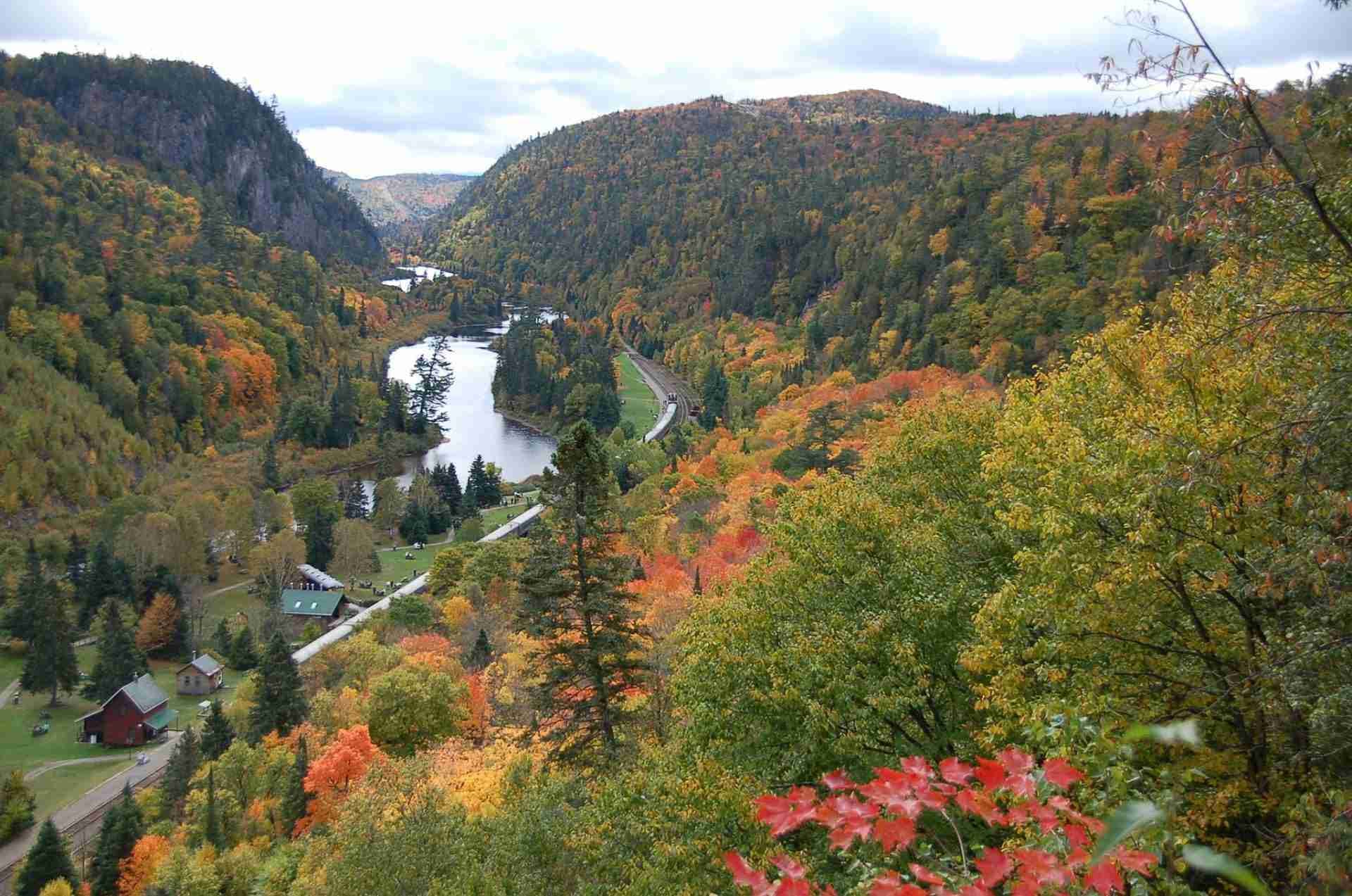
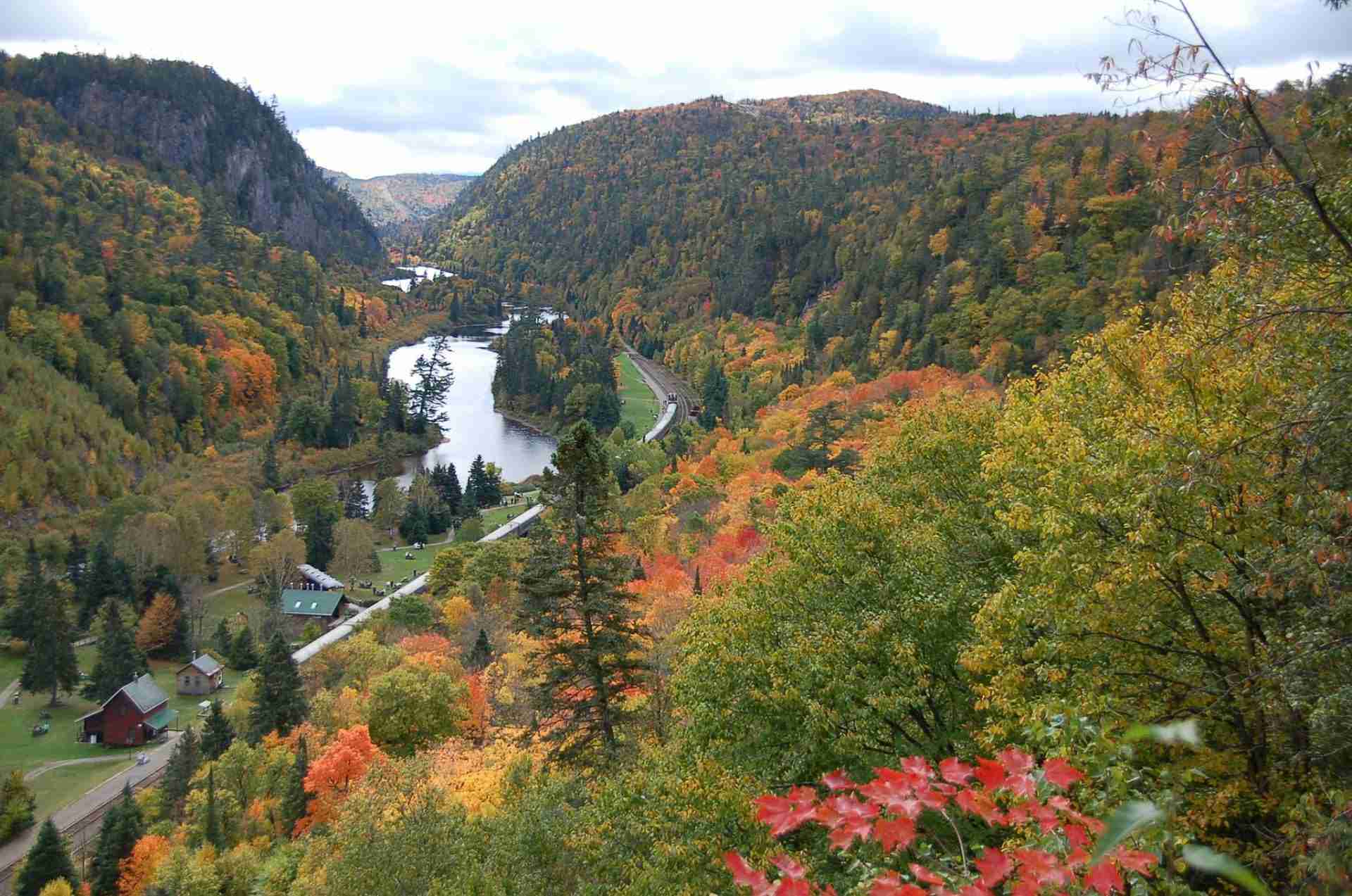
Hidden deep within the boreal wilderness of Ontario's Algoma region, the Agawa Canyon Park Lookout Trail offers photographers one of the most dramatic elevated vistas in the province. Accessible primarily by rail from Sault Ste. Marie aboard the Agawa Canyon Tour Train, the trail leads to a manmade lookout perched 76 meters above the canyon floor. From this viewpoint, you'll see the Agawa River slicing through the canyon, framed by steep, granite cliffs that rise 175 meters high—an awe-inspiring scene that has inspired generations of artists, including members of the iconic Group of Seven. This is rugged country, where the shifting seasons, dense forest, and raw geological forms create ever-changing photographic conditions. Whether you're after golden autumn canopies or the lush greens of summer, the Agawa Canyon Lookout is a visual destination like no other.
Best Photography Opportunities
• Panoramic Canyon Views from the Lookout Platform
: The lookout platform at the end of the trail offers the trail's most iconic shot—a wide, sweeping view of the entire canyon from above. A wide-angle lens (16–35mm) captures the full breadth of the Agawa River winding through the deep ravine, bordered by vertical cliffs and dense forest. The best time to shoot here is early morning, when soft light filters through the eastern tree line and mist sometimes hovers over the water. In fall, the scene erupts in a blaze of gold, orange, and crimson, making it one of the most colorful natural compositions in Ontario.
• Staircase Perspectives and Vertical Framing
: The 372-step climb itself is a photographic opportunity. Midway landings offer partial glimpses of the canyon through the trees—perfect for layered compositions using foreground elements like railing and trunks. Frame upward or downward using a 24–70mm lens to capture the sense of height and effort, with the canyon walls gradually revealing themselves in the background. Overcast days work well here, as they soften light contrast and preserve foliage detail.
• Agawa River and Canyon Floor Studies
: Once you've descended from the lookout, don't overlook the lower trail system. The Agawa River, with its slow-moving water and rocky edges, offers strong reflections and leading lines. Use a polarizer to reduce glare and bring out rich riverbed detail. Early morning light strikes the canyon walls at sharp angles, creating contrasty patterns on the water and shoreline. Look for fallen logs, shoreline textures, and the dance of light on water for intimate landscape shots.
• Group of Seven–Inspired Compositions
: The scenery in this region directly inspired the painters of the Group of Seven—artists who sought to express Canada's natural grandeur through bold lines, saturated color, and simplified form. Channel their vision by seeking out compositions that emphasize rhythm: repeating tree trunks, rock strata, and river curves. A 50mm prime works beautifully for this kind of study, helping distill broader views into frame-worthy abstracts.
• Wildlife and Seasonal Flora
: While the grand vistas draw the most attention, macro and wildlife opportunities abound. Moose, black bears, and smaller mammals frequent the area, and songbirds are active near the river and trail. In spring and summer, ferns and wildflowers like trilliums and blue-bead lilies provide macro subjects on the forest floor. A telephoto lens (100–400mm) is essential if you're hoping to photograph wildlife, while a 90mm macro lens brings out the delicate patterns of flora in soft woodland light.
Best Time to Visit
Agawa Canyon is most accessible and visually rewarding from late May through mid-October. The Tour Train operates seasonally, and its fall excursions—particularly from mid-September through the first two weeks of October—are famous for their unparalleled autumn color. This is the best time to capture the full spectrum of Ontario's hardwoods from the lookout platform.
Summer (late June through August) offers the lushest green tones, rushing waterfalls, and the best weather for hiking. However, mid-day light can be harsh—early morning departures offer the softest conditions and least crowded trails.
Spring brings new growth and clearer views through the forest canopy, especially in early May before full leaf-out. The waterfalls that dot the canyon walls are often more vigorous at this time, and the light remains low enough for extended shooting hours.
The trail is closed in winter, and the Tour Train does not run during the off-season. If you're planning a fall photography trip, book tickets well in advance—autumn departures sell out quickly, especially on weekends.
How to Get There
The primary way to reach Agawa Canyon Park and its Lookout Trail is via the Agawa Canyon Tour Train, which departs from downtown Sault Ste. Marie, Ontario. The train journey is a full-day round trip, covering approximately 185 miles (298 km) into the heart of the Canadian Shield. The canyon stop includes about 90 minutes of ground time to explore the park, walk the trails, and reach the lookout.
The lookout trail begins at the north end of the park and includes a clearly marked staircase leading to the elevated platform. The climb is moderate but can be demanding—372 wooden steps with railings and landings along the way.
There are no additional permits or fees required beyond the train ticket, which includes access to the canyon park and trails. Comfortable hiking shoes, water, and weather-appropriate clothing are essential, especially in variable fall or spring conditions. Note that there is no vehicle access—only rail—making planning essential.
Recommended Gear and Shooting Tips
Bring a wide-angle lens (16–35mm) for capturing expansive canyon views, a mid-range zoom (24–70mm) for trails and general landscapes, and a telephoto lens (70–200mm or 100–400mm) for isolating distant features or wildlife encounters. A lightweight tripod is useful for long exposures of the river or low-light canyon detail but must be portable due to the stairs.
Use a polarizer to reduce water glare and enhance contrast in foliage—especially important when the trees are changing color or after rain. ND filters are handy for smoothing river flow or creating ethereal mist effects in the early morning.
Protect your gear with rain covers or dry bags—the weather in the canyon can shift quickly, and mist or light drizzle is common. Use a backpack with chest and waist straps for the climb. Leave time to scout compositions on the way up—you'll be racing both time and elevation.
Photograph the view from multiple points on the stairs—not just the final platform—as each level offers a unique angle. For the best light on the canyon walls and trees, plan your frames around the train's arrival time and sun direction, which varies by season.
Nearby Photography Locations
: South of the canyon, this sprawling park offers dramatic shoreline cliffs, inland lakes, and rocky beaches. The rugged coastlines are excellent for long exposures, stormy skies, and minimalist compositions at dawn or dusk.
: Along the Trans-Canada Highway en route to Sault Ste. Marie, Batchawana Bay offers wide, sandy beaches and sweeping views across Lake Superior. Excellent for sunset photography with warm golden-hour tones reflecting on the water and waves.
: Easily accessed by car from the highway, this waterfall is a favorite roadside stop with a short trail and boardwalk. It's a strong destination for practicing waterfall compositions with dynamic flow and foreground interest.
: This hike climbs to a bluff overlooking Pancake Bay and the expanse of Lake Superior. It's a fantastic sunset location, and the trail is accessible for a half-day outing. Autumn foliage here is particularly brilliant.
• Algoma Central Railway Tracks
: Along the train route itself, there are occasional photo opportunities from the windows—dense forest corridors, sudden lake views, and trestle bridges that curve dramatically across the landscape. Use a fast shutter speed and clean your window space in advance for the best in-motion captures.
The Agawa Canyon Park Lookout Trail is a convergence point of scale, color, and stillness—a place where time slows and the vastness of the Canadian Shield opens up before your lens. From the deep forest floor to the wind-stirred treetops above the canyon wall, it's a landscape of grandeur, best experienced slowly, with eyes wide open and camera ready.
Comments
Loading comments…